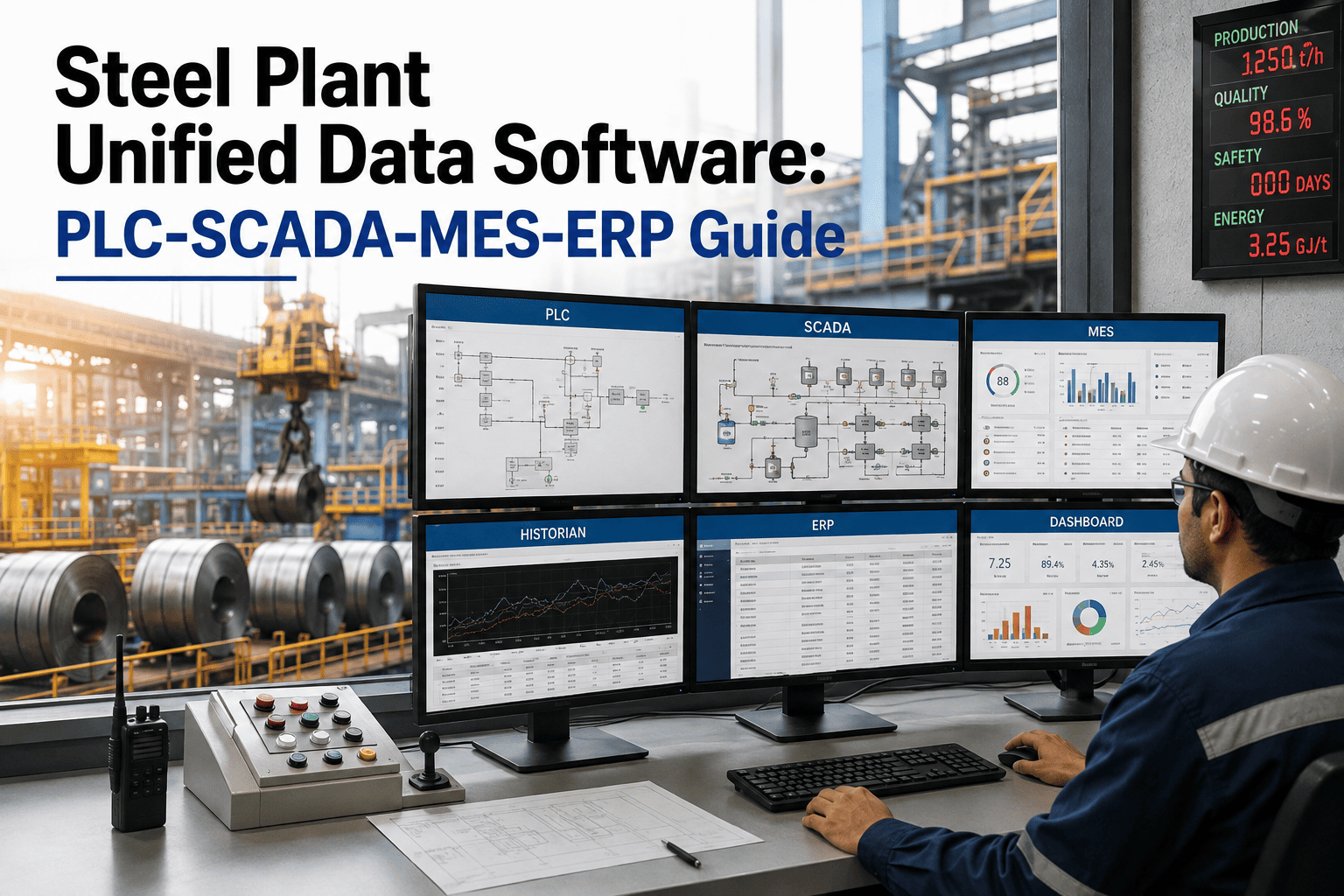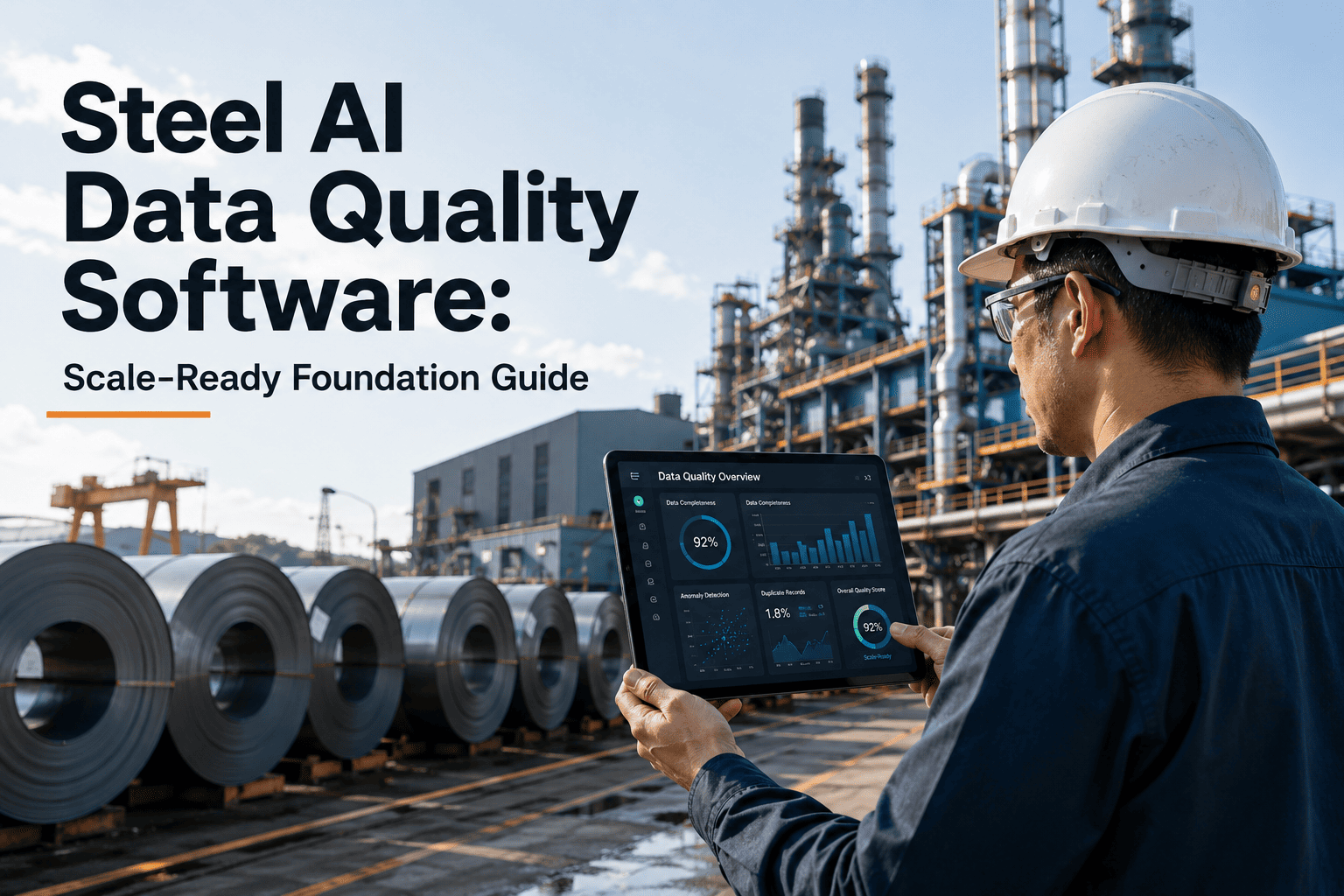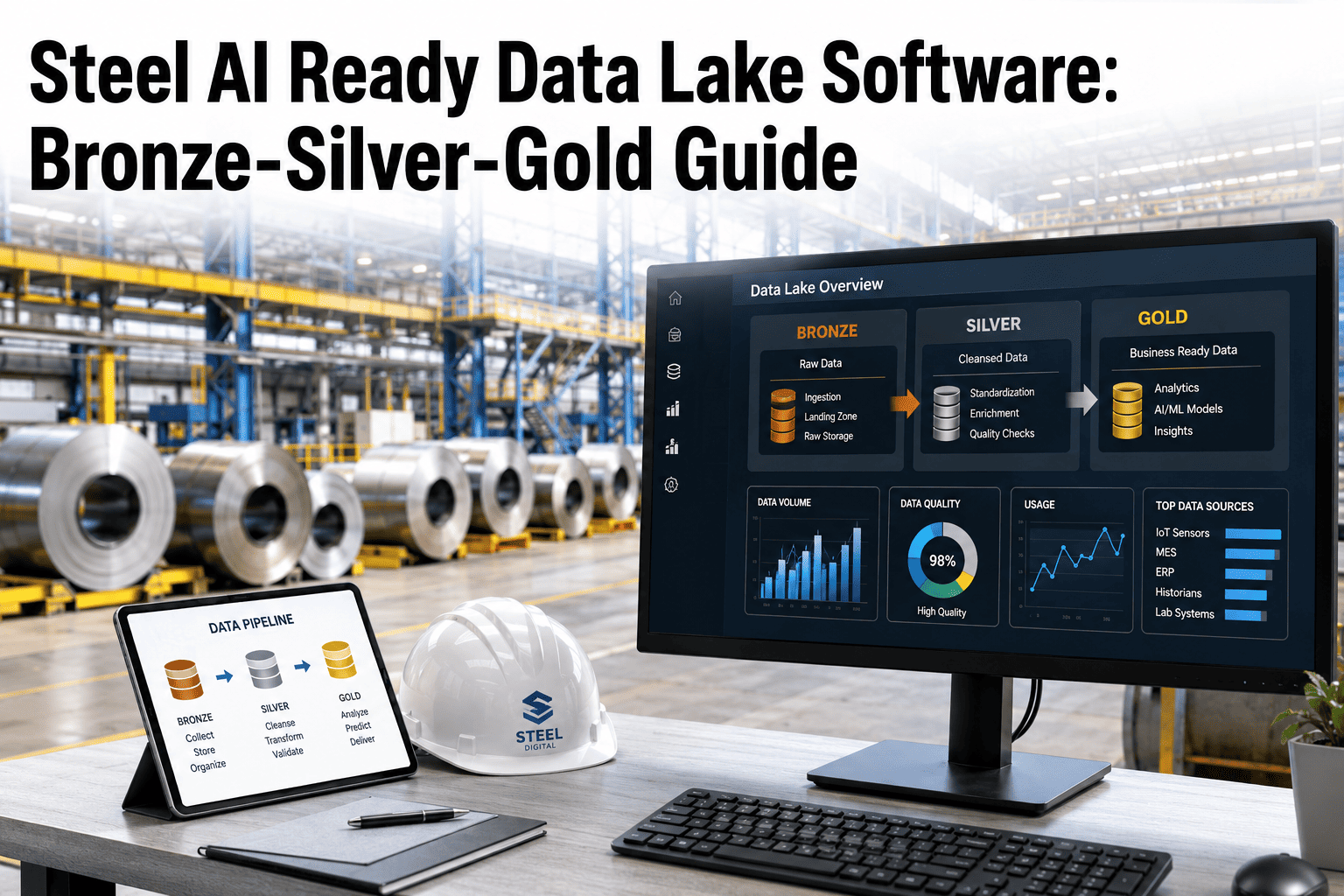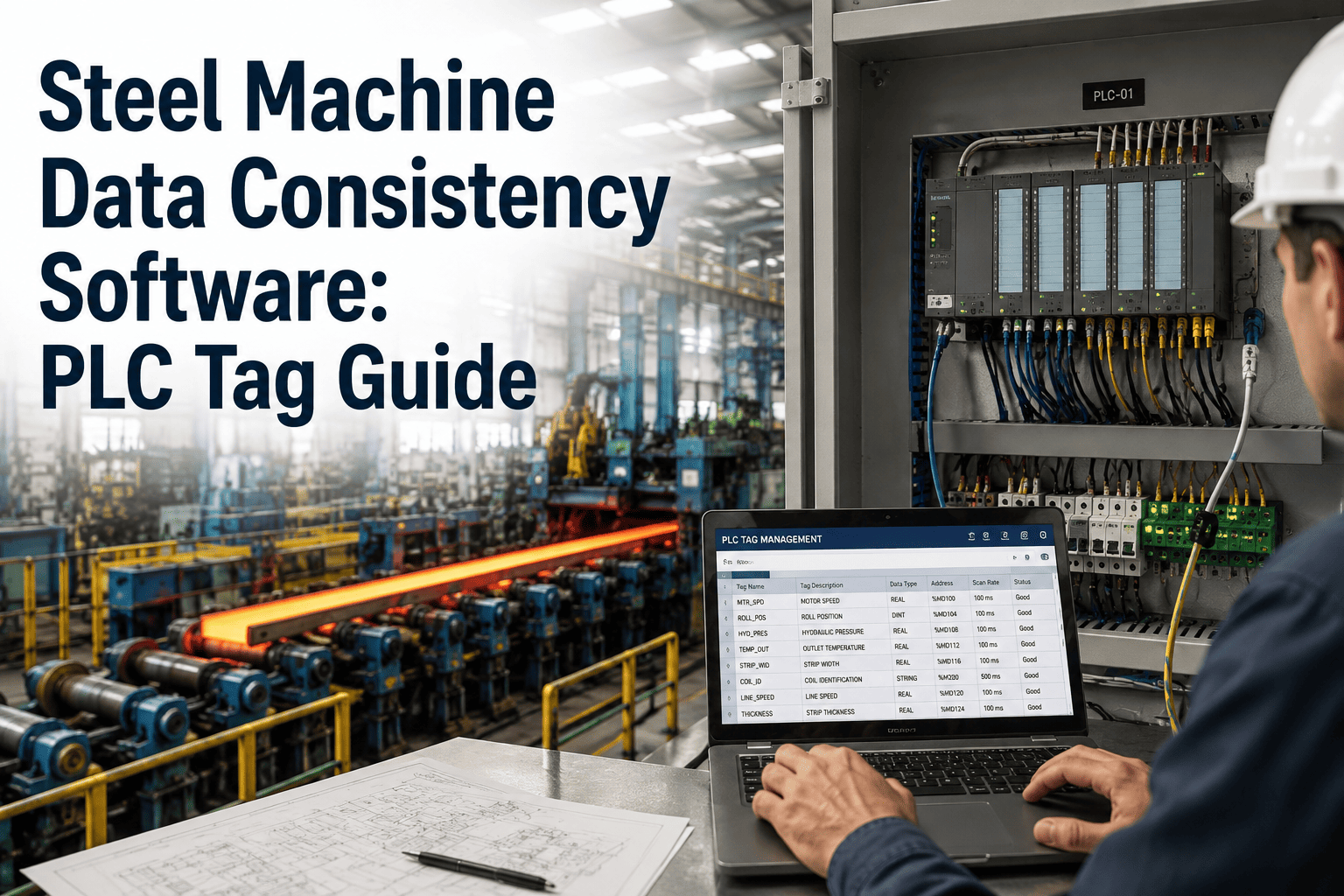
A predictive model doesn't fail because the algorithm is wrong — it fails because "Furnace_1_Temp," "FCE01_TEMP," and "F1TempPV" are three different tag names for the same signal, sitting in three different historians, sampled at three different rates, with two of them in Celsius and one in Fahrenheit. Steel plants running decades of brownfield PLC upgrades accumulate this kind of tag chaos silently, and nobody notices until an AI or reliability project tries to pull clean, comparable data across machines and discovers the foundation isn't there. Fixing the model never helps — the data has to agree with itself first, at the tag, the unit, and the sampling interval, before any analytics layer on top of it means anything. Plants that get this right are not the ones with newer PLCs, they are the ones running a tracked data consistency discipline where every tag, unit, and sampling rate lives in one registry instead of an engineer's personal spreadsheet, which is exactly the foundation built inside the OxMaint CMMS platform. Every new PLC project then inherits the standard instead of inventing a new one.
Machine Data Consistency Software for PLC Tags, Units & Sampling Rates
Standardise tag naming, engineering units, and sampling intervals across every shop floor PLC — so the data behind every dashboard, KPI, and AI model actually means the same thing everywhere.
Four Layers Where Steel Plant Data Quietly Falls Apart
Data consistency is not one problem — it is four separate layers stacked on top of each other, and a fault at any single layer poisons everything built above it. A perfectly named tag sampled at the wrong rate is just as useless to a predictive model as a correctly sampled tag with the wrong unit. Plants have to get all four layers right, together, for the data to be trustworthy. None of the four layers is optional, and none of them can be retrofitted cheaply — a tag that was never linked to an asset at commissioning has to be traced back through drawings and PLC addresses months or years later, which is exactly the kind of work a registry is built to prevent from ever being necessary.
Tag Naming
Same physical signal named differently across PLCs, HMIs, and the historian — the single most common source of a broken cross-machine data set.
Engineering Units
Temperature, pressure, and flow signals stored in mixed units across shops, silently skewing any comparison or aggregate calculation.
Sampling Rate
Fast-changing process signals undersampled, or slow signals oversampled and bloating storage — both distort trend analysis and model training.
Asset Mapping
Tag not linked to a registered equipment ID, so the signal exists in the historian but cannot be tied back to a machine, line, or maintenance record.
What Tag Chaos Looks Like Before and After Standardisation
The comparison below shows the same three signals from a rolling mill drive system as they typically exist before a data consistency program, and after tag naming, units, and sampling rate get standardised through a shared registry.
Fragmented Tag Set
Furnace_1_Temp (°F, 10s) · FCE01_TEMP (°C, 1s) · F1_Temp_PV (°C, 60s) — three tags, three units, three sampling intervals, all describing the same furnace zone temperature, none of them cross-referenced to an asset ID.
Registered Tag Record
EAF01-TEMP-Z1 (°C, 5s) — one tag name following the plant standard, one unit, one sampling interval, mapped directly to the EAF01 asset record with a full cross-reference to the original PLC address and drawing.
Stop Building Dashboards on Data That Doesn't Agree With Itself
OxMaint keeps every PLC tag, unit, and sampling rate registered against its asset, so every report, KPI, and model pulls from one consistent source instead of three conflicting ones.
The Real Cost of Inconsistent Machine Data
The cost of tag chaos rarely shows up as a single line item — it shows up as project delay, wasted engineering hours, and analytics initiatives that quietly stall before they ever reach production. The breakdown below is where that cost typically concentrates across a plant's automation and analytics budget.
Engineering and analytics time spent reconciling tag names, units, and sampling rates before any real modeling work can begin.
Analytics or predictive maintenance pilots that work at one machine but fail to scale because the next machine's tags don't match the same schema.
New PLC projects re-inventing tag conventions from scratch because no shared standard or registry exists to inherit from.
Storage and query cost from inconsistent, often unnecessarily high sampling rates applied without a documented standard.
How Standardised Tags Change What an Analytics Project Can Actually Do
The value of a clean tag registry is easiest to see in what it unlocks downstream. A predictive maintenance model trained on one press brake can only be reused on the next press brake if both machines expose the same signal under the same name, same unit, and same sampling interval — otherwise every deployment becomes a bespoke integration project instead of a repeatable rollout. The same logic applies to energy dashboards, OEE calculations, and any cross-machine benchmarking a reliability team wants to run. None of that work is really about the analytics layer; it is about whether the data underneath it was built to be compared in the first place.
Bespoke Every Time
Each new machine, each new dashboard, and each new model requires its own manual mapping exercise before any useful comparison can happen — work that gets repeated, slightly differently, by whoever is assigned the project next.
Reusable by Design
A model, dashboard, or report built against the standard schema works on every machine that follows it, turning a one-off integration effort into a template that scales across the fleet with minimal rework.
Reading the Board — What a Tracked Tag Registry Looks Like
The registry snapshot below shows how a single EAF and its supporting drives look once tag naming, units, and sampling rates are tracked as part of the equipment's own asset record rather than buried in PLC documentation nobody outside engineering ever opens.
Untracked Tag Sprawl vs a Registered Data Consistency Program
Most plants already have a tag naming convention written down somewhere. The gap is enforcement — whether new PLC projects, contractor work, and controller replacements actually follow it, and whether anyone can tell when they don't. The comparison below is what plants typically see after moving from a written standard to an enforced, registry-backed one.
| Program Element | Untracked (Standard on Paper) | Registered (CMMS-Enforced) | Typical Impact |
|---|---|---|---|
| Tag Naming Compliance | 50–65% of tags follow the documented standard | 90–96% of tags follow the documented standard | +35% schema compliance |
| New Machine Onboarding | Days to weeks reconciling naming and units | Hours, inheriting the registered schema | Faster commissioning |
| Analytics Pilot to Scale | Rebuilt per machine due to schema mismatch | Reused directly across matching assets | Faster fleet rollout |
| Cross-Shop Reporting | Manual reconciliation before every report | Automatic, same schema across shops | Hours saved weekly |
| Historian Storage Cost | Inconsistent, often oversampled tags | Sampling rate matched to signal behavior | 10–20% storage saved |
The Six Practices Behind Durable Machine Data Consistency
Plants that keep their tag, unit, and sampling standard clean for years — not just for the length of one PLC upgrade project — run the same six practices inside their CMMS, tied to the equipment record rather than living in a document nobody rereads after commissioning. Treated this way, the standard survives staff turnover, contractor changes, and controller generations without needing another full cleanup project every few years.
Schema Inheritance
Every new PLC or controller replacement project starts from the registered tag schema instead of a blank naming convention, so drift never gets a chance to start.
Asset-Linked Tagging
Every tag registered against a specific asset ID at creation, not retrofitted later, so the historian and the CMMS always agree on what a signal belongs to.
Unit Consistency Audit
Signals of the same physical type checked across shops to confirm matching engineering units before any cross-machine comparison is trusted.
Sampling Rate Review
Sampling interval checked against actual signal volatility, correcting both undersampled fast signals and oversampled slow ones.
Third-Party Compliance Check
Contractor and integrator PLC work reviewed against the registered naming standard before sign-off, closing the most common source of new drift.
Legacy Tag Retirement
Old, non-compliant tags formally retired and cross-referenced rather than left live in parallel with their standardised replacement.
Where Tag Drift Creeps Back In After the First Cleanup
Most plants have already done a tag cleanup at some point — usually tied to a historian migration or a major analytics push. The problem is that cleanup is a one-time event and drift is continuous. New PLC panels get commissioned by different integrators, contractors patch in signals under time pressure without checking the standard, and a controller replacement quietly reintroduces the old naming pattern because nobody flagged it during commissioning sign-off. A registry only holds its value if compliance is checked as new work happens, not rediscovered during the next big project years later.
What a Registered Data Consistency Program Returns
The figures below reflect what steel plants typically document after moving from a written tag standard to one enforced through a shared, asset-linked registry across shops and PLC generations.
Tags following the documented naming, unit, and sampling standard across every shop instead of just the newest one.
Analytics and reliability projects spending less time reconciling data and more time actually analysing it.
New PLCs and controller replacements inheriting a schema instead of inventing one from scratch each project.
Historian storage and query cost reduced once sampling rates match actual signal behavior across the fleet.
Frequently Asked Questions
Give Every Signal One Name, One Unit, One Home
The steel plants getting real value from AI and analytics all share one thing first — a machine data foundation that agrees with itself. Start building the registry today.