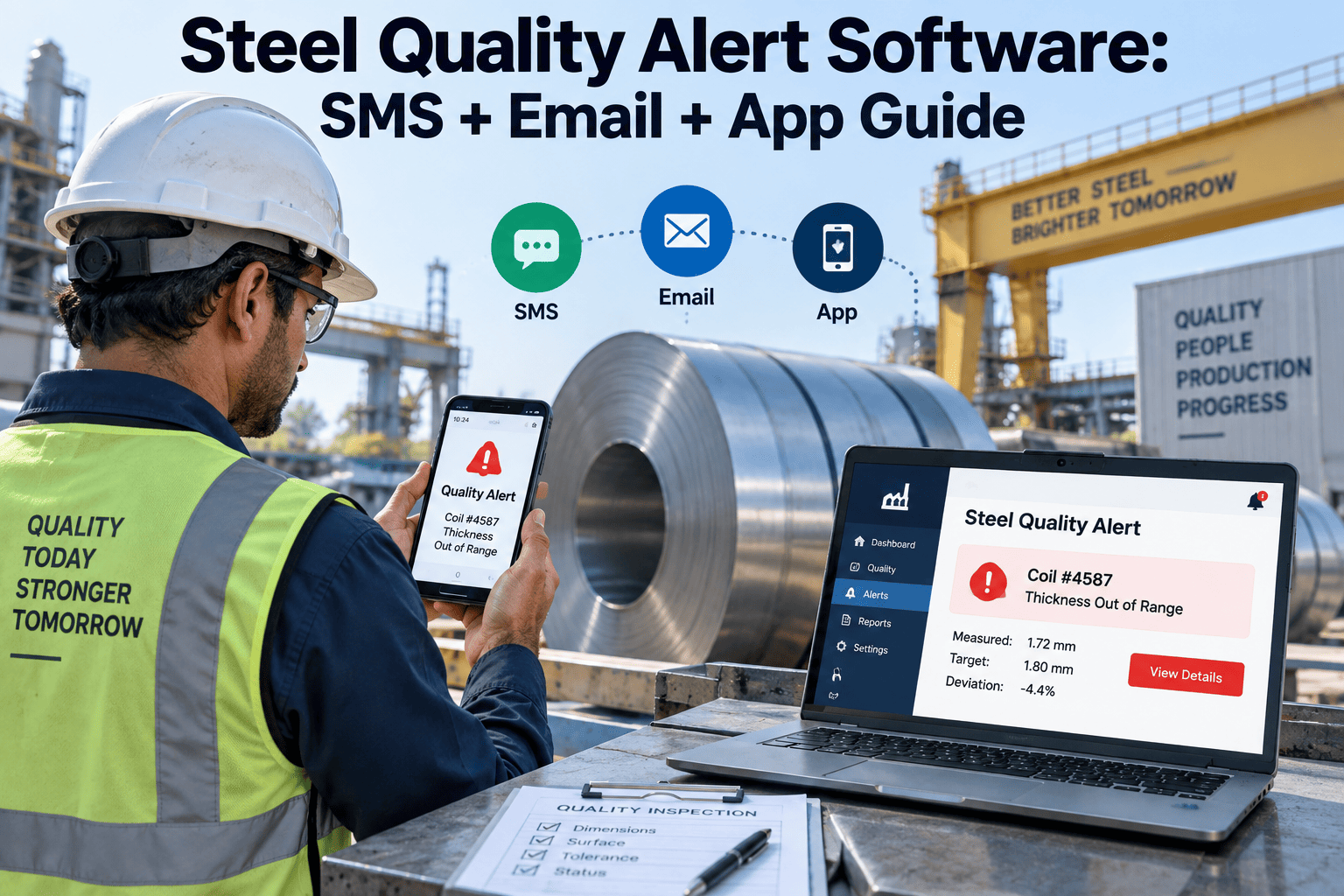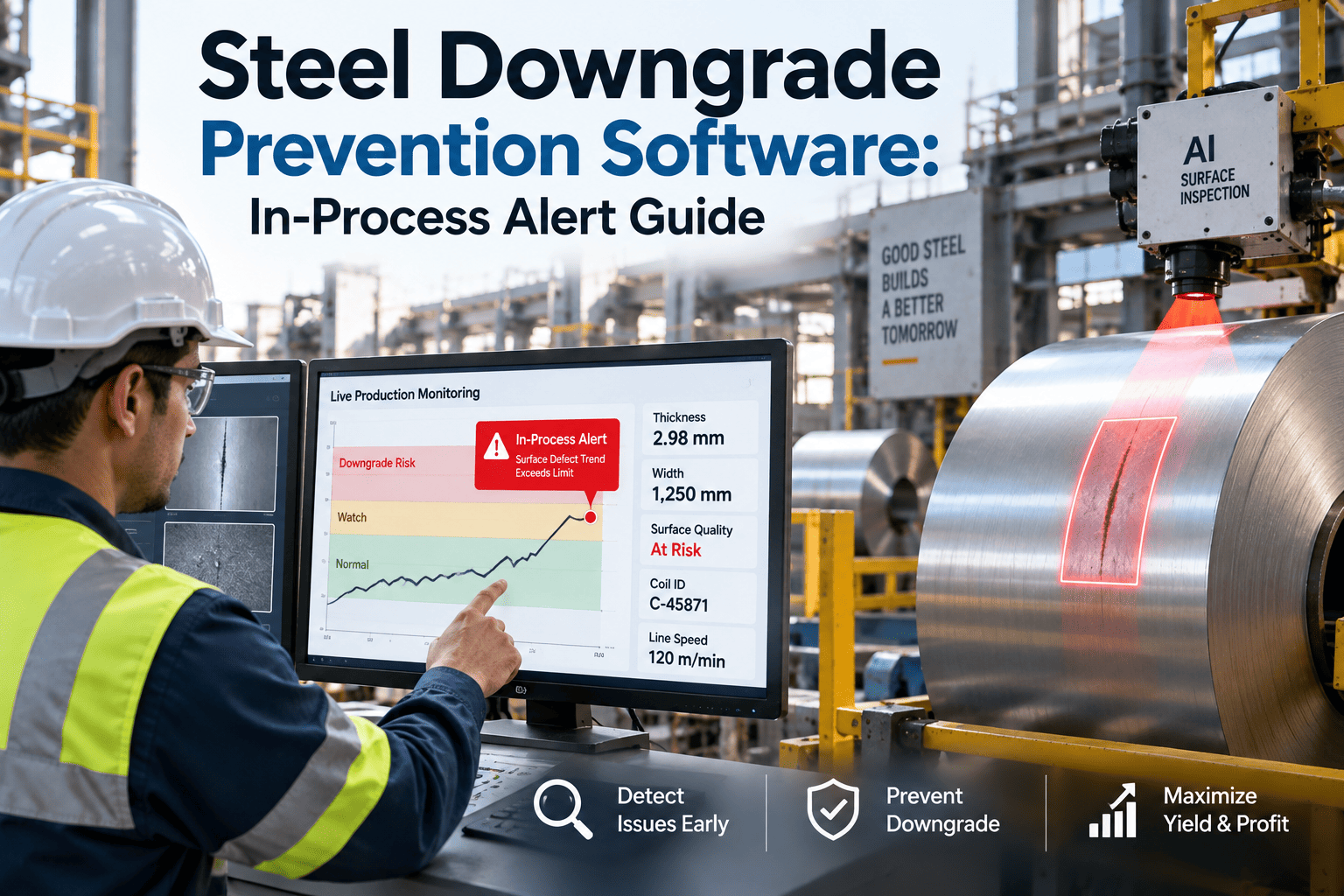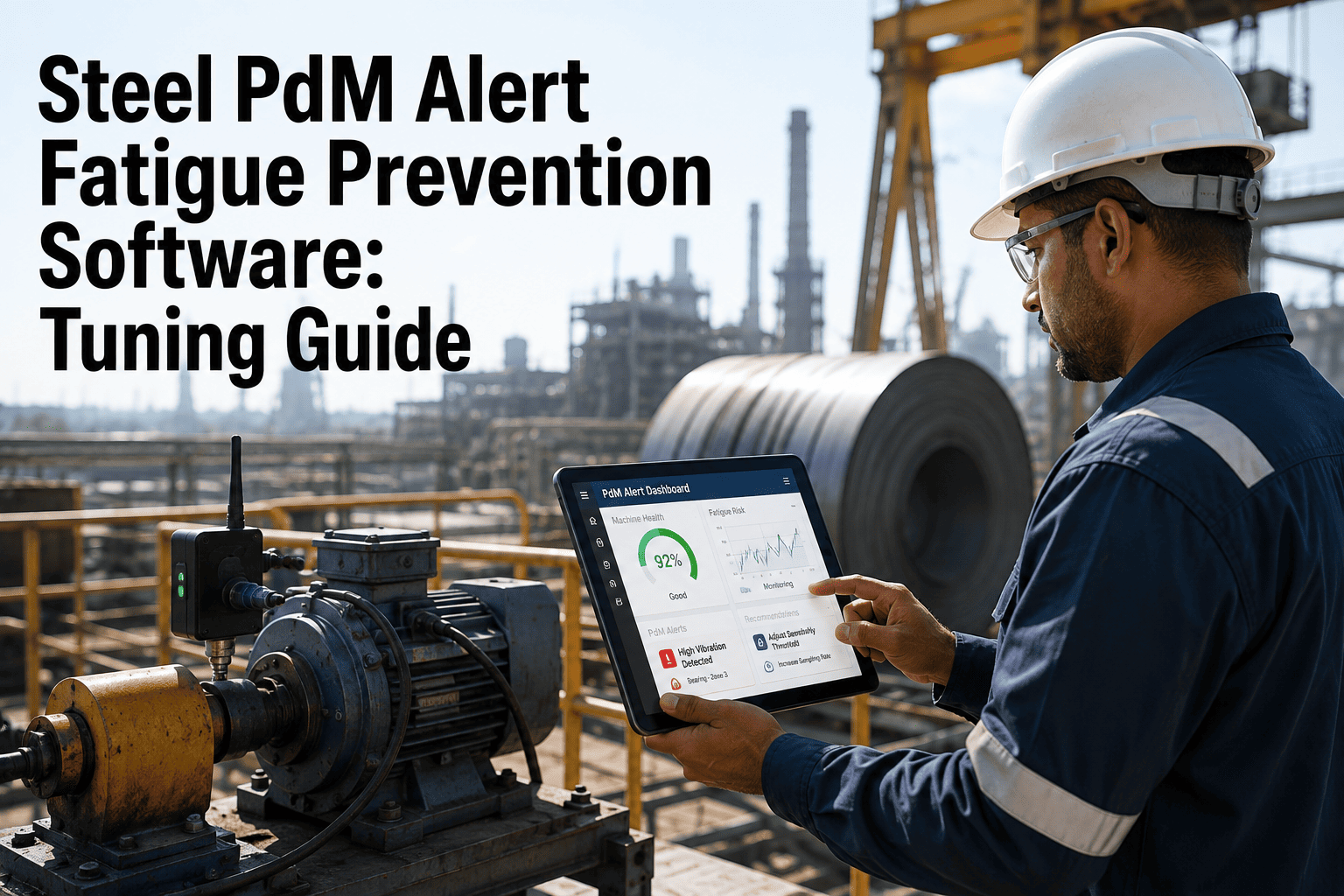
Predictive maintenance was supposed to end unplanned steel plant downtime — instead, many reliability teams have quietly stopped opening their PdM dashboards altogether. When vibration, thermal, and oil sensors flood technicians with hundreds of notifications a day, the one alert that actually matters gets buried under noise nobody trusts anymore. This tuning guide shows steel maintenance leaders exactly how to set asset-specific thresholds, apply multi-sensor correlation, and structure a three-tier alarm framework so that 15 monitored assets produce 5 to 15 genuinely actionable alerts a month — not 500 daily pings everyone learns to ignore. You can start tuning your own alert thresholds today inside a Start Free Trial of Oxmaint.
Of the 500 alerts your sensors fired this week, how many did a technician actually open?
Most steel plants do not have a predictive maintenance problem — they have an alarm discipline problem. Single-sensor thresholds fire false positives on 35–40% of alerts, technicians stop responding within weeks, and a real bearing failure eventually slips through unnoticed inside the noise. A properly tuned CMMS turns that same sensor data into 5–15 alerts a month that every technician trusts and acts on immediately.
Why steel PdM alerts turn into noise nobody reads
Alert fatigue is rarely a sensor failure. It is a configuration failure that repeats the same six mistakes across almost every steel plant that rolls out condition monitoring without a tuning plan.
A single vibration limit applied across a rolling mill gearbox, a caster segment roll, and an overhead crane hoist ignores how differently each asset behaves under normal load, so one threshold is always wrong for someone.
Thresholds activated before an asset's normal operating range is established under cold-start, ramp-up, and full-load conditions treat routine start-up spikes as developing faults every single shift.
A work order generated from one vibration reading alone, with no thermal or current data to corroborate it, carries a documented false-positive rate of 35–40% on rotating steel plant equipment.
A freshly rebuilt pump or motor naturally reads differently for the first two to four weeks after service, and systems that do not account for this run-in period fire alerts on assets that were just repaired.
A bearing-temperature alert on a rolling mill motor that lands in a shared inbox instead of routing to the on-shift mechanical tech gets triaged hours late, or not at all, regardless of how accurate it was.
AI thresholds trained on last year's production mix and equipment condition degrade quietly as duty cycles change, and without retraining, accuracy erodes until the alerts stop matching plant reality.
The three-tier alert framework steel plants actually trust
Instead of one flat threshold that either fires or does not, a tuned CMMS separates every reading into three response tiers — so a technician's phone only buzzes when something genuinely needs a wrench.
A reading only escalates to a technician's queue when it deviates meaningfully from that specific asset's own baseline, is confirmed by a second independent sensor type, and persists across more than one reading cycle rather than a single spike.
| Tier | Trigger Logic | System Response | Example |
|---|---|---|---|
| Tier 1 — Action | Multi-sensor confirmed, sustained deviation | Auto work order with diagnostic context | Vibration and temperature both rising on a caster roll bearing |
| Tier 2 — Watch | Single-sensor deviation, not yet confirmed | Added to trend dashboard, no dispatch | Slight vibration rise with stable temperature reading |
| Tier 3 — Log | Within normal baseline variance | Recorded silently for future trend analysis | Start-up vibration spike within known ramp-up range |
| Suppressed | Asset serviced within 14–30 days | Sensitivity reduced during run-in window | Rebuilt motor reading elevated vibration post-repair |
The 90-day alert tuning timeline
Tuning is not a one-time setup — it is a staged process that steel plants typically complete across three phases before expanding coverage plant-wide.
Sensors run in silent logging mode with no active alerts while the system learns each asset's normal vibration, temperature, and current signature across cold-start, ramp-up, and full-load conditions.
Asset-specific thresholds replace plant-wide defaults, three-tier logic is applied per asset class, and ownership routing is mapped to shift schedules and technician skill certifications.
Alerts go live on 10–15 Tier 1 assets. Every confirmed false positive is logged and fed back into the model so the same false alarm does not recur on that asset again.
Alert volume, response time, and confirmed-fault rate are measured against the pilot baseline, and coverage expands to remaining Tier 1 and Tier 2 assets across the plant.
Ready to stop drowning in unread PdM alerts?
Oxmaint's alert configuration workflow applies asset-specific baselines, three-tier logic, and multi-sensor correlation automatically — so your team only sees the alerts worth acting on.
The alert tuning checklist reliability leads use every rollout
Print this and walk it with your reliability team before activating a single alert on a new asset class.
- Collect 30 days of readings before activating any alert
- Set thresholds per asset, never plant-wide
- Capture cold-start, ramp-up, and full-load signatures separately
- Review and recalibrate thresholds quarterly
- Require two independent sensor types before Tier 1 escalation
- Confirm sustained deviation, not a single reading spike
- Apply three-tier logic to every asset class before go-live
- Suppress sensitivity for 14–30 days after service events
- Route each alert to the on-shift owning technician
- Attach service history and readings to every work order
- Match alert routing to skill certification, not just team
- Track average time-to-acknowledge per alert tier
- Log every confirmed false positive against its asset
- Feed false-positive data back into threshold tuning monthly
- Report alert-to-action ratio to leadership each quarter
- Expand coverage only after pilot alert volume stabilizes
What proper alert tuning actually recovers
The gap between a noisy PdM rollout and a tuned one is not marginal — it shows up directly in technician hours, response accuracy, and how much leadership trusts the program going forward.
Steel PdM alert tuning — the questions reliability leads ask first
A properly tuned program on 15 Tier 1 assets should produce roughly 5 to 15 actionable alerts a month, not hundreds of daily notifications. If your team is seeing more than that, thresholds are likely still set plant-wide. You can map your own tuning targets by starting a Start Free Trial.
Plan on roughly 30 days of silent baseline logging before any alert goes live, followed by a 60-day configuration and pilot window. Most plants reach a stable, trustworthy alert volume by day 90.
Yes — single-sensor alerts carry a documented 35–40% false-positive rate on rotating steel equipment, while requiring two independent sensor types to confirm a fault typically drops that below 8%.
A tuned system automatically reduces alert sensitivity for 14 to 30 days after a service event, since freshly rebuilt equipment often reads differently during its run-in period without indicating a new fault.
In most cases, yes — tuning is a configuration and workflow change layered on your existing vibration, thermal, and oil sensors. Book a Demo to see how it maps to your current sensor setup.
Turn your PdM alerts back into signals your team trusts
Set asset-specific baselines, three-tier logic, and multi-sensor correlation with Oxmaint, and get your reliability team back to responding to alerts instead of silencing them.