Steel Plant Asset Management: 10,000+ Assets in One Platform
By James smith on March 18, 2026
A typical 2–4 MTPA integrated steel plant operates between 8,000 and 15,000 maintainable assets. Without a structured asset management platform, this inventory lives in fragmented spreadsheets, outdated SAP hierarchies nobody maintains, and the institutional memory of technicians approaching retirement. When that memory leaves, the asset history goes with it — and so does the evidence base for every maintenance decision the plant makes. Effective steel plant asset management is not about tracking serial numbers. It is about building the data foundation that determines whether PM intervals are set by failure mode probability or by what a previous maintenance manager wrote 12 years ago — whether capital replacement is justified by lifecycle cost data or by a judgment call in a budget meeting. Start building your steel plant asset register in OxMaint free — no credit card, no asset count limit, no asset data required to get started.
Steel Plant Asset Management: 10,000+ Assets in One Platform
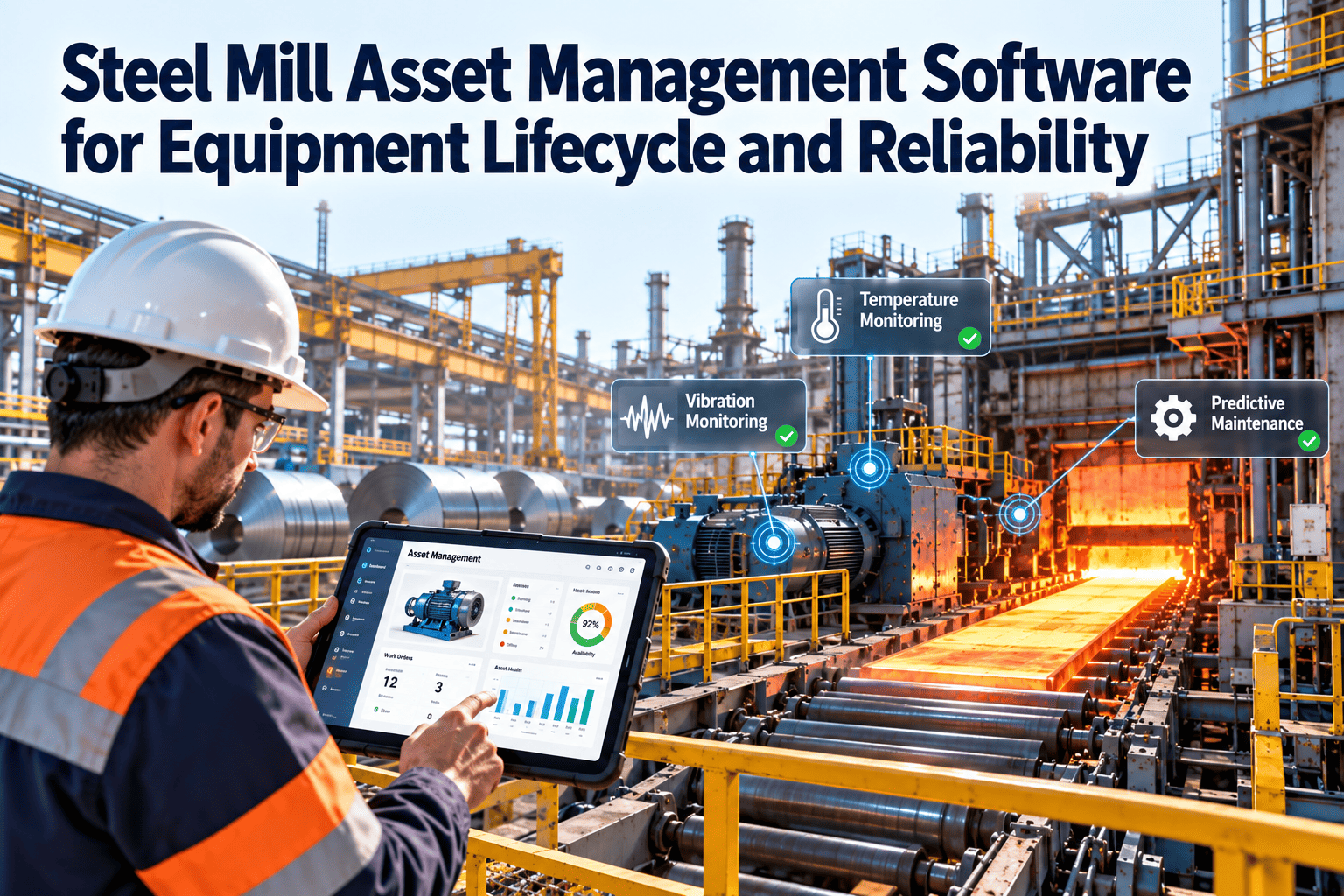
Track every furnace, crane, mill, caster and conveyor from commissioning to decommissioning — with refractory heat-count lifecycle, roll campaign tonnage, ladle fleet tracking and crane certification management built in natively.
10,000+Maintainable assets in a typical 2–4 MTPA integrated facility — fewer than 20% in a structured register
40%Of maintenance decisions at plants with unstructured data lack accurate equipment history
3×Higher probability of optimal replacement decisions with complete lifecycle cost data
Steel-Specific Asset Classes
Four Steel Asset Classes General CMMS Platforms Cannot Handle
Refractory, consumable rolls, campaign-limited vessels, and certified lifting equipment do not exist as native concepts in general manufacturing platforms. They get shoehorned into standard asset records with custom fields, or managed outside the CMMS in parallel spreadsheets. Both approaches break at scale. Book a session to review your current asset data architecture with OxMaint's steel team.
REF
Refractory Assets
Refractory is a consumable that degrades with each heat cycle — not a machine with a fixed replacement schedule. Its remaining life depends on heat count, operating temperature, steel grade, and physical inspection findings. A CMMS treating blast furnace refractory like a pump bearing generates incorrect PM schedules and misses early failure indicators.
What OxMaint Tracks
Heat count — cumulative exposure against designed campaign life
Temperature exposure time — integrated thermal load per lining zone
Condition score per inspection zone — photo evidence linked to asset
Remaining life projection driving PM schedule — not calendar date
Live Asset Snapshot
Heat Count Progress
72%
Thermal Load
58%
Condition Score
41%
Reline Recommended — 280 Heats Remaining
RLL
Rolling Mill Rolls
Work rolls and backup rolls have finite campaign life measured in tonnes of product — not calendar time. Wear curves are grade-specific: high-strength structural campaigns wear rolls faster than standard grades. Without MES-linked tonnage tracking, rolls are either replaced too early (wasting life) or too late (generating surface defects on product).
What OxMaint Tracks
Campaign tonnage counter — linked to MES production data
Grade-specific wear curves — campaign limit varies by steel grade
Roll diameter history — tracked across multiple campaigns per roll
Roll change window — coordinated with production schedule
Active Campaign — #3 HSM Work Roll
Tonnes This Campaign142,000 t
Grade Limit (S355)180,000 t
Campaign Progress
79%
Roll Change Due — 38,000 t Remaining
LAD
Ladles, Tundishes and Process Vessels
Ladles and tundishes are reusable vessels with steel-grade-specific lifecycle constraints. A ladle lined for stainless steel processing cannot serve carbon steel without refractory contamination risk. In a fleet of 50+ ladles, managing individual vessel histories manually creates the exact conditions for grade mix-ups and safety events.
What OxMaint Tracks
Individual vessel identity — serial number, lining history, grade qualification
Heat count per lining — replacement triggered at design limit
Steel grade certification history — qualification record per vessel
Pre-heat temperature log — compliance documentation per heat
Ladle Fleet Status — Sample
L-01 · 42 heats
L-02 · 17 heats
L-03 · 78 heats
L-04 · 33 heats
L-05 · 81 heats
L-06 · 94 heats
Within limit
Due soon
Reline now
CRN
Overhead Cranes and Lifting Equipment
Overhead cranes in a steel plant are safety-critical assets with mandatory statutory inspection requirements. A 250-tonne ladle crane failure during a heat is a catastrophic safety event. Certification management must include hard-stop scheduling that cannot be deferred without documented management override and risk acceptance.
Lift cycle counter — linked to crane control system data
Safe working load documentation — accessible in field on mobile
Certificate storage — NDT reports, load test records, regulatory filings
Crane #3 — Casthouse — Certification Status
Annual Load Test — Current
Hook NDT Inspection — Current
Brake Certification — Due in 34 days
Wire Rope Inspection — Current
OxMaint handles all four steel-specific asset classes natively.Refractory heat-count lifecycle, roll campaign tonnage, ladle fleet tracking, and crane certification management are built in — not professional services customisations billed after contract signature.
Asset Criticality Rating: The Framework That Drives Every Maintenance Decision
Criticality rating is the single most important configuration decision in a steel plant asset management programme. It determines PM frequency, spare parts stocking levels, condition monitoring investment, and work order response priority. A plant that rates 8,000 assets as "critical" has rated none of them as critical. Sign in to OxMaint to configure your criticality tiers and apply ratings to your full asset register.
A
Safety Critical
Immediate safety event, environmental incident, or production stop with no bypass. Examples: ladle cranes, BF cooling circuits, pressure vessels, fire suppression.
Production stop or significant quality impact, no immediate safety risk. Examples: rolling mill main drives, caster withdrawal drives, BOF oxygen lance, reheating furnace burner controls.
Spares PolicyIn-plant stock maintained at all times
C
Operationally Important
Reduced capacity or elevated maintenance cost. No production stop. Examples: secondary pumps with redundancy, non-critical HVAC, conveyors with bypass routing.
PM FrequencyStandard — supervisor approval for deferral
Spares PolicyOrder on need at standard lead times
D
Run to Failure
Minor inconvenience or negligible cost. Replacement cheaper than scheduled maintenance. Examples: small lighting, low-voltage auxiliary controls, non-process instrumentation with redundant backup.
PM FrequencyNo scheduled PM — corrective only
Spares PolicyStandard stock, no dedicated holding
Asset Register Hierarchy
How OxMaint Structures a Steel Plant Asset Register
OxMaint structures steel plant assets in a five-level hierarchy that maps precisely to how steel facilities are organised — from plant through process area, system, assembly, and component. Every work order, PM schedule, and cost record links to this hierarchy, allowing cost roll-up from component to system to area to plant total. Sign in to OxMaint to start building your hierarchy using the steel plant asset structure template.
L1
Plant / FacilityIntegrated Steel Works — Main Site
L2
Process AreaBlast Furnace Shop · BOF Shop · Caster Shop · Rolling Mill · Utilities
L3
SystemBF Cooling System · BF Gas System · Casthouse Equipment · Stove System
L4
Equipment Unit / AssemblyCooling Stave Assembly Zone 3 · Tuyere Cooling Circuit #6 · Casthouse Crane #1
Cost, work order history, and failure mode data rolls up through every level — from individual component to full plant total in one report.
FAQs
Frequently Asked Questions
How long does it take to build a complete steel plant asset register in OxMaint?
With OxMaint's steel plant import templates and onboarding support, a structured 10,000-asset register is typically complete within 60–90 days for a new implementation. For migrations from SAP PM or a legacy CMMS, the timeline depends on source data quality — OxMaint's migration team cleans and structures incoming data as part of onboarding. The initial deployment focuses on the top-200 Tier A and B assets, which are live within the first 30 days and generate value immediately while the full register is completed in parallel. Start your free account and upload your first asset list using our steel plant import template.
How does OxMaint track assets temporarily out of service — ladles in relining or rolls in the grinding shop?
OxMaint tracks asset status through a configurable lifecycle — Active, In Service, Standby, In Repair, In Overhaul, Condemned, and Decommissioned. A ladle in relining sits in "In Overhaul" with the relining work order linked to its record; heat count pauses and resumes when the vessel returns to Active. Rolls in the grinding shop are tracked in "In Repair" with the grinding cycle recording the new surface profile and diameter measurement. The fleet dashboard shows real-time status distribution across all vessels and rolls — giving production planning visibility into available ladle and roll inventory at any point. Book a demo to see the fleet status dashboard for ladles and rolls.
Can OxMaint generate lifecycle cost reports to support capital replacement decisions?
Yes. OxMaint calculates lifecycle cost per asset by summing all work order labour, parts, and contractor costs against that asset's record across its operating life. For Tier A and B assets, this generates a cumulative maintenance cost curve comparable against replacement cost — identifying the economic replacement point where cumulative maintenance cost plus reliability risk exceeds the annualised cost of replacement. Facilities using this analysis systematically make capital replacement decisions 2–3 years earlier in the asset's degradation cycle, avoiding emergency replacement costs and unplanned downtime penalties.
What is the fastest way to start if we have no existing structured asset data?
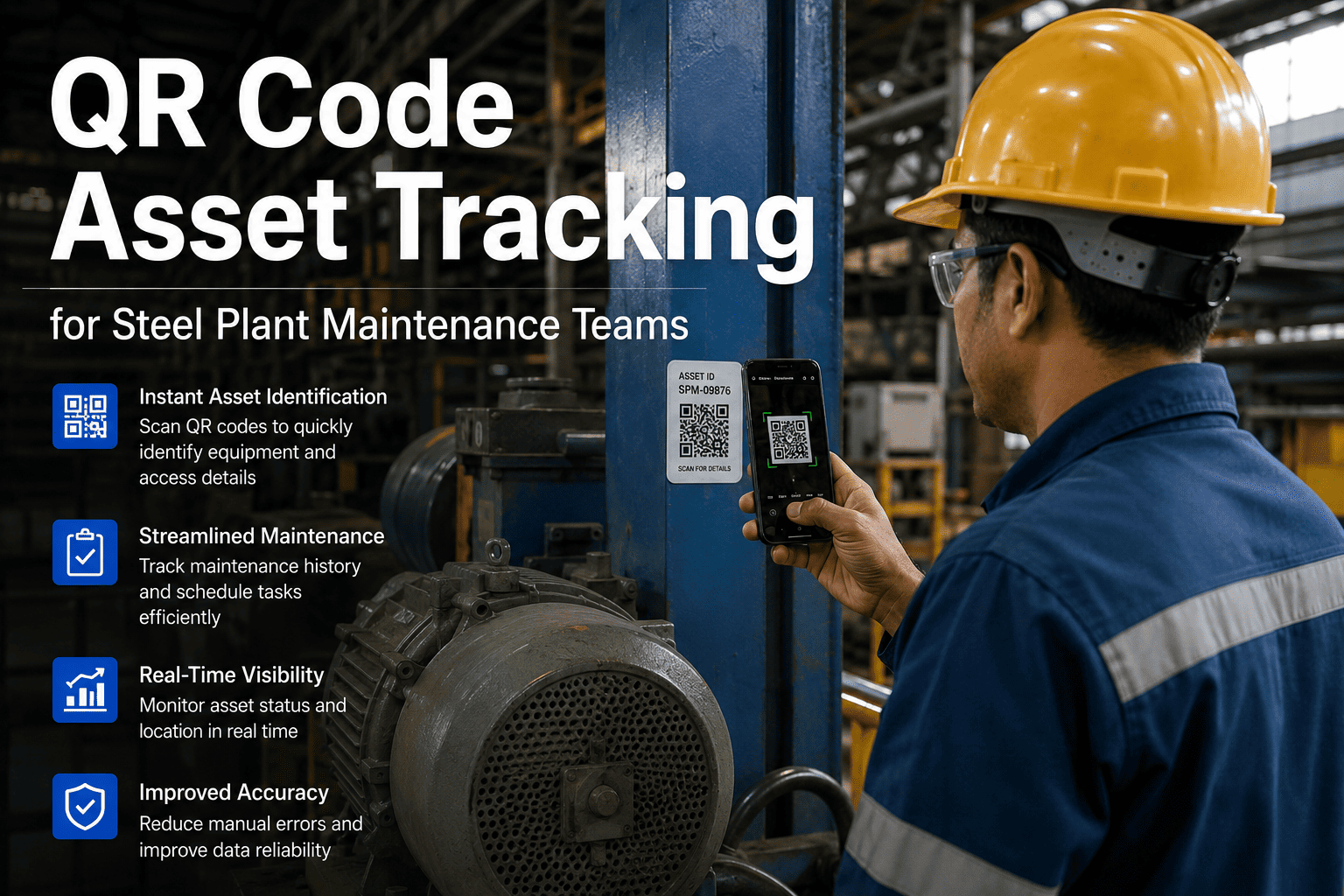
Start with your top-20 highest-consequence assets — typically the Tier A list for your primary process route. OxMaint's mobile app enables rapid field data capture: a technician walks the plant with a tablet, scans or photographs each asset, captures nameplate data, and the record is live immediately. The structured hierarchy and criticality rating are applied during this capture process. Most teams have their first 200 assets recorded and their first PM schedules running within the first week of deployment — without any data import from existing systems. Sign up free to start your asset capture today.
Steel Asset Management · OxMaint · Free to Start
One Platform for Every Asset in Your Steel Plant
From blast furnace refractory to roll campaign tracking, ladle fleet management to crane certifications — OxMaint's asset management was built for steel plant complexity. Free plan, no asset limit, no credit card required.