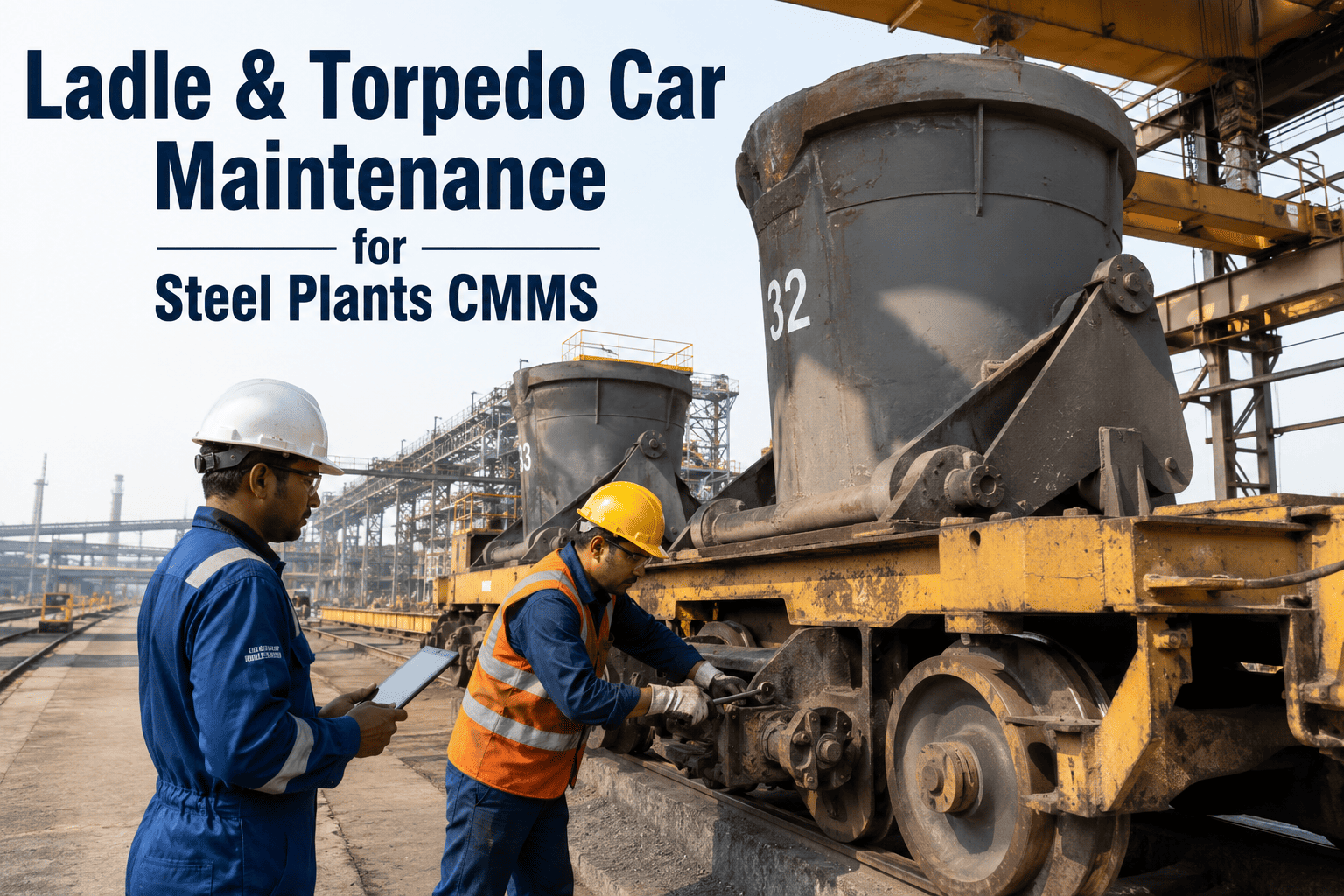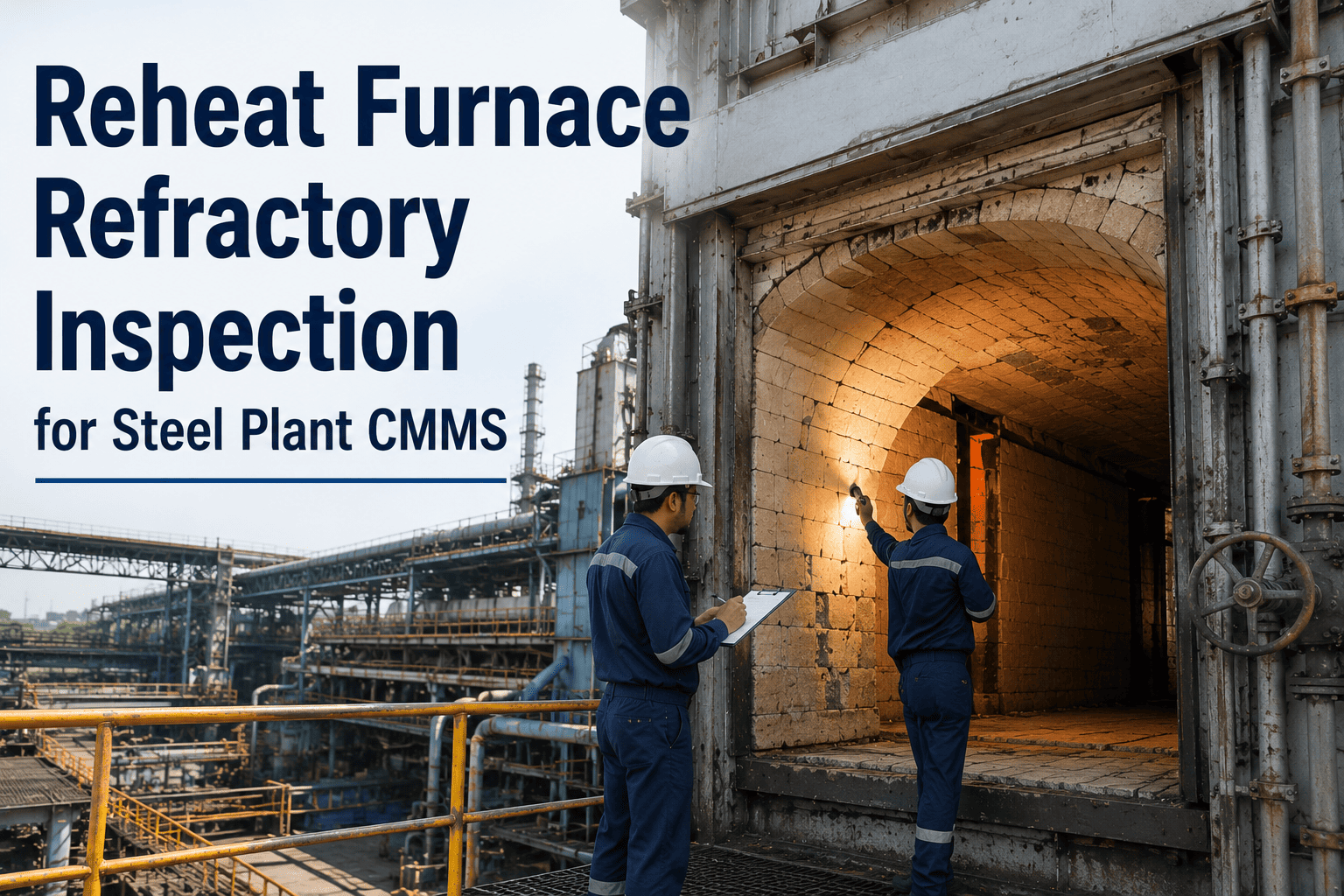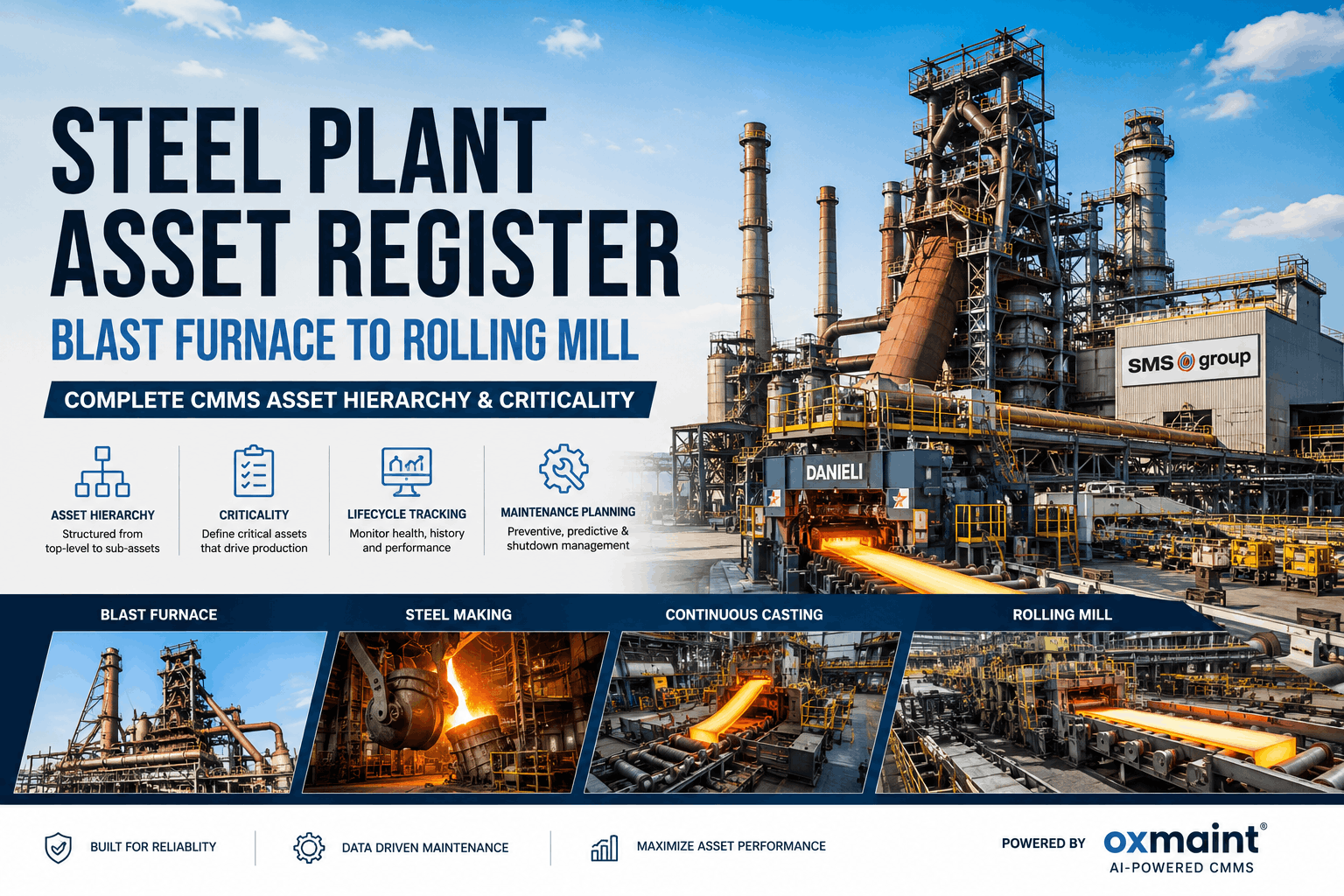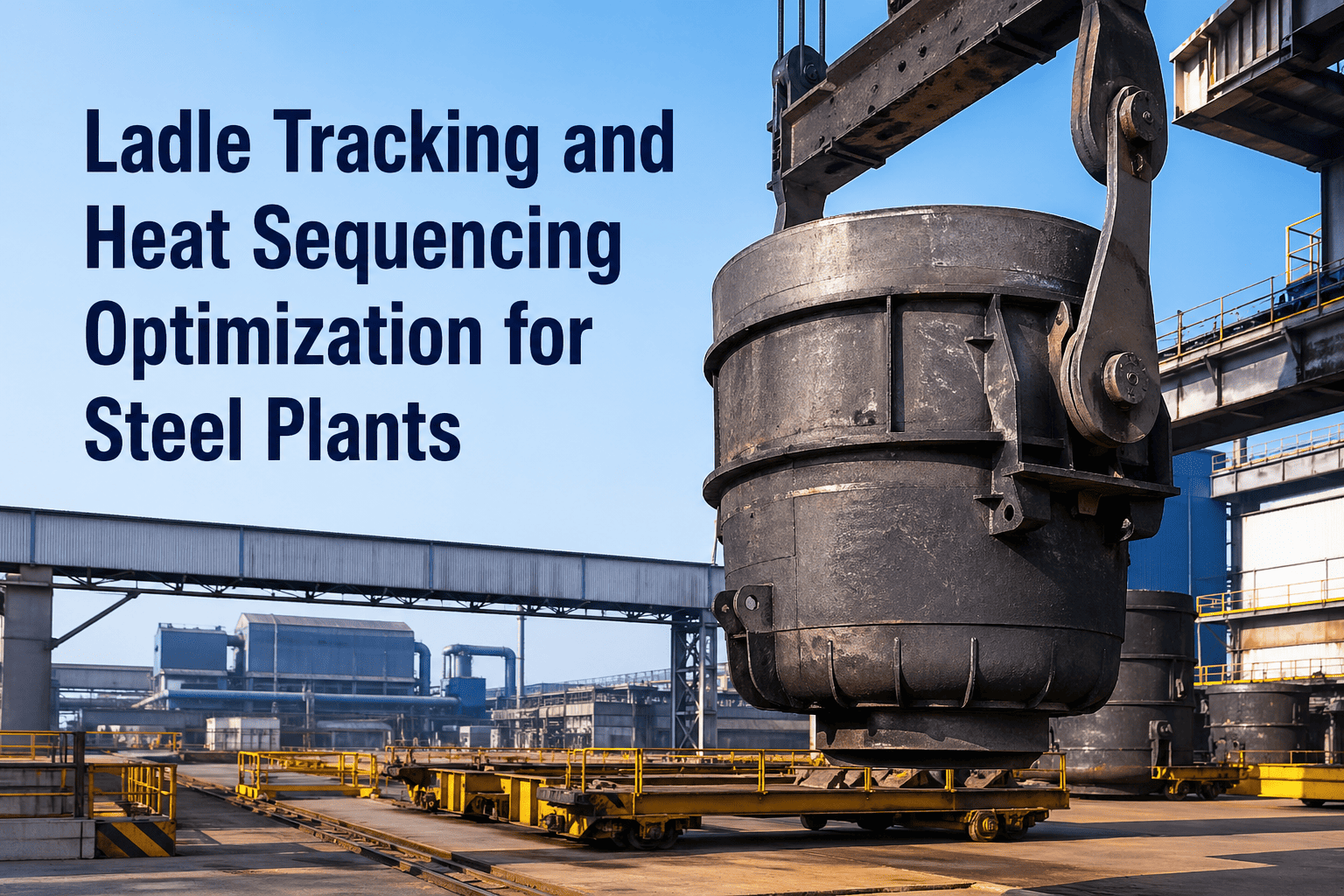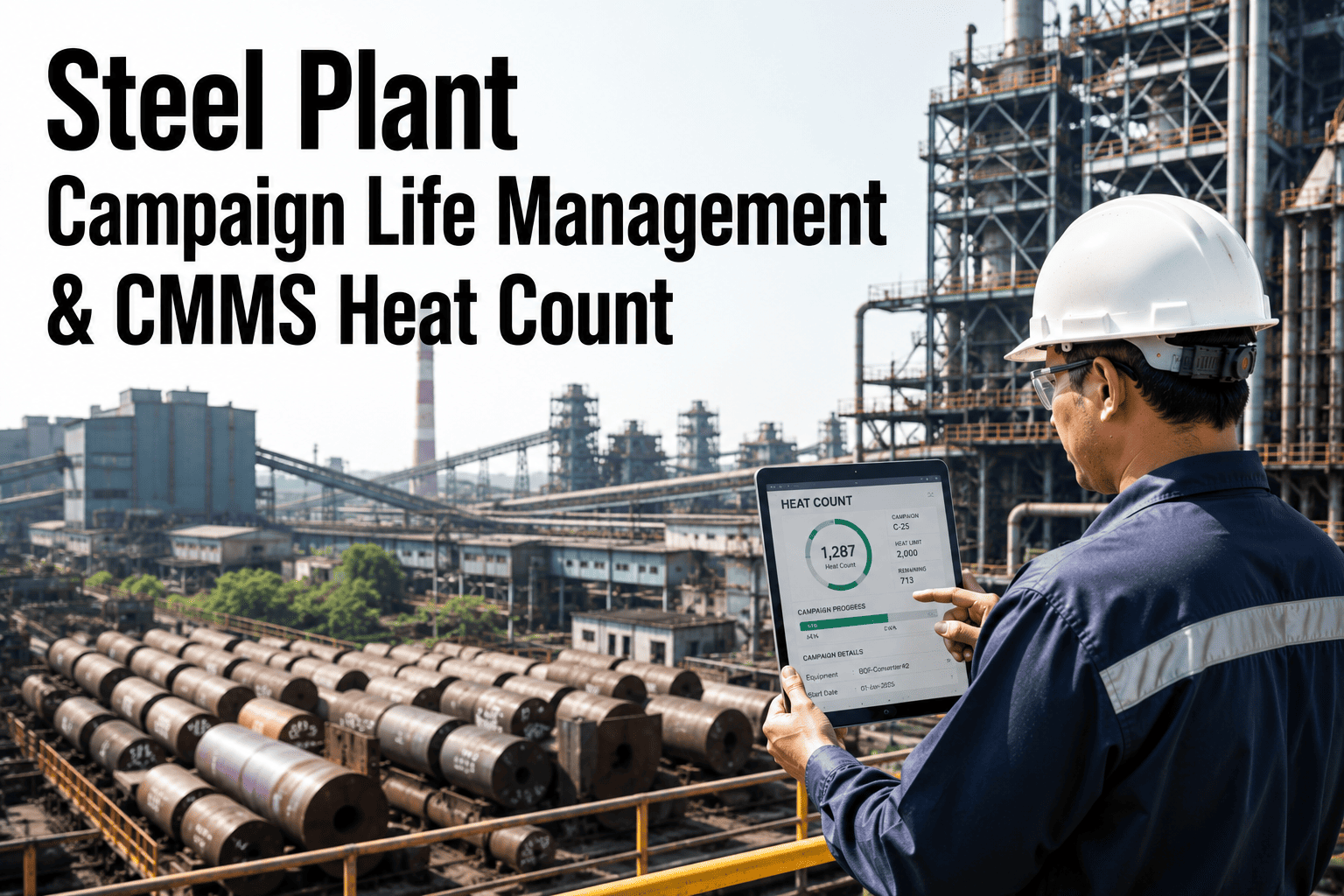
Steel plant campaign life management is the discipline of tracking every heat, tap, and cycle a refractory-lined vessel endures — from blast furnaces and basic oxygen furnaces (BOF) to ladles and torpedo cars — so maintenance teams can plan relines before catastrophic failure, not after. The core metric at the heart of this discipline is the heat count: a running tally of molten-metal charges that tells you exactly how much life remains in a brick lining, a slag zone, or a safety lining. When heat count data lives in spreadsheets or disconnected shift logs, plants lose millions to unplanned relines, emergency gunning, and stalled cast sequences. Moving that data into an AI-powered CMMS like OxMaint lets reliability teams track campaign life in real time, predict remaining useful lining life, and schedule refractory interventions during planned outages — you can Start Free Trial to see your own heat-count dashboards live in under 48 hours.
Campaign Life Management for Steel
How many heats until your next emergency reline?
Steel plants lose $2–5M per unplanned campaign failure. OxMaint tracks every heat, predicts remaining lining life, and schedules refractory interventions before a blast furnace, BOF, or ladle fails mid-cast.
What Is Campaign Life?
Steel plant campaign life: the complete guide
In integrated steelmaking, "campaign life" refers to the total operational period — measured in heats, taps, days, or tons of hot metal — that a refractory-lined vessel can run before its lining must be repaired or completely replaced. A blast furnace campaign can span 15–20 years and over 15,000 heats; a BOF vessel campaign typically runs 4,000–7,000 heats between shell relines; a ladle fleet may see 80–150 heats per lining campaign depending on slag chemistry and gunning frequency. Managing these campaigns without a dedicated CMMS campaign life tracking system forces teams into reactive mode: emergency gunning at 3 AM, shortened cast sequences, and unplanned tap-to-tap delays that cost $200–500K per day in lost production.
How to Track Campaign Life
How to track blast furnace campaign life using heat count in a CMMS
Blast furnace campaign management is the most high-stakes campaign life challenge in steel. A single BF campaign runs 15–20 years, costs $100–200M to reline, and involves tracking wear across the hearth, bosh, belly, and stack zones. The heat count CMMS approach assigns every hot-metal tap a sequential number, then correlates it with thermocouple readings, shell temperature trends, and acoustic emission data to project remaining lining thickness. Plants that manage BF campaign life in OxMaint can see zone-by-zone wear projections updated after every heat — and trigger automatic work orders for grouting, gunning, or stave cooling adjustments long before a hot spot becomes an emergency.
Baseline thickness mapping
After every reline, ultrasonic and radar thickness readings are logged per zone in OxMaint. This becomes the baseline for all subsequent wear-rate calculations.
Heat count accumulation
Each hot-metal tap increments the BF heat counter. OxMaint ties every heat to process data — hot metal temperature, slag volume, production rate — for trend analysis.
Wear rate calculation
Periodic thickness surveys (quarterly or semi-annual) update the wear-per-1,000-heats figure per zone, feeding the remaining-campaign-life formula.
Predictive work order triggers
When projected remaining life drops below a configurable threshold (e.g., 2,000 heats or 6 months), OxMaint auto-generates preventive work orders for gunning, grouting, or mid-campaign repair.
End-of-campaign reline planning
18–24 months before projected end of campaign, OxMaint launches the reline project workspace — spare ordering, contractor scheduling, and outage planning all linked to the heat count.
Vessel-by-Vessel Strategy
BOF, ladle, and torpedo car campaign tracking compared
Each steelmaking vessel has a different campaign life profile, wear mechanism, and economic threshold for intervention. A one-size-fits-all tracking approach leaves gaps. Below is how the major vessel types compare — and what a CMMS campaign life system must capture for each.
| Vessel Type | Typical Campaign Life | Key Wear Zones | Tracking Metric | CMMS Trigger |
|---|---|---|---|---|
| Blast Furnace | 15–20 yrs / 15,000+ heats | Hearth, bosh, belly, stack | Heat count + thermocouple trend | Auto reline project at 18-month forecast |
| BOF Vessel | 4,000–7,000 heats | Trunnion, slag line, tap hole | Heat count + tap-hole life | Gunning work order at 60% wear |
| Steel Ladle | 80–150 heats per lining | Slag line, bottom impact pad | Ladle heat count + slag exposure | Rotate to repair bay at threshold |
| Torpedo Car | 1,200–2,500 trips | Slag line, barrel crown | Trip count + refractory temp | Schedule intermediate repair at 50% |
| Electric Arc Furnace | 600–1,200 heats | Hot spots, delta, tap hole | Heat count + power-on hours | Shell change at projected 200 heats left |
Worked Example
Ladle fleet heat count: a real-world campaign tracking scenario
Consider a mid-size steel plant running 12 active ladles in a BOF caster, producing 2.5M tons/year. Each ladle averages 110 heats per lining campaign. At any given time, 8 ladles are in rotation and 4 are in various stages of repair. Without a CMMS, the shift foreman tracks heat counts on a whiteboard — and 3–4 times per year a ladle gets pulled into service past its safe heat count, leading to shell-damage events costing $45–80K each in refractory peel-off and delayed casts.
- Heat count on whiteboards and Excel logs — no real-time visibility
- 3–4 overshoot events per year at $45–80K each = $135–320K annual loss
- Ladle shop scheduler spends 6 hours/day reconciling counts manually
- No predictive gunning — reactive repairs only after hot spots appear
- Every ladle's heat count auto-increments from Level-2 caster data
- Zero overshoot events — automated pull-at-threshold prevents damage
- Scheduler time cut from 6 hrs/day to 30 min — CMMS does the rotation plan
- Predictive gunning at heat 70 extends lining life 18–22% (110 → 130+ heats)
The result: $135–320K in damage costs eliminated, 2,200 extra heats per year from extended lining life, and 1,500+ labor hours redirected from data-entry to repair execution. That is the ROI of moving ladle campaign life tracking from a whiteboard to an AI-powered CMMS.
OxMaint Solution
How OxMaint CMMS solves campaign life management for steel plants
OxMaint is built for the realities of heavy-metals maintenance. It unifies heat count tracking, refractory condition monitoring, work-order automation, and spare-parts inventory into one AI-powered platform — so your reliability team can manage every vessel's campaign life without spreadsheets, whiteboards, or disconnected shift logs.
Real-time heat count tracking
Auto-increment heat counters for every BF, BOF, ladle, and torpedo car via integration with your Level-2 process systems. No manual entry, no whiteboards, no drift. Every stakeholder sees the same live number.
Outcome: 100% heat-count accuracy, zero overshoot eventsPredictive remaining-lining-life
AI models fuse heat count, thermocouple trends, and thickness-survey data to project remaining lining life per zone — updated after every cast, with confidence bands and automatic alerts at your threshold.
Outcome: 30–50% fewer unplanned refractory failuresAutomated refractory work orders
When a vessel hits its gunning threshold or projected remaining life drops below your trigger, OxMaint auto-generates a work order with parts, labor estimate, and outage window — routed to the right crew.
Outcome: 18–22% longer lining life via timely gunningMulti-vessel campaign dashboard
One screen shows every active vessel's heat count, remaining life, wear trend, and next-scheduled intervention — filterable by shop, vessel type, or campaign stage. Export-ready for audit and management review.
Outcome: 360° visibility, audit-ready in one clickSee OxMaint track your vessel campaigns live
Book a 30-minute demo and we will map your BF, BOF, and ladle heat-count workflows inside OxMaint — before you spend a dollar.
FAQ
Campaign life management in steel plants: frequently asked questions
What is campaign life management in a steel plant?
Campaign life management is the process of tracking and predicting the operational life of refractory-lined vessels — blast furnaces, BOFs, ladles, torpedo cars — across each "campaign" (the period between relines). It involves counting heats, monitoring lining wear, and scheduling refractory repairs before failure. Steel plants use a CMMS like OxMaint to automate heat count tracking, calculate remaining lining life, and trigger preventive work orders at the right time.
How is heat count used in CMMS campaign life tracking?
Heat count is the primary lifecycle counter for refractory-lined vessels. A CMMS increments the heat count automatically after every tap, then divides remaining lining thickness by the wear-per-1,000-heats rate to project remaining campaign life. When the projected life drops below a threshold, the CMMS generates a work order for gunning, grouting, or reline planning — preventing unplanned failures.
What is a typical blast furnace campaign life in heats?
A modern blast furnace campaign lasts 15–20 years and accumulates 15,000+ heats between major relines. The exact number depends on hot-metal production rate, ore quality, and lining design. BF campaign management requires zone-level tracking — hearth, bosh, belly, and stack each wear at different rates and need individual remaining-life calculations. You can explore how OxMaint handles this at app.oxmaint.ai.
How does a CMMS improve BOF campaign management?
A CMMS improves BOF campaign management by auto-tracking heat count per vessel, projecting slag-line and trunnion-zone wear, and scheduling gunning interventions at the optimal point — typically 60% of campaign life. Plants using OxMaint for BOF campaign management report 18–22% longer vessel life and 30–50% fewer unplanned tap-to-tap delays caused by refractory emergencies.
Can OxMaint integrate with our existing Level-2 steelmaking systems?
Yes. OxMaint integrates with Level-2 process-control systems via OPC-UA, REST APIs, and database connectors to pull heat count, tap temperature, slag data, and production metrics automatically. This eliminates manual data entry and ensures your campaign life calculations are always based on real-time process data. Book a demo at calendly.com/oxmaintapp/30min to see a live integration map for your stack.
Stop counting heats on whiteboards. Start managing campaign life in OxMaint.
Join steel plants that cut unplanned refractory failures by 30–50% and extended lining life by 18–22% with AI-powered heat count tracking and predictive maintenance.
Free 14-day trial · No credit card