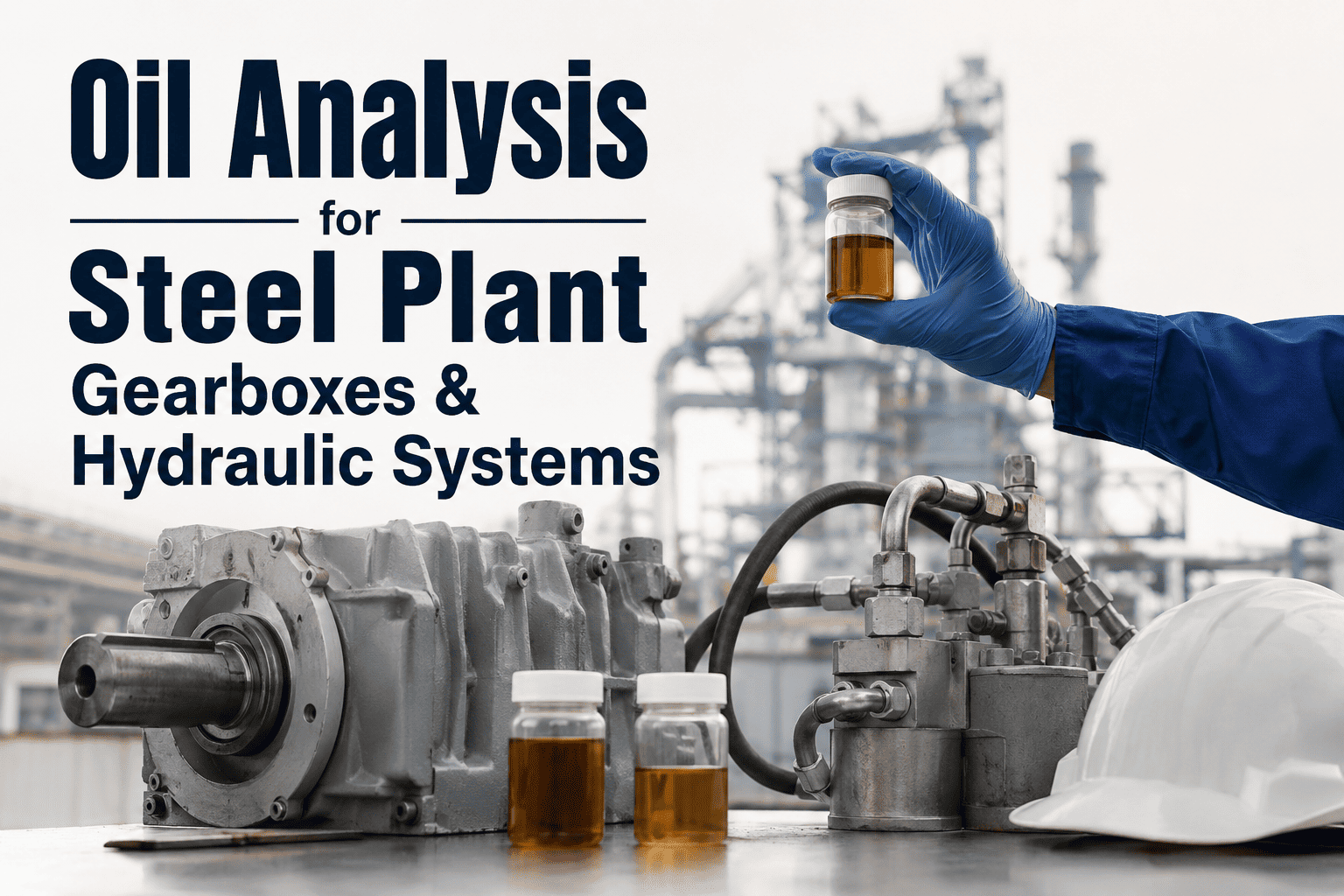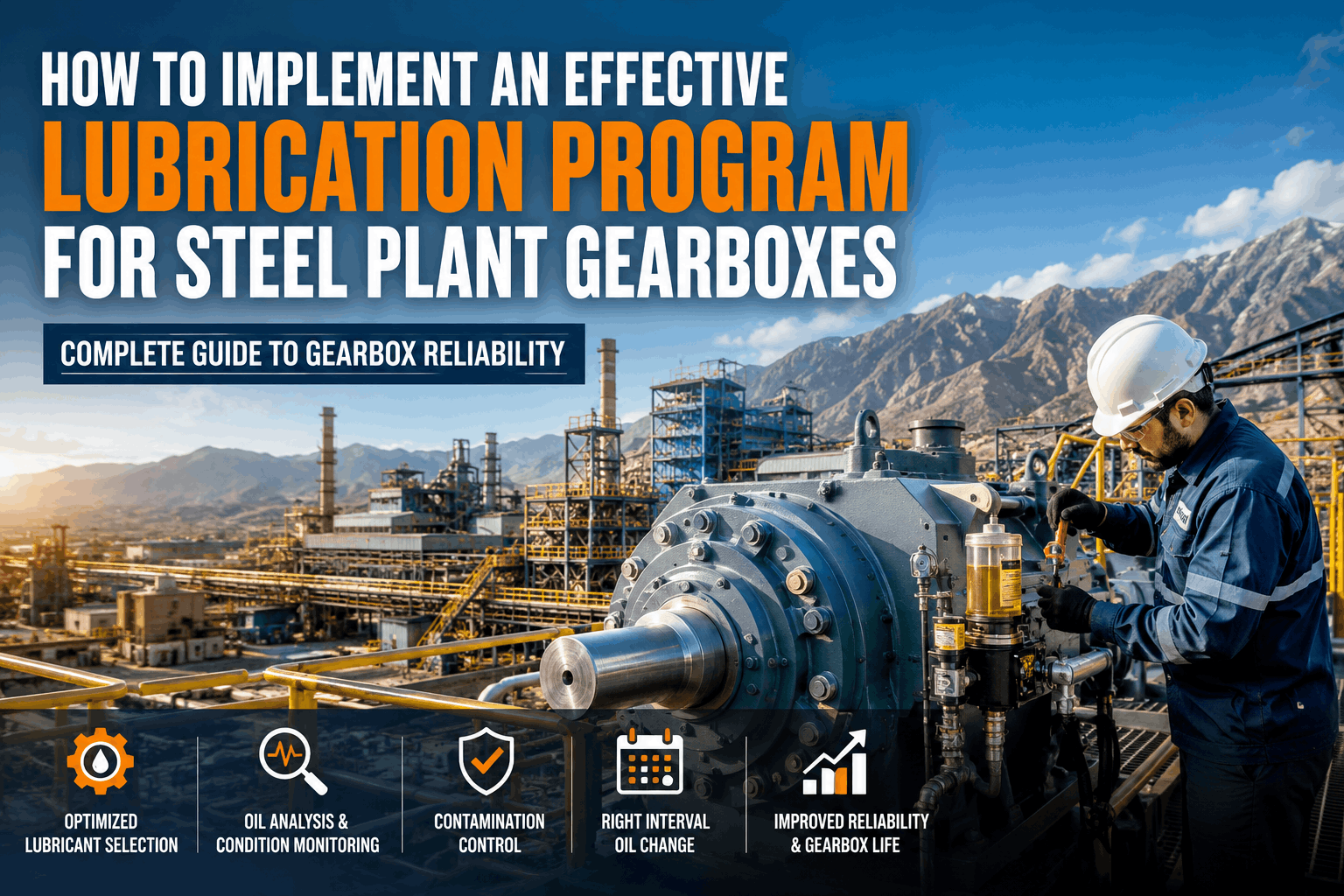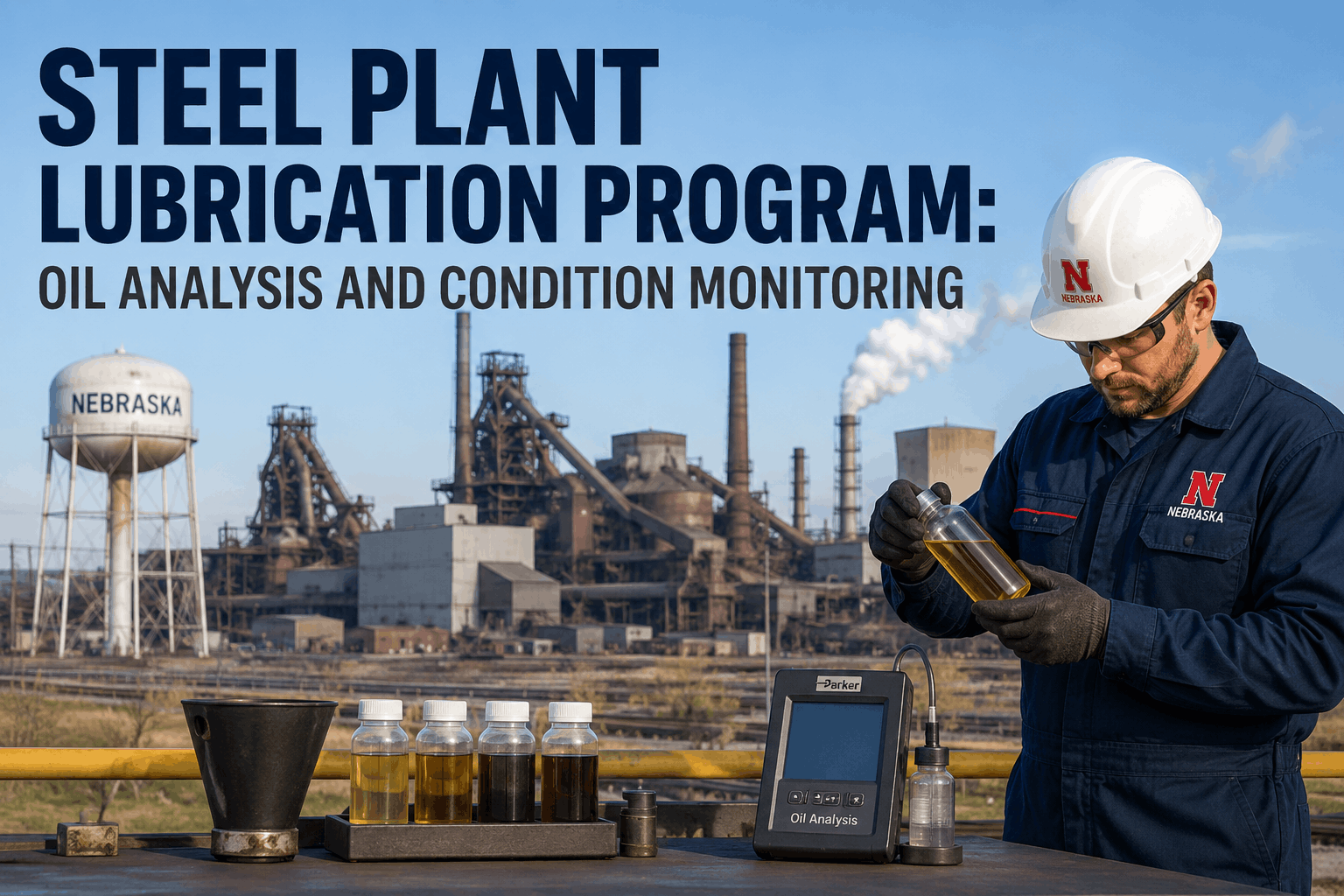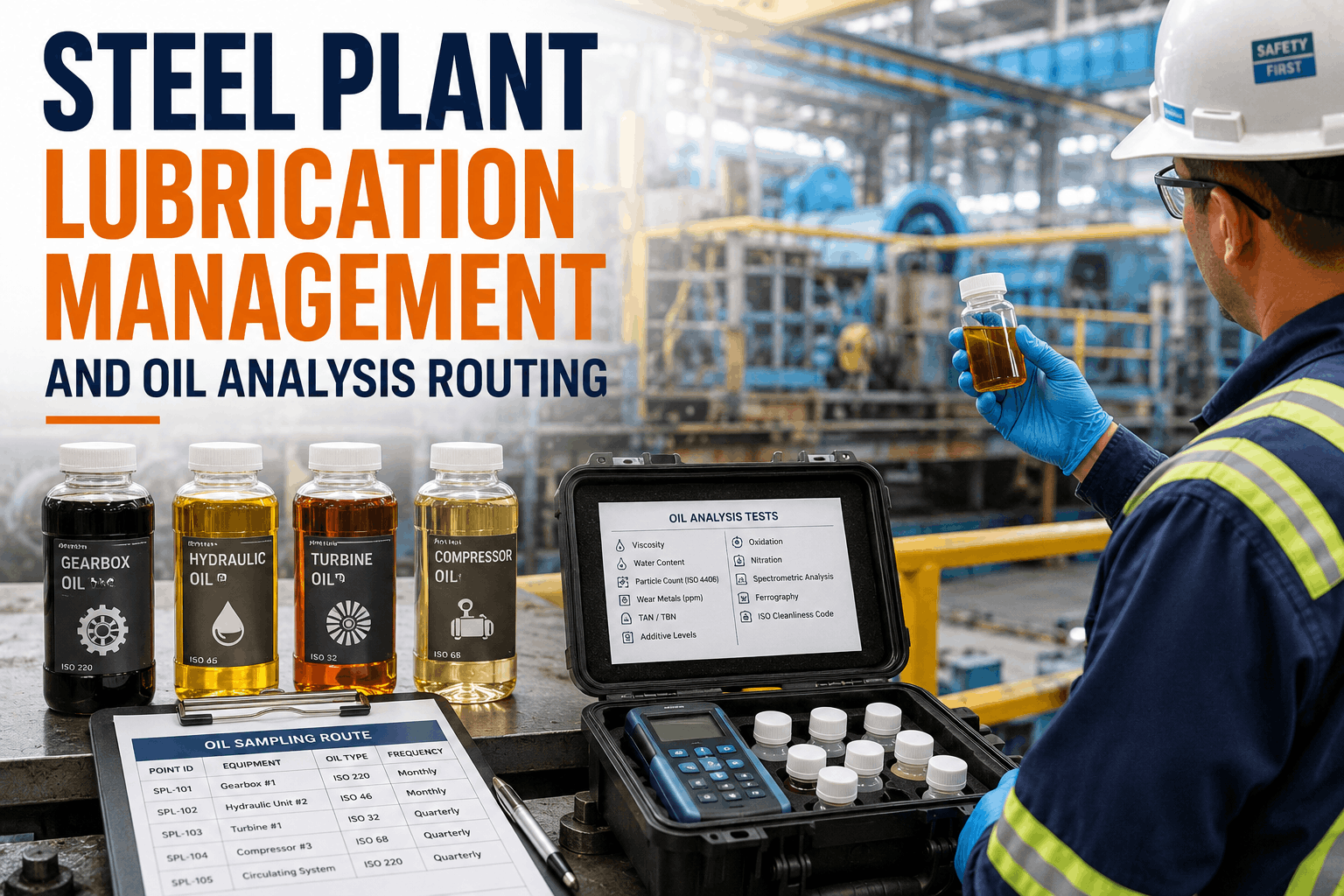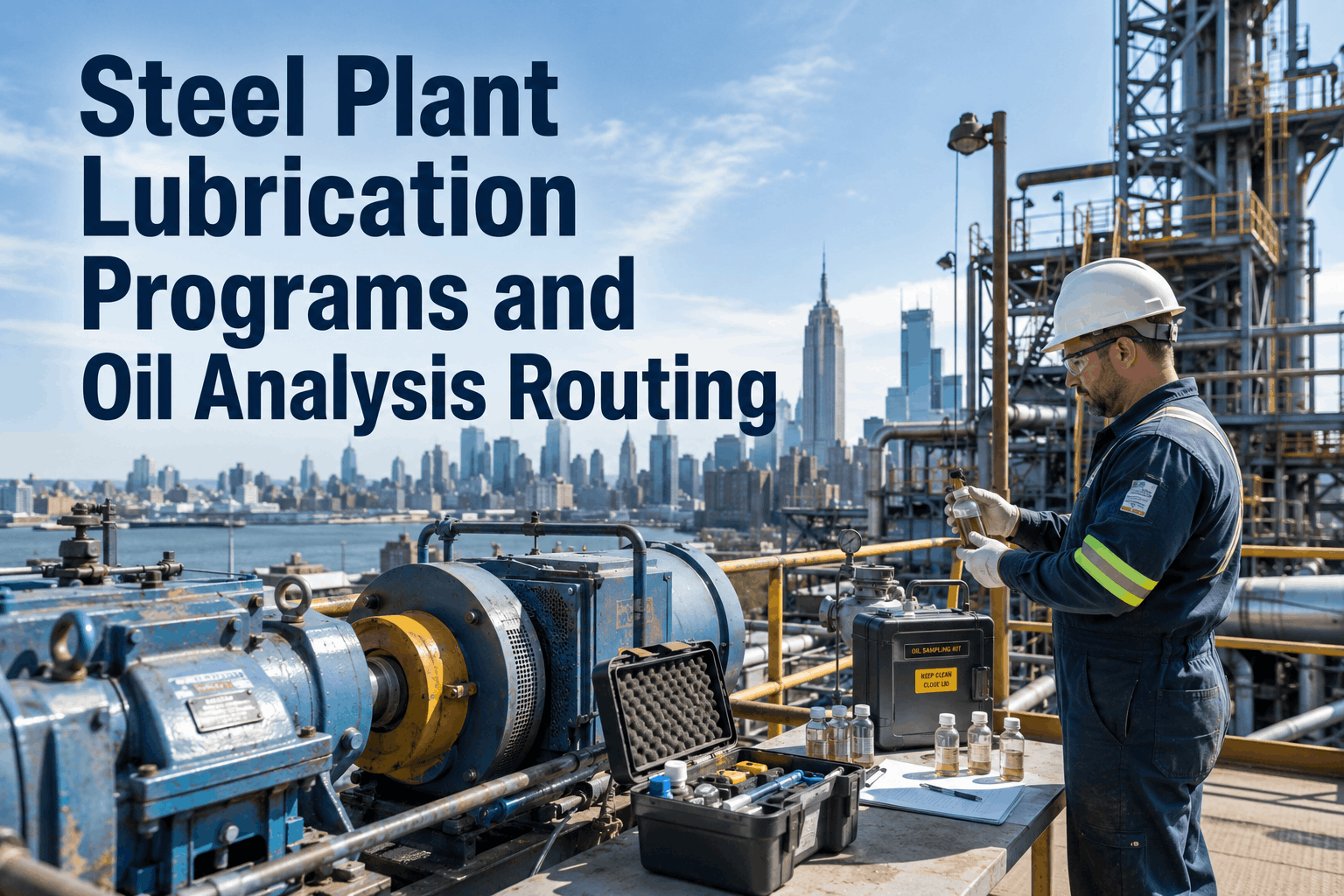
In the high-friction, high-heat environment of US steel manufacturing, lubrication is the literal lifeblood of production. From the massive gearboxes of hot strip mills to the heavy-duty bearings of sinter plant kilns, the difference between a 10-year campaign and a catastrophic mid-shift seizure often comes down to a few microns of oil film. Transitioning from "grease-gun maintenance" to a world-class lubrication program requires a systematic approach to oil analysis routing, contaminant exclusion, and precision application. A CMMS-driven lubrication strategy ensures that the right lubricant reaches the right place, at the right time, in the right quantity — backed by the auditable oil sampling records that prove your reliability. Sign Up Free to start building your steel plant lubrication roadmap today.
Connect Your Oil Analysis Data to Maintenance Work Orders in Real Time
OxMaint's lubrication module tracks every lube point as an individual asset record — with oil life trending, route scheduling, and automatic work order generation when contamination thresholds are breached. No separate lab portals. No disconnected records.
Particle contamination is the "silent killer" of rolling mill gearboxes — and it is detectable weeks ahead with proper ISO 4406 cleanliness trending. A gearbox that drifts from a 16/14/11 to an 18/16/13 target creates a wear acceleration that conventional inspections won't flag. CMMS-integrated oil analysis catches it at the deviation point — while there is still time to schedule a high-efficiency kidney-loop filtration before the gears suffer surface fatigue.
Primary Failure Modes — Industrial Lubrication Systems
Root Cause of Lubrication Failures — Industry Data
Understanding where lubrication failures originate determines which parameters deserve the highest PM frequency. Across documented steel mill bearing failure events, particle contamination and water ingress account for the vast majority of avoidable incidents.
Critical Lubrication Monitoring by Asset Category
| Asset Category | Key Parameters | Target Threshold | CMMS Action |
|---|---|---|---|
| Main Mill Gearboxes | ISO 4406, Viscosity, Water-ppm | ISO 16/14/11; Water <100 ppm | Kidney-loop filtration WO |
| EAF Tilt Hydraulics | Viscosity, Acid Number (TAN) | TAN increase <1.0 vs baseline | Fluid bleed/feed or change |
| Hot Caster Bearings | Grease consistency, MoS2 content | No black oxidation / hardening | Shift-level manual grease check |
| Baghouse Fan Bearings | Vibration + Ultrasound-assisted lube | dB drop >15 during application | Grease volume optimization PM |
| Hydraulic Power Units | Particle count, Desiccant status | NAS Class 6 or better | Breather & Filter change WO |
How OxMaint Handles World-Class Lubrication
Each of your 5,000+ grease zerks and oil ports is created as a unique sub-asset in OxMaint with its lubricant spec, quantity, and frequency. This ensures every point is traceable to the specific machine. Sign Up Free to build your lube register.
OxMaint aggregates oil lab results alongside maintenance records. When a particle count or moisture level crosses your thresholds, a corrective work order is generated automatically with history attached.
Schedules every daily, weekly, and monthly lube route as a digital checklist. Technicians log completions, volumes added, and leak findings in real-time on mobile devices. Book a Demo to see mobile routing.
Every quart of oil added is tracked. OxMaint generates consumption reports that identify leaking seals or blowing grease lines based on "top-off" volume trends, eliminating fluid waste.
Paper Records vs. CMMS-Integrated Lubrication
"Before we moved our lubrication program into OxMaint, our grease routes were essentially 'best-effort.' We had no way to prove that the bearings in the middle of our hot strip mill were being reached. By digitizing our lube routes and trending our lab data in a single system, we have reduced our friction-related bearing failures by 62% in the first year alone. We also identified a major water leak in our Finish Mill #4 gearbox three weeks before it would have seized, saving us an estimated $800,000 in lost production. Our lubrication team is now a core part of our reliability engineering department."
Frequently Asked Questions
Oil analysis allows US mills to extend drain intervals based on actual fluid health, saving thousands in lubricant costs and disposal fees.
OxMaint trends your lab data, ensuring an oil change is only performed when the fluid's protective properties are actually depleted.
The code measures the number of particles at 4, 6, and 14 microns; lower numbers indicate cleaner oil and longer component life.
OxMaint tracks these codes for every critical gearbox, triggering a filtration work order if contamination levels exceed your targets.
Extreme heat accelerates oxidation and reduces viscosity; US plants must use high-VI synthetic oils or specialized greases for EAF assets.
OxMaint manages the lubrication specifications for every asset, ensuring that the correct high-temp product is always applied.
Ferrography analyzes the shape and size of wear particles to identify the specific component failing (e.g., gear teeth vs. bearings).
OxMaint stores these forensic reports in the asset history, providing the "smoking gun" needed for planning major overhauls.
The system builds optimized routes that group lube points by location and lubricant type, preventing travel waste and cross-contamination.
Technicians use the mobile app to check off points in real-time, ensuring that "hidden" grease zerks are never missed.
Cooling water and scale-breaker sprays constantly attack bearing seals, leading to emulsification that destroys the oil's load-carrying ability.
OxMaint tracks water-ppm levels, generating an immediate "Dehydrate" work order if moisture levels breach safety limits.
OxMaint tracks drum levels and shelf life, ensuring lubricants are used before additives degrade and that stockouts never occur.
Proper lube room management is a core requirement for world-class audits, providing a clean, organized start for your program.
Yes, technicians log every quart added; excessive top-offs trigger a "Leak Investigation" work order to identify the underlying seal failure.
This "consumption tracking" is a powerful diagnostic tool for identifying assets that are leaking profit into the scale pits.
Every Lube Point. Every Oil Sample. In One Traceable CMMS.
Join the US steel mills using OxMaint to digitize their lubrication records, trend oil life, and eliminate friction-related failures before they happen.