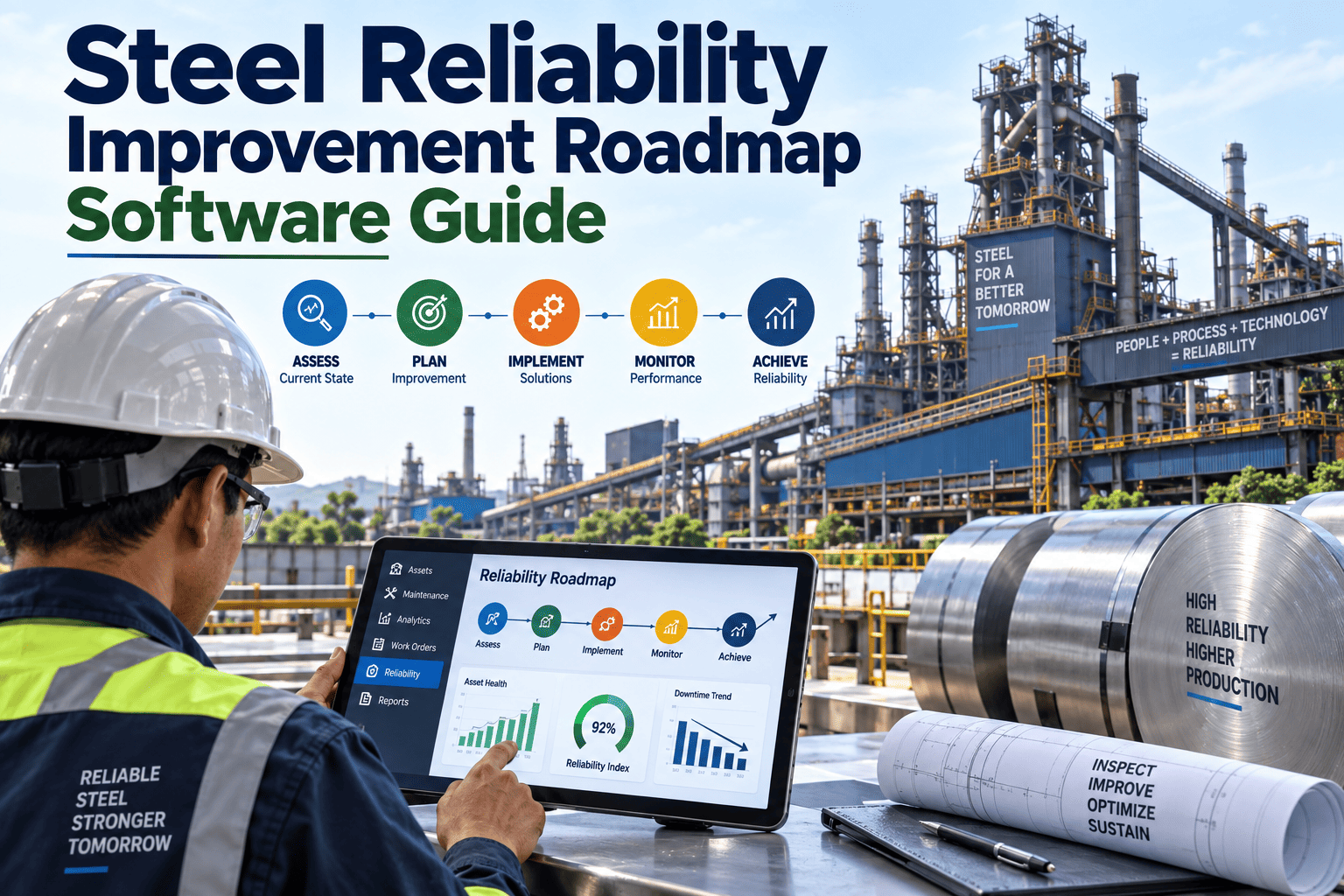
Steel plant maintenance excellence represents the gold standard of operational performance — a strategic transformation that separates industry leaders from competitors struggling with reactive downtime, escalating repair costs, and safety incidents. Achieving world-class maintenance performance isn't an overnight endeavor; it requires a carefully orchestrated roadmap that aligns organizational culture, technology infrastructure, workforce capability, and continuous improvement discipline. Many steel facilities across the United States operate at sub-optimal maintenance maturity levels, losing millions annually to preventable equipment failures, excessive overtime labor, and production delays. The distinction between a maintenance organization stuck in reactive firefighting mode and one delivering proactive, predictive excellence hinges on adopting a strategic framework that transforms maintenance from a cost center into a competitive advantage. OxMaint's AI-powered maintenance intelligence platform enables steel plants to implement this excellence roadmap by providing real-time visibility into asset condition, predictive failure detection, and data-driven decision support that accelerates the journey from traditional time-based maintenance toward condition-based, predictive, and prescriptive maintenance strategies. This comprehensive roadmap outlines the five critical phases of maintenance transformation, the key performance indicators that drive accountability, and the implementation milestones that separate successful transformation initiatives from those that stall mid-journey. Start your free trial to begin building maintenance excellence at your facility, or book a demo to explore how OxMaint accelerates steel plant maintenance maturity.
The first phase of maintenance excellence transformation begins with comprehensive organizational and technical assessment. Steel plant maintenance teams must conduct a detailed audit of current maintenance practices, equipment condition data, workforce capability gaps, and technology infrastructure. This assessment establishes the baseline maturity level against industry benchmarks and identifies the critical pain points driving operational inefficiency. Leading steel facilities employ structured assessment frameworks that evaluate maintenance planning effectiveness, execution discipline, asset data quality, spare parts management, and preventive maintenance compliance rates. The foundation phase typically requires 8-12 weeks and involves cross-functional teams from maintenance, operations, engineering, and finance. Key deliverables include a detailed maturity assessment report, gap analysis against best-practice benchmarks for steel plant maintenance, documented baseline performance metrics (mean time between failures, mean time to repair, planned vs. unplanned maintenance ratio), and stakeholder alignment on transformation vision and expected business outcomes. During this critical phase, steel plants should deploy condition monitoring technology like OxMaint to establish real-time equipment health visibility, enabling more accurate baseline assessment and creating the foundation for data-driven maintenance decisions in subsequent transformation phases.
Phase 2 represents the critical transition from firefighting-dominated maintenance culture to disciplined preventive execution. Steel plants must establish rigorous planned maintenance programs, implement preventive maintenance task lists for all critical equipment (blast furnaces, hot rolling mills, cold rolling lines, casting equipment), and enforce maintenance scheduling discipline to move the needle from 35% planned maintenance toward 70%+ planned execution. This phase requires significant organizational change management as technicians transition from reactive problem-solving to proactive condition management. Successful stabilization depends on standardizing maintenance procedures, documenting best practices, establishing spare parts optimization programs, and implementing workforce scheduling discipline. Steel plant maintenance teams must develop equipment-specific preventive maintenance plans that account for operating conditions, load profiles, environment factors, and manufacturer recommendations. OxMaint's maintenance planning capabilities enable plants to correlate historical equipment failure data with operating conditions, optimizing preventive maintenance intervals and task frequencies to maximize asset availability while minimizing maintenance labor and spare parts costs. Phase 2 typically spans 12-18 months and should achieve measurable improvements in planned maintenance ratio (targeting 65-75%), reduction in emergency maintenance calls by 30-40%, and initial spare parts inventory optimization of 15-20%.
| Metric | Reactive Maintenance (Baseline) | Preventive Maintenance (Phase 2 Target) |
| Planned Maintenance Ratio | 25-35% | 65-75% |
| Mean Time Between Failures (Hours) | 180-240 | 480-640 |
| Mean Time to Repair (Hours) | 12-16 | 4-6 |
| Spare Parts Carrying Cost | 12-14% of budget | 8-9% of budget |
| Equipment Availability | 78-82% | 88-92% |
| Overtime Labor as % of Budget | 18-22% | 6-8% |
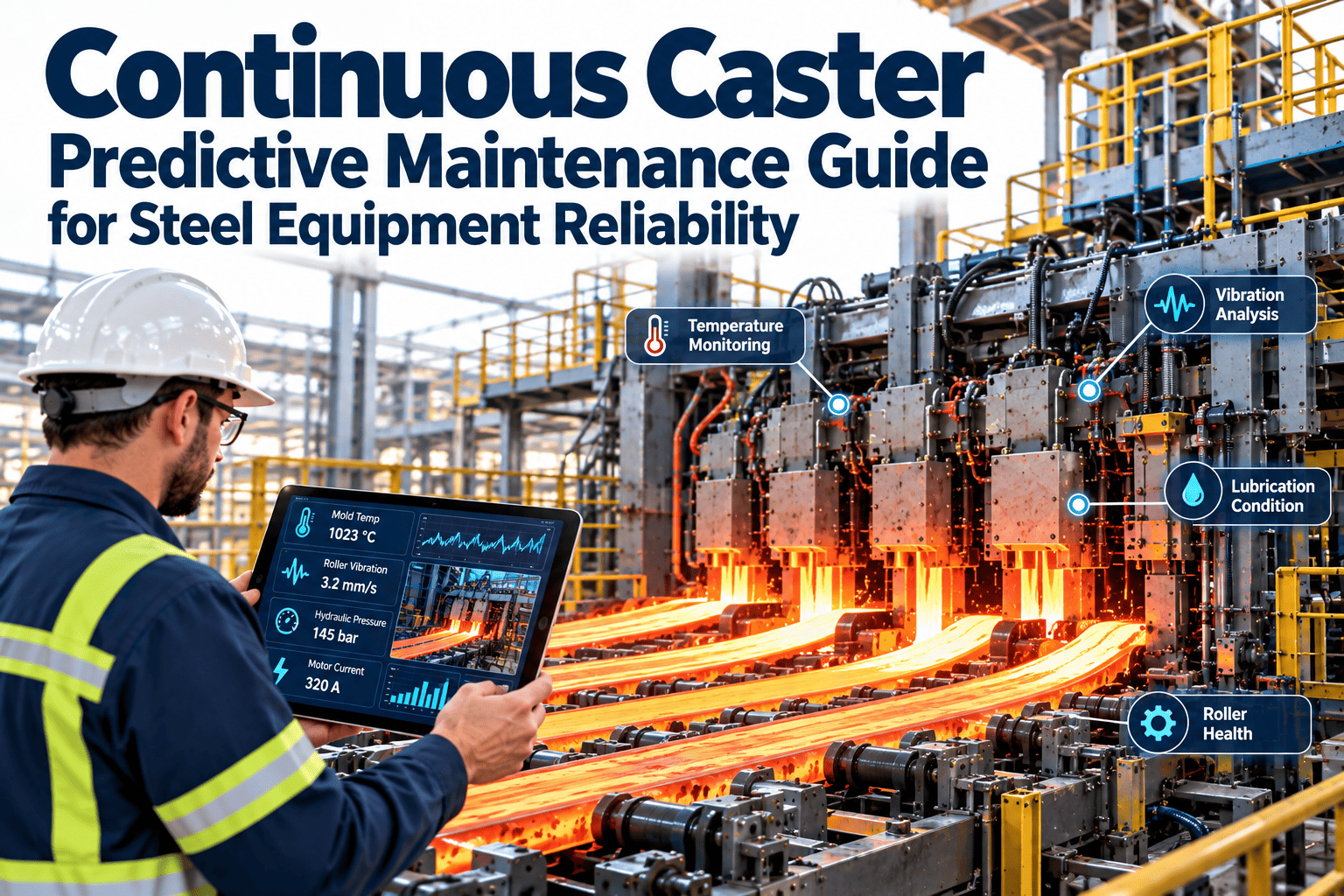
The transition from time-based preventive maintenance to condition-based predictive maintenance marks the strategic inflection point where maintenance excellence becomes genuinely transformational. Phase 3 requires deploying comprehensive condition monitoring infrastructure across critical equipment — vibration sensors on rotating machinery, thermal imaging for bearing condition, oil analysis programs for hydraulic systems, ultrasonic monitoring for mechanical wear, and real-time asset performance telemetry integrated into a centralized maintenance intelligence platform. Steel plants implementing Phase 3 achieve dramatic improvements in asset availability because maintenance activities are triggered by actual equipment condition rather than arbitrary time intervals. A hot rolling mill bearing, for example, may remain in excellent condition at 2,000 operating hours but show early wear signatures at 1,800 hours — condition-based maintenance enables intervention at the optimal window, preventing catastrophic failure while eliminating unnecessary preventive replacements. OxMaint's AI-powered condition monitoring synthesizes sensor data, operational telemetry, and historical failure patterns to predict equipment degradation 7-14 days in advance, enabling maintenance teams to plan activities during scheduled downtime windows rather than facing emergency shutdowns. Phase 3 implementation typically spans 18-24 months and should achieve planned maintenance ratios exceeding 85%, equipment availability improvements of 15-22%, and spare parts cost reductions of 25-35%. The platform integrates with existing CMMS systems (SAP, Maximo, Infor), enabling seamless workflow automation where predicted failures trigger automatic work order generation, spare parts pre-positioning, and technician notification.
Phase 4 represents the frontier of maintenance excellence where AI systems don't simply predict failures but prescribe optimal maintenance interventions. Rather than merely detecting that a bearing is degrading, prescriptive maintenance systems analyze multiple intervention scenarios — replace bearing now at cost $12K but with 3-hour downtime, order expedited replacement for delivery in 5 days at cost $18K, or continue operating with intensified condition monitoring for 7 days at risk of $450K production loss if failure occurs. OxMaint's prescriptive engine evaluates business impact, cost-benefit tradeoffs, and risk profiles to recommend the optimal maintenance strategy for each equipment condition scenario. Phase 4 implementation requires sophisticated data infrastructure where sensor networks, operational telemetry, financial systems, and production scheduling systems all feed into a unified intelligence platform capable of recommending maintenance actions that optimize across competing business objectives — minimizing total cost of ownership while maximizing asset availability and safety compliance. Steel plants operating at Phase 4 maturity achieve maintenance cost reductions of 35-45%, equipment availability exceeding 93%, and dramatic improvements in maintenance team productivity as technicians spend less time troubleshooting reactive failures and more time executing planned, high-value interventions. The prescriptive optimization phase typically requires 24-36 months of implementation and represents the sustainability phase where excellence becomes embedded in organizational culture and decision-making systems.
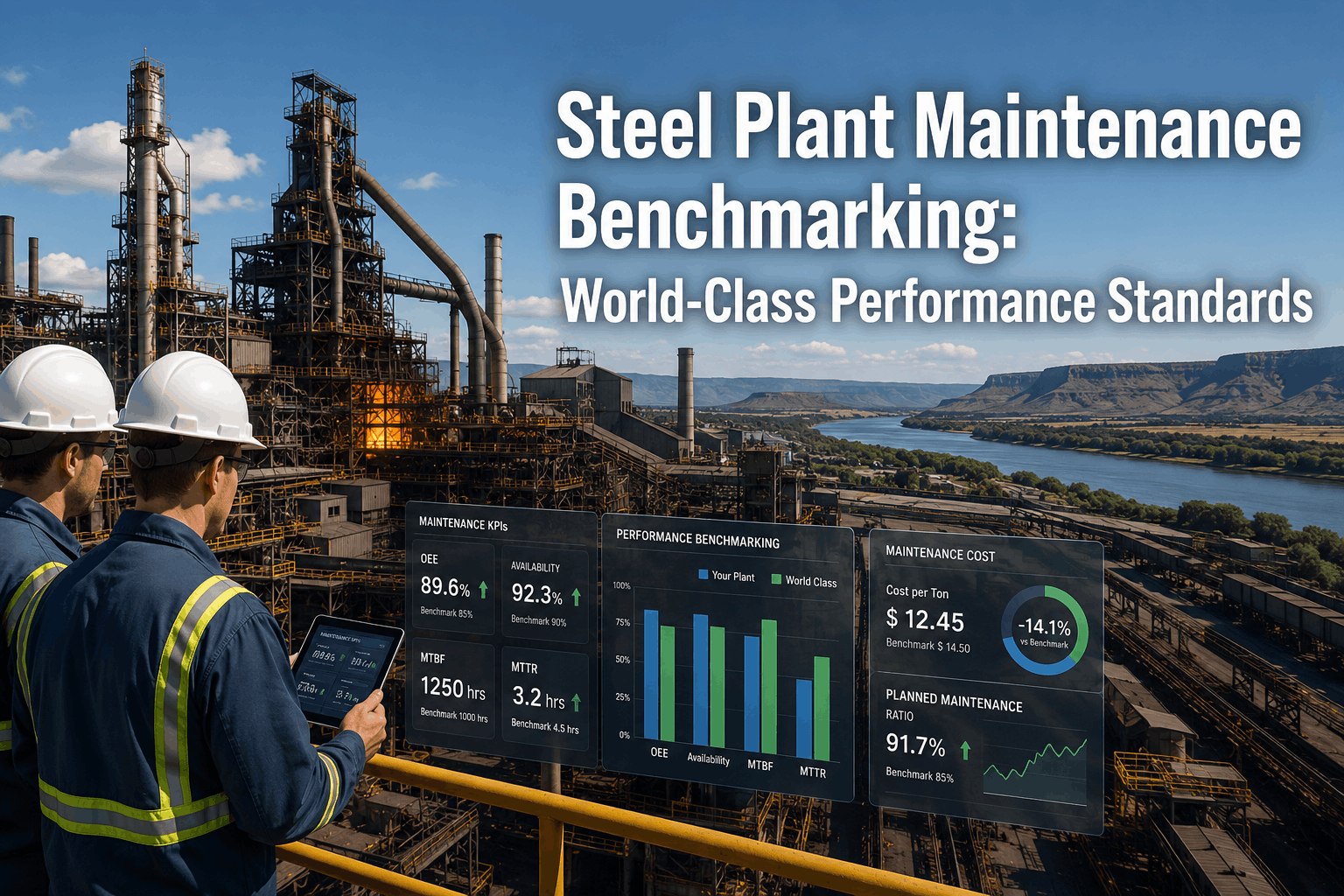
The final phase of maintenance excellence transformation focuses on sustainability, continuous improvement culture embedding, and organizational adaptation to changing business conditions. Phase 5 isn't a destination but rather an operational model where maintenance excellence becomes self-reinforcing through data-driven decision making, continuous capability development, and proactive technology evolution. Steel plants sustaining excellence typically establish formal continuous improvement programs where maintenance teams regularly review performance data, identify optimization opportunities, update predictive models based on new failure patterns, and invest in emerging technologies that further enhance maintenance effectiveness. Organizational learning systems capture best practices from high-performing facilities and disseminate them across multi-site operations. OxMaint enables this continuous learning by providing benchmarking analytics that compare facility performance against industry standards and peer operations, identifying lagging areas and best practice opportunities. Sustaining excellence also requires succession planning and workforce development as experienced technicians retire and new talent joins the organization. Digital competency becomes non-negotiable; maintenance teams must be comfortable interpreting AI recommendations, collaborating with condition monitoring systems, and leveraging data analytics in daily decision making. Steel plants operating sustainably at excellence maturity achieve stable maintenance cost positions at 6-8% of operating budget (versus 12-15% for reactive operations), maintain equipment availability exceeding 92%, and realize safety metrics 60%+ better than industry averages.
| Excellence Phase | Target Maturity Timeline | Planned Maintenance Ratio | Equipment Availability Target | Maintenance Cost Reduction |
| Phase 1: Foundation | 0-3 months | Baseline assessment | Measured baseline | 0% (assessment phase) |
| Phase 2: Stabilization | 3-18 months | 65-75% | 85-88% | 12-18% |
| Phase 3: Condition-Based | 18-42 months | 80-88% | 90-93% | 25-35% |
| Phase 4: Prescriptive | 42-72 months | 85-92% | 93-95% | 35-42% |
| Phase 5: Continuous Excellence | 72+ months | 88-94% | 93-96% | 38-48% |
Every day of delayed maintenance excellence transformation costs steel plants $14,000-$42,000 in preventable downtime, reactive labor inefficiency, and suboptimal asset utilization. OxMaint accelerates transformation timelines while reducing implementation risk through proven methodology, integrated platform technology, and expert guidance across all five excellence phases.