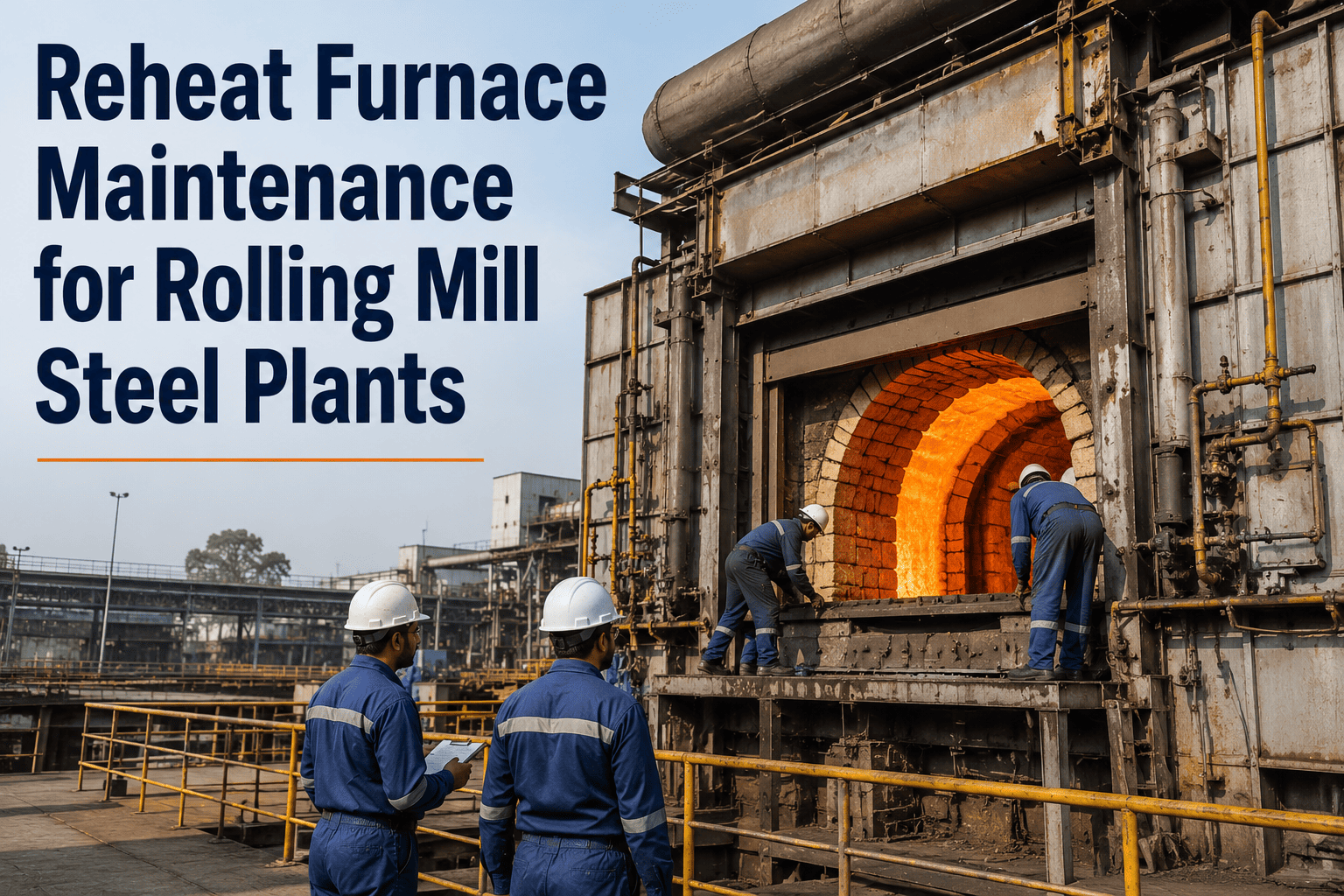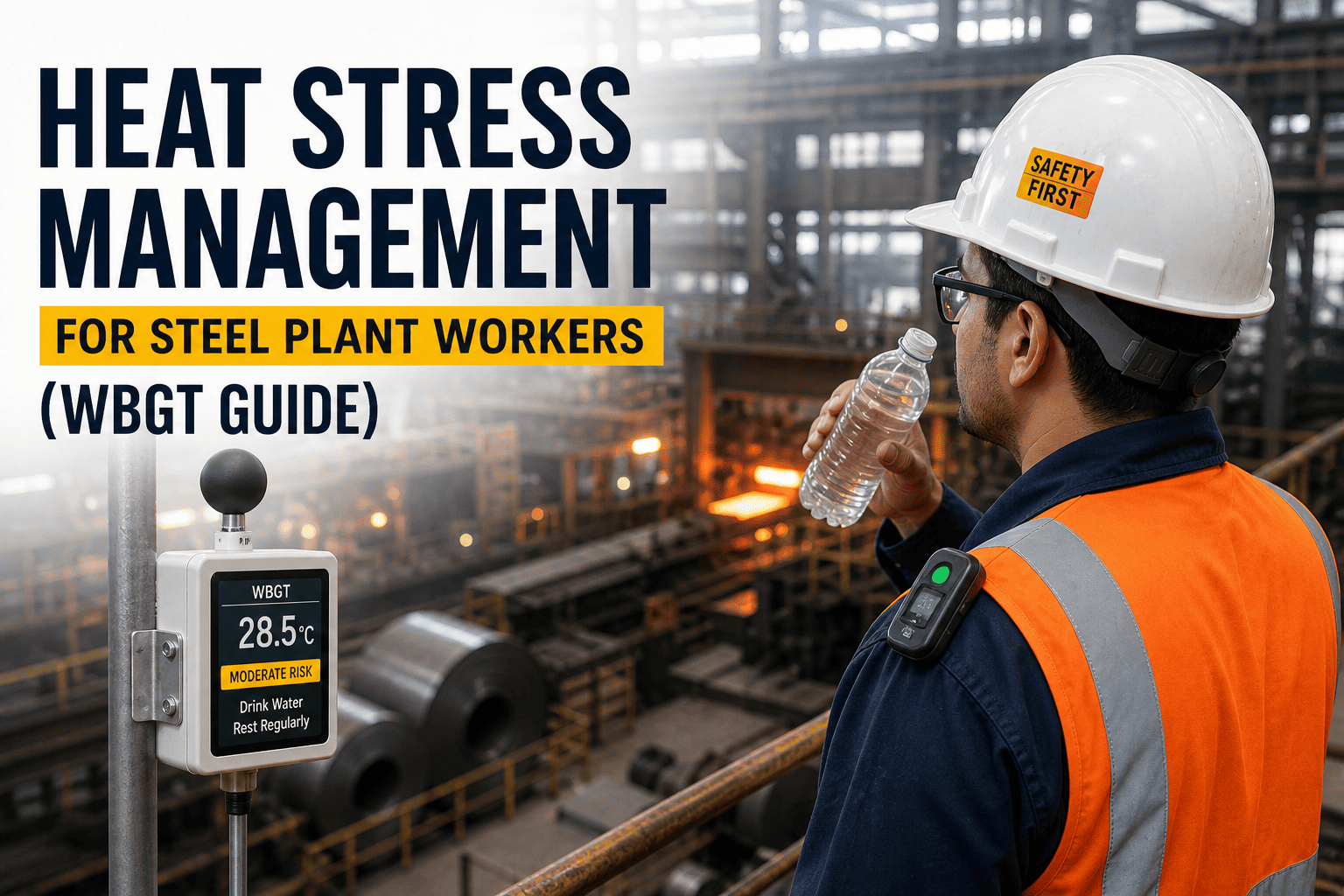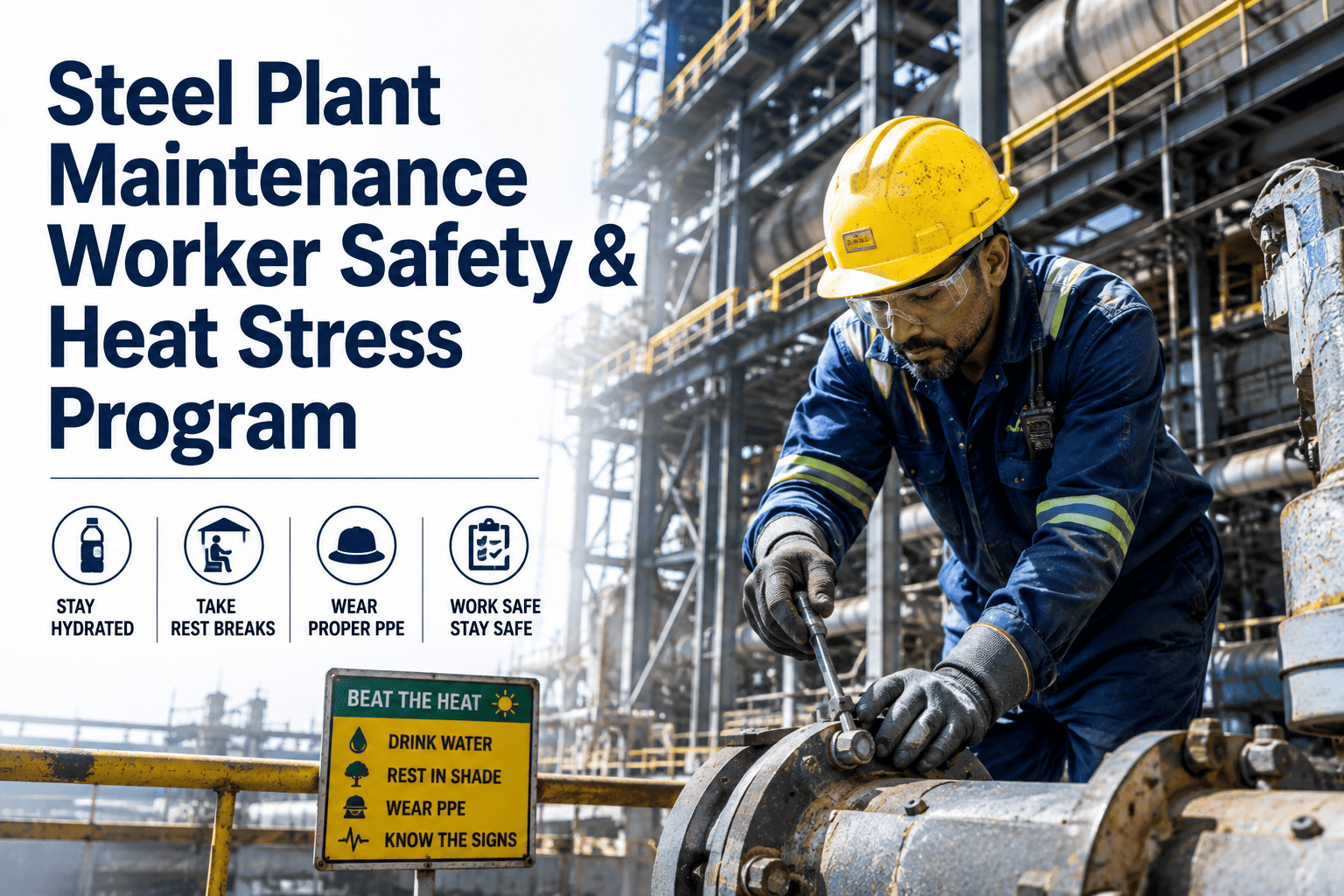
Steel plant maintenance worker safety hinges on one relentless adversary: heat. Near blast furnaces, ladles, and reheating furnaces, ambient temperatures can exceed 140°F (60°C), pushing technicians past their physiological limits in under 45 minutes. A robust steel plant safety program must combine rigorous PPE protocols, structured work-rest cycles, and real-time environmental monitoring to protect maintenance crews from heat stress and molten-metal thermal exposure. By digitizing these safety workflows with OxMaint, reliability leaders can automate safety inductions, track PPE compliance, and trigger predictive maintenance interventions — Start Free Trial to modernize your plant's heat stress management today.
STEEL PLANT SAFETY GUIDE
Can your maintenance crews survive a 12-hour shift next to a 2,500°F blast furnace?
Heat stress and molten-metal thermal exposure are the leading environmental hazards in steel manufacturing. Without an automated safety program, plants face recordable injuries, OSHA fines, and catastrophic equipment failures. OxMaint digitizes your heat management protocols to keep workers safe and production running.
HEAT STRESS PROTOCOL
How to build a steel plant heat stress program that actually protects workers
A compliant steel plant safety program goes beyond posting OSHA posters. It requires engineering controls, administrative work-rest cycles, hydration tracking, and continuous environmental monitoring. Here is the 4-step framework leading mills use to manage maintenance worker safety in extreme heat zones.
Environmental Heat Monitoring
Install WBGT (Wet Bulb Globe Temperature) sensors near blast furnaces, caster lines, and reheat furnaces. When WBGT exceeds 86°F (30°C), mandatory heat-stress protocols activate automatically. OxMaint ingests these sensor readings via IoT integrations to trigger predictive alerts.
Structured Work-Rest Cycles
Enforce 45-minute work intervals followed by 15-minute recovery periods in cooled break areas (below 76°F). For heavy maintenance near molten metal, cycle down to 30/30. OxMaint auto-populates these rest cycles into digital work orders, ensuring compliance is logged.
Hydration & Electrolyte Protocols
Maintenance technicians must consume 8 oz of water every 20 minutes in furnace zones, supplemented with electrolyte packs every hour. Plant managers use OxMaint checklists to verify hydration station inventory and log individual worker intake during high-risk shifts.
Buddy System & Emergency Response
No maintenance worker enters a high-risk furnace area alone. The buddy system mandates paired technicians with continuous visual contact. OxMaint's work order module enforces dual-assignment rules for permit-required confined spaces and hot zones near the tap hole.
SAFETY CHECKLIST
Steel plant maintenance PPE & safety inspection checklist
Personal protective equipment is the last line of defense against thermal radiation, molten metal splashes, and extreme ambient heat. Use this PPE steel plant maintenance checklist to verify gear before any furnace-side work order begins.
- Aluminized proximity suit (rated for 2,000°F radiant heat)
- Hard hat with aluminized reflective cover
- Polycarbonate face shield over primary safety goggles
- Leather gauntlet gloves with aluminized backing
- Phase-change cooling vests (activated < 59°F)
- Personal heat strain monitors (core temp tracking)
- Insulated hydration packs (minimum 2L capacity)
- Fire-retardant FR coveralls (NFPA 2112 compliant)
- Self-retracting lifelines (SRLs) for elevated caster platforms
- 4-gas atmospheric monitors (O2, LEL, CO, H2S)
- Extraction tripod kits for deep pit maintenance
- Two-way intrinsically safe radios
| Furnace Zone | Ambient Temp Range | Max Work Time | Required Rest Period | PPE Level |
|---|---|---|---|---|
| Slag Pit / Tap Floor | 120°F - 140°F | 30 minutes | 30 minutes | Level 3 (Aluminized + Cooling Vest) |
| Reheat Furnace Area | 100°F - 120°F | 45 minutes | 15 minutes | Level 2 (FR Coveralls + Face Shield) |
| Caster Platform | 90°F - 105°F | 60 minutes | 15 minutes | Level 2 (FR Coveralls) |
| Rolling Mill Basement | 95°F - 115°F (high humidity) | 45 minutes | 15 minutes | Level 2 (FR Coveralls + Hydration Pack) |
PRODUCT FIT
How OxMaint digitizes steel plant maintenance safety programs
Paper-based safety logs and clipboard inductions fail when temperatures spike. OxMaint's AI-powered CMMS platform transforms your heat stress management from a reactive compliance burden into a proactive, automated safety shield.
Enforced Permit-to-Work & PPE Checklists
Digitize furnace-zone entry permits. OxMaint forces technicians to complete PPE verification and buddy-system assignments on mobile devices before a work order status changes to "In Progress." Outcome: 100% audit-ready compliance, zero paper trails.
IoT-Driven Heat Exposure Alerts
Integrate WBGT sensors directly into OxMaint. When thermal thresholds breach safe limits, the system automatically pauses active work orders and pushes cool-down notifications to supervisors. Outcome: 40% faster response to dangerous heat spikes.
Predictive Furnace Maintenance Scheduling
Use AI-driven failure predictions to schedule invasive hot-zone repairs during planned outages or cooler overnight shifts, minimizing technician exposure to peak radiant heat. Outcome: 30-50% reduction in unplanned emergency furnace downtime.
Safety Induction & Training Tracking
Ensure no contractor or maintenance worker enters the melt shop without a verified, up-to-date steel plant safety induction. OxMaint blocks work order assignment if certifications are expired. Outcome: 100% compliance with OSHA and internal safety audits.
A 180-asset mini-mill spending $42K annually on heat-related incident responses and reactive furnace repairs deployed OxMaint's heat management workflows. By shifting 65% of high-risk maintenance to cooler shifts and enforcing automated work-rest cycles via mobile checklists, the plant cut heat-stress incidents by 82% and saved $31,500 in overtime and medical costs within the first year.
See OxMaint protect your maintenance crews — book a 30-min demo
Discover how leading steel plants digitize heat stress protocols, enforce PPE compliance, and eliminate paper safety logs with OxMaint's AI-powered CMMS.
FAQ
Steel plant maintenance safety & heat stress FAQs
What is the maximum safe temperature for steel plant maintenance work?
The OSHA-recommended threshold is a Wet Bulb Globe Temperature (WBGT) of 86°F (30°C) for heavy physical work. Above this, employers must implement mandatory work-rest cycles, hydration protocols, and cooling stations. For zones directly adjacent to molten metal where radiant heat pushes ambient temperatures above 130°F, continuous exposure should never exceed 30-45 minutes without a 15-30 minute recovery period in a cool environment.
How does a buddy system improve steel furnace worker safety?
The buddy system ensures continuous visual surveillance in high-risk zones where heat exhaustion or molten metal splash can incapacitate a worker instantly. If a technician suffers heat stroke near a blast furnace, their partner can immediately trigger emergency extraction and first aid. OxMaint's CMMS enforces this by requiring dual-technician assignments on all permit-required work orders in designated hot zones before maintenance can begin.
What PPE is required for maintenance workers near molten metal?
Maintenance workers near molten metal require aluminized proximity suits rated for 2,000°F radiant heat, polycarbonate face shields, leather gauntlet gloves with aluminized backing, and NFPA 2112-compliant FR coveralls. For prolonged exposure, phase-change cooling vests and personal heat strain monitors are strongly recommended. Plant managers can digitize and track this PPE steel plant inventory directly in OxMaint to ensure compliance.
How do you prevent heat stress during summer maintenance in a steel plant?
Prevent summer heat stress by shifting heavy maintenance to early morning or overnight shifts, lowering WBGT exposure. Deploy mobile cooling stations, enforce 8 oz of fluid intake every 20 minutes, and use IoT sensors to monitor ambient conditions in real time. OxMaint automates these protocols by triggering work-rest cycle alerts and pausing active work orders when environmental thresholds are breached.
Can a CMMS improve maintenance safety in a steel plant?
Yes. A worker safety CMMS like OxMaint replaces paper logs with digital, geo-tagged safety checklists and permit-to-work systems. It ensures technicians cannot activate a furnace-zone work order without verifying PPE, buddy-system pairing, and safety induction status. This reduces human error, creates audit-ready compliance trails, and uses predictive analytics to schedule high-risk maintenance during cooler operational windows.
Eliminate heat stress risks with a digital safety program built for steel
Join the reliability leaders using OxMaint to automate PPE tracking, enforce work-rest cycles, and protect every maintenance technician on the floor.
Free 14-day trial · No credit card