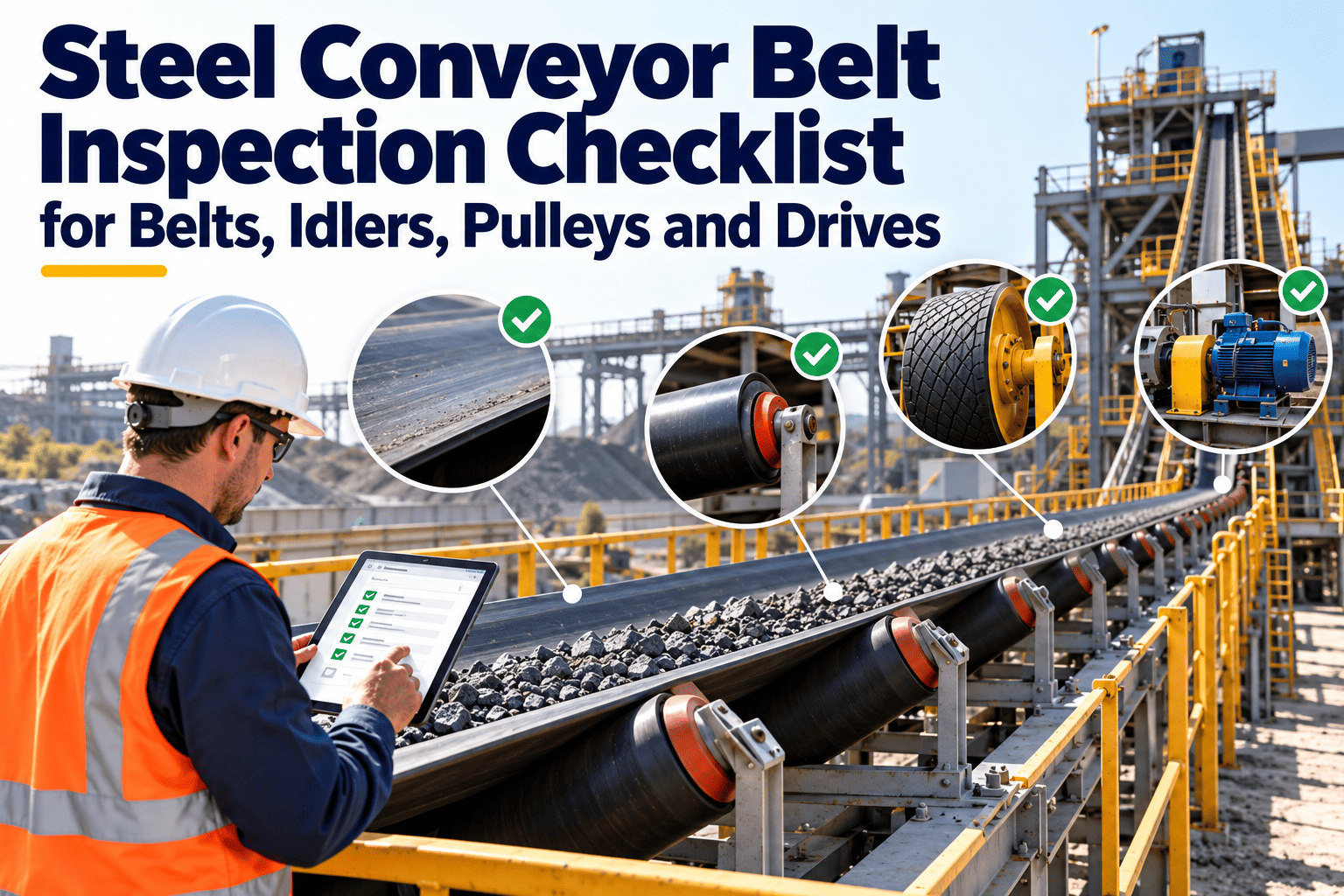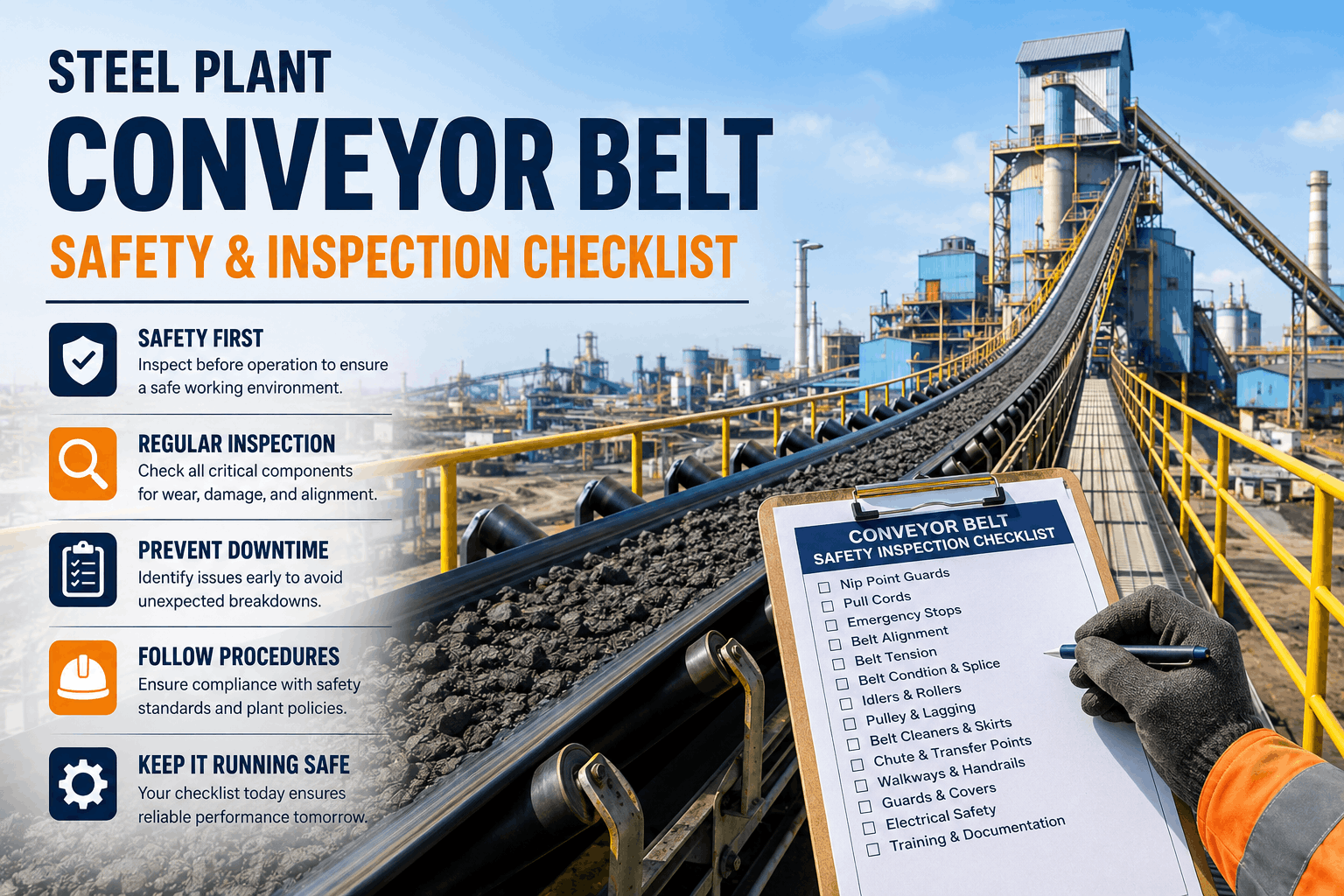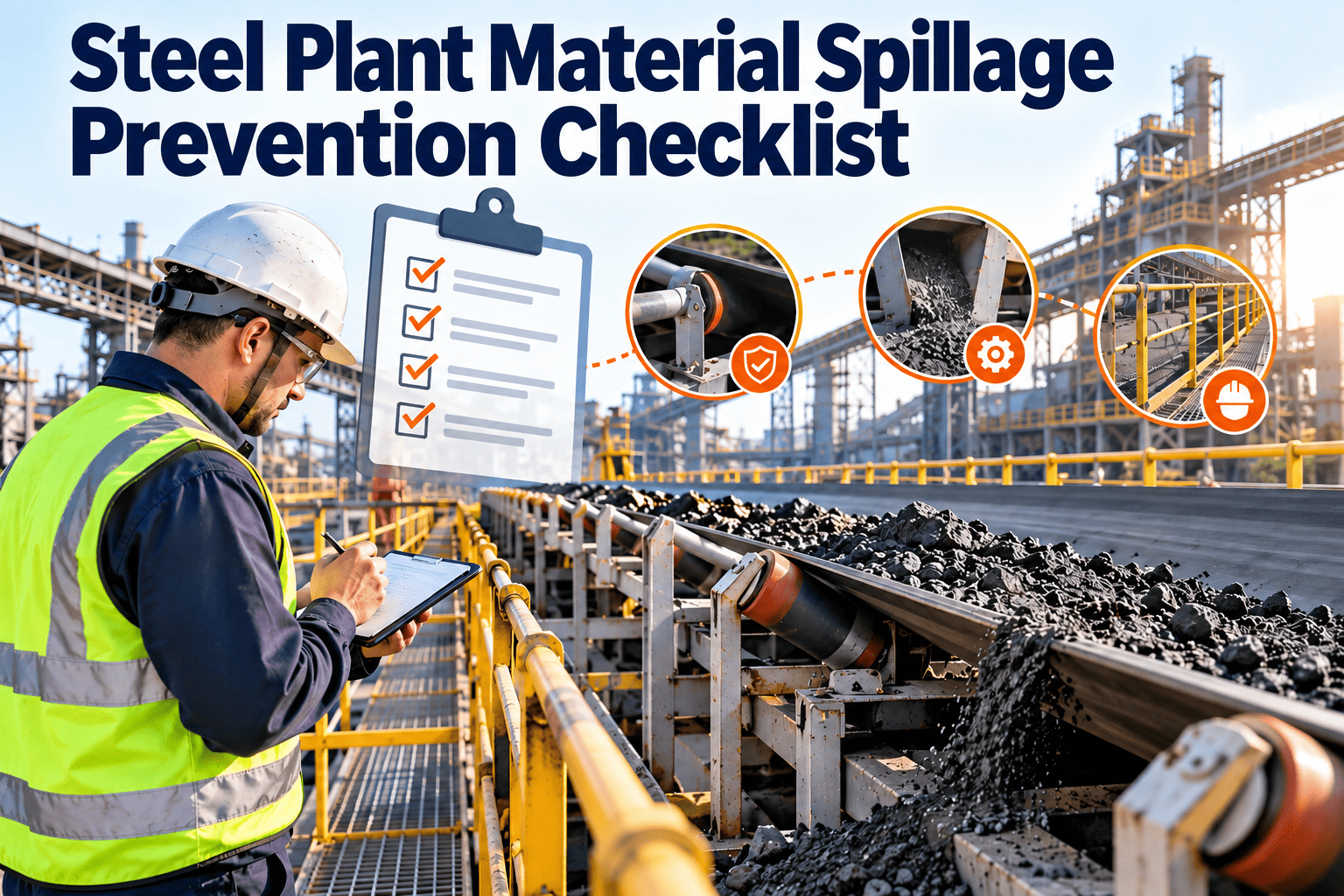
Material spillage on steel plant conveyors rarely starts as a big failure. It starts with a worn skirt rubber, a chute liner that has changed the material trajectory, or a belt that has drifted a few centimetres off centre. Iron ore, coke, sinter, coal and flux then fall along the belt line, bury idlers, wear rollers and create housekeeping and fire risks. This checklist gives crews a repeatable inspection routine for loading zones, transfer points and belt tracking, and shows how maintenance management software can turn each finding into a tracked work order.
Material Handling Maintenance
Steel Plant Material Spillage Prevention Checklist
A component-by-component inspection routine for chutes, skirting, transfer points, belt tracking and loading conditions on steel plant conveyors.
1Feed and loading zone
2Chute and skirting
3Transfer point
4Belt tracking
5Cleaners and return
Inspection frequency key
SEvery shift
WWeekly
MMonthly
QQuarterly or at shutdown
Section 01
Loading Zone and Chute Condition
Most spillage begins where material meets the belt. If the load lands off centre or at the wrong speed, every downstream fix works harder.
Material lands in the centre of the belt. Check that the stream is centred and does not hit one side, since off-centre loading pushes the belt sideways and forces material over the edge.
Chute liners inspected for wear, holes and missing sections. Worn liners change the flow direction of coke, sinter or ore and can throw material past the skirt.
Chute free of build-up and blockage. Sticky or wet material can cake on walls and cause plugging, which forces spillage at the feed point.
Impact beds or impact idlers checked. Damaged or missing impact support lets the belt sag under load, opening a gap at the skirt where fines escape.
Feed rate and material size compared with design conditions. Overloading, oversize lumps or surge feeding are common causes of spillage even when equipment is sound.
Section 02
Skirting and Sealing System
Skirting keeps material on the belt through the loading zone. Small gaps let fines escape continuously and are easy to overlook until buildup appears.
Skirt rubber contact and gap measured. Look for gaps along the belt edge, and compare wear with the manufacturer or site standard. Rubber that is too tight also damages the belt cover.
Skirt boards and clamps checked for cracks, loose bolts and misalignment. A shifted skirt board opens a wedge-shaped gap that widens under load.
Skirt length matches the loading zone. Confirm the enclosed section is long enough for material to settle before the belt leaves the skirt.
Dust seals and covers intact. Torn covers and missing inspection doors let dust escape and are often the first visible sign of a spillage problem.
Section 03
Transfer Point Inspection
Transfer points are where spillage risk is highest, because material changes direction and speed. Inspect them as a full system, not as separate parts.
Discharge trajectory observed while running. Confirm material leaves the head pulley cleanly and lands centred on the receiving belt without splashing or rebound.
Hood, spoon or rock box condition checked. Wear-through here creates uncontrolled material flow and sudden blockages.
Belt speed and receiving belt alignment compared. Large speed differences or misaligned belts push material to one side and raise the chance of spillage.
Blockage detection and level switches tested. A blocked chute that trips late lets material back up and spill over the belt.
Turn Every Spillage Finding Into a Tracked Job
Oxmaint lets crews complete conveyor inspections on mobile, raise work orders for worn skirts or liners, and see repeat spillage locations across the plant.
Section 04
Belt Tracking, Cleaners and Return Side
Carryback and mistracking cause spillage far from the loading zone, often under the belt where it is hard to see.
Belt tracks centrally at head, tail and along the run. Note where the belt drifts, because repeated drift at one point often points to a seized idler or structural misalignment.
Idlers turning freely and free of build-up. Seized or coated idlers push the belt off line and create wear on the belt cover.
Primary and secondary belt cleaners checked for blade wear and tension. Ineffective cleaners send carryback down the return side, where it drops off as spillage.
Tail pulley and return rollers free of trapped material. Material caught between belt and pulley damages the belt and causes tracking problems.
Belt cover, splices and edges inspected. Edge damage or a failing splice can steer the belt and open leak paths.
Section 05
Housekeeping, Safety and Records
Spilled material cleared from walkways, under-belt areas and drive equipment. Accumulated coke or coal dust is a fire and slip hazard, and it hides bearing and roller faults.
Guards and access points confirmed in place after clean-up. Spillage work often involves guard removal, so verify restoration before restart.
Spillage locations logged with asset, cause and quantity estimate. Repeated entries for one transfer point show where redesign is worth the cost.
Open findings linked to work orders with owners and due dates. A finding without a job is only an observation.
Measure It
Spillage Prevention KPIs
| KPI | How to measure | Direction |
|---|---|---|
| Inspection completion | Checklists completed against scheduled | Aim for complete |
| Spillage events per transfer point | Logged events by location | Trending down |
| Skirt and liner defects closed | Work orders closed within target time | Trending up |
| Clean-up hours | Crew hours on spillage removal | Trending down |
| Unplanned belt stops | Stops caused by blockage or mistracking | Trending down |
Frequently Asked Questions
How often should conveyor skirting be inspected?
Check it weekly, and after any change in material or loading. Wet or abrasive feeds may need more frequent checks.
What causes most spillage at transfer points?
Poor chute design or wear, off-centre loading and speed mismatch are common causes. Inspect them together.
Can spillage be tracked in a CMMS?
Yes. Log each event against the asset and link it to a work order. Try Oxmaint to set this up.
Does belt cleaning affect spillage?
Yes. Carryback falls from the return belt as spillage, so blade condition matters as much as skirting.
Can this checklist be used on mobile?
Yes. Book a demo to see mobile inspection routes for conveyors.
Keep Conveyors Clean, Running and Traceable
Use Oxmaint to schedule conveyor inspections, capture defects at the belt and keep a clear record of every spillage repair.