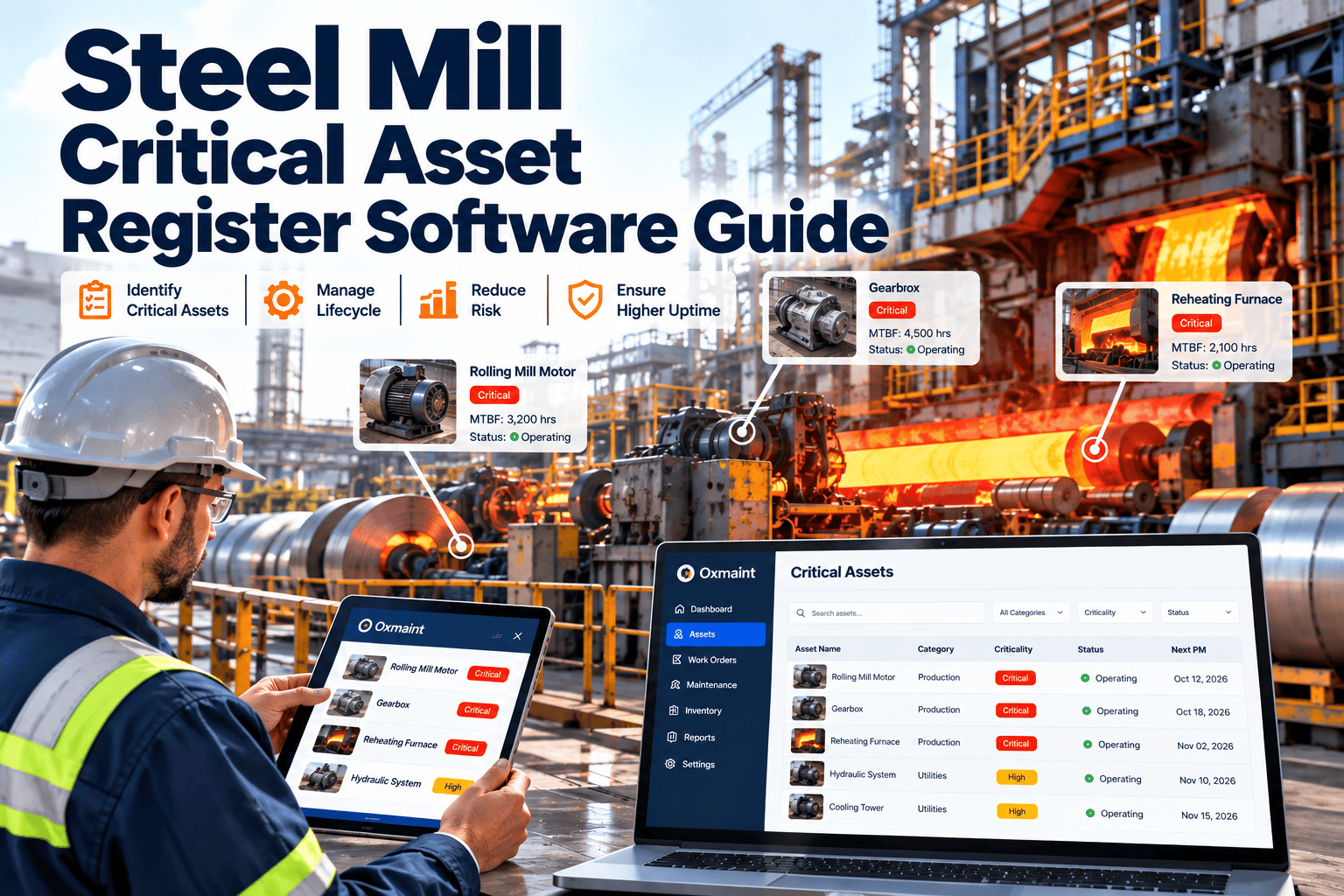
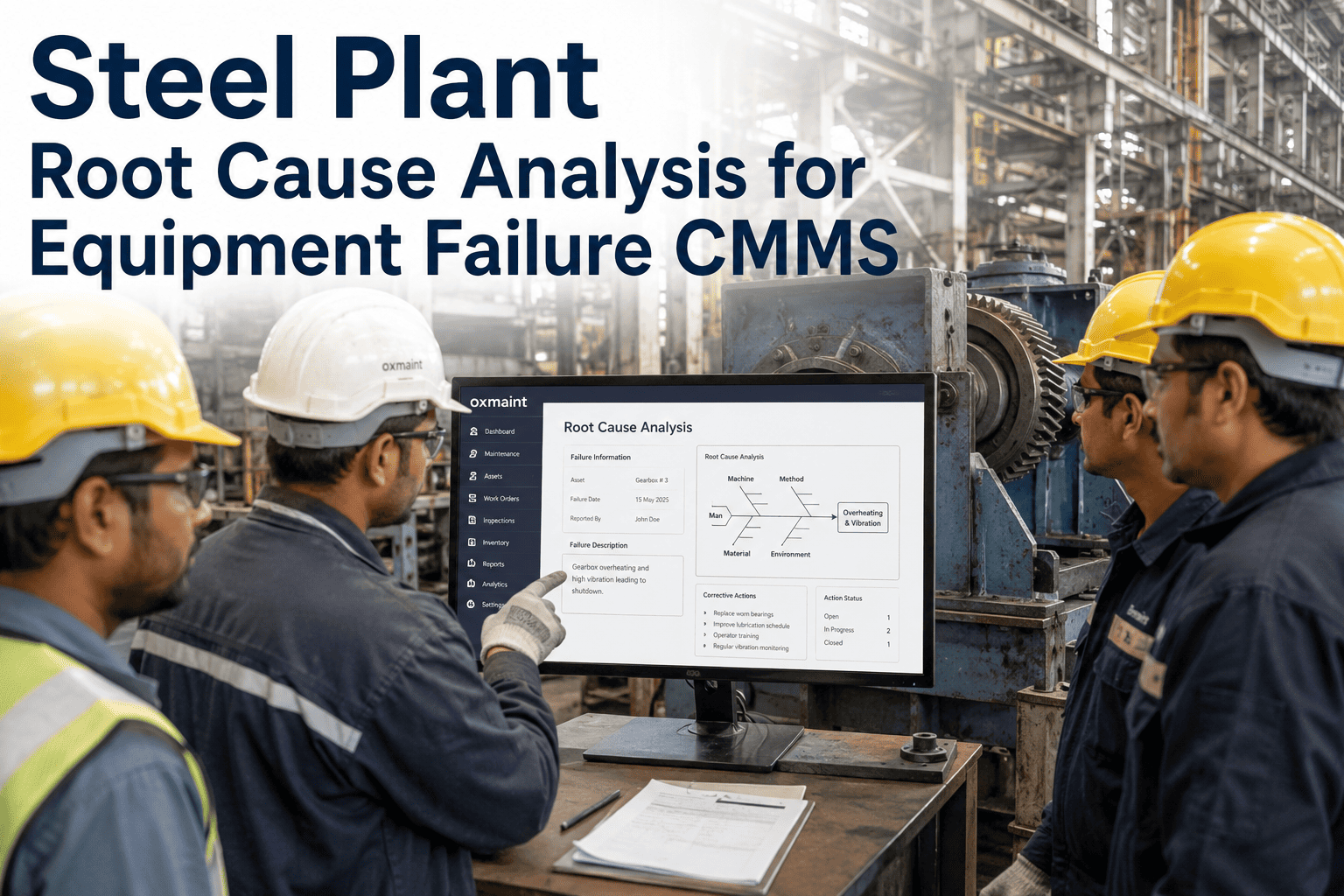
On March 14, the hydraulic accumulator on Caster 2's ladle turret had been leaking for eleven days. The maintenance request was logged on Day 3 — Priority 3, "schedule when available." It sat in a backlog of 247 open work orders, triaged by a planner who had never seen the equipment in person and didn't know that the accumulator pressurized to 3,200 PSI and sat eighteen inches above a stream of liquid steel at 1,550°C. On Day 9 the leak worsened. The operator mentioned it during shift handover, but the incoming crew had three higher-priority breakdowns to address. On Day 11 the accumulator bladder failed catastrophically. 14 liters of hydraulic fluid at 3,200 PSI sprayed onto the caster platform. The fluid contacted a surface at 400°C and ignited instantly. The flash fire burned two operators — one with second-degree burns across his forearms, the other with facial burns that required three surgeries. The caster was offline for 9 days. The total cost — medical, lost production, regulatory fines, equipment repair, investigation, and legal — exceeded $2.8 million. The root cause wasn't the accumulator. Accumulators fail. The root cause was a maintenance system that couldn't distinguish between a leaking hydraulic line on the warehouse forklift and a leaking hydraulic accumulator eighteen inches above molten steel. Both were Priority 3. Both sat in the same backlog. The system had no concept of safety criticality — no flag that said "this equipment, in this location, at this pressure, near this hazard, requires immediate attention regardless of what else is in the queue." Every serious accident in a steel plant traces back to the same pattern: a known equipment condition, a maintenance system that failed to escalate it appropriately, and a gap between when the hazard was identified and when it was addressed. CMMS — when configured with safety criticality, hazard proximity scoring, and automatic escalation rules — closes that gap. It doesn't just schedule maintenance. It understands which maintenance failures can kill people, and it refuses to let those work orders sit in a backlog.
The Incident Pyramid — How Maintenance Gaps Escalate
1
Fatality or Catastrophic Event
Explosion, structural collapse, molten metal contact, toxic gas release. Unrecoverable harm. The event that ends careers, closes plants, and changes families permanently.
10
Serious Injury / Major Property Damage
Burns, crush injuries, falls from height, equipment destruction. Hospitalization, lost-time incidents, regulatory investigation, $500K–$5M per event in total cost.
30
Minor Injury / Recordable Incident
First aid cases, restricted duty, minor equipment damage. OSHA recordable. Each one is a near-miss for the layer above — the same failure under slightly different conditions kills.
300
Near-Miss / Unsafe Condition Identified
Equipment abnormality observed, leak reported, guard missing, alarm triggered. No injury — this time. Every near-miss is a preview of the incident it will become if the condition isn't corrected.
3,000+
Deferred Maintenance / Unresolved Work Orders
The foundation the entire pyramid sits on. Every layer above is fed by maintenance that was requested, acknowledged, and then buried in a backlog without safety-based prioritization.
The Six Ways Maintenance Failures Cause Steel Plant Accidents
Steel plants operate at the intersection of extreme temperatures, massive mechanical forces, toxic gases, electrical hazards, and molten materials. When equipment fails in this environment, the consequences aren't broken production schedules — they're broken bodies. Each failure mode below has caused fatalities in steel plants within the last decade.
Hydraulic lines, cylinders, and accumulators pressurized to 2,000–5,000 PSI operating within meters of liquid steel. Leak + hot surface = flash fire. Catastrophic burst = high-velocity fluid spray + fire.
23 reported flash fires from hydraulic failures near casters and BOF vessels in the past 5 years across the global steel industry.
CMMS Prevention: Hydraulic components within 5m of molten metal auto-classified as Safety-Critical. Leak reports auto-escalate to Priority 1. PM intervals for hose replacement, accumulator inspection, and fitting torque checks enforced with zero-tolerance overdue policy.
Water contacting molten steel causes instantaneous steam expansion — a volumetric increase of 1,600×. Even small water intrusions into a furnace or ladle create explosive force capable of ejecting molten metal hundreds of feet.
Steam explosions remain the most catastrophic failure mode in steelmaking. A single event can destroy a vessel and kill everyone within a 30-meter radius.
CMMS Prevention: Cooling water systems on furnaces, casters, and ladles monitored with flow/pressure PM checks on strict schedule. Any cooling circuit leak flagged as emergency — no backlog, no deferral, immediate response required with digital confirmation of resolution.
Overhead cranes in steel plants move loads up to 300+ tons of molten metal in ladles. Wire rope failure, brake failure, structural fatigue crack, or hook failure during a ladle lift releases hundreds of tons from height.
Crane-related incidents account for 15–20% of all steel plant fatalities. Wire rope and brake failures are the leading mechanical causes.
CMMS Prevention: Crane inspections tied to cycle count, not calendar. Wire rope electromagnetic inspection, brake response testing, and structural NDT scheduled automatically. Overdue crane inspections trigger automatic crane lockout — no exceptions, no overrides without plant manager sign-off.
BF gas (CO-rich), coke oven gas, and BOF off-gas are lethal. Gas detection systems and ventilation equipment that fail silently create invisible kill zones. Workers enter areas believed safe that are actually oxygen-deficient or CO-saturated.
CO poisoning incidents in steel plants have a fatality rate exceeding 40% when detection systems fail. Multiple-fatality events occur when rescue teams enter without functioning gas monitors.
CMMS Prevention: Gas detector calibration, bump testing, and ventilation fan inspection on non-negotiable PM schedule. System blocks area access permit issuance if gas detection PM is overdue. Backup detector maintenance tracked independently from primary system.
EAF operations, ladle furnaces, and rolling mill drives operate at voltages and amperes that produce arc flash temperatures exceeding 20,000°C. Deteriorated insulation, loose connections, or failed protective devices create arc flash events with explosive force.
Arc flash accounts for 8–12% of serious electrical injuries in steel plants. Incident energy levels in EAF switchgear areas can exceed 40 cal/cm² — lethal without appropriate PPE.
CMMS Prevention: Thermographic inspection of electrical connections, insulation resistance testing, and protective relay testing scheduled by CMMS with arc flash boundary recalculation after any electrical modification. PPE requirements linked to work order by location.
When a safety interlock trips repeatedly due to underlying equipment malfunction, production pressure leads to bypass — jumper wires, defeated limit switches, blocked-open safety valves. The equipment continues running without the safety system that prevents catastrophic failure.
Interlock bypasses are cited as contributing cause in 35–40% of serious steel plant incidents. The bypass removes the last barrier between an equipment malfunction and a human casualty.
CMMS Prevention: Every safety interlock trip generates a maintenance work order for root cause repair — not reset. Repeated trips on the same interlock auto-escalate to critical priority. CMMS tracks interlock bypass requests requiring engineering approval with documented risk assessment and expiration date.
Steel operations building safety-critical maintenance into their CMMS should sign up to see how safety criticality scoring and automatic escalation rules work — every safety work order gets the priority, visibility, and accountability it requires.
Safety Criticality Scoring: Not All Work Orders Are Created Equal
The fundamental problem with most CMMS implementations in steel plants is that they treat every work order the same way — a leaking roof drain and a leaking hydraulic accumulator above a caster strand both enter the same backlog, compete for the same resources, and get prioritized by the same planner who may not understand the hazard difference. Safety criticality scoring fixes this by automatically classifying every asset and every work order based on the consequence of failure.
Criticality Level
Consequence of Failure
Response Time
PM Overdue Tolerance
Escalation Rule
S1 — LIFE SAFETY
Potential fatality, explosion, toxic release, molten metal contact
Immediate — work stops until resolved
Zero — overdue PM locks out equipment
Auto-notify plant manager + safety director. Cannot be deprioritized.
S2 — SERIOUS INJURY
Hospitalization-level injury, major environmental release, significant fire
4 hours — next available crew
48 hours — then auto-escalates to S1
Auto-notify maintenance manager. Appears on shift supervisor dashboard.
S3 — MINOR INJURY
First-aid level injury, minor equipment damage, localized spill
24 hours
7 days — then auto-escalates to S2
Appears on planner queue with safety flag. Weekly review required.
S4 — PRODUCTION / PROPERTY
Production loss, equipment damage, no injury potential
Planned — schedule per production needs
30 days
Standard planning and scheduling process.
Every Safety Work Order Prioritized. Every Critical PM Enforced. Every Escalation Automatic.
OXmaint applies safety criticality scoring to every asset and every work order — S1 life-safety equipment gets immediate response, automatic escalation to plant leadership, and zero-tolerance PM enforcement. No safety-critical work order sits in a backlog. No overdue PM goes unnoticed.
The Failure-to-Incident Timeline: How 11 Days Becomes a Catastrophe
Serious steel plant accidents don't happen suddenly. They develop over days or weeks through a predictable sequence of missed interventions. The timeline below reconstructs how the caster hydraulic fire progressed — and where a safety-configured CMMS would have stopped it.
Day 1
Hydraulic fitting begins weeping — minor drip observed by operator during walkdown.
What happened: Operator mentioned it verbally during shift handover. No written record.
With CMMS: Operator submits mobile work request with photo. System auto-classifies: hydraulic component, within 5m of caster strand → S1 Life Safety. Immediate notification to maintenance supervisor.
Day 3
Leak worsens. Operator files formal maintenance request. Planner assigns Priority 3.
What happened: Work order entered backlog of 247 orders. Planner unfamiliar with the equipment's proximity to molten metal.
With CMMS: Already resolved — S1 work order was actioned within 4 hours on Day 1. Fitting replaced, system integrity verified, work order closed with torque verification documented.
Day 7
Leak now visible from 10 feet away. Puddle forming on caster platform grating.
What happened: Work order still in backlog. Planner prioritized two rolling mill breakdowns and a crane PM that were overdue.
With CMMS: This state never reached. But if the S1 escalation had been overridden for any reason, the system would have re-escalated daily with plant manager notification and equipment lockout warning.
Day 9
Operator raises concern again during shift handover. Incoming supervisor notes it but has three breakdowns ahead of it.
What happened: Verbal escalation — no system record, no accountability trail, no automatic notification to safety department.
With CMMS: Would never occur. System does not allow S1 work orders to remain open beyond 24 hours without documented resolution or plant manager authorization for delay with risk mitigation plan.
Day 11
Accumulator bladder fails catastrophically. 14 liters of hydraulic fluid at 3,200 PSI sprays onto 400°C surface. Flash fire. Two operators burned.
Result: 2 hospitalized workers (one requiring 3 surgeries), 9 days caster downtime, $2.8M total cost, OSHA investigation, 4 citations issued.
With CMMS: This event prevented. The leak was repaired on Day 1 during a planned isolation that took 45 minutes and cost $340 in parts and labor.
$340 repair on Day 1 — or $2.8 million catastrophe on Day 11. The only variable was a maintenance system that understood the difference between a leak and a bomb.
Safety-Critical PM Compliance: The Numbers That Prevent Accidents
Preventive maintenance on safety-critical equipment isn't a best practice — it's the last line of defense before an equipment failure becomes a human casualty. PM compliance on S1 and S2 equipment should be 100%. Anything less means safety systems are operating without verification, and the plant is relying on luck instead of process. Reliability teams tracking safety PM compliance should book a free demo to see how safety-critical PM dashboards work in the platform.
Crane Wire Rope & Brake Inspection
98%
1 inspection 2 days overdue — Bay 4 crane, scheduled for tonight's shift
Gas Detection Calibration & Bump Test
100%
All 47 fixed and portable gas detectors current
Hydraulic System Inspection (Caster / BOF Zone)
100%
All hoses, fittings, and accumulators within 5m of molten metal inspected on schedule
Cooling Water Flow & Pressure Verification
95%
3 circuits 4 days overdue — EAF roof panels. Escalated to S1, assigned to night crew tonight.
Safety Interlock Functional Testing
97%
2 interlocks on rolling mill emergency stops overdue 6 days — escalated to S2, parts on order
Electrical Thermographic Inspection (EAF / LF)
92%
4 switchgear inspections overdue — contractor scheduling delay. Plant manager notified per S1 escalation rule.
Lockout/Tagout Integration: The CMMS-Driven LOTO Workflow
Lockout/tagout failures contribute to approximately 10% of serious steel plant injuries. The failure isn't usually in the physical locks — it's in the process: wrong isolation point identified, not all energy sources controlled, equipment re-energized before all workers cleared, or LOTO procedure not updated after equipment modification. CMMS-driven LOTO ties the isolation procedure to the specific equipment asset, ensuring the right procedure is applied every time. Operations strengthening LOTO compliance should sign up to see equipment-specific LOTO procedures managed in the CMMS.
CMMS-Driven LOTO — From Work Order to Safe Clearance
1
Work Order Generated
Maintenance task created for specific equipment. CMMS identifies all energy sources: electrical, hydraulic, pneumatic, thermal, potential (gravity), chemical.
2
LOTO Procedure Auto-Loaded
Equipment-specific isolation procedure attached to work order automatically — isolation points, lock locations, verification steps, PPE requirements. Updated every time equipment is modified.
3
Isolation Executed & Verified
Technician follows step-by-step procedure on mobile device. Each isolation point confirmed digitally with timestamp and photo. Zero-energy verification documented before work begins.
4
Work Completed & Clearance Released
Every person who placed a lock must digitally confirm removal. System blocks equipment restart until all locks cleared. Full LOTO audit trail stored with work order — available for regulatory review.
Expert Perspective: Safety Isn't a Priority — Priorities Change. Safety Is a Prerequisite.
I've investigated 23 serious incidents and 4 fatalities in steel plants over the past 15 years. Every single one — every one — traced back to a known equipment condition that existed in a maintenance work order, a logbook entry, a verbal report, or an operator's memory before the incident occurred. Not one was a true surprise. The accumulator that exploded had been leaking for 11 days. The crane rope that failed had shown broken wires in the previous inspection that were documented but not acted on. The gas detector that didn't alarm had a calibration 47 days overdue. The interlock that was bypassed had been tripping for three weeks because the underlying sensor was failing — and instead of fixing the sensor, someone jumped the interlock. In every case, the information existed. The system for acting on that information did not. That's what a safety-configured CMMS changes. It doesn't generate new information — your operators and inspectors are already finding the hazards. It creates a system where safety-critical findings cannot be ignored, cannot be deprioritized, cannot sit in a backlog alongside forklift tire changes and warehouse light bulb replacements. It forces the organization to act on what it already knows — before the gap between knowledge and action becomes the distance between a near-miss and a funeral.
Classify Every Asset by Safety Consequence
Walk your plant and ask one question about every piece of equipment: "If this fails, can it hurt someone?" If yes, it's S1 or S2. Tag it. Score it. Build the PM schedule and escalation rules around that score. Everything else comes second.
Make Safety PMs Un-Deferrable
When a crane inspection goes overdue, the crane locks out. When a gas detector calibration expires, the area permit is revoked. The system enforces the consequence — not the supervisor, not the planner, not the production manager. The system.
Track Near-Misses as Work Orders, Not Reports
Every near-miss should generate a corrective action work order, not a safety report that gets filed and forgotten. The work order has an owner, a deadline, an escalation rule, and a completion requirement. Reports inform. Work orders fix.
Every Hazard Identified. Every Safety Work Order Escalated. Every Life Protected.
OXmaint turns safety-critical maintenance from a backlog item into an organizational imperative — automatic escalation, zero-tolerance PM enforcement, LOTO integration, near-miss-to-work-order conversion, and a safety dashboard that tells plant leadership exactly which life-safety systems are current and which are not. The next serious accident at your plant is already sitting in a work order somewhere. Find it before it finds your people.
Frequently Asked Questions
How does CMMS prevent safety incidents in steel plants?
CMMS prevents safety incidents in steel plants by ensuring that maintenance on safety-critical equipment is never deferred, deprioritized, or lost in a general backlog. It accomplishes this through safety criticality scoring that automatically classifies every equipment asset based on the consequence of failure — from S1 (life safety: potential fatality, explosion, toxic release) through S4 (production/property impact only). When a work order is created on S1 or S2 equipment, the system applies different rules than standard maintenance: immediate notification to designated safety personnel, compressed response time requirements (immediate for S1, 4 hours for S2), automatic escalation if the work order isn't actioned within the response window, and zero-tolerance PM enforcement that locks out equipment or revokes area access permits when preventive maintenance goes overdue. The system also converts near-miss reports into corrective action work orders with assigned owners and deadlines, integrates lockout/tagout procedures with equipment-specific work orders, and maintains a real-time dashboard showing safety PM compliance by category so plant leadership has continuous visibility into the status of every life-safety system.
What are the most dangerous maintenance failures in steel plants?
The most dangerous maintenance failures in steel plants fall into six categories based on fatality and serious injury data. Hydraulic system failures near molten metal, where pressurized fluid contacts hot surfaces causing flash fires, are responsible for dozens of burn injuries annually across the global steel industry. Water-cooling system failures on furnaces and casters create steam explosions — the most catastrophic single-event failure mode in steelmaking, where water contacting molten steel expands 1,600 times in volume with explosive force. Crane mechanical and structural failures (wire rope breaks, brake failures, structural fatigue) during molten metal lifts can release hundreds of tons from height. Gas detection and ventilation system failures create invisible toxic atmospheres where CO poisoning incidents have fatality rates exceeding 40%. Electrical arc flash events in EAF and ladle furnace switchgear produce temperatures exceeding 20,000°C. Safety interlock bypasses, where operators defeat safety systems to maintain production when the underlying equipment malfunction isn't repaired, remove the last barrier between an equipment failure and a human casualty. Each of these failure modes is preventable through CMMS-enforced preventive maintenance, safety criticality scoring, and automatic escalation of safety-related work orders.
What is safety criticality scoring for steel plant equipment?
Safety criticality scoring is a systematic classification of every equipment asset based on the consequence of its failure — specifically, the potential for human harm. In a steel plant CMMS, equipment is classified into four levels. S1 (Life Safety) equipment includes any component whose failure can cause fatality, explosion, toxic release, or molten metal contact — hydraulic systems near casters and BOF vessels, cooling water systems on furnaces, crane lifting systems, gas detection and ventilation equipment, and safety interlocks on critical process equipment. S2 (Serious Injury) equipment includes components whose failure can cause hospitalization-level injury, major environmental release, or significant fire — secondary containment systems, emergency lighting, fire suppression, and structural supports in high-traffic areas. S3 (Minor Injury) covers equipment whose failure might cause first-aid-level injury or minor equipment damage. S4 (Production/Property) covers everything else. The criticality score determines PM frequency, response time requirements for corrective maintenance, escalation rules when work orders are not addressed within the response window, and the consequences when PM goes overdue — including automatic equipment lockout for S1 assets and management notification for S2 assets.
How does CMMS integrate lockout/tagout procedures?
CMMS integrates lockout/tagout by linking equipment-specific LOTO procedures directly to maintenance work orders. When a work order is created for equipment that requires isolation, the CMMS automatically attaches the correct LOTO procedure for that specific asset — identifying all energy sources (electrical, hydraulic, pneumatic, thermal, potential energy, chemical), all isolation points with their physical locations, the sequence of isolation steps, verification requirements for zero-energy state, and the required PPE for the work. The technician follows the procedure step by step on a mobile device, confirming each isolation point with a digital timestamp and optional photo. The system records who placed each lock, when it was placed, and on which isolation point. When work is complete, every person who placed a lock must digitally confirm removal — the system blocks equipment restart until all locks are cleared and all personnel are confirmed clear of the equipment. The complete LOTO record is stored with the work order, creating a permanent audit trail for regulatory compliance. Critically, the LOTO procedure is updated automatically whenever the equipment is modified — new energy sources, changed isolation points, or additional hazards are reflected in the procedure immediately.
What safety metrics should steel plants track in CMMS?
Steel plants should track five categories of safety-related maintenance metrics in their CMMS. First, safety-critical PM compliance by category — the percentage of S1 and S2 preventive maintenance tasks completed on time for each equipment category (crane inspections, gas detector calibration, hydraulic system inspections, cooling water verification, interlock testing, electrical thermography). Target is 100% with zero overdue tolerance on S1 equipment. Second, safety work order response time — measuring the elapsed time from work order creation to work completion for S1 and S2 corrective maintenance, compared against the required response time for each criticality level. Third, near-miss-to-work-order conversion rate — tracking what percentage of reported near-miss events generate corrective action work orders and whether those work orders are completed within the required timeframe. Fourth, interlock trip frequency by asset — monitoring repeated safety interlock activations on the same equipment to identify underlying malfunctions before someone bypasses the interlock. Fifth, overdue safety PM escalation count — tracking how many safety PMs reach the escalation threshold, which indicates systemic issues with scheduling, resource allocation, or parts availability that need management intervention.