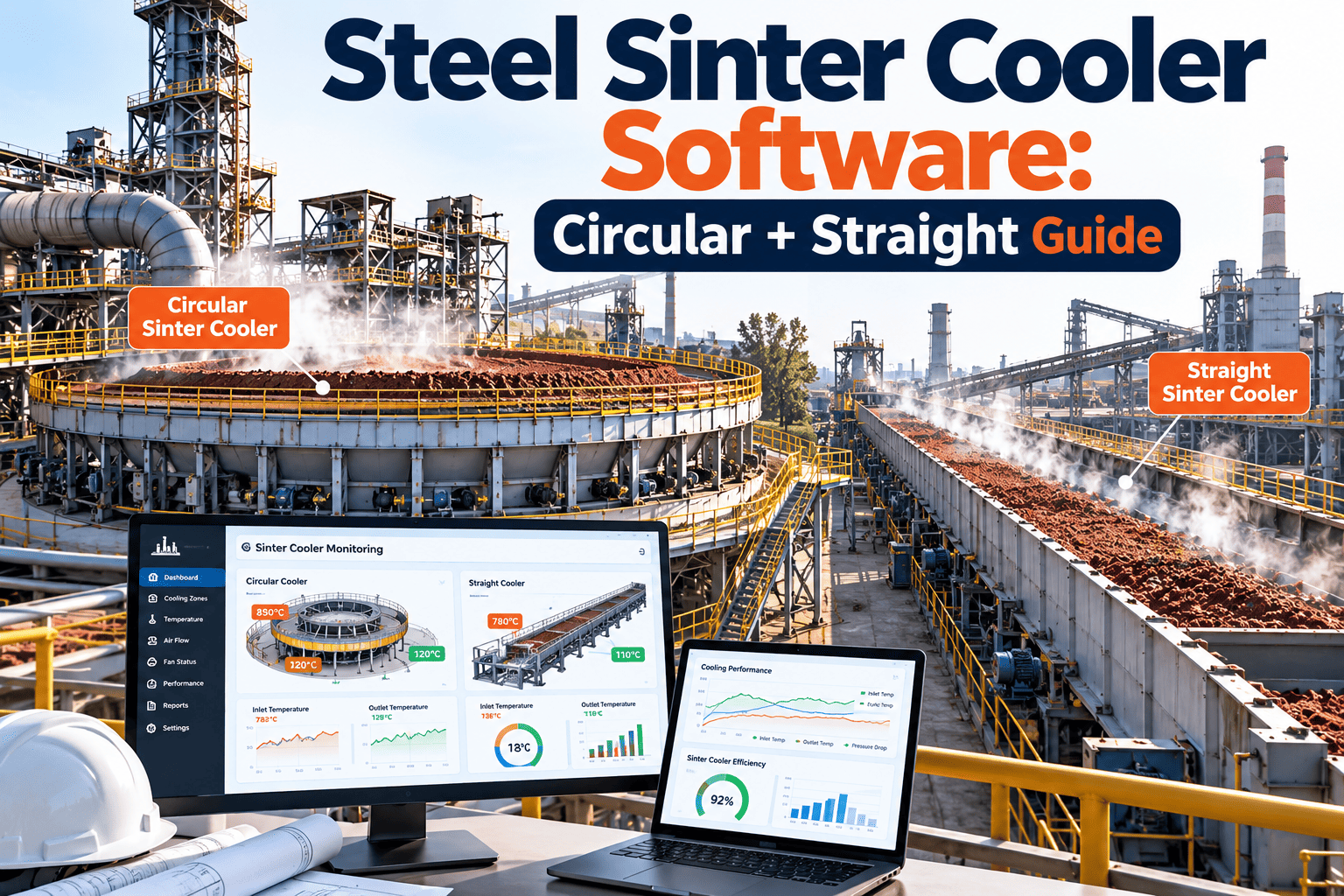
The sinter cooler sits between the sinter machine and the blast furnace, and when it underperforms the damage spreads in both directions. Hot sinter that is not cooled enough burns conveyors and degrades screening, while air leakage wastes fan power and heat recovery potential. Grate bars, trolleys, seals, fans and discharge chutes all wear under heat and abrasion. This guide shows how sinter plant teams can manage circular and straight coolers with CMMS software that ties inspections, work orders and spares to each cooler asset.
Steel Sinter Cooler Software: Circular + Straight Guide
Manage cooler grate condition, fan performance and discharge temperature with a maintenance system built for the heat, dust and continuous duty of a sinter plant.
What a sinter cooler is asked to do
Sinter leaves the machine at several hundred degrees Celsius and must be cooled before it travels on conveyors to the stockhouse. The cooler does this by passing air through the sinter bed, usually with fans below the grate and a hood above to collect hot air.
Circular versus straight coolers
Both designs cool sinter with forced air, but their mechanical layout creates different maintenance priorities.
| Aspect | Circular cooler | Straight cooler |
|---|---|---|
| Layout | Annular ring of trolleys rotating around a central axis | Linear strand of pallets or trolleys moving along a track |
| Main wear points | Trolley wheels, rail, sealing troughs, bottom seals | Pallet or grate bars, track, return rollers, side seals |
| Leakage focus | Water seal and mechanical seals between moving and fixed parts | Seals along the full length and at the head and tail ends |
| Drive | Friction or gear drive on the ring, with tracking checks | Head-end drive with chain or sprocket arrangements |
| Inspection challenge | Continuous rotation limits access to trolleys | Long length means many stations to inspect |
| Typical CMMS approach | Track trolleys by position number | Track grate or pallet sections by station |
Where sinter coolers fail
Grate bar burn-out and breakage
Thermal cycling, abrasion and fine sinter wedging in gaps lead to cracked or missing bars. Missing bars let fines fall through and disturb airflow.
Air leakage at seals
Leaks reduce effective cooling air, raise fan load and lower the temperature of recovered exhaust air. They also push dust into the surrounding area.
Trolley wheel and bearing wear
Wheels run under load in a hot, dusty environment. Bearing failure can derail a trolley and stop the whole cooler.
Fan imbalance and impeller wear
Dust build-up and erosion cause vibration and falling airflow, often visible first as rising discharge temperature.
Chute and hopper wear
Hot, abrasive sinter wears liners quickly. Blockages and liner failures interrupt flow to the belts.
Drive and tracking problems
Misalignment, ring or rail wear and gearbox faults raise stress on the structure and shorten component life.
Keep the cooler running as long as the sinter machine does
Set up cooler assets, schedule inspections and track every grate, seal and trolley repair in one place.
Risk matrix for cooler maintenance planning
Rank failure modes by how likely they are and how much they disrupt the sinter plant. The qualitative matrix below is a planning aid, which you should calibrate with your own failure history.
Inspection rhythm by frequency
Daily
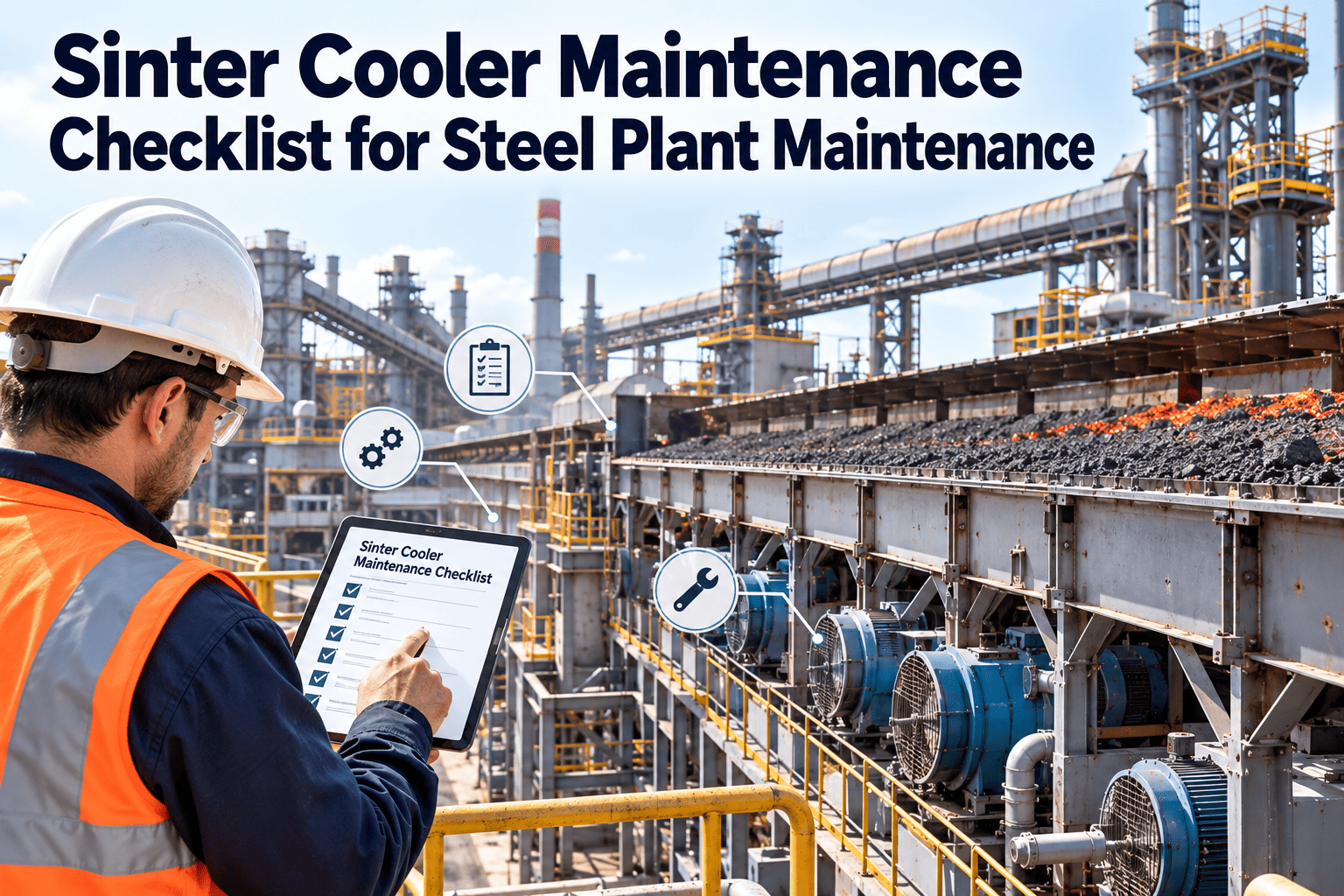
- Walk the cooler and note unusual noise, dust or hot spots.
- Review discharge temperature trend.
- Check fan current and bearing temperature.
- Look for visible seal gaps.
Weekly
- Inspect trolley wheels and rails where accessible.
- Check lubrication points and grease flow.
- Inspect discharge chute for wear and build-up.
- Record vibration readings on fans.
Shutdown
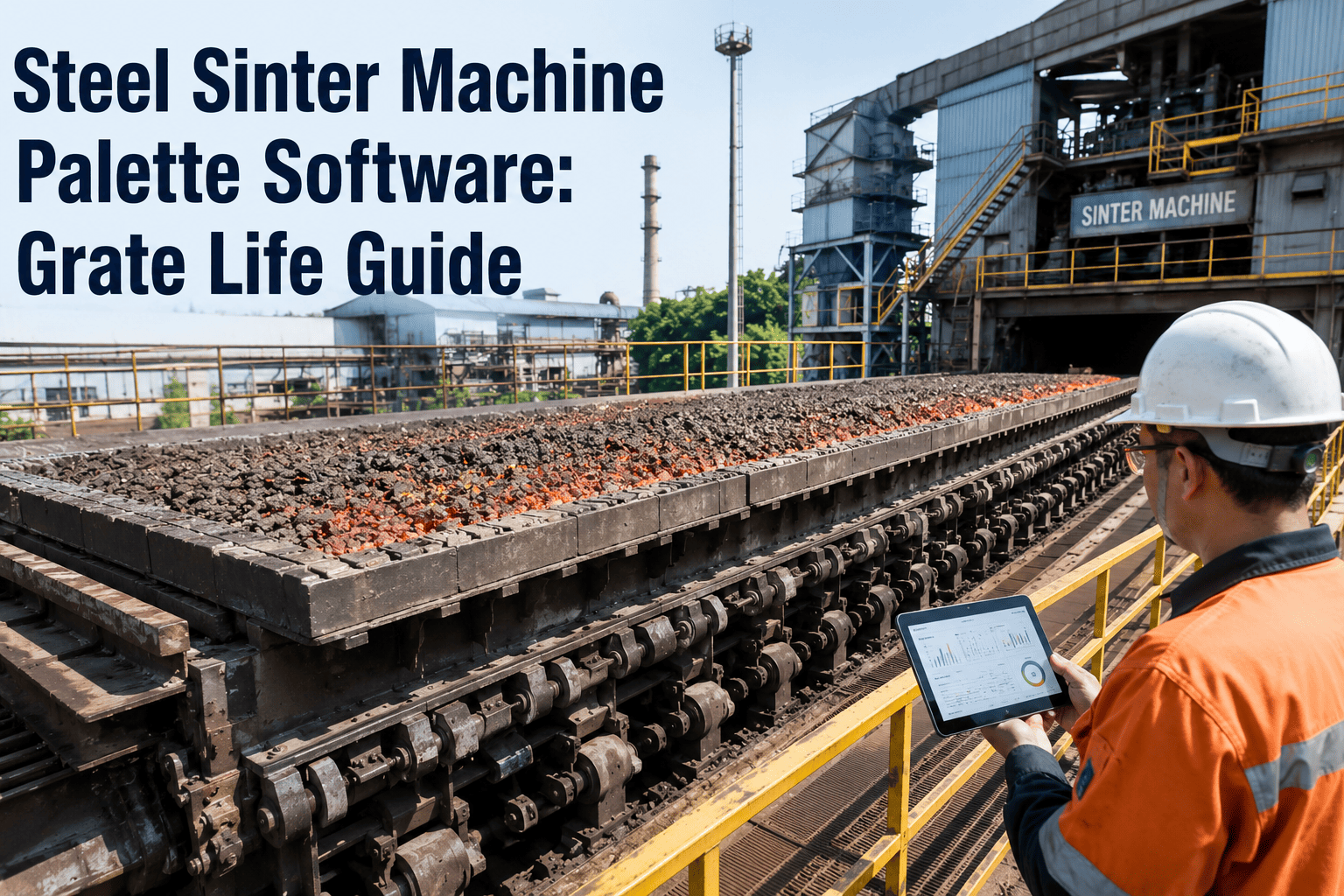
- Replace damaged grate bars by position.
- Renew worn seals and liners.
- Measure drive alignment and gearbox condition.
- Inspect hood, ducting and structure for cracking.
Discharge temperature as an early warning
Rising discharge temperature rarely has one cause. Treat it as a prompt to check a defined set of assets instead of guessing.
Asset structure that makes cooler history usable
Numbering trolleys and grate sections by position lets you see whether failures cluster in one area or follow a pattern around the cooler.
Spare parts that keep a cooler stop short
| Spare | Why it matters | Stocking idea |
|---|---|---|
| Grate bars | Frequent wear item with direct effect on airflow | Hold a working quantity by type |
| Trolley wheel and bearing sets | Failure can stop the whole cooler | Keep complete sets for rapid change |
| Seal materials | Leakage control depends on prompt renewal | Stock standard lengths and fixings |
| Fan bearings and couplings | Long outage if a bearing fails without a replacement | Hold critical items with known lead times |
| Chute liners | Predictable wear, easy to plan | Order against shutdown scope |
How Oxmaint supports sinter cooler maintenance
Asset management
Build the cooler hierarchy down to trolleys, fans and seals so repairs and failures attach to the right component.
Preventive maintenance
Schedule lubrication, wheel inspection, fan checks and seal reviews on time or running-hour triggers.
Work orders
Assign, track and close repairs with parts, labour and findings, including grate bar replacement by position.
Mobile inspections
Operators and technicians record round findings on a phone or tablet in dusty, noisy areas.
Inventory
Monitor spare levels and link parts to the assets that consume them.
Reports and dashboards
Review repeat failures, overdue tasks and downtime causes to shape the next shutdown scope.
Air leakage and heat recovery: the efficiency link
Many sinter plants recover heat from cooler exhaust air for steam generation, preheating or other uses. Anything that dilutes or diverts that air reduces the value of the recovery system.
- Leakage through damaged seals lets cold ambient air enter the hood or bypass the bed, which lowers exhaust temperature.
- Poor air distribution from missing grate bars or blocked gaps creates hot and cold zones across the bed.
- Fan damper faults can leave the cooler over-ventilated or under-ventilated for the sinter rate.
- Hood and duct cracks affect both energy recovery and dust emissions.
Treat sealing as an energy and environmental task, not only a mechanical one. A seal repair backlog is easier to defend when it is linked to fan load, exhaust temperature and dust control.
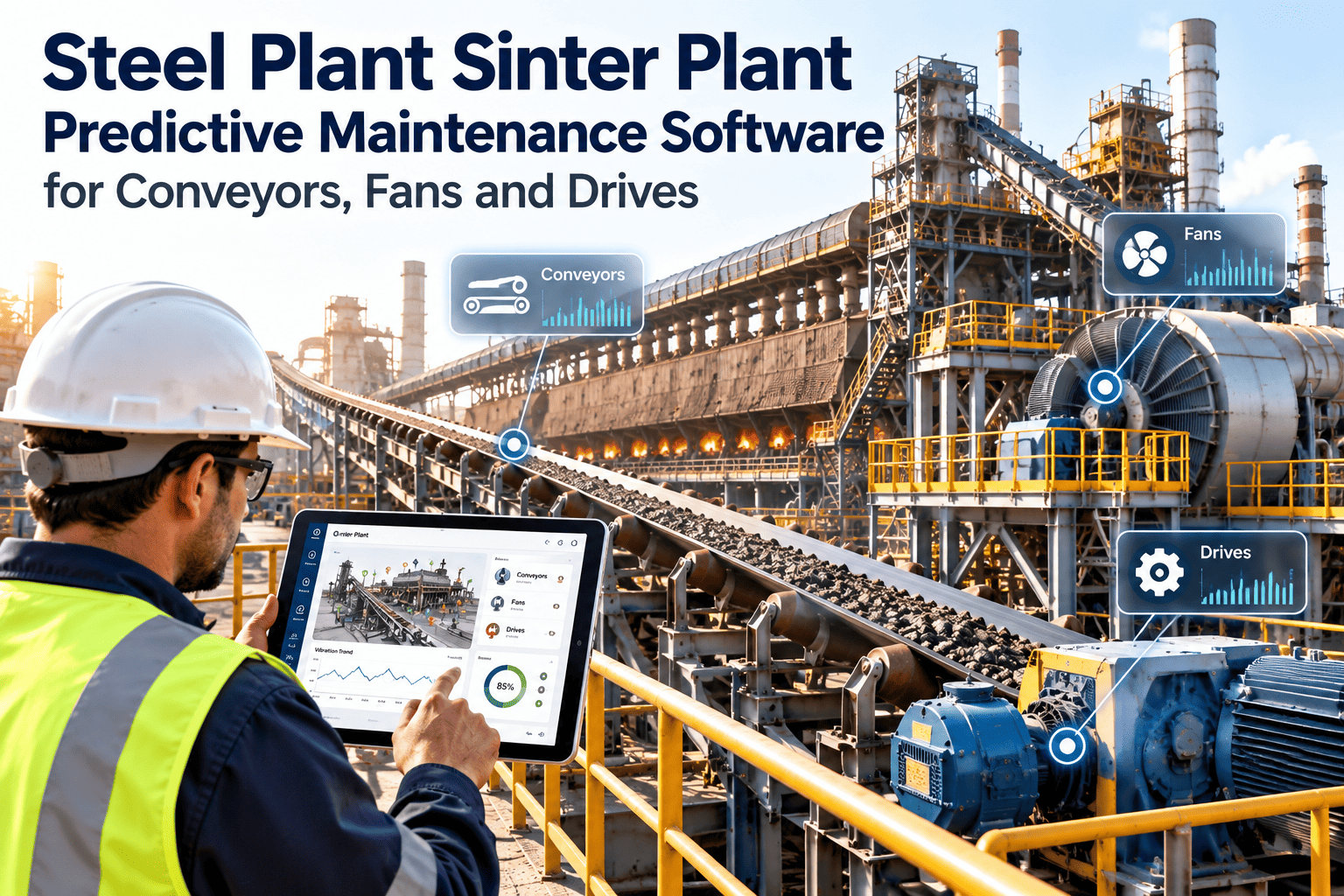
Condition monitoring that suits cooler assets
Vibration on fans and drives
Trend overall velocity and bearing condition on fans, motors and gearboxes. Rising readings after a clean-out often indicate impeller damage or misalignment.
Infrared thermography
Scan hood surfaces, bearing housings and electrical panels. Hot spots on a casing may show failed refractory or insulation, and hot bearings show lubrication faults.
Process trend review
Compare discharge temperature, fan current and bed differential pressure. A divergence from normal gives a reason to inspect before a stop.
Condition data is useful when it triggers action. Set alarm limits that open an inspection or work order, and record what was found so thresholds can be refined.
Grate bar and trolley management in practice
Common cooler maintenance mistakes
| Mistake | Consequence | Better approach |
|---|---|---|
| Patching seals without recording location | The same leak returns and nobody knows its history | Log each seal by section and review repeat repairs |
| Waiting for visible grate gaps | Airflow is already uneven by the time damage is obvious | Inspect on schedule and replace on condition |
| Treating fans as general plant equipment | Cooling loss is discovered only through temperature alarms | Give fans criticality ratings and condition tasks |
| Lubricating by habit | Over-greasing and missed points both shorten bearing life | Use defined lubrication routes with quantities |
| Building shutdown scope late | Parts and labour are not ready when the stop starts | Collect open findings continuously in the CMMS |
KPIs for a sinter cooler maintenance programme
Reliability
- Cooler availability against the sinter machine.
- Unplanned stops per month and their causes.
- Mean time between failures for fans and trolleys.
Process link
- Discharge temperature stability.
- Fan energy use per tonne of sinter.
- Exhaust temperature to heat recovery.
Maintenance discipline
- Preventive task completion rate.
- Backlog of open seal and grate findings.
- Spare part availability at shutdown.
Planning a cooler shutdown around the sinter machine
Because the cooler runs in step with the sinter machine, its work competes for the same limited stop windows. Good planning begins well before the shutdown date.
Using operator rounds to catch problems early
- Operators are often first to notice noise, vibration, dust and smell changes around the cooler.
- Short, structured checklists make those observations consistent between shifts.
- Findings that need repair can become work requests immediately, with a photo and location.
- Trend reports show which rounds find the most issues, helping teams refine the checklist.
The goal is a simple loop: observe, record, plan, repair and verify. A CMMS keeps that loop visible across shifts and departments.
Lubrication and cleanliness in a dusty environment
Sinter dust is abrasive and fine, so lubrication practice has a large effect on bearing and chain life around the cooler.
- Define each grease point, grease type and quantity so crews do not rely on habit.
- Check that seals and breathers on gearboxes and bearing housings are intact before topping up lubricant.
- Sample gearbox oil on a schedule and record condition against the asset.
- Clean fan impellers and housings during stops to prevent build-up from returning as imbalance.
Recording lubrication tasks in the CMMS also shows when a point is repeatedly missed, which is often the first sign that access or routing needs to change.
Safety and compliance considerations
- Hot surfaces, dust, noise and rotating equipment make permit and isolation control essential during cooler work.
- Dust and exhaust air emissions are subject to local environmental conditions, so keep seal and filter maintenance records ready for review.
- Confined space and work-at-height tasks around hoods and ducts should follow documented procedures.
- Store inspection sheets and sign-offs where an auditor can find them without a search.
Requirements vary by country and site, so confirm the applicable rules with your safety and environmental teams.
Before and after a structured cooler programme
Before
- Grate damage is found during a breakdown.
- Seal repairs are patched and forgotten.
- Fan vibration is only noticed when a bearing fails.
- Shutdown scope is built from memory.
After
- Grate bars are tracked by position and replaced on condition.
- Seal issues have owners and due dates.
- Fan readings are trended against alarm limits.
- Shutdown scope comes from open findings and history.
Frequently asked questions
Can one system manage both circular and straight coolers?
Yes, each cooler gets its own asset hierarchy and task set. You can set this up in Oxmaint.
What should be inspected most often?
Fans, trolley wheels, seals and discharge temperature trends deserve frequent attention because they drive most cooler stops.
How do I track grate bar replacements?
Record the position, date and reason on a work order so patterns of early failure can be spotted.
Does it support condition-based maintenance?
Yes, vibration, temperature and inspection results can trigger work orders. To discuss your cooler, book a demo.
Why does discharge temperature matter so much?
Excess heat damages belts and screens, and it often signals airflow or sealing problems upstream.
Give your sinter cooler a maintenance plan it can rely on
Move from breakdown repairs to scheduled inspections, tracked spares and clear history for every cooler component.


.png)