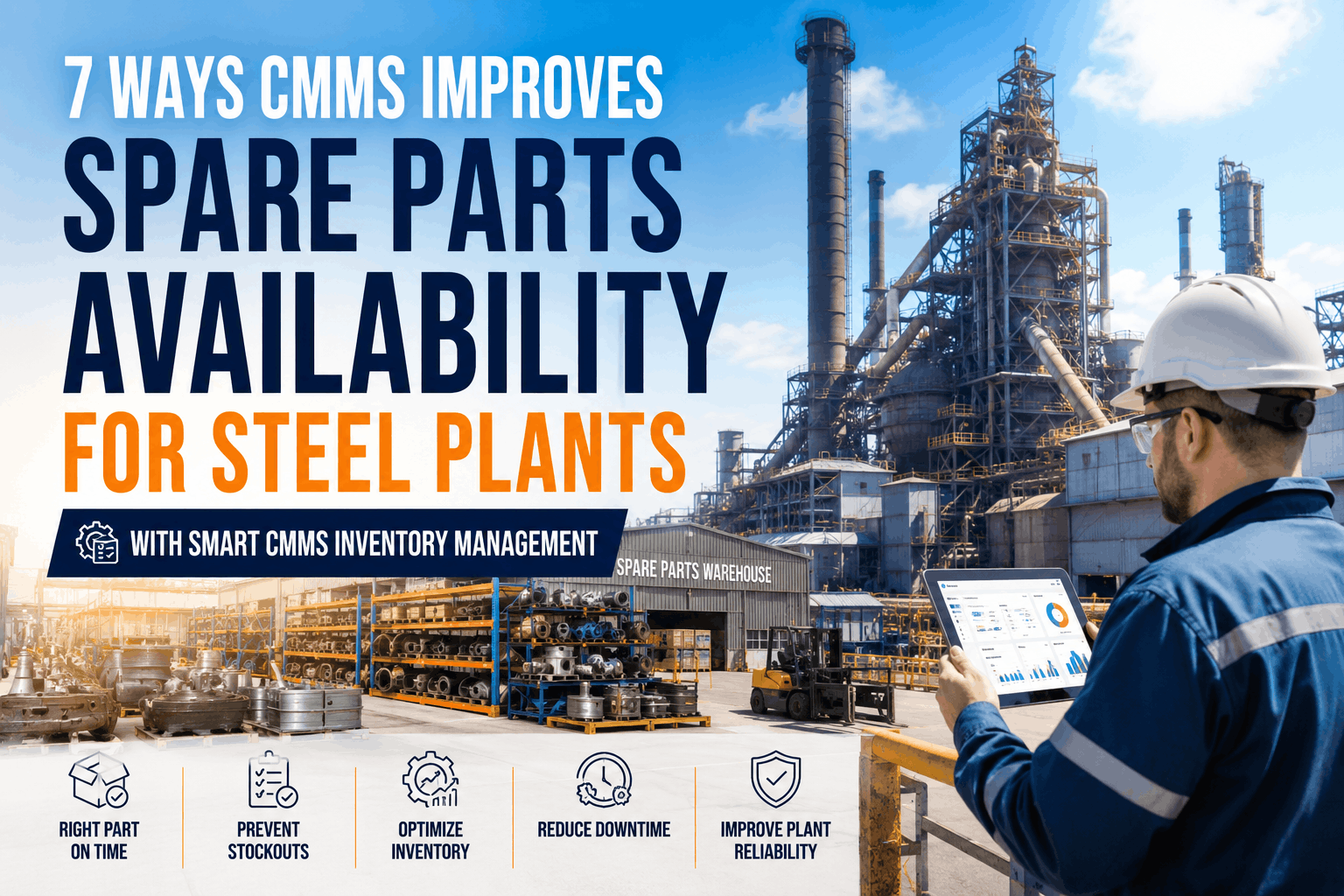
A work roll can cost more than a delivery truck and still spend eleven months sitting on a shelf between changeovers. A hydraulic cylinder for a caster segment might fail twice in five years, yet a rolling mill cannot afford to be without one for a single shift. This is the paradox every steel plant storekeeper lives with — carrying capital-heavy spares that rarely move but absolutely cannot run out. Steel spare consignment stock and vendor managed inventory (VMI) exist to solve exactly this problem, letting the OEM or distributor hold the part at your site while you only pay when it actually leaves the shelf. Done well, it frees working capital, shortens downtime, and turns a guessing game into a documented, auditable process — and that documentation is where most consignment programs quietly fall apart without a system like Oxmaint behind them.
Steel Spare Consignment Stock Software for Vendor Managed Inventory
Track ownership, replenishment triggers, and pay-on-use billing for every consigned roll, bearing, cylinder, and refractory item across your steel plant stores — in one connected system.
Consignment Stock and VMI Are Not the Same Agreement
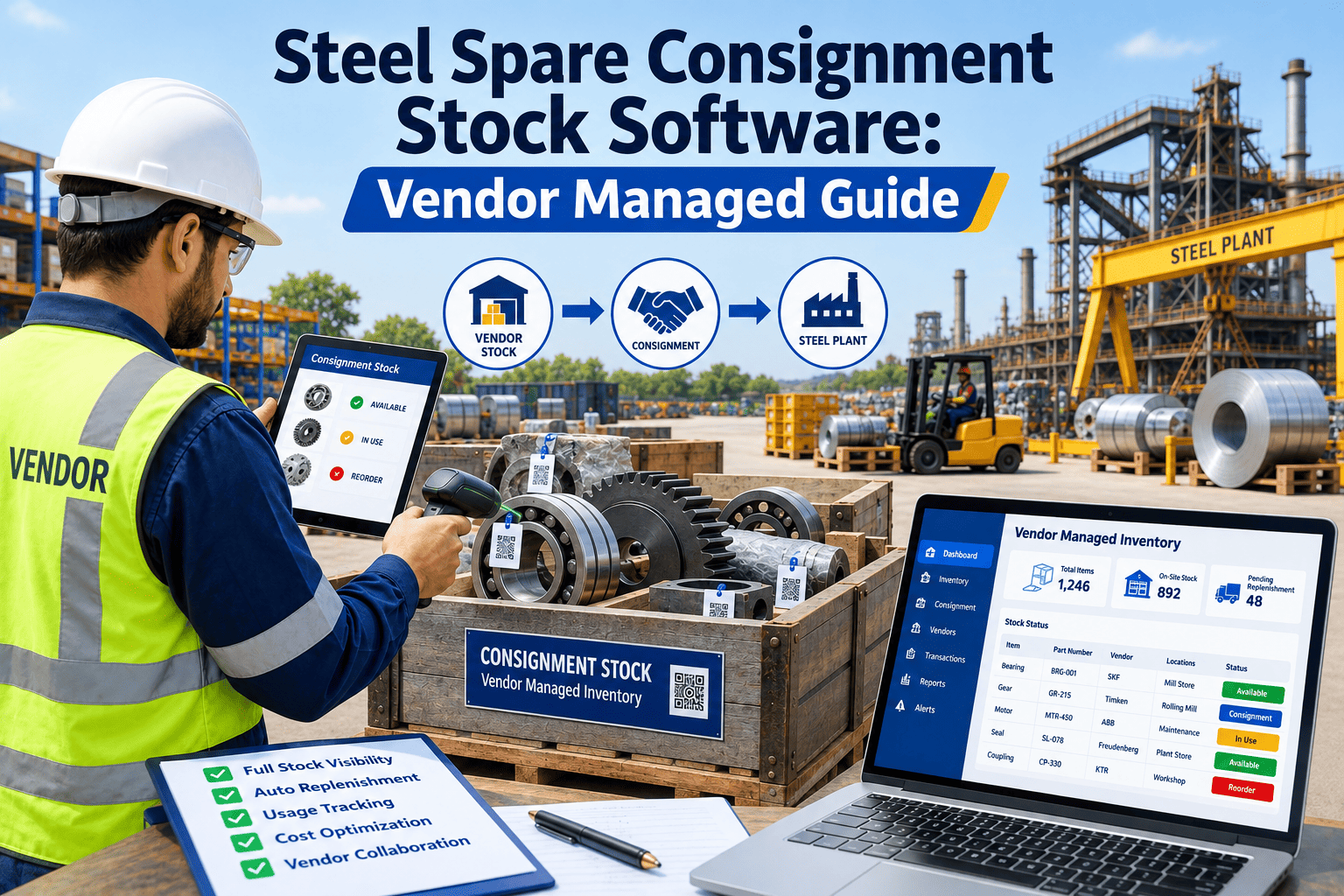
On the plant floor the two terms get used interchangeably, and that habit costs money. Consignment stock is about ownership — the supplier keeps title to the spare until your maintenance crew physically draws it for a job, and cash only leaves your account at that point. Vendor managed inventory is about responsibility — the supplier watches your consumption data and decides when to top up your bins, but the part usually becomes your asset the moment it's delivered, exactly like a normal purchase order. A plant can run either model alone, or combine them so the supplier both replenishes the bin and retains ownership until consumption, which is the arrangement most steel plants eventually want for their highest-value, slowest-moving spares.
Supplier owns the part until it is drawn from the store
You pay only on actual consumption
Frees working capital and improves inventory turns
Best for high-value, low-frequency spares like rolls and cylinders
Supplier monitors levels and decides what to replenish
Ownership usually transfers on delivery, not on use
Reduces stockouts and manual reorder effort
Best for fast-moving items like bearings, belts, and fasteners
How a Steel Spare Consignment Program Actually Runs
A consignment program looks simple on paper — supplier stocks it, you use it, you get billed — but running it across thousands of SKUs in a rolling mill or a DRI plant needs a disciplined sequence. Skip a step and you either lose the cash-flow benefit or end up with a store nobody can reconcile at audit time.
Classify the spare
Identify which items qualify — typically high-value, low-turn parts like work rolls, chock bearings, hydraulic cylinders, and refractory sets, not fast-moving consumables.
Set the min-max band
Agree a minimum and maximum quantity per bin location, along with a lead time buffer that reflects casting or forging time for a replacement roll.
Tag and receive
The consigned part arrives with a supplier-owned tag or serial number, entered into a non-valuated stock category so it never hits your inventory valuation.
Draw against a work order
When maintenance pulls the part for a job, the issue is logged against a specific work order, which is the trigger event for both ownership transfer and billing.
Reconcile and rebill
Consumption reports go to the supplier on an agreed cycle, an invoice is raised for used quantity only, and the bin is replenished to the agreed maximum.
Which Steel Plant Spares Fit a Consignment Model
Not every part belongs on consignment — putting fast-moving, low-value items like nuts, bolts, or filters into a consignment agreement usually adds more paperwork than it saves. The model earns its cost on spares that are expensive, slow-moving, and operationally critical.
Work Rolls and Roll Sets
High unit cost, long lead time to recast or regrind, and direct impact on rolling mill output if unavailable.
Bearings and Chock Assemblies
Critical to mill stands and continuous casters, with wide size variation that makes local stocking expensive.
Hydraulic and Pneumatic Cylinders
Used across casters, EOT cranes, and pressing lines — low failure frequency but zero tolerance for downtime.
Refractory and Lining Sets
Tied to furnace campaign schedules, with consumption that is predictable enough for supplier-managed replenishment.
Electrical Drives and Sensors
High-value automation spares where local distributor stock reduces the plant's exposure to obsolescence.
Large Motors and Gearboxes
Capital-intensive rotating equipment spares that would otherwise sit idle on the books for years at a time.
What a Steel Consignment Agreement Should Actually Cover
Most disputes between plants and suppliers trace back to a consignment agreement that never defined these terms clearly in the first place. Whatever software you run, the contract has to specify each of the following before the first pallet arrives at your store.
| Contract Term | What It Defines | Why It Matters |
| Ownership Transfer Point | Exact moment title passes from supplier to plant | Determines who bears the loss if a part is damaged in storage |
| Min-Max Levels | Minimum and maximum quantity per part per location | Sets the replenishment trigger and caps space and risk |
| Billing Cycle | Weekly, fortnightly, or monthly consumption invoicing | Controls how often cash actually leaves your account |
| Ageing and Obsolescence | Who absorbs cost if a consigned part is never used | Prevents disputes over write-offs after long idle periods |
| Cycle Count Rights | How often either party can physically audit the bin | Keeps book stock and physical stock from drifting apart |
| Price Revision Clause | How unit price changes are notified and applied | Avoids surprise cost jumps on already-committed stock |
Turn your consignment agreement into live min-max rules, billing triggers, and audit trails — not a spreadsheet nobody updates.
Owned Stock vs Consignment Stock — A Realistic Comparison
Here is a simplified picture for a mid-sized rolling mill carrying roughly 200 high-value spare lines, comparing a fully owned inventory model against a consignment arrangement for the same parts.
Fully Owned Inventory
Consignment Model
Our roll shop used to tie up nearly three crore in spare rolls that sat unused for months. Moving the top thirty SKUs to a supplier consignment arrangement freed that capital almost overnight. The hard part was reconciling consumption against invoices every month, and that only became manageable once we tracked it inside Oxmaint instead of email threads.
Maintenance Head, Integrated Steel Plant, Eastern India
How Oxmaint Manages Consignment and VMI Stock for Steel Plants
A steel plant running consignment stock across multiple suppliers needs more than a purchase order system — it needs ownership status, consumption triggers, and billing evidence tracked against every single bin, roll, and cylinder in the store. Book a demo to see it configured for your own stores structure.
Non-Valuated Stock Tracking
Consigned parts are held in a separate stock category so they never distort your owned-inventory valuation or audit reports.
Min-Max Replenishment Rules
Set thresholds per part per bin and let the system flag or auto-notify the supplier when a level is breached.
Work-Order Linked Consumption
Every draw against a consigned part is tied to a maintenance work order, so ownership transfer and billing have a documented trigger.
Consumption-Based Billing Reports
Generate supplier-ready consumption statements for any billing cycle, matched against agreed unit rates automatically.
Multi-Supplier, Multi-Store Visibility
See consigned stock across rolling mill, caster, and power house stores by supplier, part, and ageing bucket in one view.
Cycle Count and Audit Trail
Run physical counts against book stock with a full history of receipts, issues, and ownership changes for every serial number.
Frequently Asked Questions
Is consignment stock the same as vendor managed inventory?
Which spares should a steel plant put on consignment first?
How is consigned stock billed?
Who is responsible if a consigned part becomes obsolete?
Can consignment stock be tracked in the same system as owned inventory?
Stop reconciling consignment stock in spreadsheets. Track ownership, replenishment, and billing for every steel spare in one system.