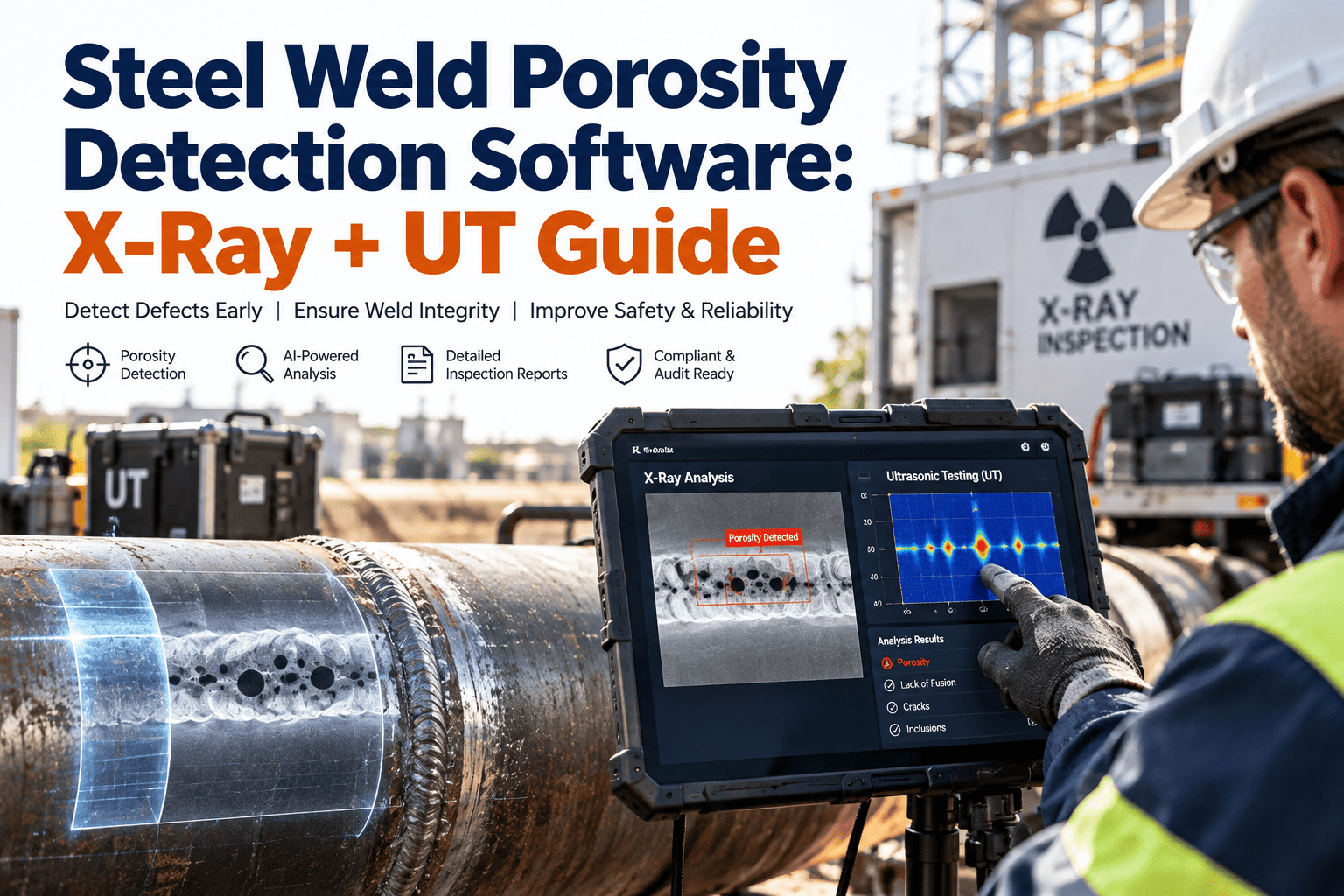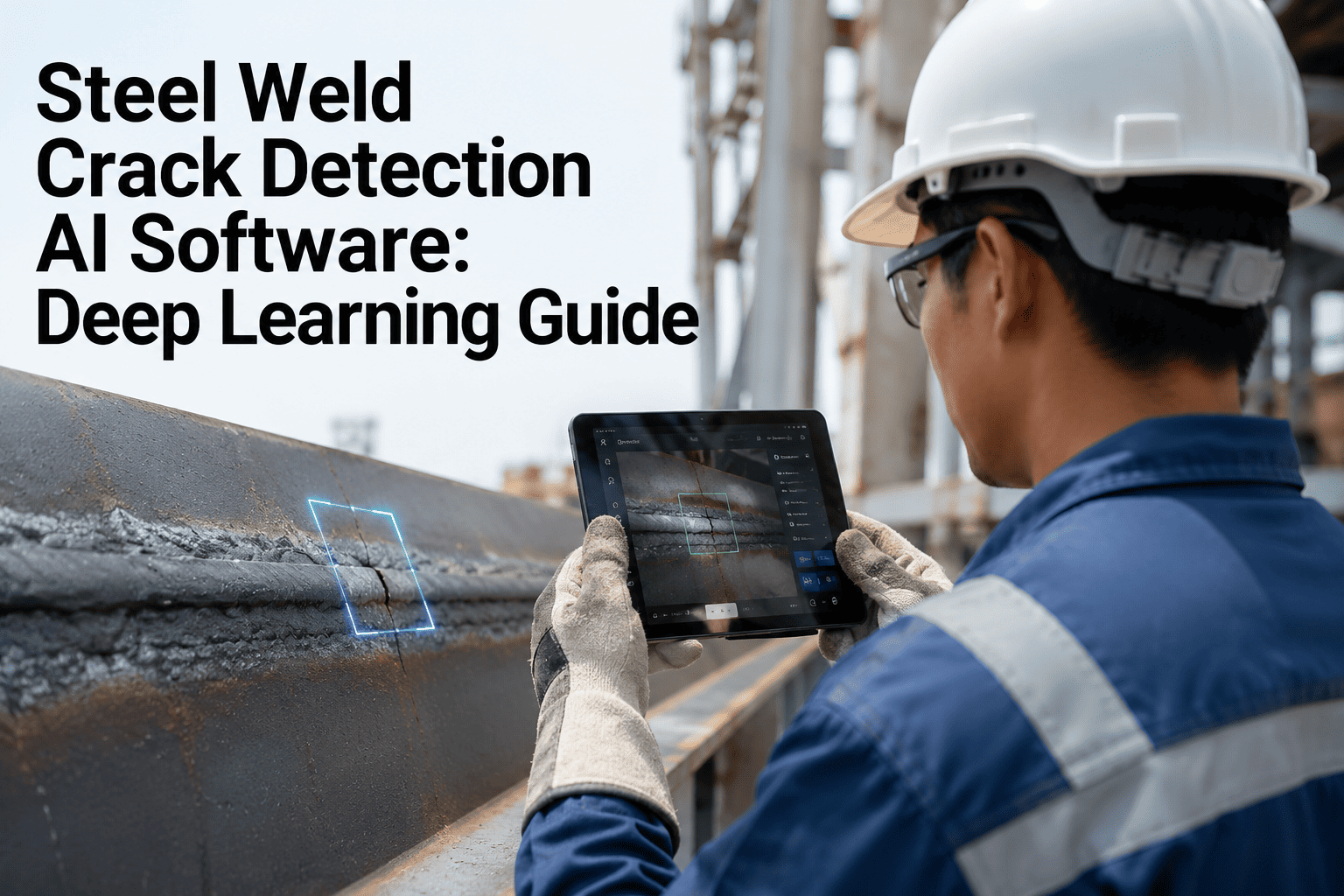
Weld cracks are the defect every radiographic and ultrasonic inspector fears missing, because a hairline crack in a load-bearing seam can sit invisible under a coating and still propagate under cyclic stress months later. Manual film review and B-scan interpretation depend on a human eye holding the same threshold through hundreds of frames a shift, and fatigue quietly turns a borderline call into a missed one near the end of a long inspection run. Deep learning changes what the inspection floor can actually catch, because a model trained on thousands of labeled crack signatures applies the exact same threshold to weld one and weld one thousand. Start a free OxMaint trial to score your next batch of X-ray and UT records against a trained crack model, or book a demo to see a live detection pass.
Steel Weld Crack Detection AI Software
Deploy a deep learning layer trained on thousands of X-ray and ultrasonic weld signatures that flags cracks the way a senior NDT inspector would — every shift, at the same threshold, with a heatmap showing exactly where and why.
Which Inspection Method Feeds Which Model
Crack detection AI is not one model — it is a family of models, each trained on the signal shape a specific NDT method produces. OxMaint routes each weld's inspection data to the model built for that signal.
| NDT Method | Signal Type | Crack Sensitivity | Typical Model Architecture |
|---|---|---|---|
| Radiographic (X-ray) | 2D grayscale image | Surface and near-surface cracks | CNN classifier or YOLO-style detector |
| Ultrasonic B-scan | Depth-amplitude image | Sub-surface and root cracks | CNN or transformer object detector |
| Phased array UT | Sectorial scan image | Volumetric, multi-angle | Hybrid CNN with sequence layers |
| Magnetic particle | Visual light image | Surface-breaking only | Lightweight CNN classifier |
| Dye penetrant | Visual light image | Surface-breaking only | Lightweight CNN classifier |
A single crack that reaches a customer as a warranty claim or a field failure report typically costs more than a full year of AI-assisted inspection across an entire weld line. OxMaint runs the crack model alongside your existing NDT workflow, not instead of it.
From Raw NDT Signal to a Flagged Crack
A working crack detection model is built in a fixed sequence. Skipping a stage is the most common reason a plant's own pilot model underperforms once it hits real production welds.
What the OxMaint Crack Detection Layer Adds
Every flagged crack is shown with a heatmap overlay on the original X-ray or B-scan image, so the reviewing inspector sees exactly which pixels drove the model's call instead of trusting a black box.
Confirmed and overturned flags are tracked per weld station and per shift, surfacing where the model is over-flagging so the threshold can be tuned instead of ignored.
Where a weld has both radiographic and ultrasonic records, OxMaint cross-references both model outputs before a crack call is raised, cutting single-method false positives.
A confirmed crack flag automatically opens a rework or hold work order against the weld's asset record, with the heatmap image attached as evidence.
Every inspector confirmation or override is logged and scheduled into the next model retraining cycle, so accuracy improves with plant-specific weld data over time.
Every model score, inspector decision, and rework outcome is stored against the individual weld identifier, ready for a customer or code-body traceability request.
Frequently Asked Questions
Does an AI crack detection model replace certified NDT inspectors?
How much labeled data does a plant need before a model is usable?
Can the same platform handle both X-ray and ultrasonic B-scan data?
What happens when the model and the inspector disagree?
Does a confirmed crack flag connect to a maintenance or rework work order?
Give Every Weld the Same Trained Eye, Every Shift
OxMaint layers deep learning crack detection over your existing X-ray, ultrasonic, and phased array inspection workflow, with explainable heatmaps, a false-call dashboard, and a full audit trail per weld — so a missed crack stops being a matter of which shift caught it.