Work rolls wear with every tonne that passes through the stand, not with every hour on the calendar. A roll that sits through a slow week and a roll that runs a heavy campaign can show the same mounted time and very different surface and diameter condition. Plants that schedule roll changes and grinding by the clock either pull good rolls early or leave worn ones in too long. Tonnage-based triggers tie maintenance to the work the roll has actually done. This article explains how to track it, what to record, and where tonnage alone is not enough, and you can book a demo to see roll records and tonnage triggers in Oxmaint.
Work Roll Tonnage Tracking for Steel Plant Reliability
Count the tonnes each roll carries, trigger changes and grinding from real usage, and keep a roll history that explains every campaign.
Time-Based and Tonnage-Based Roll Triggers Compared
- Easy to schedule and easy to forget why a limit was chosen
- Ignores product mix, reduction, and rolling speed
- Pulls lightly used rolls early and wastes grinding stock
- Leaves heavily used rolls in service past their condition
- Follows the work that actually wears the surface
- Can be tuned by roll grade, stand, and product family
- Supports consistent campaign length and planned changes
- Builds a history that can be compared roll to roll
Tonnage is a usage measure, not a condition measure. It tells the plant when to look, and the inspection tells the plant what it found. The strongest programs use both.
What Every Roll Record Should Hold
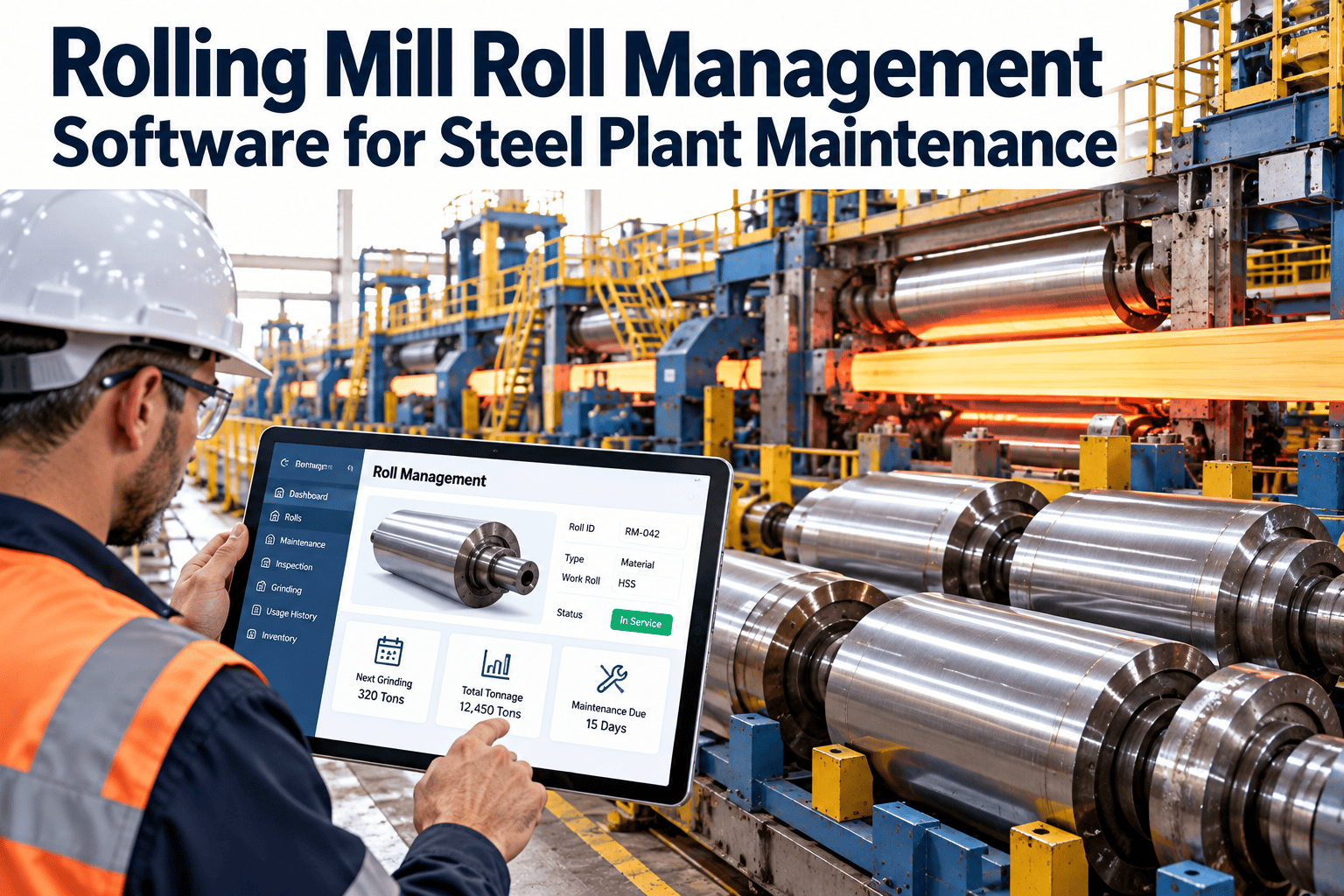
Each roll needs a permanent identity and a running history. Roll shops commonly keep individual roll performance data and use it to improve roll life, and the same data helps failure investigations later. The checklist shows the fields worth capturing.
- Unique roll number and grade
- Supplier and manufacture date
- Roll type and intended stand position
- Original and minimum allowable diameter
- Stand and position, top or bottom
- Mount and removal date and time
- Tonnes rolled in this campaign
- Cumulative tonnes over the roll life
- Diameter before and after grinding
- Stock removed in each grind
- Surface and subsurface inspection results
- Crown, taper, and finish achieved
- Cobbles, wrecks, and emergency removals
- Defects found such as fire cracks or spalling
- Bearing and chock assembly changes
- Reason for removal and approving person
Diameter Loss and Remaining Life, With Illustrative Numbers
Every grind removes material, and every roll has a minimum diameter below which it must be scrapped. Tracking stock removed per campaign turns that limit into a forecast of how many campaigns remain.
With that forecast, purchasing can order replacement rolls before the stock runs low, instead of discovering the shortage when the last good roll is already on the mill.
Keep Tonnage, Grinding, and Inspection in One Roll Record
Oxmaint helps roll shops and mill maintenance teams track campaigns, trigger work from usage, and keep a clean history for every roll.
Setting Tonnage Bands Instead of One Hard Limit
A single number invites last-minute arguments. Bands give planners time to prepare. Set the bands per roll grade, stand, and product family, and revise them from inspection results. The values in the table are placeholders to show the structure.
| Band | Share of planned tonnage | What the system does | Who acts |
|---|---|---|---|
| Normal | Below the early band | Keeps counting, shows remaining life | Nobody needed |
| Prepare | Early band reached | Reserves the replacement roll, books roll shop time | Planner and roll shop |
| Due | Planned limit reached | Creates the roll change work order for the next window | Mill maintenance |
| Review | Limit exceeded | Requires an exception note and a surface check | Maintenance lead |
What Tonnage Does Not Capture
- Thermal events, such as a cobble or a stalled strip that overheats the roll surface.
- Cooling water problems, including flow, temperature, and quality changes.
- Product changes that rolled the same tonnes at harsher reductions.
- Subsurface damage that only inspection will find.
Roll Damage Types to Record Against the Campaign
Roll shop references describe a consistent set of defects. Logging them against the campaign shows which grade, stand, or practice produces them.
From Removal to Remount Without Losing the Data
Where Tonnage Numbers Come From
| Source | What it gives | Common weakness | Safeguard |
|---|---|---|---|
| Mill automation or production records | Tonnes per coil, slab, or pass | Not tied to a roll number | Link stand and roll mount events to production |
| Roll change entries | Mount and removal times | Late or missing entries | Require entry on a mobile device at the stand |
| Roll shop measurements | Diameter and stock removed | Handwritten sheets | Enter directly against the roll record |
| Inspection findings | Defects and depth | Free-text notes | Use defect picklists with photos |
When mill automation already counts tonnes, integration scope should be confirmed in a walkthrough. Where it does not, a disciplined manual entry at each coil or shift can still provide a usable count.
Where Tonnage Programs Lose Credibility
Which Oxmaint Capabilities Support Roll Tracking
Oxmaint manages the maintenance side of the roll programme. Tonnage data can come from your mill records or from entries made on the floor. Confirm the integration approach for your plant in a demonstration.
Why Work Rolls and Backup Rolls Need Different Rules
Roll reference material assigns different roll types to different duties. Work rolls touch the strip and take the surface wear. Backup rolls support them and are managed on a different rhythm. Tonnage tracking should reflect that split.
| Roll role | Typical material families mentioned in references | Main wear concern | Tracking focus |
|---|---|---|---|
| Hot strip finishing work rolls | Chill and indefinite chill iron grades | Surface wear, fire cracking, spalling | Tonnes per campaign and stock removed |
| Cold rolling work rolls | Fully hardened forged steel | Surface finish loss and marking | Tonnes, surface roughness, regrind interval |
| Backup rolls | Forged steel, cast iron, and spheroidal graphite grades | Subsurface fatigue and spalling | Cumulative tonnes and inspection history |
| Section and bar rolls | Alloy iron and carbide grades | Groove wear and collar breakage | Tonnes per groove and regroove history |
Material choices differ by mill and supplier, so treat the table as a structure for organising your own data, not as a specification.
Keeping Surface Health Visible
- Record cooling water flow, temperature, and pH checks, since poor water quality can damage some roll materials.
- Log the surface finish measured after each grind so you can see how finish decays across a campaign.
- Note product mix by campaign, because heavier reductions wear rolls faster for the same tonnes.
- Photograph defects at removal so patterns can be reviewed later.
Planning Roll Stock So the Mill Never Waits
Roll change plans fail when a ready roll is not available. Treat roll stock as a managed inventory with statuses and lead times, not as a set of items sitting in racks.
- Compare ready rolls against the number needed over the next planning period.
- Order replacements using the campaigns-remaining forecast and supplier lead time.
- Reserve a roll against each planned change so two stands do not claim the same one.
- Review rolls on hold weekly so decisions do not stall.
Responsibilities Around the Roll Programme
| Role | Responsibility | Record produced |
|---|---|---|
| Mill operator | Reports roll change events and abnormal rolling conditions | Mount and removal entries, incident notes |
| Roll shop technician | Inspects, grinds, measures, and assembles | Diameter, stock removed, defects, verification |
| Maintenance planner | Schedules changes and reserves rolls and bearings | Planned work orders and stock reservations |
| Quality engineer | Links surface defects on product to roll campaigns | Defect to roll correlation notes |
| Reliability engineer | Reviews campaign data and adjusts tonnage bands | Updated limits and the reason for each change |
Using Campaign History to Improve the Next Campaign
The value of tonnage tracking compounds over time. After several campaigns, the history shows which grades last longest in which stands, and which practices shorten life. Hold a regular review so the data changes decisions.
- Compare tonnes per campaign across rolls of the same grade and stand.
- Look for rolls that wore faster than the group and check what was different about their campaigns.
- Match surface defects found at removal to product mix, cooling conditions, and incidents.
- Check whether grinding stock removed is consistent, or whether some grinds take more than needed.
- Decide whether bands should move earlier or later, and record the reason for the change.
- Share findings with the mill crew so practice changes follow the data.
A Practical Checklist for the First Month
- Give every roll in service and in the shop a unique number and enter its grade and diameter.
- Agree how tonnes will be counted, whether from mill records or manual shift entries.
- Define tonnage bands for one stand and one roll grade before expanding.
- Train the crew to log every mount and removal on a mobile device at the stand.
- Require the roll shop to enter diameter and defects against the roll record before it is released.
- Review the first full campaign against the inspection results and adjust the bands.
Metrics for a Roll Reliability Programme
| Metric | How to calculate | What it shows |
|---|---|---|
| Tonnes per campaign | Tonnes rolled between mount and removal | Roll grade and practice performance |
| Stock removed per tonne | Diameter ground off ÷ Tonnes rolled | Wear rate and grinding efficiency |
| Planned change share | Planned removals ÷ Total removals | How often changes are controlled |
| Emergency removal count | Removals caused by cobbles or defects | Process stability and roll damage risk |
| Roll stock cover | Rolls ready ÷ Rolls needed over the plan period | Risk of running short of ready rolls |
| Cost per tonne rolled | Roll, grinding, and bearing cost ÷ Tonnes | Economic roll performance by grade |
Work Roll Tonnage Tracking Questions
No, it tells you when to inspect. Surface condition, diameter, and events still decide the change.
Start with manual entries at each shift or coil, and sign up to build the roll records. Integration can follow later.
Yes, because wear and thermal load differ along the mill. Set limits by grade, stand, and product family.
It prevents early pulls that waste grinding stock and late pulls that damage rolls. You can book a demo to see the roll history view.
Log the stand, the rolls involved, tonnes at the time, damage found, and the decision on reuse or scrap.
Let Tonnes Rolled, Not the Calendar, Decide When Rolls Come Out
Build a roll record that connects usage, inspection, grinding, and spares, and give planners the lead time to change rolls on their terms.