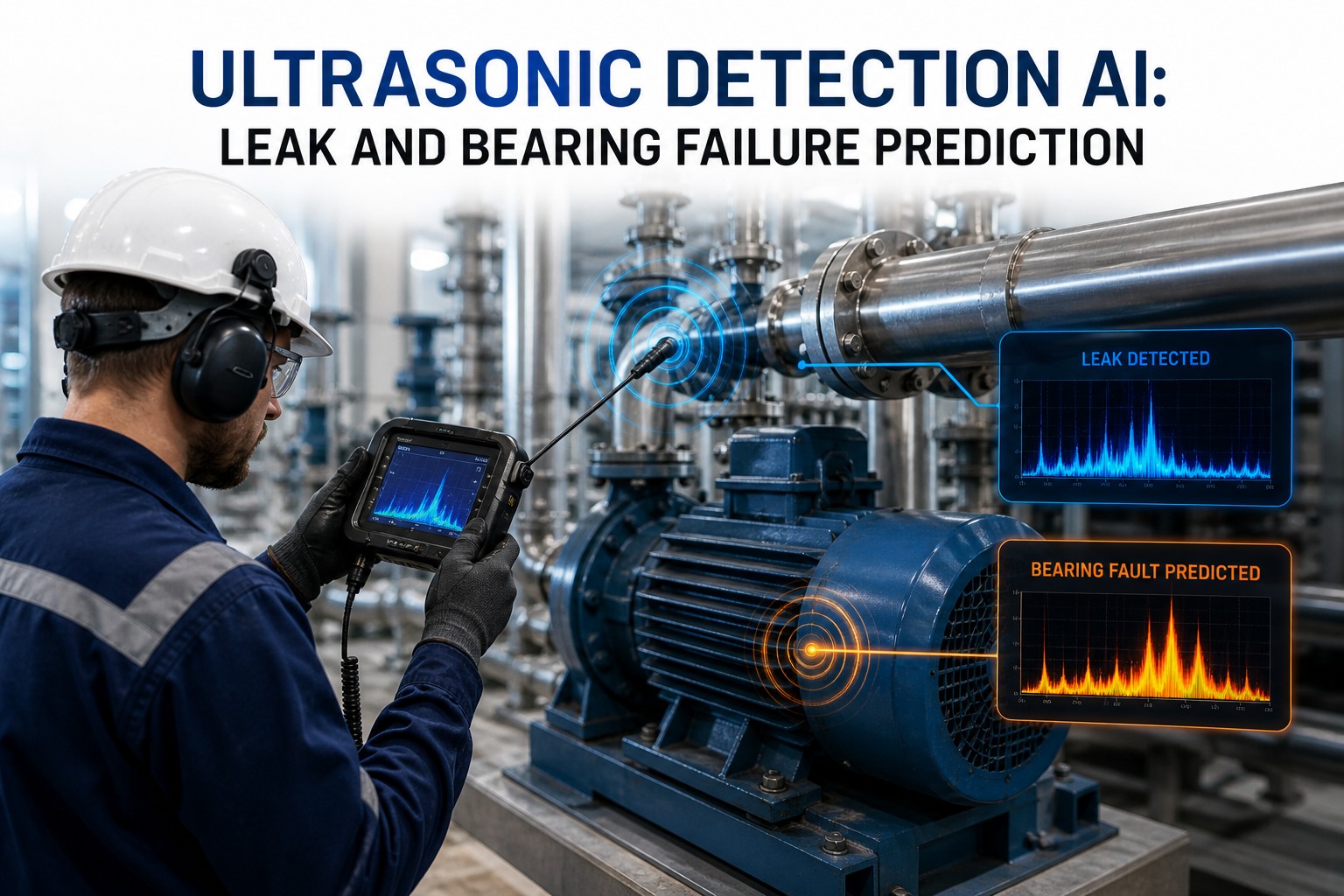
How AI Vision Detects Cracks, Corrosion, and Leaks in Real Time
By Riley Quinn on May 6, 2026
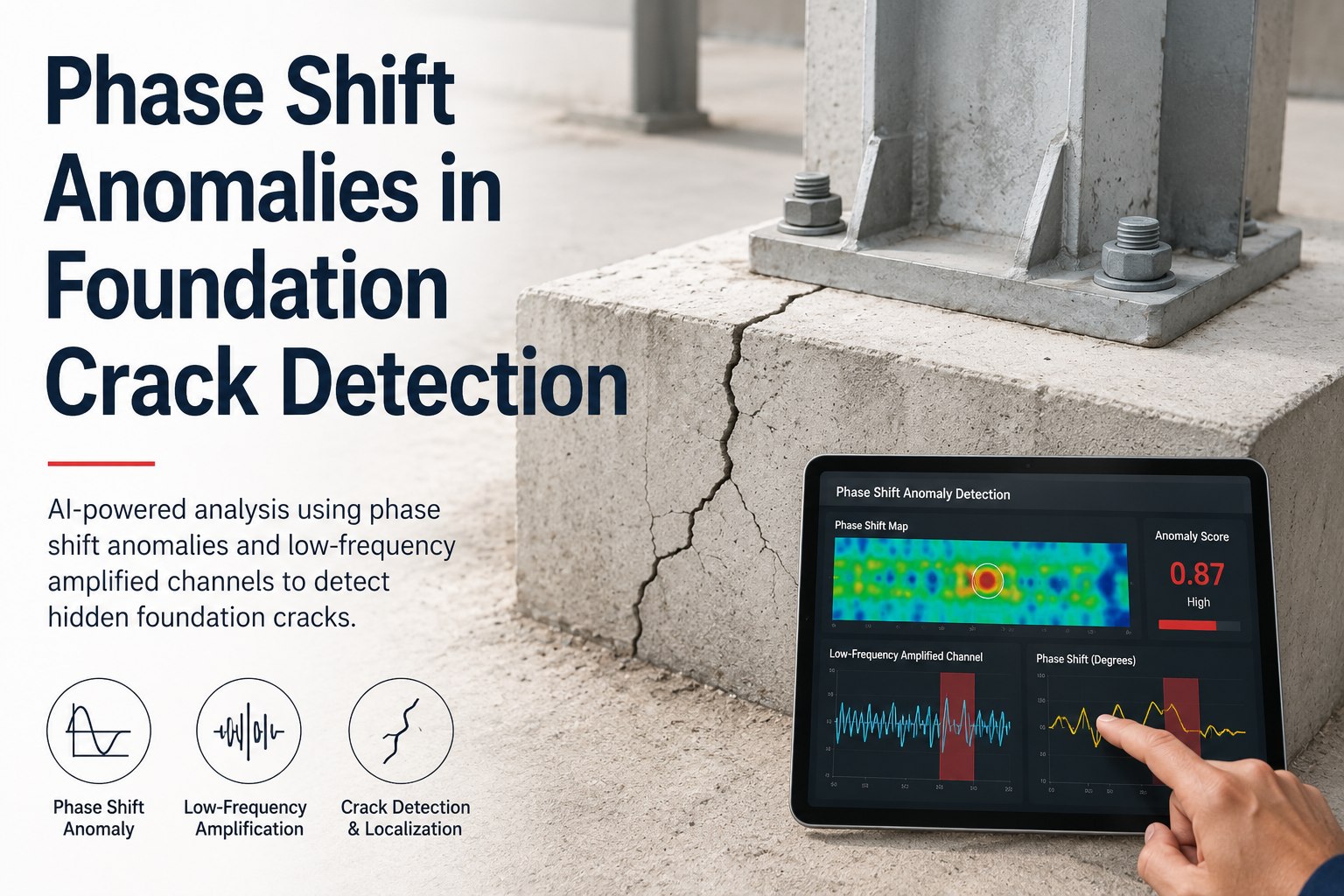
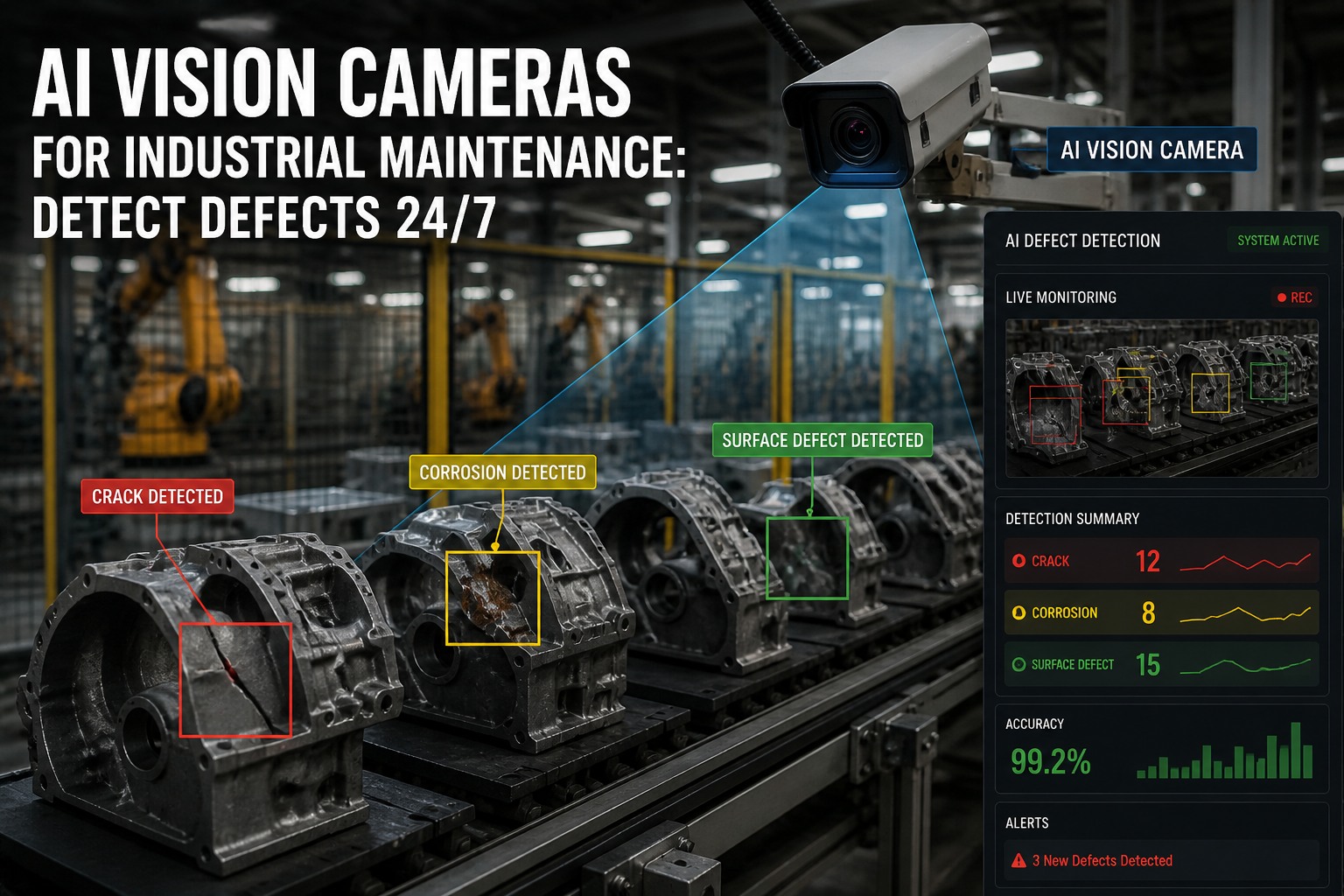
A 4K factory camera produces 8.3 million pixels per frame, 30 frames per second, every minute the line is running — that's 14.9 billion pixels per minute pouring out of one camera, and a hairline crack in a pressure vessel weld might occupy 60 of them. No human can stare at that flow long enough to catch the crack reliably; computer vision can, and increasingly does. Convolutional neural networks process those frames through stacked layers of learned filters, surfacing cracks, corrosion blooms, and leak signatures in milliseconds while the rest of the frame stays dark. This post walks through how the CNN actually sees defects, the three vision tasks (classification, detection, segmentation) that handle different inspection problems, and how OxMaint's AI Vision Camera connects every detection straight to a CMMS work order. Sign up free to test AI vision detection on your own equipment images.
MAY 12, 2026 5:30 PM EST , Orlando
Upcoming OxMaint AI Live Webinar — How AI Vision Detects Cracks, Corrosion, and Leaks in Real Time
Live session for plant managers, reliability engineers, EHS leaders, and operations teams who want to understand what AI vision actually does inside an inspection camera. We'll walk through the convolutional neural network pipeline frame-by-frame, demonstrate live crack detection with bounding boxes and segmentation masks, show how leak detection works across visible, IR, and ultrasonic spectra, and walk through the OxMaint AI Vision Camera deployment that ships pre-trained and ready to run in 6–12 weeks.
The Three Vision Tasks That Solve Three Different Inspection Problems
"AI vision" is a category of technologies, not a single tool. Different inspection problems need different vision tasks, and getting the match right is the difference between a system that works and a system that floods technicians with false alarms. The three core tasks below each answer a different question about a defect — and most production deployments use all three depending on which equipment is being monitored.
01
Classification
"Is there a defect?"
Returns a single label per image: "crack present" or "no defect". Fastest to run, simplest to deploy. Best for go/no-go decisions on individual parts.
CNN backbone: ResNet, EfficientNet, MobileNet
02
Object Detection
"Where is the defect?"
Returns bounding boxes around every defect found, plus a class label and confidence score. Multi-defect, multi-location. The workhorse of plant-floor inspection.
Architecture: YOLOv8/v10, Faster R-CNN, RetinaNet
03
Segmentation
"What's the exact shape?"
Pixel-level mask of every defective region. Returns exact crack length, corroded surface area, leak plume size — quantitative measurements, not just bounding boxes.
Architecture: U-Net, DeepLabv3+, Mask R-CNN, SAM2
Inside the CNN — How a Camera Frame Becomes a Defect Detection
The "neural" part of convolutional neural networks isn't metaphor. The architecture really does process images the way the visual cortex does: stacked layers of feature detectors, each layer building on what the previous one extracted. A raw frame enters the input layer as a grid of pixel intensities. By the time it reaches the output, the network has decomposed and recomposed it through dozens of learned transformations, ending in a structured prediction: "crack at coordinates (340, 220), 96% confidence." The visualizer below tracks one frame through the five canonical stages. Book a demo to walk through the CNN pipeline running on your equipment footage.
01
INPUT
Raw 1920×1080 frame from camera. Pixel intensities only — no semantic meaning yet.
02
EARLY CONV
First 2-3 conv layers extract simple features: edges, color gradients, textures. ~64 feature maps in parallel.
03
DEEP CONV
Deeper layers combine simple features into complex patterns: corners, holes, repeating textures, defect-like shapes. ~512 feature maps.
04
DETECTION HEAD
Detection head proposes bounding boxes at multiple scales. Each box gets a class probability and confidence score. Non-max suppression cleans overlaps.
05
OUTPUT
Final output: bounding box coordinates, defect class, confidence score. Sent straight to OxMaint CMMS to auto-generate work order.
7.2
ms
End-to-end inference per frame on RTX PRO 6000
138
FPS
Throughput at 1080p — 4.6× real-time
90.5
% mAP
Accuracy on industrial steel defect benchmark
The Three Defect Categories — Each Needs a Different Strategy
Cracks, corrosion, and leaks all defeat the human eye in different ways and require different sensing strategies. Cracks are sharp-edged and high-contrast but often microscopic. Corrosion is large-area but visually subtle, often blending with surrounding metal. Leaks may be invisible in standard light but glow in infrared or ultrasound. The cards below outline what each defect actually looks like to a CNN, the spectrum it's typically detected in, and the architecture that handles it best. Sign up free to load your equipment images into the defect classifier.
Crack Detection
Best spectrumVisible + UV fluorescence
CNN architectureU-Net + ViT segmentation
Detection limit~0.1 mm width
Typical mIoU71–98% (segmented)
Hairline cracks in welds, pressure vessels, structural steel. Segmentation models trace the exact crack path so length and width can be measured pixel-by-pixel.
Corrosion Detection
Best spectrumVisible RGB + multispectral
CNN architectureDeepLabv3+ semantic seg
Output% surface area corroded
Stage trackingPitting → uniform → flaking
Surface oxidation, pitting, flaking on tanks, piping, structural members. Semantic segmentation calculates total corroded percentage and tracks progression month-over-month.
Leak Detection
Best spectrumIR thermal + acoustic ultrasound
CNN architectureYOLO detection + flow analysis
Plume signatureΔT or pressure differential
Detection limit~0.5 g/h gas leak rate
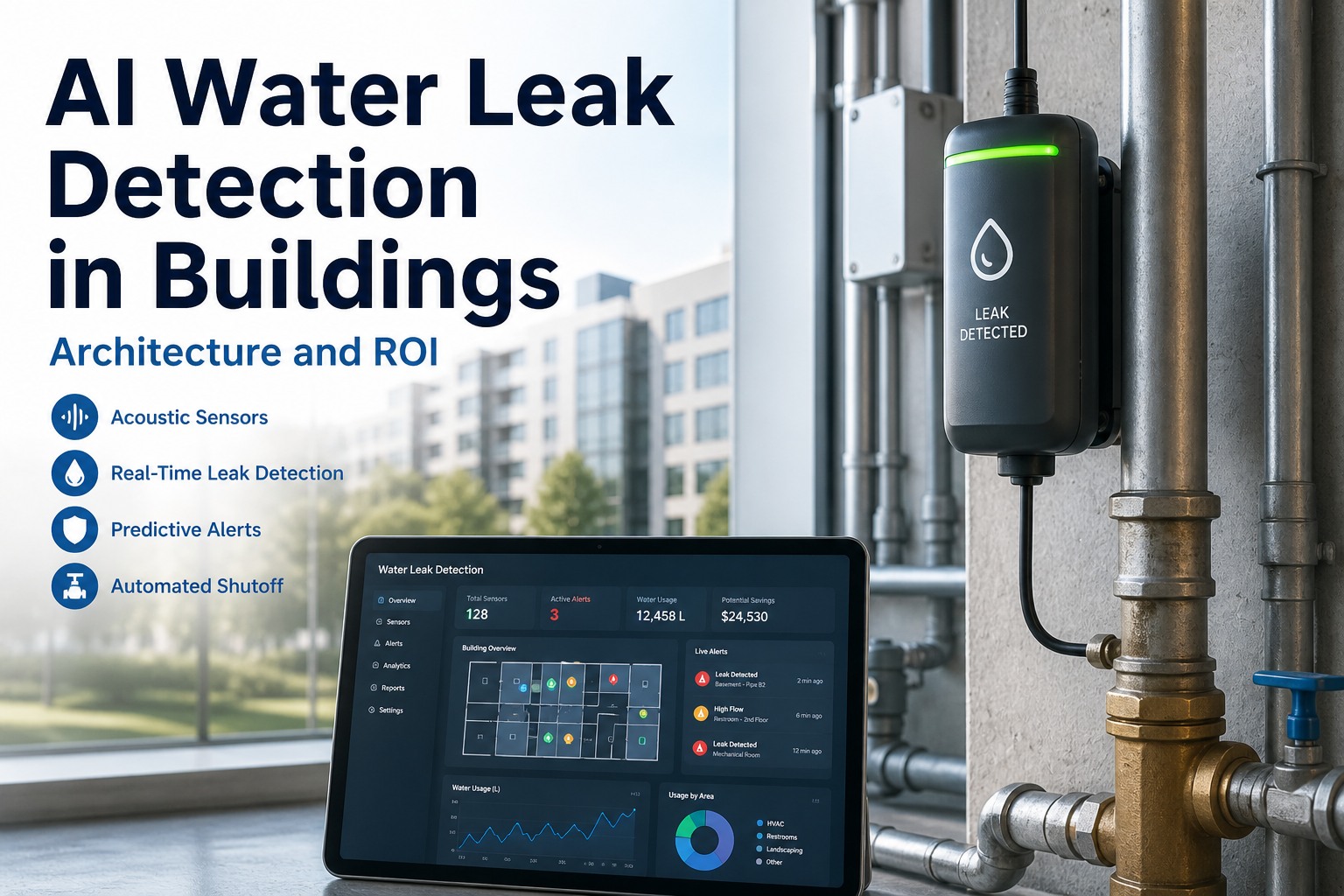
Gas, steam, water, hydraulic fluid escapes. Thermal imaging shows temperature plume; acoustic shows pressure-wave signature. Detection at distances up to 30 meters.
Why Real-Time Matters — The 30 FPS Threshold
Inspection cameras don't fire defect alerts the same way smoke detectors fire. They run continuously, processing every frame, and the gap between "frame captured" and "alert generated" determines whether the alert is useful. The 30 FPS benchmark is the engineering threshold below which detection feels laggy to operators and above which alerts feel instantaneous. Most production CNN deployments now operate well above this threshold — DEMA-YOLO hits 134 FPS on industrial benchmarks, YOLOv6-N reaches 1,234 FPS on a Tesla T4 GPU — leaving plenty of headroom for 4-8 simultaneous camera feeds on a single inference server.
0
30
60
90
120+
Lag visible
Real-time floor
Production-grade · headroom for multi-camera
Mobile CPU inference~12 FPS
Real-time benchmark30 FPS
YOLOv8 on AGX Orin~85 FPS
DEMA-YOLO industrial134 FPS
YOLOv8 on RTX PRO 6000138 FPS
Pre-Configured · CNN-Ready · Ships in 6–12 Weeks
Order an OxMaint AI Vision Camera Pre-Loaded for Defect Detection
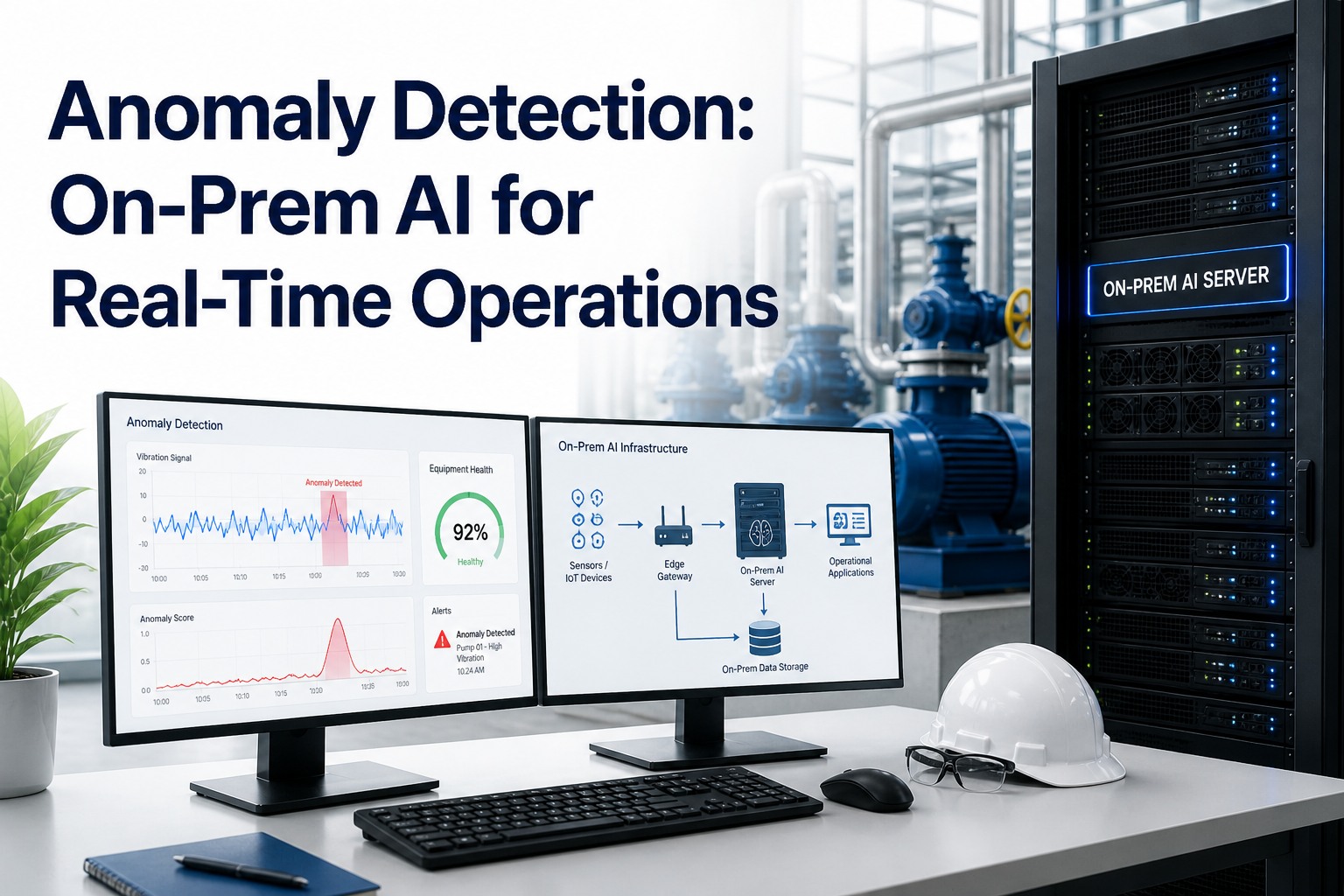
A complete on-prem AI vision deployment for crack, corrosion, and leak detection. Industrial cameras, AGX Orin edge processing, RTX PRO 6000 Blackwell central server running YOLOv8 detection and U-Net segmentation, automatic CMMS work-order generation tied to every detection. Pre-trained on industrial defect datasets, ready to fine-tune on your specific equipment within days.
From Detection to Work Order — The Closed-Loop Pipeline
Spotting a defect in real time isn't the deliverable. The deliverable is a scheduled corrective action with the right technician assigned, the right parts staged, and the right documentation attached. The OxMaint AI Vision Camera connects every CNN detection directly to the CMMS work-order engine, with rule logic that maps each defect type and severity to its standard corrective procedure. Sign up free to walk through the detection-to-work-order pipeline on your data.
01
Capture
Industrial camera streams 30 FPS into AGX Orin edge unit. Frames buffered locally, never streamed to cloud.
→
02
Detect
CNN runs every frame through YOLO + U-Net pipeline. Bounding boxes + segmentation masks for every defect found.
→
03
Classify
Synapse AI assigns severity 1-10. Below threshold = log only; above = work order. Trend analysis flags growth.
→
04
Work Order
Auto-generated CMMS ticket: defect image with annotated mask, severity, corrective procedure, technician, parts list.
Investment Summary — Per-Plant Rollout
The OxMaint AI Vision Camera deployment uses the standard per-plant architecture: central RTX PRO 6000 Blackwell server plus two AGX Orin edge appliances. Crack detection models, corrosion segmentation models, leak classification models, and CMMS connectors all included in the OxMaint AI Software + Integration line. Book a demo to walk through per-plant pricing for your specific camera footprint.
Swipe to see breakdown
Component
Unit Cost
Per Plant
Notes
RTX PRO 6000 Blackwell 96GB Server
$19,000
$19,000
YOLO + U-Net + Synapse AI inference
NVIDIA AGX Orin #1 (Vision Edge)
$4,000
$4,000
DeepStream multi-camera pipeline
NVIDIA AGX Orin #2 (CCTV + IR Edge)
$4,000
$4,000
Thermal imaging for leak detection
Industrial Ethernet Switch + Cabling
~$2,500
~$2,500
Plant-floor switch, Cat6A, SFP modules
Local Electrical / Instrumentation
$8,000–$12,000
~$10,000 est
Camera mounts, lighting, conduit
OxMaint AI Software + Integration
$35,000–$55,000
$45,000 avg
Defect models, CMMS connectors, training
Per-Plant Total
$72,500–$94,500
~$84,500 avg
4-month delivery per plant
4-Plant Full Rollout (with Enterprise AI)
~$420,000–$520,000
Total programme
Parallel delivery + DGX Station GB300 Ultra
$84.5K
Avg per plant
4 mo
Delivery
$0
Recurring fees
∞
Perpetual
Perpetual · Owned · Source Access · Data Sovereignty
Stop Catching Defects After They Fail — Run AI Vision, Owned
YOLOv8 detection, U-Net segmentation, multi-spectral leak analysis, automatic CMMS work-order generation, and the full OxMaint software stack. Your team owns the platform, the AI models, and the source code outright. The architecture every modern reliability program is converging on as cameras replace clipboards.
How accurate is AI vision compared to a trained inspector?
Modern CNN-based defect detectors routinely match or exceed trained inspectors on consistency, while inspectors retain an edge on rare or context-dependent defects the model wasn't trained on. Published benchmarks for industrial defect detection report mAP scores in the 90-99% range — DEMA-YOLO hits 90.5% on the NEU-DET steel surface dataset, 93.9% on PCB inspection, 98.7% on wafer maps. For structural cracks, U-Net+Transformer hybrids achieve 71.8% mIoU on the CrackSeg9k benchmark and 98.88% precision on classification. The honest framing is that AI vision is dramatically more consistent than humans (no fatigue, no shift-end attention drop, identical performance at 3 AM and 9 AM) and matches human accuracy on common defects, but human inspectors are still better at noticing genuinely novel issues the model has never seen. Production deployments use AI as the always-on first line and route ambiguous detections to human review — best-of-both-worlds rather than full replacement.
Do I need separate cameras for cracks, corrosion, and leaks?
Not necessarily. A single visible-light industrial camera handles cracks and corrosion well, since both produce visual signatures that high-resolution RGB sensors capture clearly. Leak detection is the case where additional spectra significantly improve performance — gas leaks are nearly invisible in standard light but glow in infrared (the gas plume causes a 1-3°C temperature differential that thermal cameras detect from 30+ meters), and water/steam leaks have distinct ultrasonic signatures that acoustic cameras pick up before visible vapor forms. Most OxMaint deployments use a hybrid sensor approach: visible-light cameras for general inspection and crack/corrosion monitoring, with thermal cameras added at high-risk points (compressed gas systems, steam manifolds, hydraulic lines) where leaks are the primary concern. The CNN models are trained per-spectrum so the same architecture handles RGB, IR, and acoustic input streams.
How does the system handle false positives?
False-positive management is where production-grade systems differ most from research demos. The OxMaint AI Vision Camera uses three layers of false-positive suppression: confidence thresholding (default 85% — lower thresholds catch more genuine defects but generate more false alarms), temporal consistency checking (a defect must appear in 3+ consecutive frames to trigger an alert, filtering out single-frame artifacts from glare or motion blur), and severity-based routing (low-severity detections are logged for trend analysis but don't fire work orders, only above-threshold detections do). The thresholds are tunable per camera and per defect class — a high-stakes pressure vessel might run 90% confidence with 2-frame temporal consistency, while routine surface monitoring runs 75% confidence with 5-frame consistency. After 90 days of operation, most plants tune their false-positive rate below 5% while maintaining detection rates above 95%.
What if my equipment doesn't look like the training data?
Out-of-the-box pre-trained models cover the most common industrial scenarios — steel surfaces, painted equipment, concrete structures, common piping materials — but every plant has unique equipment that the generic models won't perform optimally on. The OxMaint workflow handles this through transfer learning. The pre-trained models ship as the starting point, deployment includes a 2-4 week fine-tuning phase where 200-500 of your specific equipment images are labeled (with active-learning support to make this efficient), and the fine-tuned model achieves equipment-specific accuracy comparable to the original benchmarks. Source code access means you can also retrain entirely on proprietary data without OxMaint involvement if your IT team prefers full control. The DGX Station GB300 Ultra at the enterprise tier handles fine-tuning across all your plants centrally, then ships updated weights to each plant's RTX PRO 6000 server.
How long until our team is productive with AI vision?
Most teams reach basic productivity within the first 2-3 weeks of deployment and full operational fluency within 2-3 months. The OxMaint AI Vision Camera deployment includes structured onboarding: weeks 1-2 cover camera mounting, lighting setup, and initial baseline captures; weeks 3-4 cover the inspection dashboard, work-order workflow, and threshold tuning; weeks 5-8 cover advanced features like custom defect class addition, multi-camera correlation, and CMMS integration depth. Maintenance technicians typically find AI vision intuitive because the visual output (annotated bounding boxes, segmentation overlays) maps directly to how they already think about defects — easier to adopt than vibration spectrum analysis or oil chemistry. By month 4, the plant team is independently running the AI Vision Camera with detection thresholds tuned to plant conditions, custom defect classes added for plant-specific equipment, and CMMS work orders auto-generating from every above-threshold detection.