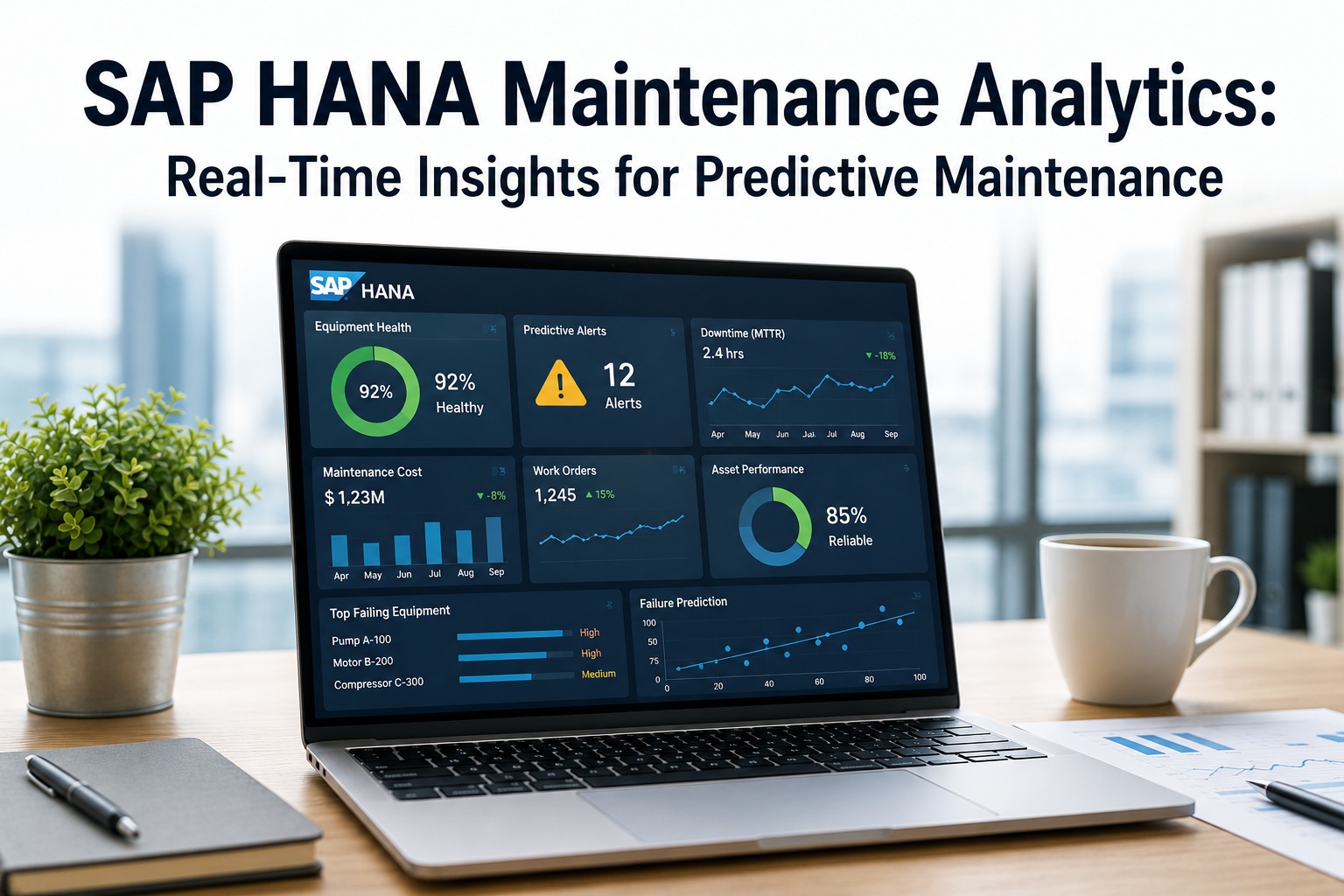
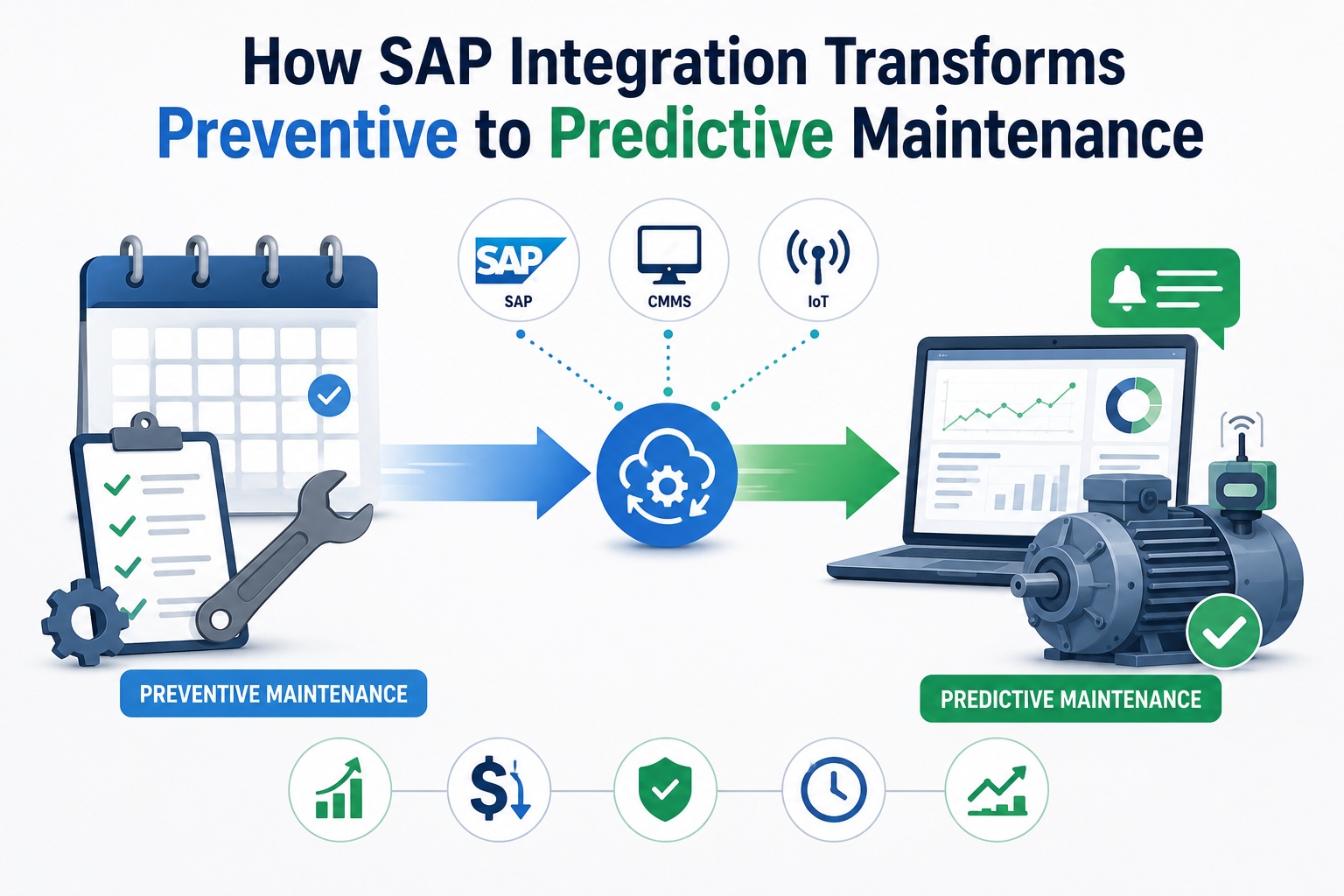
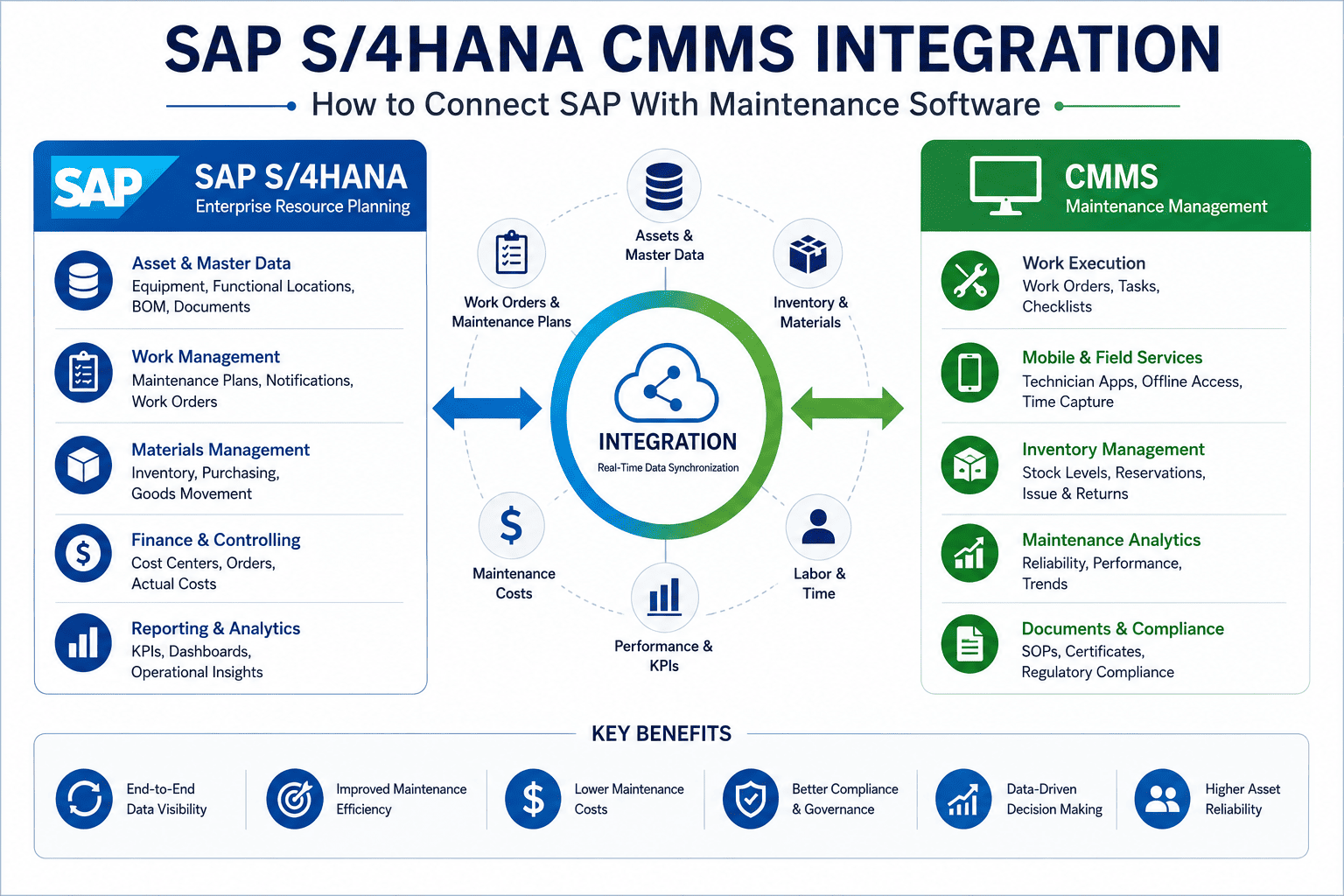
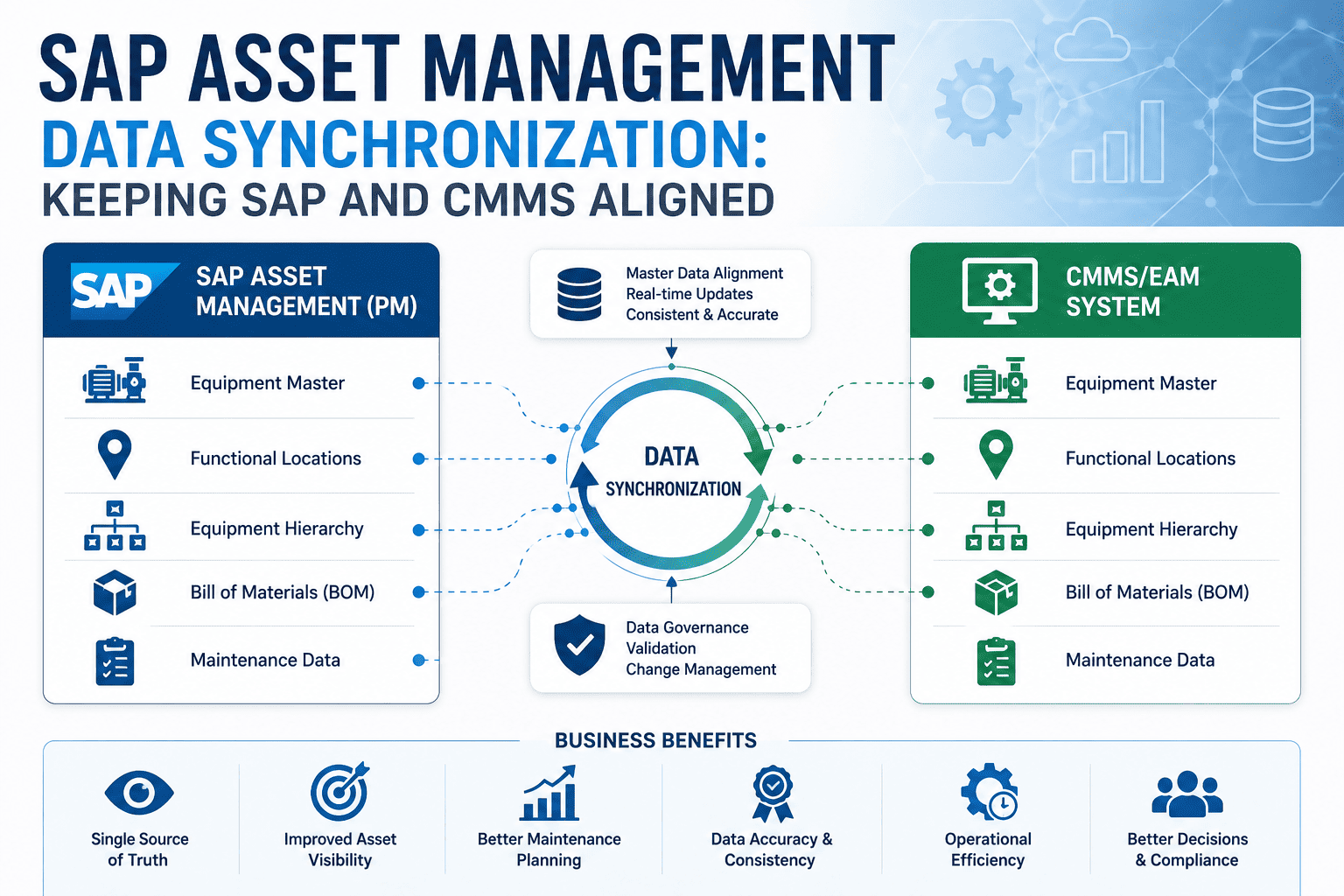
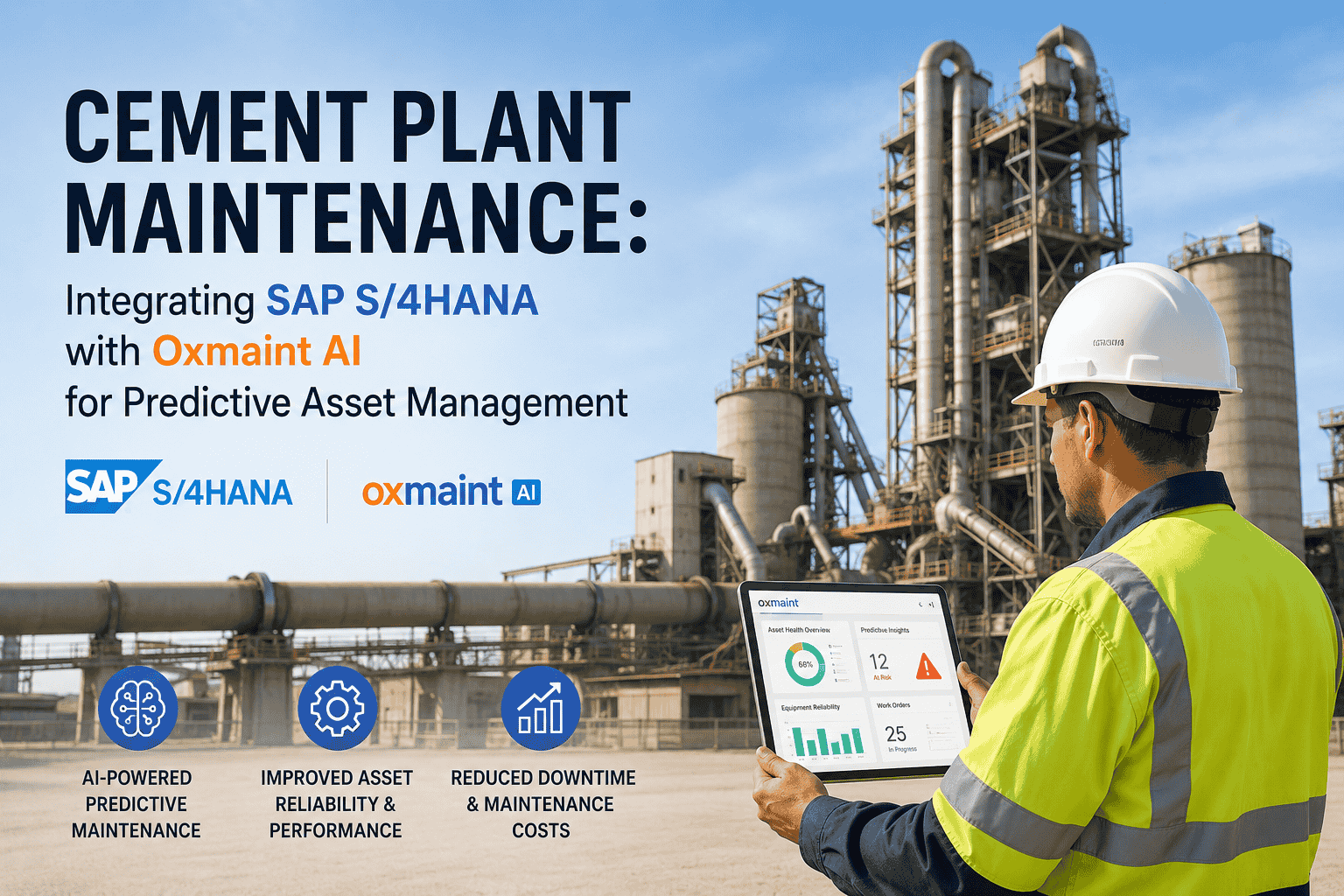
Your maintenance team generates more data in a single day than analysts could meaningfully process in a week. Sensor readings stream in by the second. Work order updates pile up by the minute. Cost postings, time confirmations, asset status changes—all flowing into systems that were designed for transactional record-keeping, not analytical insight. By the time traditional reporting catches up to what's happening on the plant floor, the moment to act has passed. SAP HANA changes this fundamental constraint. Book a free demo to see real-time maintenance analytics applied to your operational scenarios.
Fleet failure trend across 50K assets
140×
Cost analysis by plant (12 months)
90×
PM compliance rolling average
62×
Real-time MTBF recalculation
120×
Predictive failure scoring (ML model)
LIVE
Why Traditional Maintenance Analytics Hit a Wall
For decades, maintenance reporting followed a predictable pattern: data accumulated in transactional systems during the day, batch jobs ran overnight to aggregate it, and reports landed in inboxes by morning—describing what had already happened. This worked when monthly trend analysis was the primary use case. It fails completely when modern maintenance operations need to detect anomalies in minutes, recalculate MTBF after every failure event, or run predictive models against live sensor streams. IDC's 2025 industrial analytics research found that 78% of manufacturers identify "time to insight" as their biggest analytics constraint—not data quality, not tool availability, but the latency between data generation and actionable visibility.
78%
of manufacturers cite latency as their top analytics constraint, not data quality
1000×
average query speedup HANA delivers vs traditional disk-based maintenance databases
$2.3M
average annual value from real-time anomaly detection at mid-size plants
The performance gap isn't incremental—it's transformational. When analytics resolve in milliseconds instead of minutes, maintenance shifts from reactive reporting to proactive intervention. Sign up free to explore HANA-powered analytics against your asset data.
The HANA Advantage for Real-Time Maintenance Operations
SAP HANA isn't a faster database—it's a fundamentally different computing model. By keeping the entire dataset in memory, eliminating the disk I/O bottleneck, and processing data in columnar format optimized for analytical queries, HANA collapses the traditional trade-off between transactional and analytical workloads. Maintenance teams gain four distinct capabilities that simply weren't available before in-memory computing matured.
01
Real-Time OLAP
Run complex analytical queries directly against transactional data without ETL delays or data warehouse lag
02
Embedded ML
Execute predictive models inside the database engine—no data movement, no separate ML infrastructure
03
Streaming Integration
Ingest IoT sensor streams continuously and join them with structured ERP data in single queries
04
Graph & Spatial
Analyze asset interdependencies and geographic distributions natively without specialized databases
Use Case: Predictive Failure Detection at Scale
The first transformative HANA application in maintenance is predictive failure detection running against live data. Traditional setups extract sensor data overnight, run prediction models the next day, and surface results that are already 18-36 hours stale by the time technicians see them. HANA-based predictive systems score every asset reading as it arrives—latency under a second from sensor signal to risk classification. This isn't an incremental improvement; it's the difference between catching a bearing failure when it's a five-minute fix and discovering it when it becomes a five-hour outage.
Real Outcome from Tier-1 Auto Supplier
Switched from nightly batch to HANA-based real-time predictive scoring across 12,000 assets. Detected 47 critical-failure events early in first quarter—annual savings of $4.1M from prevented downtime alone.
Use Case: Multi-Plant Asset Performance Monitoring
For operations running across multiple plants, the analytical challenge multiplies. Comparing MTBF across 8 facilities, identifying the worst-performing asset class globally, or rolling up cost-per-availability hour across regions has historically required nightly aggregation jobs and pre-built data marts. HANA dissolves this complexity. Operations directors can ask any question—"which plant has the highest emergency work order ratio this week?"—and receive an answer in seconds, computed across billions of rows of underlying data. The implications for governance and accountability are significant: when answers are instantaneous, conversations get structured around facts rather than opinions.
Operations teams running multi-plant analytics on legacy databases often discover their data warehouse architecture itself has become the bottleneck. Sign up free to model multi-plant queries against a HANA-backed CMMS environment.
Use Case: Dynamic Scheduling and PM Optimization
Preventive maintenance scheduling has traditionally been calendar-driven—every 90 days, every 500 operating hours, every quarter. HANA-powered analytics enable condition-based scheduling at scale. By continuously analyzing sensor readings, usage patterns, and historical failure data, the system recommends optimal PM timing for each individual asset rather than applying blanket policies. The result: fewer unnecessary PMs on healthy equipment, more frequent attention on assets showing wear patterns, and 15-25% reduction in total PM hours without sacrificing reliability. Dynamic scheduling pays back faster than any other HANA maintenance use case, with most operations seeing measurable results within 90 days.
See HANA Analytics Running in a Real CMMS
Watch how predictive scoring, multi-plant queries, and dynamic scheduling actually behave when powered by in-memory analytics. Live walkthrough against realistic maintenance scenarios in 30 minutes.
Building the HANA Maintenance Analytics Stack
Implementing HANA-powered maintenance analytics isn't a single project—it's a phased journey that builds capability over 6-12 months. The phases below reflect what successful operations actually do, sequenced to deliver early value while building toward advanced predictive capabilities. Each phase requires the previous one to be stable before moving forward; rushing the foundation creates analytics that produce impressive demos but unreliable production results.
1
Foundation · Months 1-2
Connect SAP PM data into HANA, validate master data quality, build core descriptive dashboards (MTTR, MTBF, PM compliance)
2
Real-Time Reporting · Months 2-4
Migrate batch reports to live HANA views, eliminate ETL delays, enable plant-floor dashboards with sub-second refresh
3
IoT Integration · Months 4-6
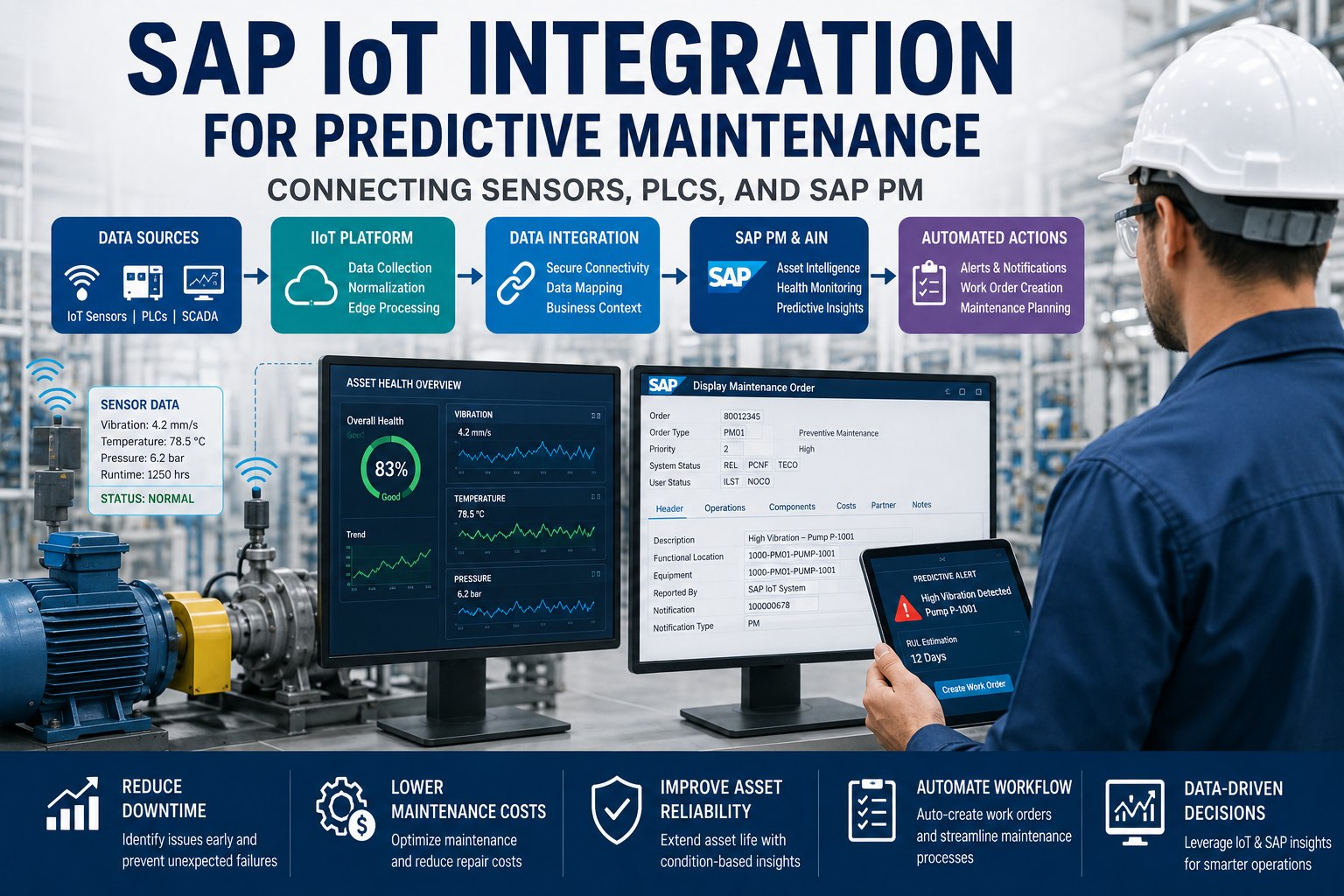
Stream sensor data into HANA, join with ERP/CMMS data, build anomaly detection rules using SAP Smart Data Streaming
4
Predictive Models · Months 6-9
Deploy ML models in HANA Predictive Analysis Library, score assets continuously, integrate predictions with work order creation
5
Prescriptive Optimization · Months 9-12
Add dynamic PM scheduling, resource optimization, multi-constraint solvers for technician dispatch and parts allocation
Operations completing all five phases typically realize 4-7x ROI on HANA infrastructure investment within 24 months. Sign up free to map your HANA analytics roadmap against your current data architecture.
Expert Perspective: Where HANA Analytics Actually Move the Needle
The HANA implementations that deliver real ROI share a pattern: they focus on the queries that previously couldn't be answered at all, not on making existing reports run faster. Speeding up a report from 30 seconds to 0.3 seconds is interesting—but the team that ran it weekly will still run it weekly. The transformative value comes from queries the team wouldn't have dared to run before because they were too slow. Suddenly your reliability engineer can ask "show me every asset whose failure pattern has shifted in the last 90 days"—and get an answer. That question was previously impossible. The transformation isn't about speed; it's about which questions become askable.
Chase Impossible Queries
The biggest ROI comes from analytics the team couldn't run before, not from speeding up existing reports. List the questions you've been deferring.
Embed Models in HANA
Predictive models executed inside HANA avoid data movement entirely. ML models running on extracted data fight a losing battle against latency.
Phase the Capability
Foundation work in months 1-3 determines whether predictive analytics in months 9-12 will be reliable. Skip the foundation at your peril.
Operations evaluating HANA maintenance analytics against current architecture can request a working session covering data flow design, query optimization, and phased rollout planning. Book a free demo to map this architecture against your SAP landscape.
Stop Waiting for Tomorrow's Data
If your maintenance analytics still depend on overnight batch jobs, you're making yesterday's decisions tomorrow. See what real-time HANA-powered maintenance intelligence looks like against your actual operational data.
Frequently Asked Questions
Do I need to run SAP S/4HANA to benefit from HANA-powered maintenance analytics?
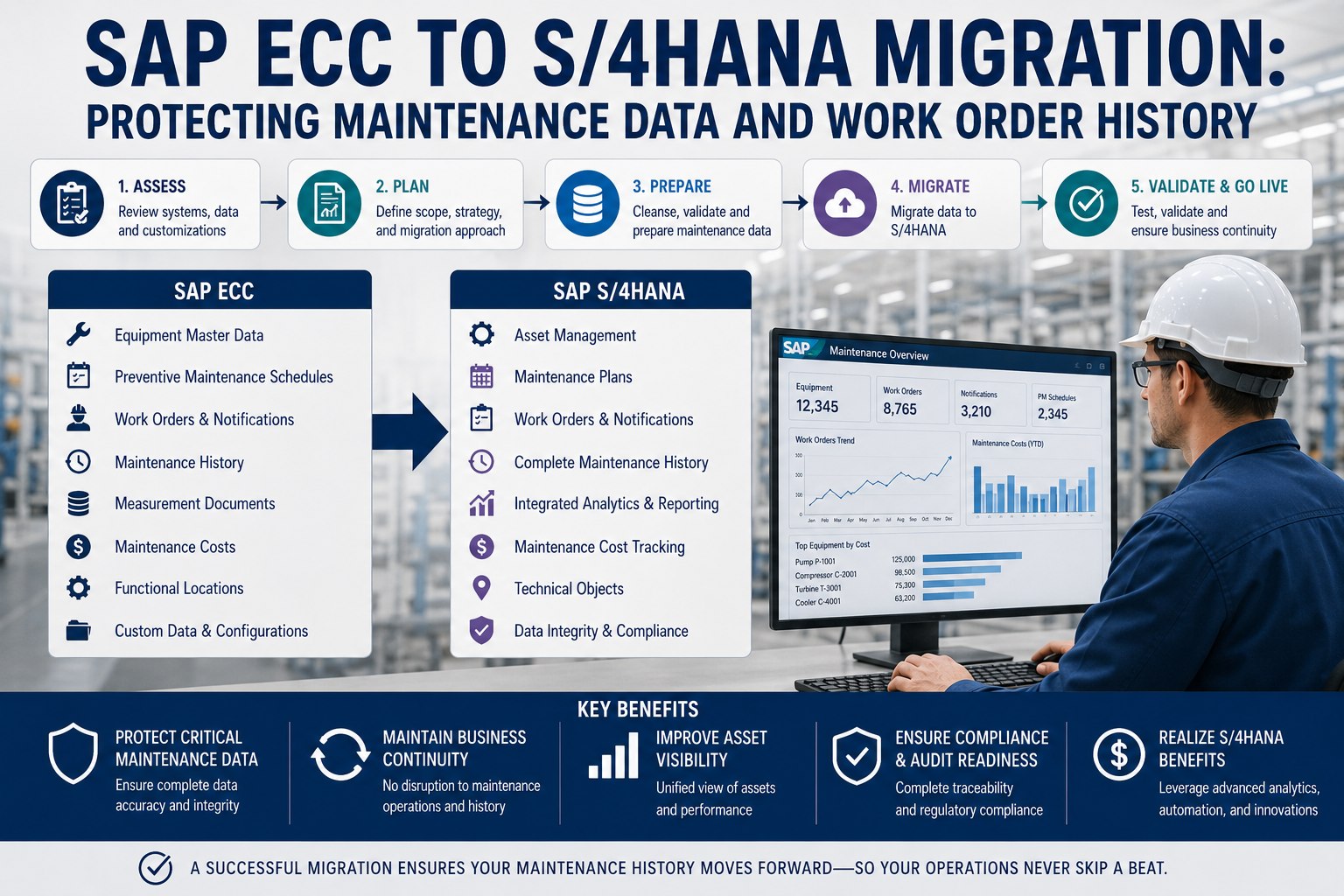
No. SAP HANA can serve as a sidecar analytics platform alongside SAP ECC, replicating PM data into HANA via SLT (SAP Landscape Transformation) while keeping your transactional system on traditional databases. This sidecar pattern is how most operations begin their HANA journey—it delivers analytical performance gains without requiring the S/4HANA migration. That said, S/4HANA runs natively on HANA and unlocks deeper analytical capabilities including embedded analytics views designed for maintenance use cases.
How much does SAP HANA infrastructure actually cost for maintenance analytics?
For mid-size maintenance operations (5-10 plants, 500-2000 assets), HANA infrastructure costs typically run $150K-$400K annually including licensing, cloud hosting (if using HANA Cloud), and operational support. The investment pays back through analytics use cases: predictive failure prevention, dynamic scheduling optimization, and multi-plant performance management. Operations focused exclusively on traditional batch reporting won't see ROI; operations using HANA for real-time and predictive analytics typically see 4-7x return within 24 months.
What's the difference between HANA and HANA Cloud for maintenance analytics?
HANA on-premise gives maximum control and is preferred for operations with regulatory data residency requirements or existing SAP infrastructure investments. HANA Cloud offers elastic capacity, lower upfront cost, and easier integration with SAP BTP services like Smart Data Streaming. Most new maintenance analytics deployments start with HANA Cloud to avoid infrastructure overhead. Hybrid deployments are common where transactional SAP runs on-premise while analytical workloads run in HANA Cloud, connected via SAP Data Provisioning Agent.
Can SAP HANA replace specialized maintenance analytics tools like Power BI or Tableau?
HANA replaces the data layer, not necessarily the visualization layer. Many operations use HANA as the analytical backend with Power BI, Tableau, or SAP Analytics Cloud as the front-end visualization tool. The combination delivers HANA's processing power with the visualization flexibility users prefer. Operations running embedded analytics in S/4HANA can sometimes eliminate separate BI tools entirely for maintenance use cases, but most enterprises maintain a multi-tool architecture for organizational and skills reasons.
How do I justify HANA investment specifically for maintenance use cases?
Build the business case around three quantified value streams: prevented downtime from predictive analytics ($800K-$3M annually for mid-size operations), reduced PM hours from dynamic scheduling (15-25% of current PM labor cost), and recovered analyst time from automated reporting (10-20 hours per week per analyst). These three streams typically deliver 4-7x ROI on HANA infrastructure within 24 months. Avoid soft benefits like "improved decision-making"—finance teams discount unquantifiable claims and the hard numbers are sufficient.