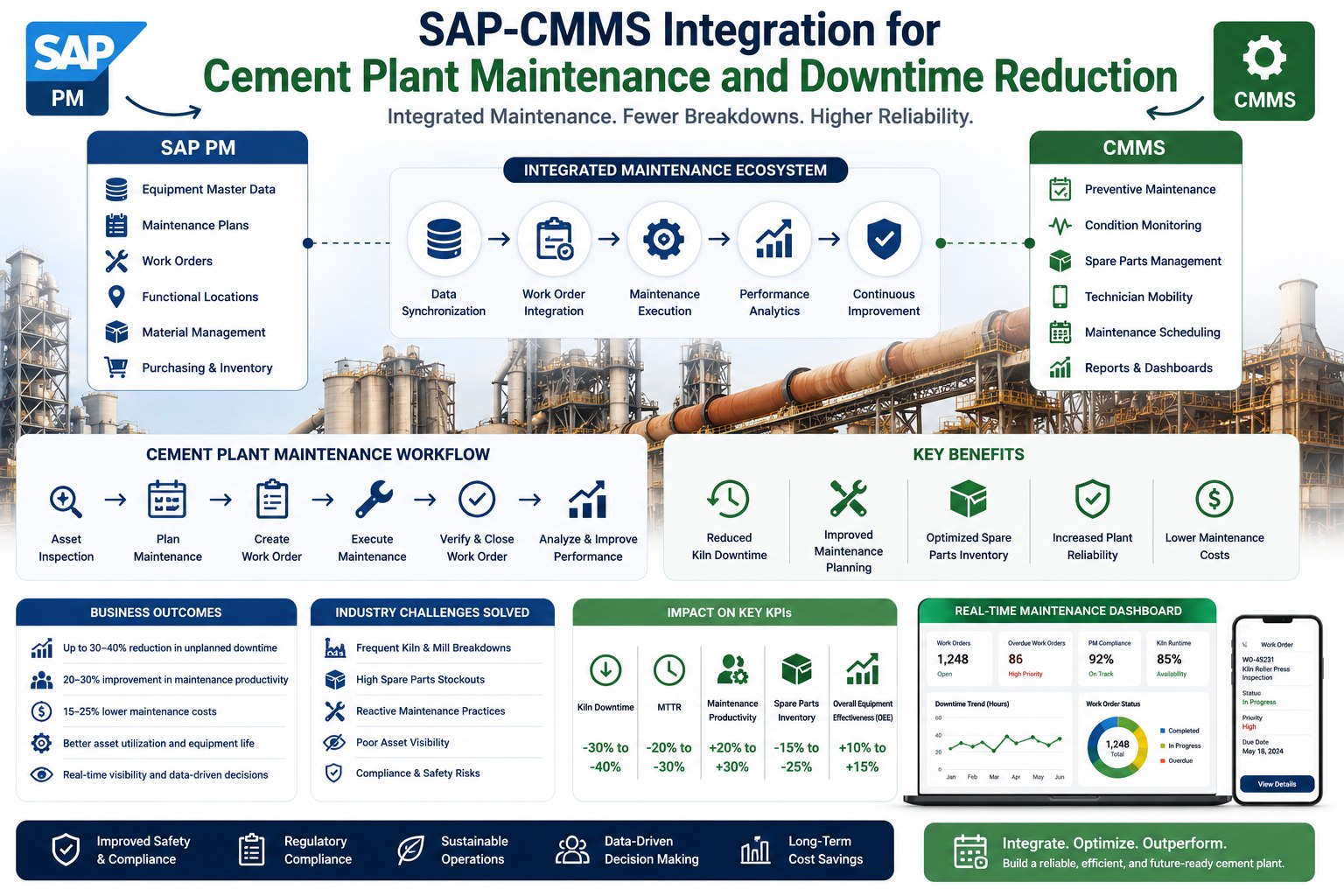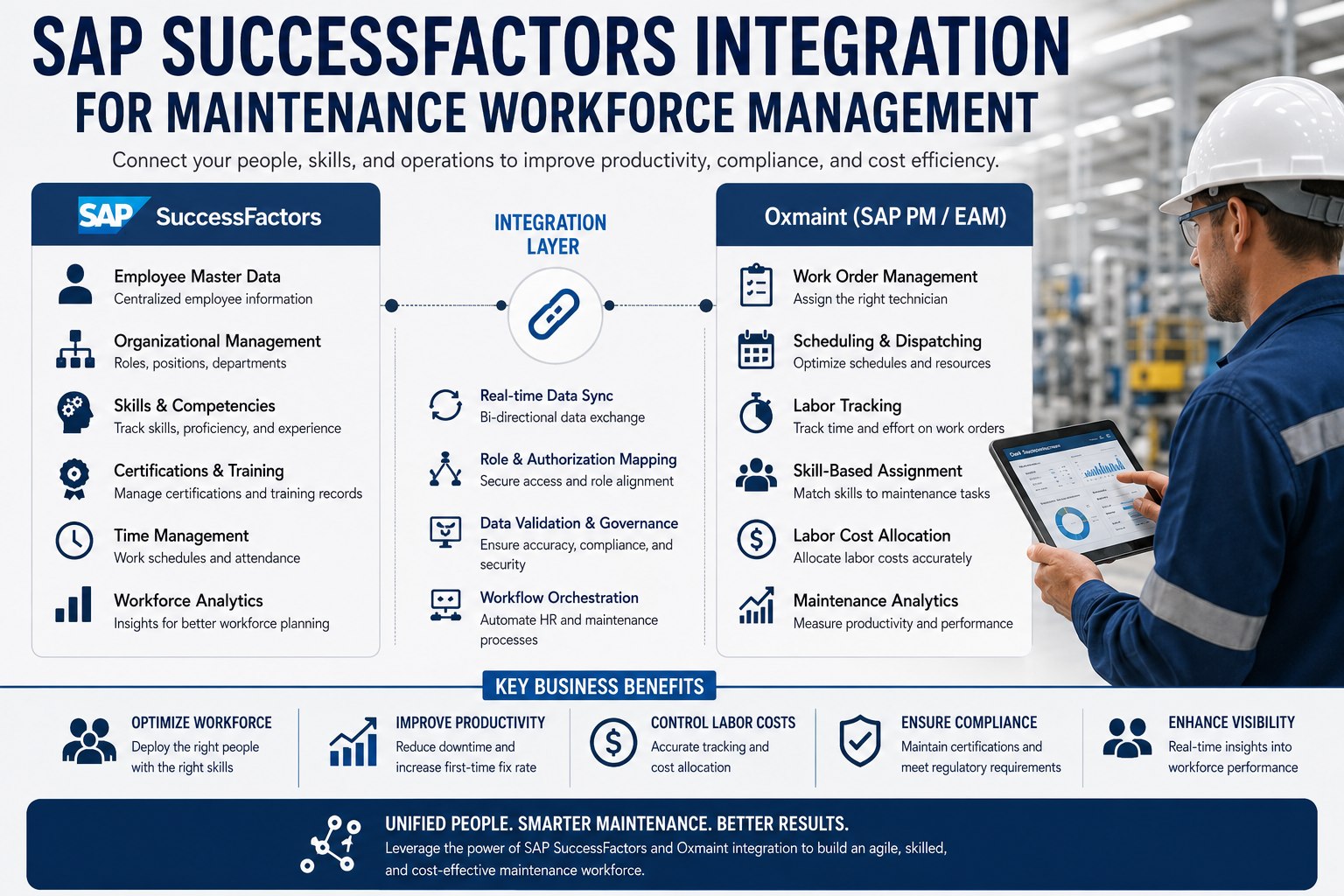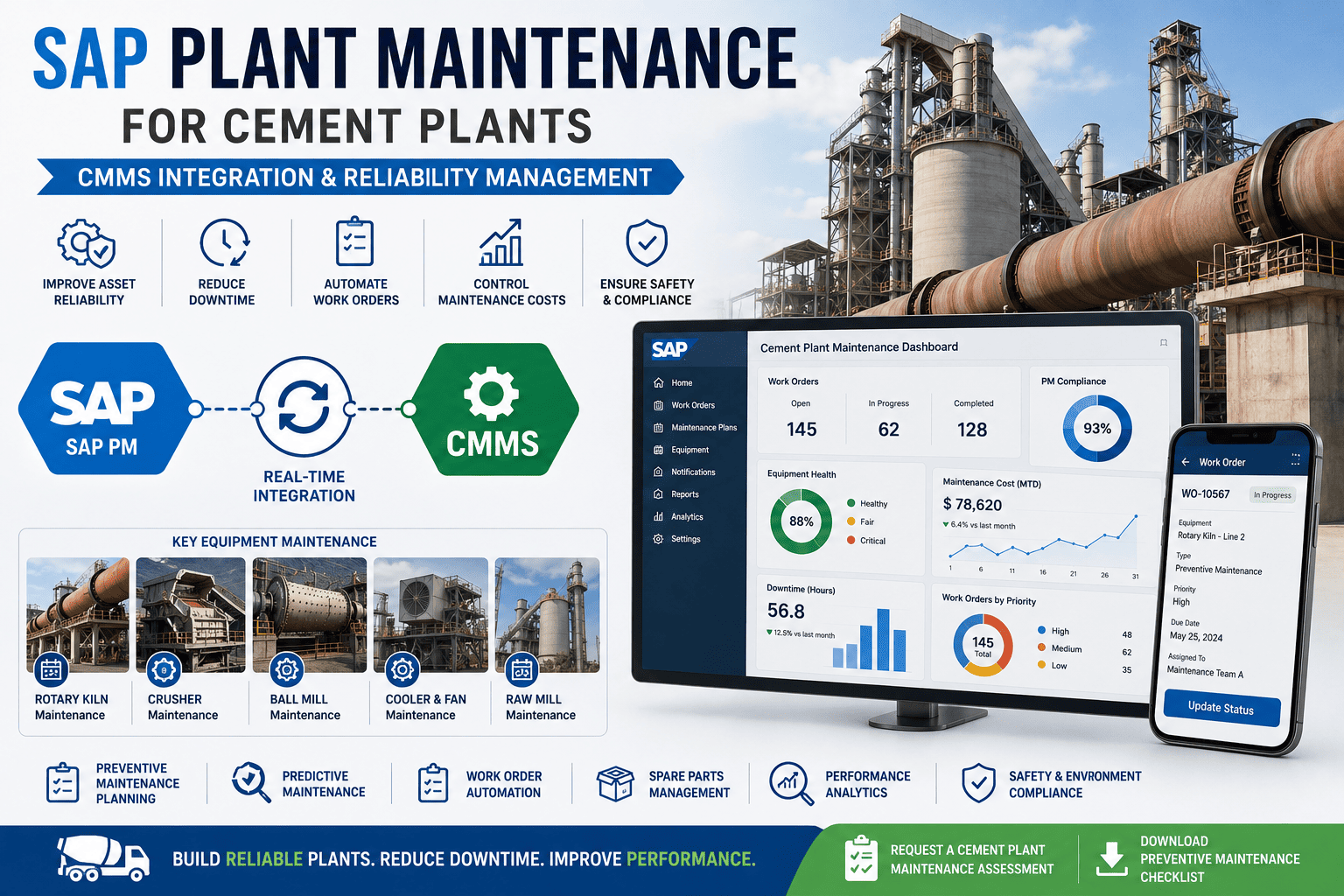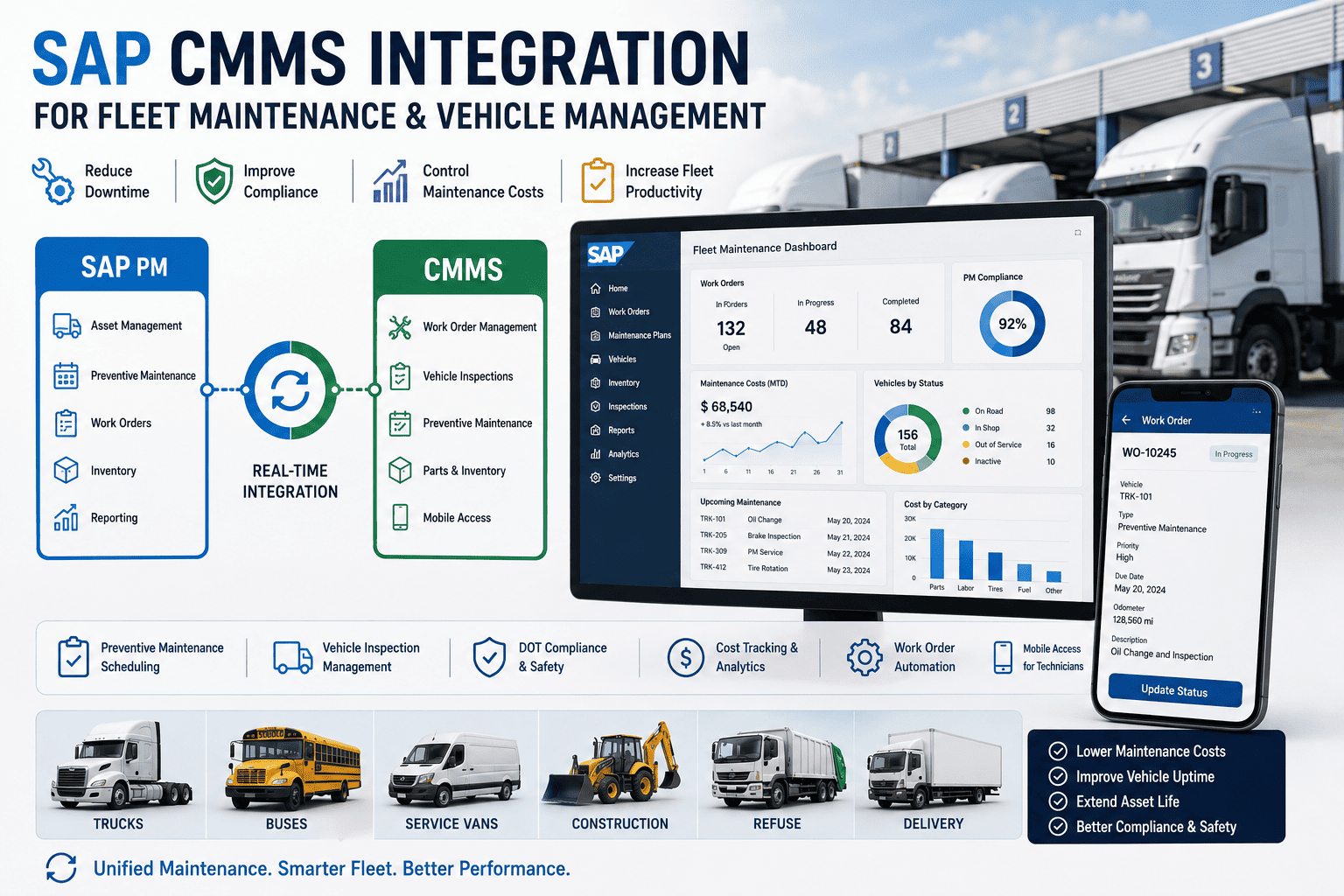
If you run SAP, a deadline is bearing down: mainstream support for ECC ends December 31, 2027, and the move to S/4HANA isn't optional anymore. But here's what most maintenance teams miss—how you connect your CMMS to S/4HANA now will either set up a clean, AI-ready future or saddle you with technical debt that blocks every upgrade after. The integration choices you make today outlast the migration itself. Get the architecture right and S/4HANA becomes the real-time backbone maintenance has been missing. Book a free demo to see a clean S/4HANA integration.
What Changes When You Move to S/4HANA
S/4HANA isn't just a newer ECC—it's a fundamentally redesigned architecture. The in-memory HANA database processes data directly in working memory, enabling real-time analysis that conventional databases can't match. Data models are simplified, Fiori delivers role-based interfaces, and embedded AI and analytics become available. For maintenance specifically, this means the enterprise system of record can finally keep pace with the plant floor—if your CMMS integration is built to take advantage of it. The catch is that S/4HANA rewards a different integration philosophy than ECC ever did, and building the old way undermines everything the new platform offers.
| Dimension | ECC Era | S/4HANA Era |
|---|---|---|
| Database | Conventional disk | In-memory HANA, real-time |
| Integration style | Custom code, point fixes | API-first, standard OData |
| Custom logic | In the ERP core | Side-by-side on BTP |
| Interface | Transaction codes | Role-based Fiori |
| Maintenance data | Batch, delayed | Live, event-driven |
| Upgrade path | Fragile, custom-bound | Clean, upgrade-stable |
The Clean Core Principle: Why It Decides Everything
Here's the single most important concept for any S/4HANA integration in 2026: Clean Core. The temptation during migration is to lift custom ECC code straight into S/4HANA—the "lift and shift" trap. It feels efficient, but it creates technical debt that blocks future AI and automation upgrades and makes every support pack a risk. The clean-core alternative keeps the ERP core standard and pushes custom logic and integrations to the edges: side-by-side extensions on SAP BTP, and an API-first approach using standard OData services. A CMMS that connects this way stays upgrade-stable for years; one that requires custom ABAP becomes the thing breaking your next migration.
- Custom ABAP dragged into the S/4HANA core
- Every support pack risks breaking the integration
- Blocks future AI, automation, and analytics
- Technical debt compounds with each upgrade
- Standard OData APIs from the Business Accelerator Hub
- Custom logic lives side-by-side on SAP BTP
- Upgrade-stable through support packs and releases
- AI and automation stay open for the future
This is why the integration method matters as much as the integration itself. Teams planning their S/4HANA move can sign up free to map a clean-core integration before a single line of custom code gets written.
What Actually Syncs Between S/4HANA and Your CMMS
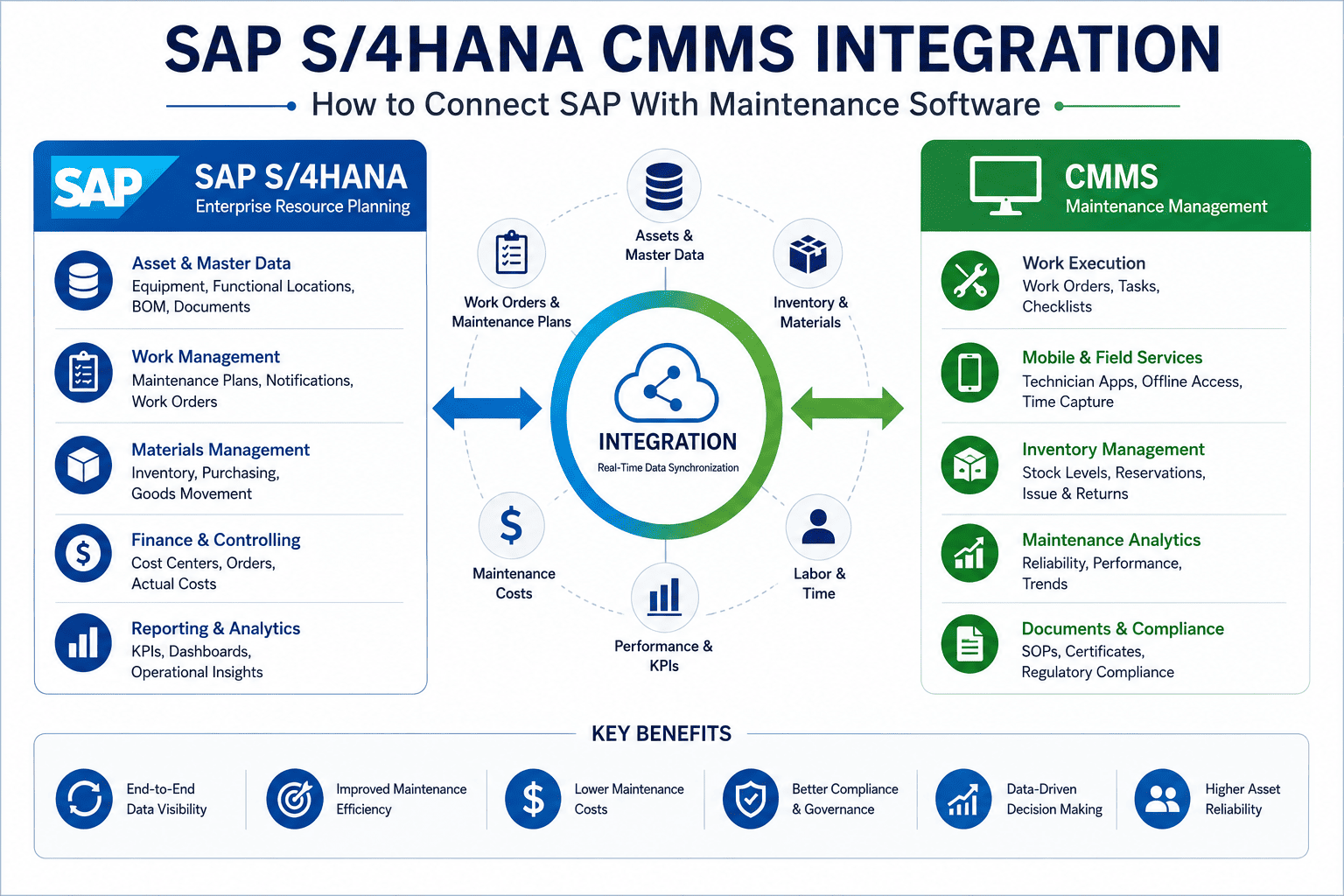
A complete maintenance integration moves data in both directions across four domains. Master data and plans flow from S/4HANA so technicians work from accurate records; execution and consumption flow back so the enterprise system stays current in real time. Because S/4HANA is in-memory, these don't have to wait for nightly batch—they can post live, which is the whole point of being on the new platform.
The Integration Roadmap, Phase by Phase
S/4HANA implementations follow SAP's Activate methodology, and a CMMS integration should ride alongside it rather than bolt on afterward. The principle throughout is fit-to-standard: minimize modifications, use standard services, and validate at every step. Whether you're integrating during a migration or connecting to an existing S/4HANA system, the same phased path keeps risk low and value early.
Done this way, integration deploys in weeks and survives every release that follows. Architects scoping their rollout can sign up free to plan their phased integration against their own S/4HANA timeline.
Expert Perspective: Integrate for the Platform You're Moving To
The mistake I see most often is teams integrating their CMMS to S/4HANA the same way they did to ECC—with custom code that works on day one and breaks on the first upgrade. S/4HANA is a different platform with a different contract: keep the core clean, integrate through standard APIs, and you get an in-memory, real-time backbone that's open to AI and automation for the next decade. Bolt custom ABAP into the core and you've spent your migration budget building the exact technical debt the migration was supposed to eliminate. Integrate for the platform you're moving to, not the one you're leaving.
Getting Started Before the Deadline
With only a fraction of the ECC base migrated and a 2027 deadline approaching, the teams that move early get the best partners, predictable budgets, and time to do it right. You don't have to wait for the full migration to begin—if you're already on S/4HANA, connect now through standard APIs; if you're migrating, design the CMMS integration as part of the program so it lands clean from day one. Start with assessment and master-data cleanup, configure standard OData services, pilot on one asset group, then scale. Teams can sign up free to start a clean-core pilot on a single asset group today. Each phase keeps the core clean and proves value before the next.
The move to S/4HANA is a once-in-a-decade chance to give maintenance a real-time, AI-ready backbone—but only if the integration is built the right way. Connect through standard APIs, keep the core clean, sync assets, work orders, inventory, and costs in real time, and you'll have a maintenance stack that gets stronger with every SAP release instead of more fragile. The deadline is fixed; the quality of what you build is still your choice. Teams ready to see a clean integration on their own landscape can book a free demo to review their integration strategy.