sap-hotel-maintenance-management

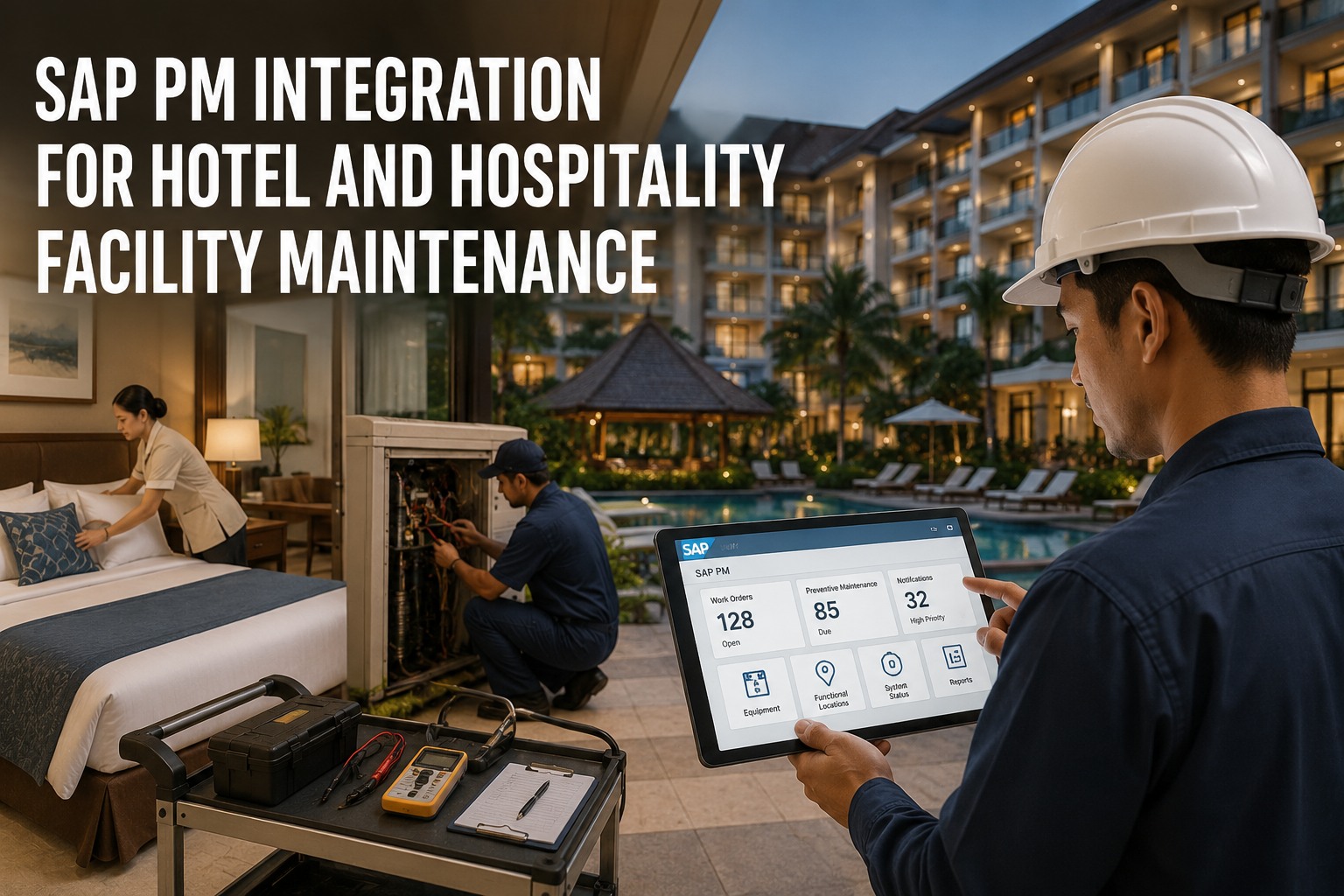
SAP PM Integration for Hotel and Hospitality Facility Maintenance


A broken AC in room 412 doesn't stay in room 412—it becomes a TripAdvisor review, a discounted future booking, a complaint to the GM. Hotels operate at the intersection of facility maintenance and guest experience, where every PM deferred shows up as a star rating dropped, every chiller fouling lands on the utility bill, and every missed brand-standards audit lands in franchise reports. SAP PM gives multi-property operators the financial backbone; what's missing is the field-execution layer connecting guest requests, audits, and engineering workflows. Book a free demo to walk through hospitality SAP-CMMS integration.

U.S. Hospitality Maintenance, 2026
Where the Money and the Guest Reviews Actually Live
$2,196
Average annual energy cost per available room across U.S. hotels
Source: ENERGY STAR / U.S. DOE
40–60%
Share of total hotel energy spend consumed by HVAC systems alone
Source: ENERGY STAR benchmarking
3–5×
Hotels consume more energy per square foot than typical commercial buildings
Source: ENERGY STAR
3–4×
Cost premium for emergency midnight maintenance callouts vs planned repair
Source: Hospitality benchmarks

Why Hotel Maintenance Operates Under Unique Pressures

Hotel maintenance is the only industrial environment where the equipment and the customer occupy the same room. A bearing failure on a plant motor is invisible to the people paying the bill. A bearing failure on a guest-room PTAC unit is a one-star review by noon and a refund request by 3 PM. The engineering department is simultaneously responsible for energy spend that determines the property's margin, brand-standards compliance that determines franchise eligibility, guest-comfort response times that determine repeat bookings, and life-safety systems that determine whether the property can legally remain open. No other facility environment carries that combination of pressures on a single team.

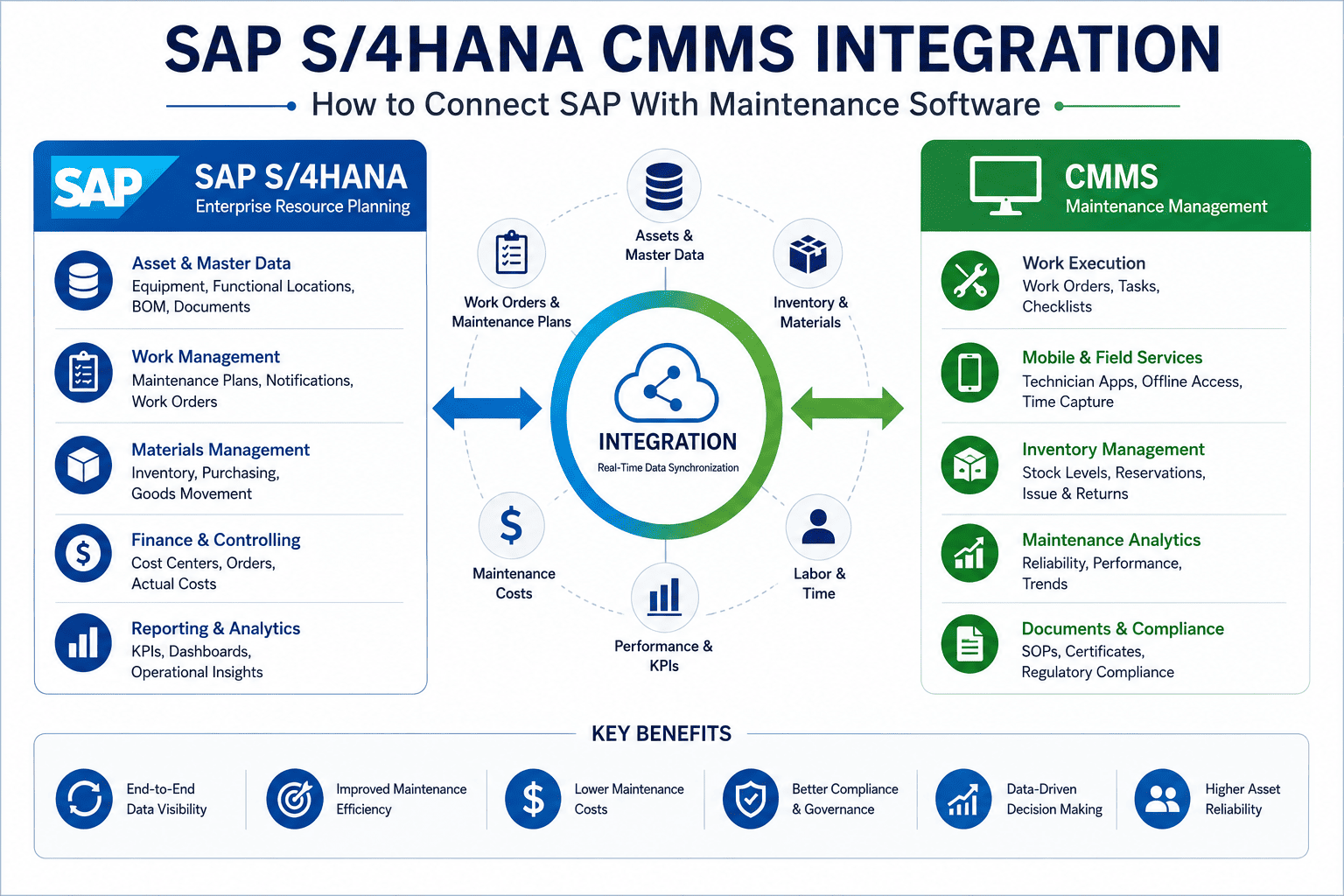
SAP PM brings the financial governance—asset master, cost centers, work order accounting—that multi-property operators need for portfolio-level reporting. What it doesn't deliver out of the box is the field-execution layer: mobile work orders for technicians moving between floors, integration with the property management system for room status, automated brand-standards audit packs, and the round-trip from guest request to closed work order in under 30 minutes. That's the layer where successful hospitality CMMS implementations live. Engineering leaders ready to see this layered approach can Sign up free to map hotel assets to SAP PM in days, not months.

The Multi-Property Portfolio View

The single hardest problem for chain operators isn't running maintenance at one property—it's seeing all of them at once. The portfolio view below shows what a corporate engineering office actually needs: every property's PM compliance, energy intensity, guest-impact metrics, and asset health visible on one screen, with drill-down to the work order level when something needs attention. This is the difference between managing a portfolio and managing six independent properties that happen to share a logo.

Portfolio Dashboard · 6-Property Operator
Real-time maintenance health across asset types · Drillable to work orders
The Atrium Downtown
Urban Business · 280 rooms
A
PM Compliance
92%
Energy / Room
$1,950
Guest CSAT (/5)
4.3
Cascade Mountain Resort
Resort / Leisure · 420 rooms
A
PM Compliance
88%
Energy / Room
$2,180
Guest CSAT (/5)
4.6
Skyway Terminal Hotel
Airport / Transient · 180 rooms
C
PM Compliance
76%
Energy / Room
$2,420
Guest CSAT (/5)
3.9
Riverside Suites
Extended Stay · 240 rooms
B
PM Compliance
84%
Energy / Room
$1,840
Guest CSAT (/5)
4.1
The Verity Boutique
Luxury / Lifestyle · 95 rooms
A
PM Compliance
94%
Energy / Room
$2,640
Guest CSAT (/5)
4.7
Grand Convention Center
Convention / MICE · 540 rooms
B
PM Compliance
81%
Energy / Room
$2,310
Guest CSAT (/5)
4.0
1,755
Total rooms
86%
Avg PM compliance
$3.8M
Annual energy spend
12,400
Tracked assets

The dashboard exposes the patterns operators can't see when each property reports independently. Skyway Terminal's PM compliance at 76 percent and 3.9-star CSAT correlates with energy spend 24 percent above portfolio average—the same chillers under-maintained at the airport hotel are simultaneously costing more to run and producing more guest complaints. The Verity Boutique runs higher energy per room than peers but justifies it with premium ADR and a 4.7-star rating. That kind of cross-property pattern recognition is what justifies portfolio-level CMMS investment. Operators ready to model this view on their own properties can Sign up free to begin importing property asset registers to SAP PM.

From Guest Request to Closed Work Order

The defining workflow of hotel maintenance isn't preventive scheduling—it's the guest-initiated request that becomes a work order, gets dispatched, executed, closed, and updates the room's available-to-rent status. The 30-minute target for urgent guest issues is the operational standard, and missing it shows up directly in next-day guest satisfaction scores.

The Guest Request Round Trip
From in-room complaint to closed work order, target under 30 minutes
T+0
Guest Reports Issue
Guest contacts front desk, in-room tablet, or messaging app. Issue type, room number, and urgency captured in PMS. Auto-acknowledgment sent to guest.
T+3 min
Auto-Triage & Work Order
PMS pushes ticket to CMMS. Asset auto-identified via room number. Severity scored. Work order created in SAP PM with cost center and functional location populated.
T+5 min
Engineering Dispatch
Nearest available technician notified via mobile. Asset history, common failure modes, and parts likely needed pre-loaded. Spare PTAC compressor stock checked.
T+20 min
Field Resolution
Technician arrives, diagnoses, repairs. Before/after photos captured. Parts consumed posted to SAP MM. Room re-validated for occupancy or moved to OOO for parts wait.
T+25 min
Guest Notification & Closure
Guest receives resolution message. Room status updated in PMS. Work order closed in SAP with full audit trail. Brand-standards record updated automatically.

The traditional version of the same request—front-desk note, walkie-talkie dispatch, paper sign-off—takes between two and six hours, with the room often staying flagged as occupied-with-issue until end of shift. Cities running integrated workflows complete the round trip inside the 30-minute target, and the guest receives a completion notification before they ask for an update.

HVAC, Brand Standards, and the Guest-Impact Chain

Three asset categories dominate hospitality maintenance economics: HVAC (the energy and comfort lever), life safety (the legal and insurance lever), and brand standards compliance (the franchise and audit lever). Each demands a different workflow but shares a common requirement: documented PM evidence linked to specific assets, retrievable on demand.

Three Asset Categories That Drive Hotel Maintenance Economics
HVAC
Energy & Guest Comfort
PTACs, fan coil units, chillers, cooling towers, boilers, AHUs, building automation. 40-60% of total energy spend. Comfort complaints drive direct review impact.
PM Cadence
PTAC filters monthly · Coil cleans quarterly · Chiller tubes annually · Refrigerant logs continuous
LS
Life Safety & Code
Fire suppression, alarms, smoke detectors, sprinklers, elevator emergency systems, generators, exit lighting. Regulatory requirements vary by jurisdiction—non-compliance closes properties.
PM Cadence
NFPA-required inspections quarterly · Annual sprinkler trip · Generator load tests monthly
BSA
Brand Standards Audit
Franchise audit checkpoints—Marriott BSA, Hilton QA, IHG MIB. Cosmetic finish, fixture functionality, room cleanliness, public area condition. Failure threatens franchise eligibility.
PM Cadence
Room deep-clean PMs quarterly · Touch-up paint cycles · Fixture replacement triggered by audit prep

The financial weight of these categories is asymmetric. HVAC drives recurring energy savings; life safety drives catastrophic-loss avoidance; brand standards drive franchise eligibility. A property that loses its brand affiliation loses the central reservation system, the loyalty program traffic, and roughly 30 percent of its RevPAR overnight.

See Hospitality SAP-CMMS Running on Multi-Property Operations
Walk through a live demo covering guest request workflows, HVAC PM scheduling, brand-standards audit packs, and portfolio-level SAP reporting—on your own property mix. 30 minutes, no commitment.

ROI: The Hospitality Math That Justifies Integration

The financial case for hospitality CMMS integration rests on three compounding levers: avoided HVAC energy waste, accelerated guest-request resolution that protects RevPAR, and brand-audit pass rates that protect franchise economics. The numbers below come from operating data at chain operators between 4 and 12 properties.

Manual Tracking vs Integrated CMMS: 12-Month Operating Delta (Per 200-Room Property)
Swipe to compare
Operating Metric Manual / Hybrid Integrated CMMS Shift
Guest request resolution time 2–6 hours 20–30 min −85%
HVAC PM completion rate 62% 92% +30 pts
Energy spend reduction (HVAC) Baseline $60K–$120K/yr 15–25%
OOO room hours per month 180–280 50–90 −68%
Brand audit pass rate 74% 96% +22 pts
Guest comfort complaint volume Baseline Down 60–80% Material
$130K–$260K Annual comprehensive value per mid-size property
3–10 months Typical payback period across hospitality deployments

The biggest single ROI lever in hospitality isn't labor savings or even energy—it's the OOO room hours. Every hour a room sits Out of Order is forgone revenue at full ADR. A property running 180 OOO hours per month at $200 ADR is losing $36,000 in monthly room revenue to maintenance delays alone. Cut that by 65 percent and the system pays for itself before any other lever activates. Engineering directors ready to model their property's specific exposure can Book a free demo to walk through OOO reduction on their property mix.

Expert Perspective: What Hospitality CMMS Programs Get Right

The hotels that get this right understand that the engineering department isn't a cost center—it's an experience producer. Every PM completed on schedule is a guest complaint that didn't happen, a review that didn't get written, a refund that didn't get issued. When the engineering team operates on the same data platform as the front desk, the housekeeping team, and the GM, the property runs differently. The difference shows up in the loyalty member retention numbers, not in the maintenance budget. That's the lens corporate engineering offices need to use when they evaluate CMMS investment.

Build for the Guest Round Trip
The defining workflow isn't the PM schedule—it's the guest request that closes within 30 minutes with a notification. Design the system around that loop and every other workflow gets easier.
PMS-CMMS Integration Is Not Optional
When room status flows between the property management system and the maintenance system in real time, OOO times collapse. Standalone CMMS deployments without PMS integration miss the largest savings lever.
Brand Standards Are an Operating System
Treat Marriott BSA, Hilton QA, IHG MIB as code, not as paperwork. Configure the CMMS to enforce the audit checkpoints continuously, and the actual audit becomes a routine export rather than a six-week scramble.

90-Day Path to Integrated Hospitality Operations

Hospitality CMMS rollouts succeed when they deliver visible guest-experience wins in the first six weeks, then scale across the portfolio in a structured second phase. The roadmap below is what chain operators consistently execute when they move from property-by-property spreadsheets to SAP-integrated portfolio operations.

90-Day Hospitality CMMS Rollout
From property asset import to multi-site portfolio operations
Days 1–20
Asset Import & PMS Mapping
Import pilot property's asset register from SAP PM. Map functional locations to rooms, public areas, and mechanical spaces. Validate PMS integration round-trip for room status.
Days 21–45
Guest Workflow Go-Live
Activate mobile work orders for engineering team. Connect guest-request channels to CMMS. Validate sub-30-minute round trip on common issue types (PTAC, plumbing, lighting).
Days 46–70
HVAC PM & Energy Tie-In
Deploy HVAC PM schedules across PTACs, FCUs, chillers. Wire utility data to track energy impact. Activate brand-standards audit checkpoints with automated evidence capture.
Days 71–90
Portfolio Rollout
Expand from pilot property to full portfolio. Activate corporate-level dashboard. Schedule quarterly portfolio review. Begin tracking cross-property benchmarks and savings.

By day 90, chain operators executing this roadmap typically see guest request resolution times drop by 80 percent, HVAC PM compliance climb above 90 percent, and the first measurable energy savings land on the next utility bill. Engineering directors ready to begin pilot-property asset import can Sign up free to start the pilot property setup this week.
Turn Maintenance Into a Guest Experience Asset
Every guest request resolved in 30 minutes. Every PM documented. Every brand audit ready in minutes. See SAP-integrated hospitality CMMS running on your property portfolio in a live walkthrough.

Frequently Asked Questions

Does SAP PM handle the full hospitality asset hierarchy—rooms, common areas, mechanical, F&B?
SAP PM provides excellent equipment master and financial governance for every asset category a hotel manages, with functional location structures that easily map to floors, rooms, and zones. What standard SAP PM doesn't deliver is the field-facing workflow for guest requests, real-time PMS integration for room status, mobile inspections, and brand-standards audit packs. These capabilities come from a CMMS layer that integrates with SAP PM via standard OData APIs while keeping SAP as the system of record for asset master data and maintenance cost.
How does PMS integration with CMMS reduce Out of Order room time?
When the property management system and CMMS share real-time room status, an Out of Order flag triggered by a maintenance issue is visible to the front desk immediately, work orders auto-create with room number populated, and room re-validation happens through the CMMS rather than through a phone call to the front desk. The round trip from issue identification to room re-availability collapses from end-of-shift batch reconciliation to real-time updates. Operators typically see OOO hours drop 60-70 percent after PMS-CMMS integration.
What's the impact on brand-standards audit performance?
Brand audit performance improves materially because PM evidence becomes continuous rather than reconstructed before the visit. Marriott BSA, Hilton QA, and IHG MIB inspectors look for the same evidence: PM completion records, work order history, response time logs, and asset condition documentation. When that evidence exists as a byproduct of normal operations, audit pass rates typically climb from the low-to-mid 70s to the mid-90s, and franchise compliance risk drops significantly.
What's the typical implementation timeline for a multi-property operator?
A focused phased implementation runs 60 to 90 days from pilot kickoff to multi-property operation. The pilot property goes live within four to five weeks. Remaining properties roll out in priority order, typically grouped by region or brand affiliation, through day 70. Portfolio-level reporting and benchmarking is typically activated in the final 30 days. Cloud-based deployment eliminates the per-property IT projects that historically delayed hospitality CMMS adoption.
How does the system handle the seasonal staffing variability common in hospitality?
Mobile work orders, role-based access, and skill-tagged dispatch allow the same workflow to operate cleanly whether the engineering team is at peak summer staffing or off-season minimum. New technicians receive work orders with full asset history, common failure modes, and step-by-step procedures pre-loaded on their device, dramatically shortening ramp-up time. Audit trails persist regardless of who performed the work, so seasonal staffing churn doesn't degrade compliance evidence quality.


Share This Story, Choose Your Platform!