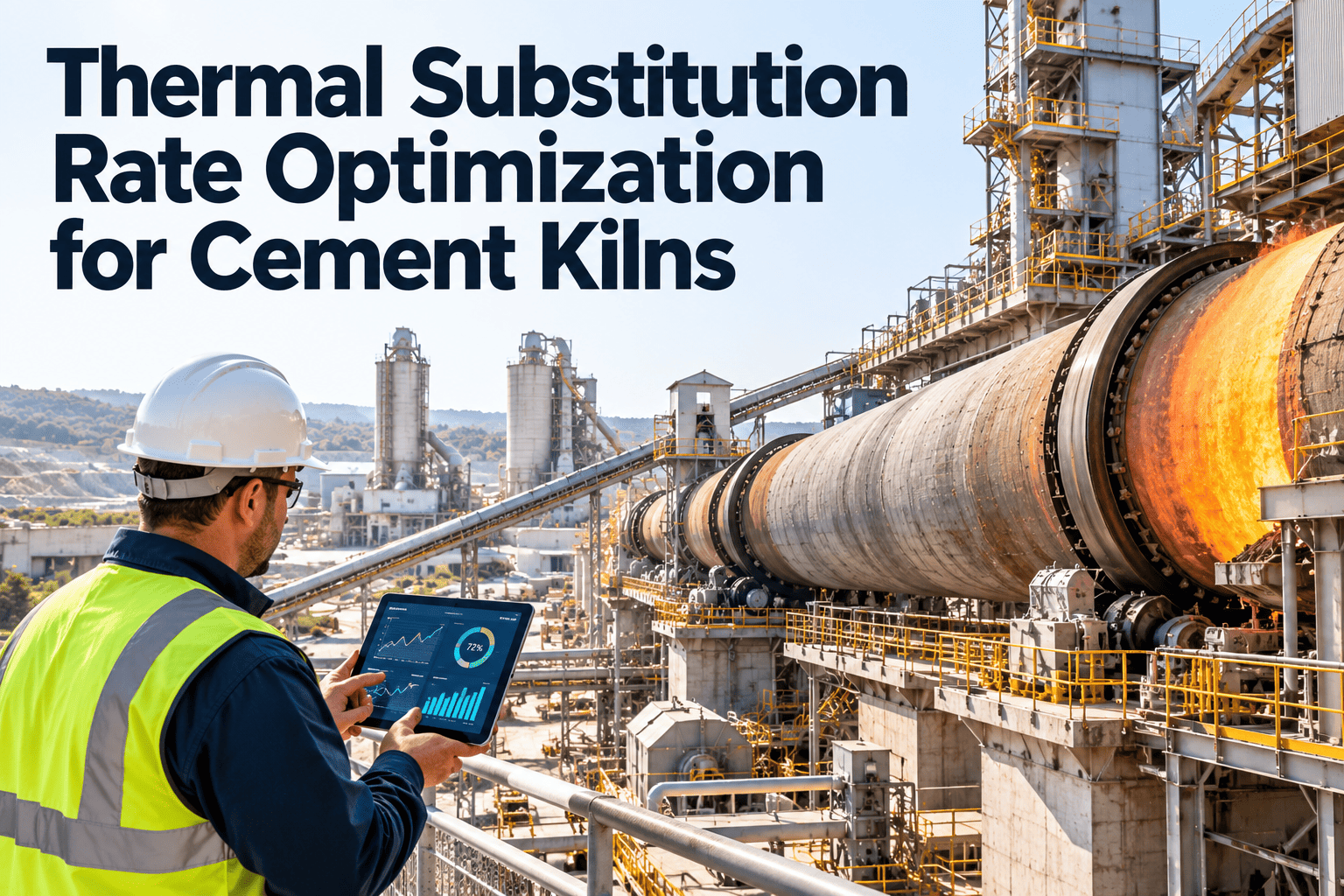
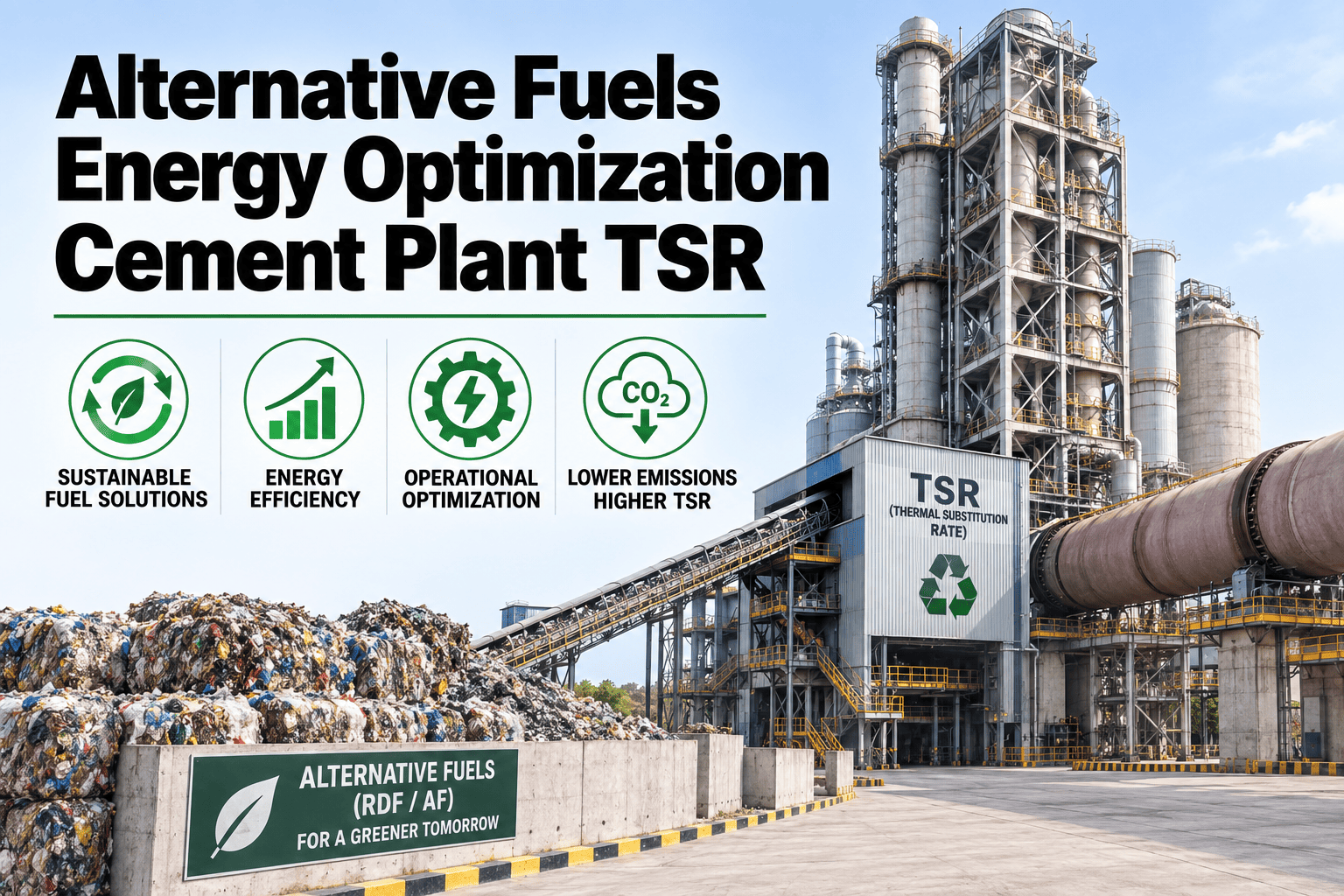
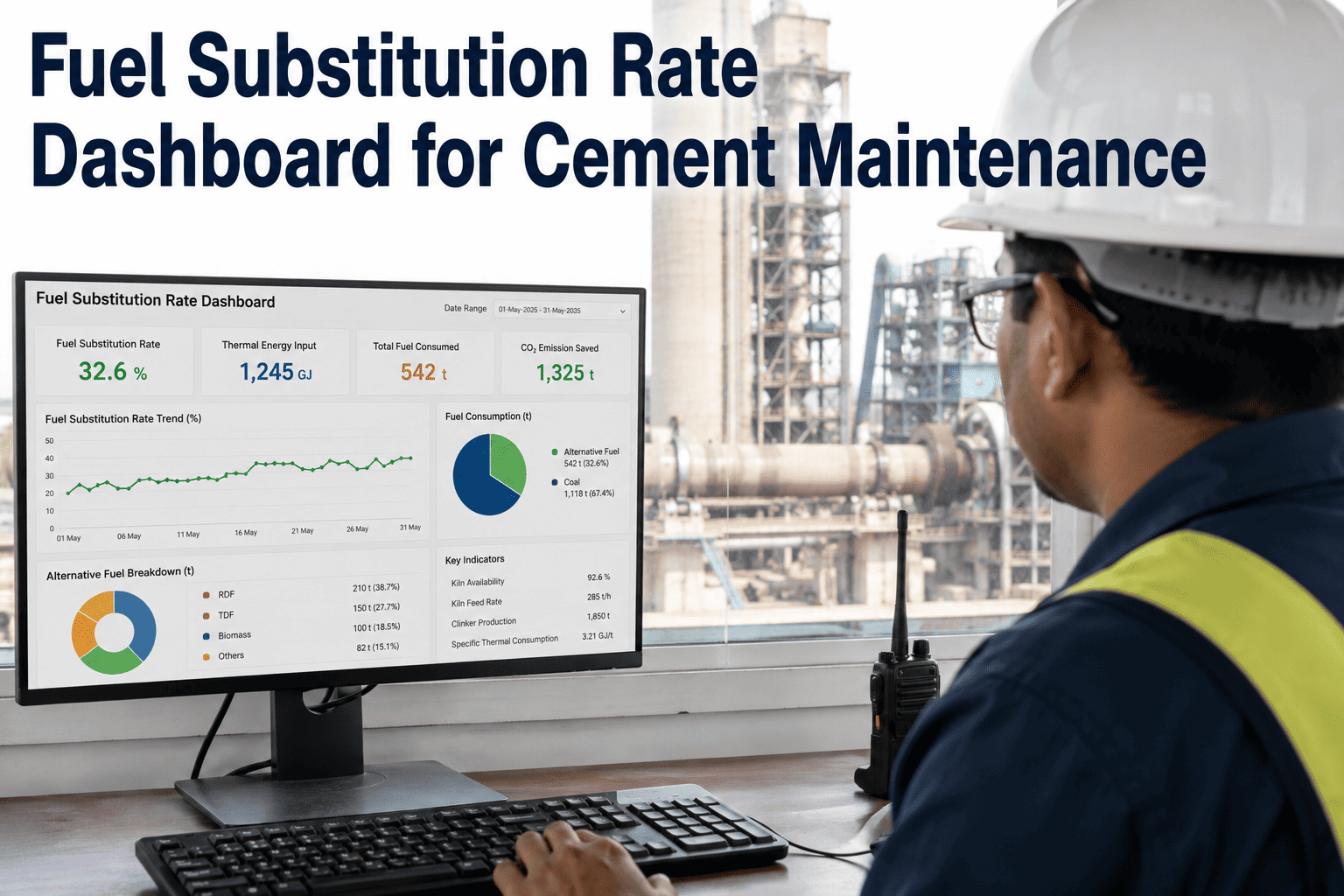
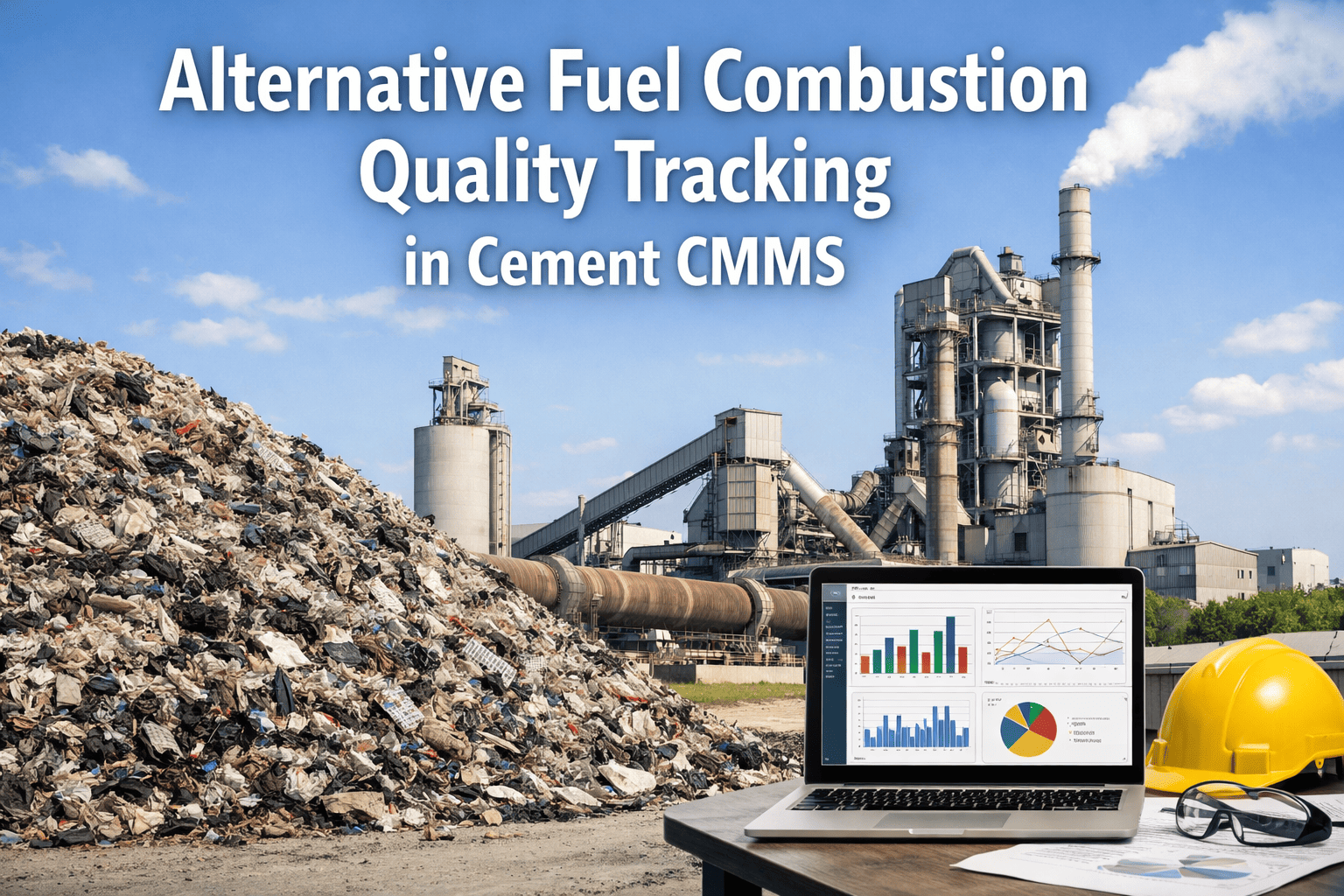
Alternative fuels now account for 20–80% of thermal energy substitution at leading cement operations globally — yet the feeding systems, pre-processing equipment, and burner modifications that enable co-processing are maintained with far less discipline than the kilns they serve. A clogged RDF dosing screw, a worn tire shredder anvil, or an uncalibrated fuel quality sensor creates cascading problems: combustion instability, unplanned kiln shutdowns, regulatory compliance failures, and fire or explosion risk. Oxmaint's Fuel Quality Tracking and Feeding System PM modules give cement plant maintenance teams the same structured discipline for AFR infrastructure as for primary production equipment. Book a demo to see Oxmaint's AFR maintenance configuration for your co-processing program.
Oxmaint's AFR maintenance platform tracks fuel quality parameters per batch, schedules condition-based PM for RDF dosing screws, biomass feeders, tire shredders, and pre-calciner burner systems, and generates the compliance documentation required by EPA, EU Waste Framework Directive, and regional co-processing regulations — from one platform, without a separate environmental management system.
AFR Equipment Categories Oxmaint Manages
Alternative fuel co-processing requires a distinct asset hierarchy — AFR receiving, pre-processing, dosing, and combustion systems each with accelerated wear profiles, safety-critical inspection requirements, and environmental compliance obligations that standard CMMS configurations do not address.
Tipping halls, bunkers, grab cranes, and conveyors. Fire detection systems, negative pressure ventilation, and odor control — each requiring documented inspection intervals for environmental permit compliance.
Single and twin-shaft shredders, granulators, and magnetic separators. Anvil and rotor wear tracked by throughput tonnage — not calendar — with automatic work order generation when wear thresholds are reached.
Gravimetric dosing screws, rotary locks, belt weighers, and pneumatic injection systems. Dosing accuracy tracked per shift — deviations from target feed rate auto-generate calibration work orders.
AFR lances, tertiary air duct modifications, and combustion monitoring systems. Burner tip wear, lance geometry, and combustion temperature profiles tracked per PM cycle against design specifications.
Calorific value sensors, moisture analyzers, chlorine detectors, and heavy metal sampling stations. Calibration cycles tracked per instrument — fuel quality deviations linked to feeding rate and combustion performance records.
CEMS continuous emissions monitoring, dust filters for AFR conveyors, explosion venting panels, and fire suppression in RDF storage — compliance-critical systems with non-negotiable documented inspection intervals.
Register Your Entire AFR Infrastructure in Oxmaint — Live in 2 Weeks
RDF feeding systems, shredders, dosing screws, burner systems, and emissions monitors — all PM-scheduled, wear-tracked, and compliance-documented from one platform without a separate EMS system.
How Oxmaint Solves AFR Maintenance
Every AFR batch logged with calorific value, moisture content, chlorine level, particle size, and heavy metal readings — linked directly to dosing system performance and kiln combustion parameters for that shift. Fuel quality deviations outside permit parameters automatically trigger a hold work order on the affected batch and a review work order for the sampling system. Chlorine exceedances above bypass activation thresholds alert kiln operators and environmental managers simultaneously. Book a demo to see fuel quality tracking configured for your AFR types.
AFR feeding equipment wears by throughput tonnage, not elapsed time. A shredder processing 200 tpd RDF needs rotor inspection at 5,000 tonnes, not every 90 days — the two intervals rarely coincide. Oxmaint triggers PM by production-hour or throughput counters imported from plant historians, SCADA, or manual operator entry. Anvil wear reaches threshold at 4,800 tonnes? The rotor inspection work order generates automatically — not after the next Monday morning meeting.
Gravimetric belt weigher and dosing screw outputs logged per shift against target feed rate. When actual feed rate deviates more than ±5% from target for two consecutive shifts, Oxmaint generates a calibration work order for the affected dosing system — before the deviation impacts TSR performance or triggers a regulatory inspection. Dosing accuracy trend data exports directly into TSR optimization reports. Book a demo to see dosing accuracy monitoring for your feeding configuration.
Every fuel quality test, emissions monitoring record, safety inspection, and corrective maintenance action documented with timestamp, technician credentials, and photo evidence — exportable as formatted packages for EPA co-processing permit audits, EU Waste Framework Directive compliance reviews, and national environmental authority inspections across all six major regulatory regions covered below. No separate EMS. No manual compilation before audits.
90-Day AFR Maintenance Implementation Roadmap
- Register all AFR receiving, pre-processing, dosing, and combustion assets
- Configure throughput-based PM triggers per equipment class
- Set fuel quality parameter thresholds aligned to permit conditions
- Connect to plant historian or SCADA for throughput data import
- Build wear-based PM schedules for shredders, dosing screws, and burners
- Configure fuel quality alert workflows and regulatory hold triggers
- Mobile app onboarding for AFR maintenance technicians and shift operators
- First AFR equipment performance baseline report generated
- Environmental permit compliance export templates configured per region
- Emissions monitoring records linked to AFR feeding performance data
- CEMS calibration cycles and safety system inspection schedules activated
- Dosing accuracy deviations reviewed and feeding system adjustments documented
- TSR performance improvement vs. pre-Oxmaint baseline measured and reported
- Wear pattern analysis identifying highest-cost maintenance items per AFR type
- Full compliance audit package generated for environmental authority review
- Multi-plant AFR benchmarking initiated for group operations
Regulatory Compliance — Co-Processing by Region
AFR co-processing operates under overlapping environmental, safety, and waste management regulations — each requiring documented maintenance records tied to permit conditions. Oxmaint generates compliance exports formatted for every framework your operations encounter.
| Region | Applicable Frameworks | How Oxmaint Covers It |
|---|---|---|
| USA / Canada | EPA RCRA co-processing permits, 40 CFR Part 63 NESHAP emissions, OSHA 29 CFR 1910.119 PSM for hazardous waste fuels, state solid waste co-processing authorizations, NFPA 652 combustible dust safety | RCRA permit fuel quality records, NESHAP emissions maintenance logs, PSM mechanical integrity documentation, NFPA 652 dust management inspection records |
| Australia | National Pollutant Inventory (NPI) reporting, state EPA co-processing licenses, Safeguard Mechanism emissions intensity, WorkSafe hazardous materials handling, state waste-to-energy framework requirements | NPI fuel quality and emissions records, state EPA license compliance documentation, Safeguard Mechanism intensity exports, WorkSafe safety inspection records |
| United Kingdom | Environmental Permitting Regulations (EPR), EA co-processing waste recovery permits, UK Waste Incineration Directive (WID), COSHH hazardous waste handling, HSE COMAH for hazardous waste sites | EPR permit fuel quality documentation, WID emissions monitoring records, COSHH material handling inspection logs, HSE COMAH safety case maintenance records |
| Germany / EU | EU Waste Framework Directive R1 recovery operation, EU Industrial Emissions Directive (IED), BImSchG emissions permits, EU ETS carbon intensity, REACH for chemical waste inputs, BetrSichV equipment safety | IED emissions maintenance exports, R1 recovery operation documentation, BImSchG permit compliance records, EU ETS carbon intensity from AFR substitution, BetrSichV equipment inspection logs |
| Saudi Arabia / UAE | Saudi NCEC waste management regulations, UAE Federal Law No. 12 on hazardous waste, SASO industrial safety standards, DEWA emissions framework, Vision 2030 industrial waste recovery targets | NCEC waste handling compliance records, UAE hazardous waste fuel documentation, SASO safety inspection logs, Vision 2030 waste recovery reporting packages |
Oxmaint vs Competitors — AFR Co-Processing Maintenance
No general-purpose CMMS is configured for the throughput-based wear tracking, fuel quality monitoring, and multi-framework environmental compliance that AFR co-processing requires. Oxmaint is purpose-built for cement's specific operational reality.
| Feature | Oxmaint | MaintainX | UpKeep | Fiix (Rockwell) | IBM Maximo | Limble CMMS | Hippo (Eptura) |
|---|---|---|---|---|---|---|---|
| Throughput-based PM triggers for AFR feeders | ✓ Yes | ✗ No | ✗ No | ~ Partial | ~ Config | ✗ No | ✗ No |
| Fuel quality batch tracking per AFR type | ✓ Yes | ✗ No | ✗ No | ✗ No | ~ Partial | ✗ No | ✗ No |
| Dosing accuracy deviation → auto work order | ✓ Yes | ✗ No | ✗ No | ~ Partial | ✓ Yes | ✗ No | ✗ No |
| CEMS and emissions monitoring PM scheduling | ✓ Yes | ✗ No | ✗ No | ~ Partial | ✓ Yes | ✗ No | ✗ No |
| Environmental permit compliance exports | ✓ Yes | ✗ No | ✗ No | ✗ No | ~ Partial | ✗ No | ✗ No |
| Multi-region regulatory documentation (5 regions) | ✓ Yes | ✗ No | ✗ No | ✗ No | ~ Limited | ✗ No | ✗ No |
| Safety system PM — explosion venting, fire suppression | ✓ Yes | ~ Partial | ~ Partial | ~ Partial | ✓ Yes | ~ Partial | ✗ No |
| Cement-specific asset hierarchy | ✓ Yes | ✗ No | ✗ No | ✗ No | ~ Config | ✗ No | ✗ No |
| Mobile QR scan for field technicians | ✓ Yes | ✓ Yes | ✓ Yes | ✓ Yes | ~ Limited | ✓ Yes | ~ Partial |
| Deployment without IT project or hardware | ✓ 2–3 wks | ~ 4–8 wks | ~ 4–6 wks | ~ 8–16 wks | ✗ 6–18 mo | ~ 4–8 wks | ~ 6–12 wks |
| Transparent SaaS pricing for industrial plants | ✓ Yes | ~ Per user | ~ Per user | ~ Enterprise | ✗ High cost | ~ Per user | ~ Per user |
Why Cement Plants Choose Oxmaint for AFR Maintenance
Every percentage point of thermal substitution rate is worth $28K–$60K per year at a 1 MTPA plant. Oxmaint protects TSR targets by eliminating the equipment failures and dosing inaccuracies that silently erode substitution rates without triggering obvious alarms.
Fuel quality records, emissions maintenance logs, and safety inspection documentation maintained inside Oxmaint — eliminating the cost and data duplication of running a separate EMS alongside your CMMS for co-processing compliance.
AFR equipment wears by throughput, not time. Oxmaint's throughput-triggered PM matches actual degradation curves — preventing both premature replacement that wastes maintenance budget and deferred replacement that causes unplanned failures.
When environmental authorities inspect, documented maintenance records are your primary defence of permit compliance. Oxmaint exports timestamped, photo-evidenced maintenance packages that satisfy inspectors from EPA, Environment Agency, and EU environmental authorities — all from the same dataset.
Uneven AFR feeding from worn dosing equipment causes combustion instability, kiln coating problems, and clinker quality deviations. Oxmaint closes the loop between dosing system PM and kiln performance — preventing quality incidents caused by maintenance neglect rather than process changes.
Unlike IBM Maximo or enterprise CMMS implementations requiring months of configuration, Oxmaint deploys across a cement plant's full AFR infrastructure in 2–3 weeks — with asset registry, PM schedules, fuel quality tracking, and compliance exports all operational before the next regulatory reporting cycle.
Protect Your TSR Target With Maintenance That Matches Actual Wear
Throughput-based PM, fuel quality tracking, and environmental compliance documentation — configured for your AFR types and feeding systems within 2 weeks of deployment.
Results — What Cement Plants Achieve With Oxmaint AFR Maintenance
Frequently Asked Questions
Continue Reading
Turn AFR Equipment Maintenance Into a Competitive Advantage
Throughput-triggered PM, fuel quality tracking, dosing accuracy monitoring, and multi-region environmental compliance — all in one platform. Deployed in your cement plant within 3 weeks.