A rotary kiln that seizes at 2:43 AM doesn't announce itself in advance — but the bearing vibration that caused it was measurable three months earlier, buried in a paper logbook no one reviewed. That single unplanned stop wiped out $280,000 in production before the morning shift clocked in. Across the cement industry, plants lose 5–10% of total annual production capacity to unplanned downtime — a preventable tax on output paid every quarter, every year. A Computerized Maintenance Management System (CMMS) doesn't just digitize paperwork; it transforms how cement plants predict failures, schedule maintenance, track assets, and protect every tonne of clinker production. Plants deploying CMMS-driven predictive maintenance cut unplanned downtime by 30–50% within the first year — and the global CMMS market is growing at 10.9% CAGR precisely because the ROI is undeniable.
This guide breaks down exactly how a modern CMMS works for cement manufacturing, which modules matter most, how to implement one without disrupting production, and what ROI benchmarks to expect — with real industry data at every step. If your team still runs maintenance from spreadsheets and paper rounds, the cost of staying reactive is compounding daily. See how cement plants eliminate unplanned downtime with CMMS and understand the operational baseline before diving deeper.
What Is a Computerized Maintenance Management System?
A CMMS is a centralized digital platform that schedules, tracks, and documents all maintenance activity across a cement plant's asset base — from the rotary kiln and raw mills to conveyor systems, compressors, and baghouse filters. It replaces paper logs, spreadsheets, and reactive "fix-it-when-it-breaks" culture with data-driven, proactive maintenance workflows that protect production uptime and reduce total maintenance cost.
Work Order Automation
Auto-generate preventive and corrective work orders triggered by time, meter readings, or sensor thresholds — no manual scheduling lag.
Asset Registry
Complete digital twin of every asset — equipment specs, maintenance history, warranty data, spare parts, and failure patterns in one place.
Predictive Scheduling
Shift from fixed-interval PM to condition-based maintenance using sensor data, oil analysis, and vibration trends to schedule interventions precisely.
Real-Time KPI Dashboards
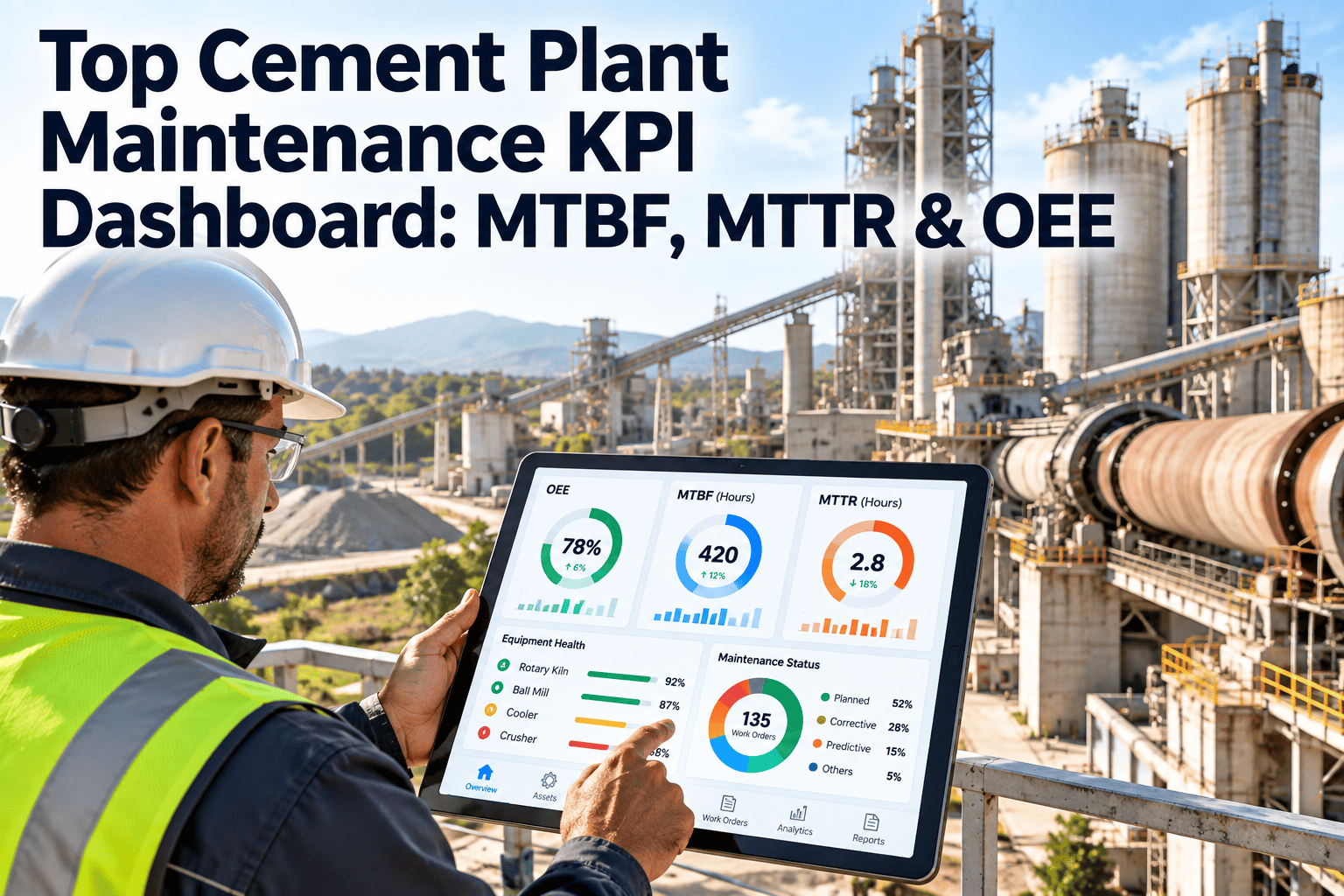
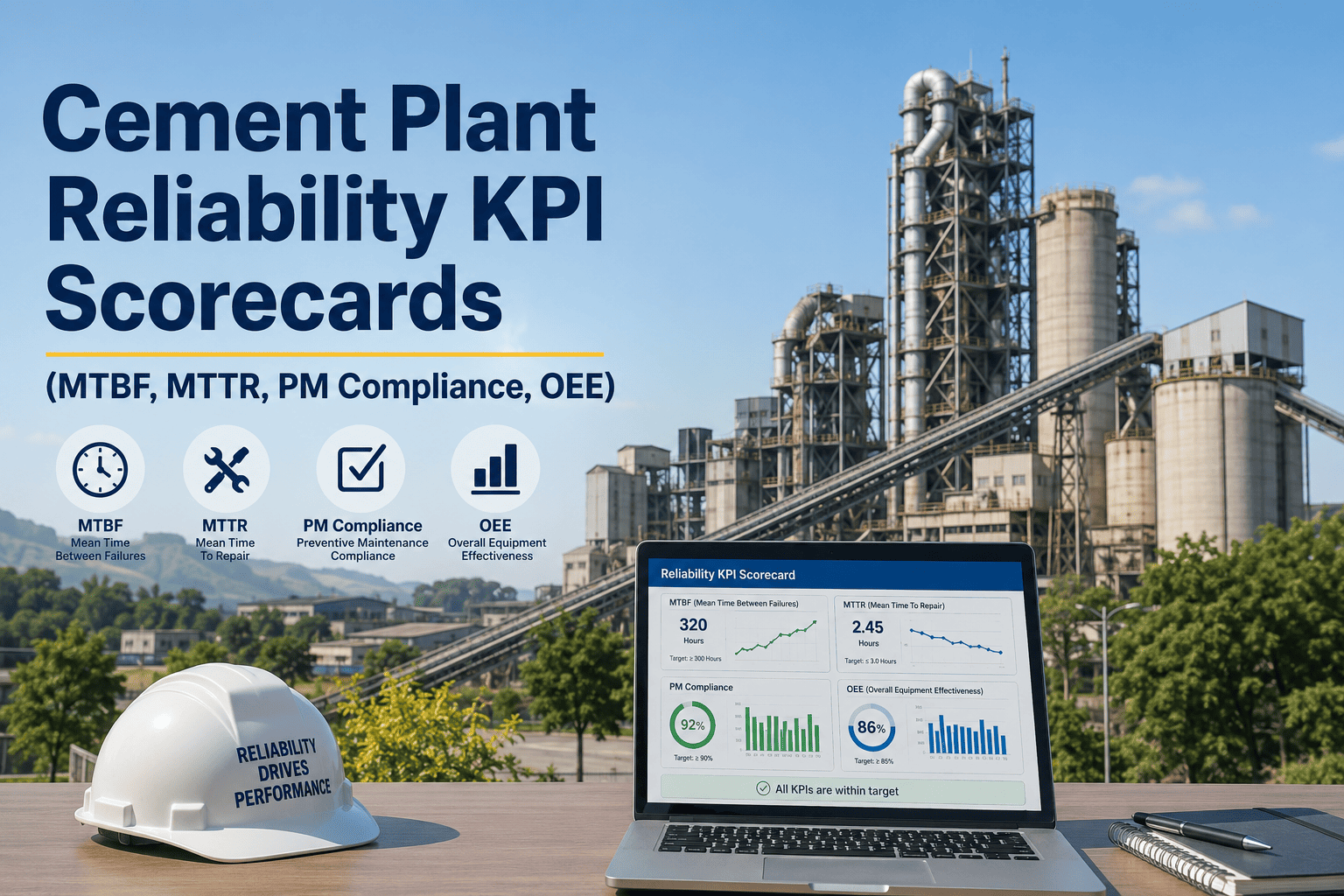
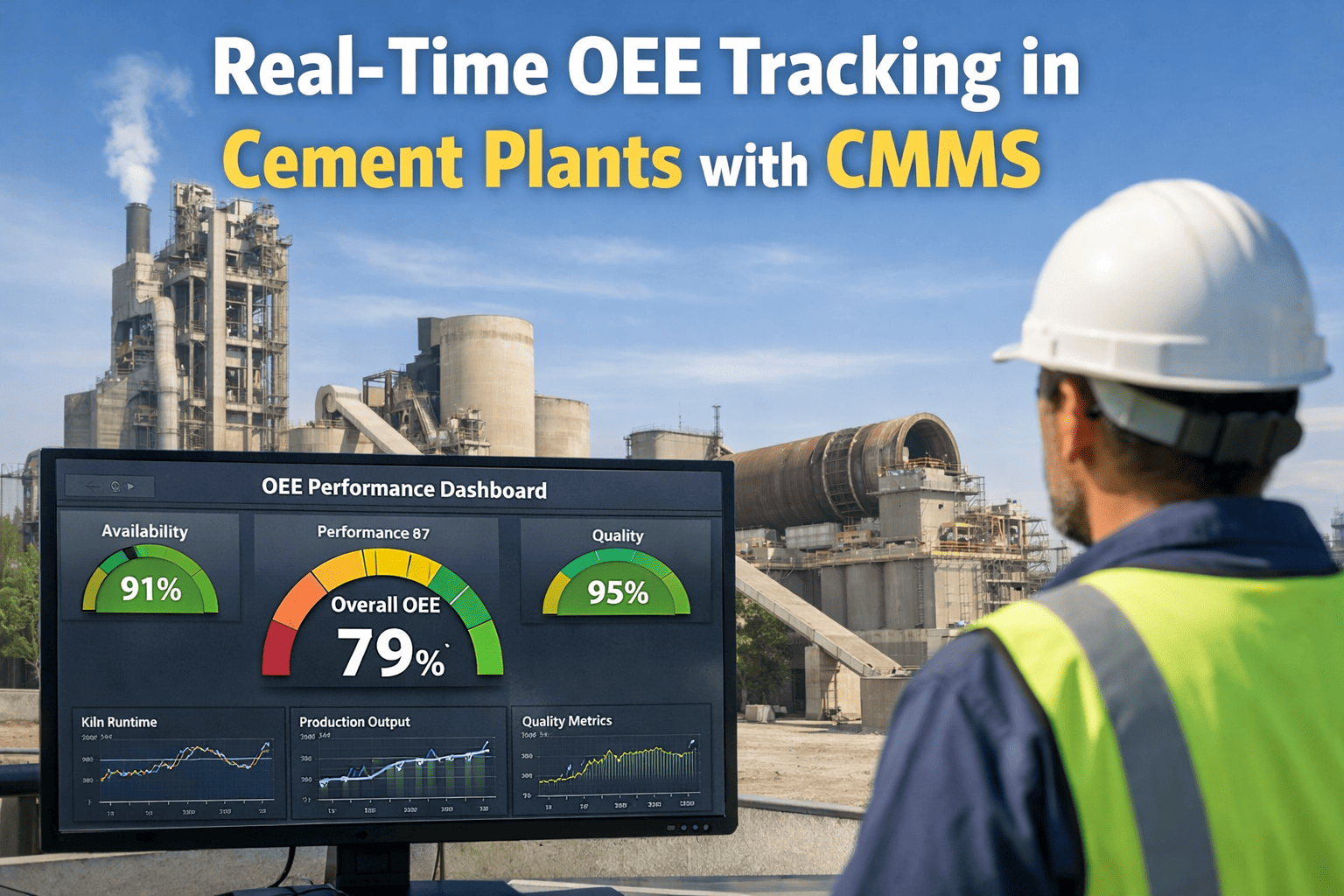
Live visibility into MTBF, MTTR, PM compliance, OEE, and downtime costs — so plant managers act on data, not intuition.
Compliance Tracking
Automated audit trails for OSHA, ISO 45001, and EPA requirements — every inspection, every signature, timestamp-verified and audit-ready.
Inventory Management
Track critical spare parts in real time — auto-reorder triggers prevent stockouts on kiln bricks, girth gear segments, and mill liners.
The Cost of Reactive Maintenance in Cement: 2025 Industry Data
Every cement plant manager understands that reactive maintenance is expensive — but the actual numbers reveal a structural problem that demands systemic change, not just faster response times.
Stop Losing Production to Preventable Failures
Oxmaint's CMMS is purpose-built for heavy industrial operations. Deploy across your cement plant in 60–90 days, connect your kiln and mill sensor data, and start eliminating unplanned stops before they happen.
CMMS vs. Reactive Maintenance: Head-to-Head Comparison
The performance gap between CMMS-managed and reactive cement plants isn't marginal — it's structural. Here's what the data shows across every critical operating metric when plants make the transition.
The 6 Critical CMMS Modules Every Cement Plant Needs
Not all CMMS platforms are built for the demands of cement manufacturing. These six modules determine whether a system delivers ROI or becomes shelfware. Sign up for Oxmaint and explore every module with live cement plant data during your free trial.
Rotary Kiln Condition Monitoring
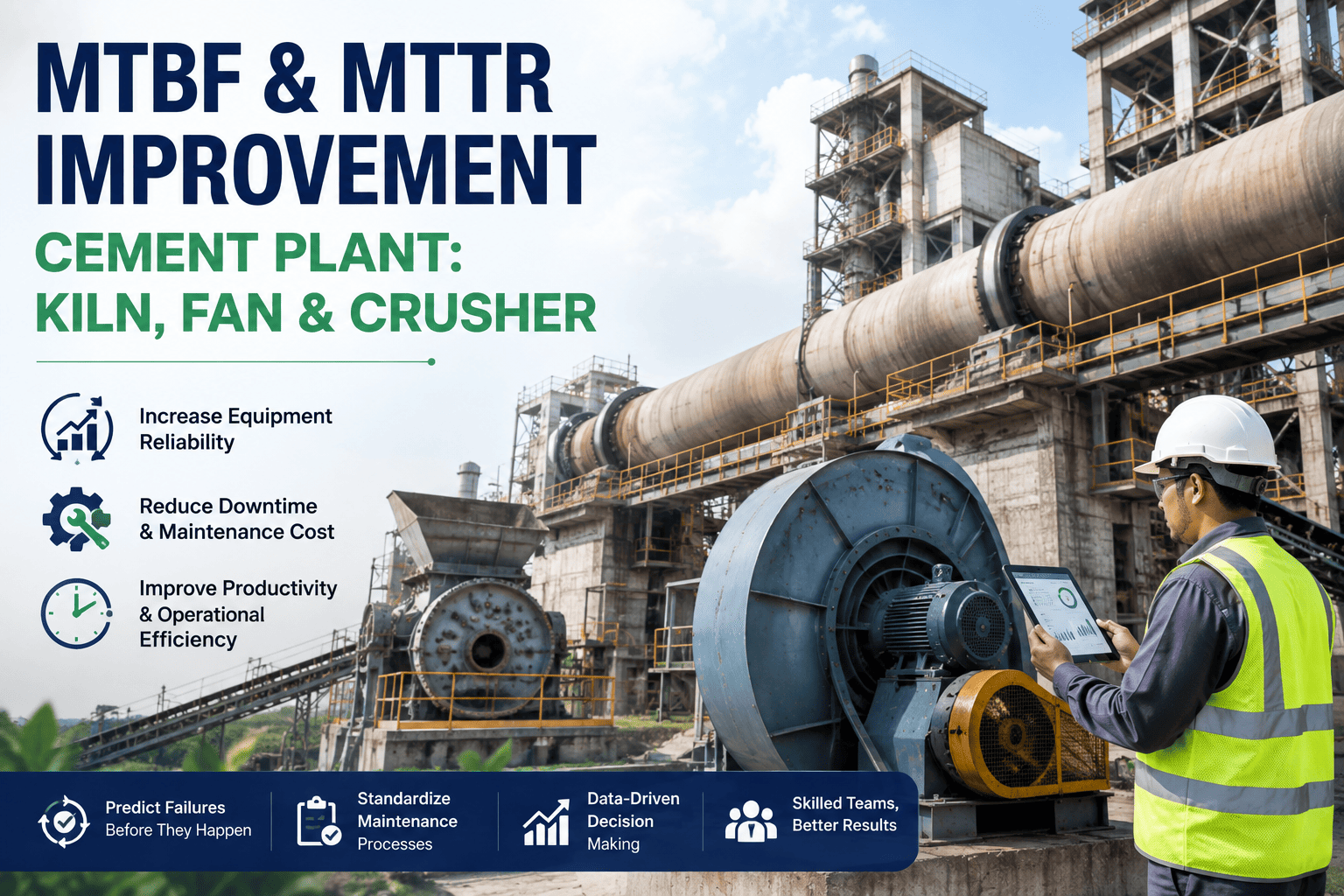
The kiln drives 70–80% of your total maintenance risk. A purpose-built CMMS module integrates with shell temperature scanners, thrust roller displacement sensors, and tyre migration monitors. Baselines are established automatically — when any parameter drifts, the system triggers a work order before failure window closes.
Work Order Management System
Cement plants generate hundreds of work orders weekly across kilns, mills, compressors, conveyors, and utilities. A CMMS automates creation, assignment, priority scoring, and escalation. Technicians receive mobile push notifications, attach photos, and close orders with digital signatures — no clipboards, no lost paperwork.
Preventive Maintenance Scheduler
Every asset in a cement plant — from the 5,000 tonne kiln to auxiliary pump motors — needs a defined PM interval. Calendar-based, meter-based, and condition-based triggers run simultaneously. The scheduler auto-adjusts when production targets change or shutdown windows shift, keeping technician workloads balanced.
Asset Hierarchy and Lifecycle Tracking
Map every asset from plant level down to individual component with full cost history, failure modes, MTBF data, and remaining useful life estimates. This module powers capital planning decisions — giving engineering managers the data to justify refurbishment or replacement before catastrophic failure forces the decision. Explore cement plant asset lifecycle management with CMMS for the complete framework.
Spare Parts and Inventory Control
Critical spares for cement plants — kiln bricks, girth gear segments, mill liners, large bearings — have long lead times and high unit costs. CMMS inventory management tracks minimum stock levels, auto-triggers purchase orders when thresholds are crossed, and links each part to the specific asset and work order where it will be used.
EHS Compliance and Audit Management
Cement plants operate under layered regulatory requirements — OSHA, EPA, ISO 45001, and increasingly, carbon reporting obligations. The CMMS compliance module auto-schedules required inspections, generates digital checklists, captures technician signatures and photos, and produces audit-ready reports on demand — eliminating last-minute compliance scrambles.
CMMS Implementation Roadmap for Cement Plants
Implementation failure in CMMS projects almost always traces back to poor sequencing — too much data, too fast, without stakeholder buy-in. This phased roadmap is designed for cement plant realities: continuous production pressure, shift-based teams, and existing assets with incomplete maintenance histories.
Foundation Setup — Weeks 1–2
No Production ImpactPM Program Migration — Weeks 2–6
Core Value DriverAnalytics and Predictive Layer — Weeks 6–12
Performance AccelerationFull Integration and Optimization — Months 3–6
ROI RealizationCMMS ROI for Cement Plants: Where the Savings Come From
ROI from CMMS deployment in cement manufacturing comes from five distinct value streams. Understanding each helps build the business case and prioritize which modules to activate first. For a detailed ROI calculation methodology, see how to calculate and justify your CMMS investment with industry-standard formulas.
Ready to See Oxmaint Running on Cement Plant Data?
Our team will walk you through a live demo with actual cement plant asset hierarchies, kiln PM schedules, and maintenance KPI dashboards. You'll see exactly how your team would use it from day one — no generic demos, no feature overload.
CMMS for Cement: Asset-Specific Maintenance Intelligence
Cement plants are asset-dense environments where maintenance priorities vary dramatically by equipment criticality. A CMMS that doesn't understand cement plant process flow will create more noise than signal. Here's how a purpose-aligned CMMS maps to the critical path through your production line.
Rotary Kiln System
Shell temperature monitoring, tyre migration alerts, girth gear wear tracking, refractory lining life cycle, and drive train condition — all integrated into automated work order generation.
Raw Mill & Finish Mill
Vibration monitoring on main bearings, liner wear tracking, separator efficiency trending, and lubrication interval management — with automatic work order escalation when readings exceed thresholds.
Crusher & Material Handling
Jaw plate and hammer wear cycles, conveyor belt tension monitoring, transfer point condition checks, and dust suppression system PMs — all scheduled automatically by the CMMS.
Compressed Air System
Filter replacement cycles, dryer performance monitoring, pressure drop trending across distribution networks, and baghouse pulse-jet cleaning interval management.
Electrical & Drive Systems
Motor thermography scheduling, switchgear inspection cycles, VSD performance tracking, and energy consumption monitoring across all high-voltage drive systems on the production line.
EHS and Compliance Assets
LOTO procedure digital enforcement, confined space entry permit tracking, baghouse emissions compliance, and ISO 45001 inspection scheduling — all audit-trail documented automatically.
Frequently Asked Questions: CMMS for Cement Plants
How long does it take to deploy a CMMS in an operating cement plant?
Modern cloud-based CMMS platforms like Oxmaint can be deployed in as little as 2–4 weeks for initial setup, with full integration including asset hierarchies, PM schedules, and mobile inspection checklists typically complete within 60–90 days. The critical factor is data quality — plants with digitized asset registers and existing PM documentation deploy faster than those starting from paper records. Unlike legacy on-premise systems that required 6–18 month IT projects, cloud CMMS setup happens without server infrastructure or specialized IT support.
What's the realistic ROI timeline for CMMS in cement manufacturing?
Most cement plants achieve positive ROI within 3–6 months of CMMS deployment — often from a single prevented major failure. The kiln is the most common first win: preventing one unplanned stop that would have cost $280,000+ in lost production typically covers 12+ months of CMMS subscription costs. Longer-term ROI compounds through extended equipment lifespan (20–40%), reduced emergency parts premium, and annual shutdown efficiency gains. The Indonesia case study documented $1.9M in annual savings against $1.4M investment across 18 months.
Can a CMMS integrate with existing kiln control systems and PLCs?
Yes. Modern CMMS platforms integrate with PLC outputs, DCS historian data, and OPC-UA compliant industrial systems through API connections. This enables real-time sensor data — kiln shell temperatures, drive current, vibration readings — to flow directly into the CMMS and trigger automated work orders when parameters exceed defined thresholds. Industrial-grade sensors with IP67+ dust and moisture ratings handle cement plant environmental conditions. Basic anomaly detection works from day one; accurate failure predictions build accuracy over the first 3–6 months of operation as equipment baselines are established.
How does a CMMS help with cement plant annual shutdown planning?
CMMS transforms shutdown execution from spreadsheet coordination to real-time digital project management. The platform manages scope definition, work order packages, contractor assignments, resource loading, and real-time progress tracking during the turnaround. Plants using CMMS for shutdown coordination report an average 25% reduction in turnaround duration by their third CMMS-coordinated cycle — because every lesson learned is captured digitally and carried into the next planning cycle automatically. Scope creep control, labor tracking versus estimate, and post-shutdown KPI analysis all happen within the same system.
What maintenance KPIs should cement plant managers track in their CMMS?
The most actionable KPIs for cement plant maintenance dashboards are: Overall Equipment Effectiveness (OEE) for the kiln and mills, Mean Time Between Failures (MTBF) by asset category, Mean Time to Repair (MTTR) by maintenance team, PM Completion Rate (target 85–95%), Reactive vs. Planned Maintenance Ratio (target <30% reactive), Work Order Backlog Age, Spare Parts Stockout Rate, and Maintenance Cost per Tonne of Clinker. Leading indicators — PM compliance and backlog age — matter more than lagging indicators for preventing failures before they happen.
Is CMMS software practical for smaller cement plants with limited IT resources?
Absolutely. Cloud-based CMMS platforms require no on-premise servers, no dedicated IT infrastructure, and minimal technical expertise to deploy and operate. Technicians access the system through mobile apps on standard smartphones — no industrial PCs or specialized hardware needed. The same proportional ROI applies at smaller scale: a 1,000 TPD plant preventing one unplanned kiln stop per quarter recovers CMMS costs many times over. Setup typically takes hours, not weeks, and onboarding support is included with most platforms at no additional cost.
How does CMMS support regulatory compliance in cement manufacturing?
A CMMS creates an unbroken digital audit trail for every maintenance activity, inspection, and regulatory test — each timestamped, geotagged, and linked to the specific asset and technician. For OSHA confined space entries, LOTO procedures, ISO 45001 audits, and EPA emissions compliance, the CMMS auto-schedules required inspections, generates digital checklists with mandatory photo capture, and produces complete compliance reports on demand. When an auditor arrives, compliance documentation that previously required days to compile is available in minutes. Permit management, incident tracking, and near-miss reporting are all centralized in the same platform.
Related Resources for Cement Plant Optimization
Explore these in-depth guides to deepen your understanding of cement plant maintenance, compliance, and operational excellence.
Reduce Unplanned Downtime in Cement Plants
Identify the top downtime drivers and see exactly how CMMS-driven predictive maintenance eliminates them — with real plant data.
Read the Guide →Cement Plant Asset Lifecycle Management
A complete framework for tracking asset health from commissioning to replacement — and making capital planning decisions with data, not instinct.
Read the Guide →Total Productive Maintenance in Cement Plants
How TPM principles applied to cement manufacturing — combined with CMMS automation — drive OEE improvements that compound year over year.
Read the Guide →Cement Kiln Energy Optimization
Detailed strategies for reducing kiln fuel consumption through maintenance precision — with energy benchmarks, heat balance calculations, and CMMS integration points.
Read the Guide →