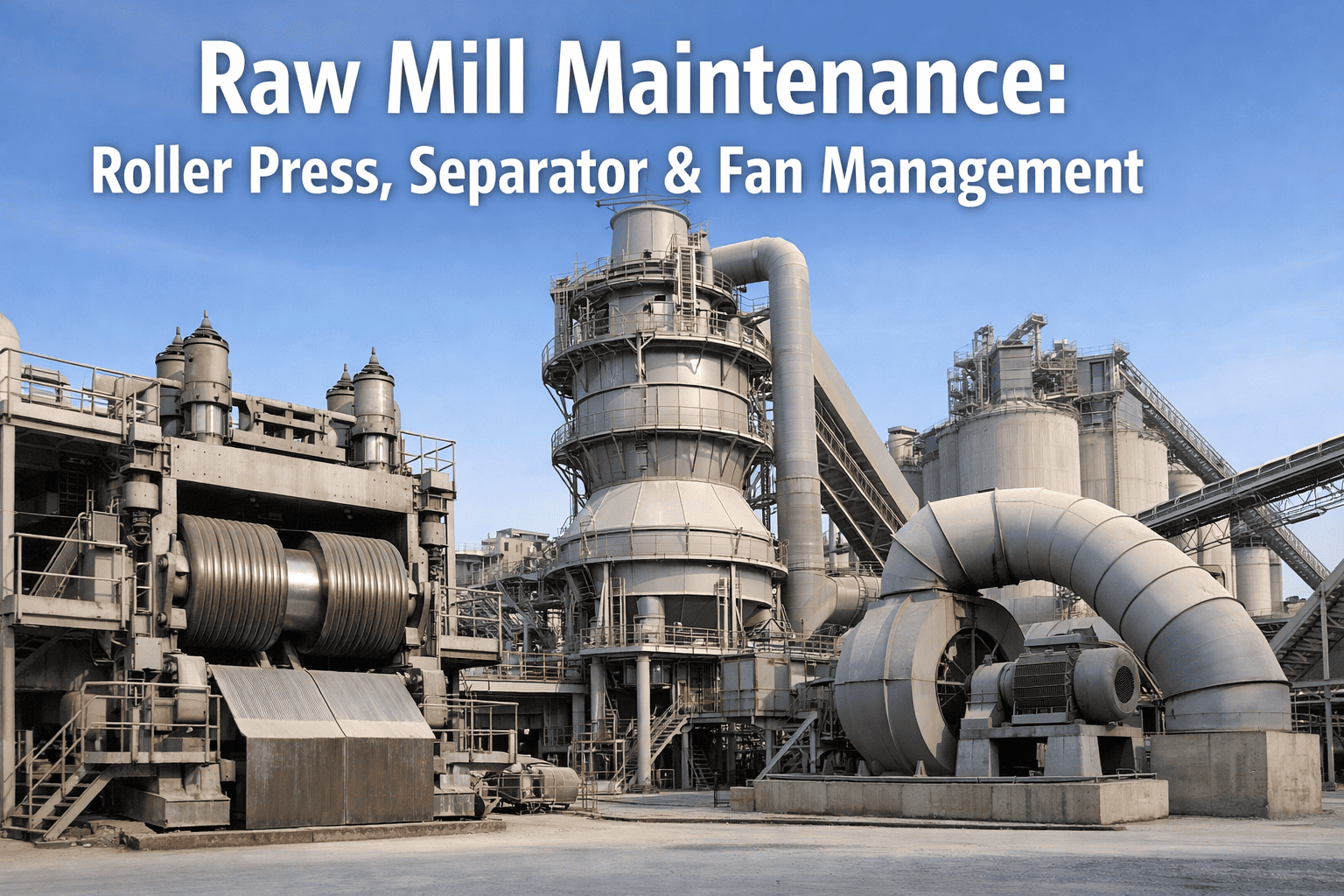
Raw mill circuit failures cost North American cement plants $85,000–$320,000 per unplanned stop in lost kiln feed and emergency repair spend — yet 74% of these events trace back to roller press wear, separator degradation, or mill fan imbalance that was measurable weeks before the failure. Without feed-rate-linked PM scheduling and component condition records, maintenance teams react to breakdowns rather than preventing them. Book a demo to see how Oxmaint tracks raw mill roller press, separator, and fan assets in a single platform.
Raw mill maintenance management is the structured scheduling of PM, wear inspections, and condition monitoring for the three primary raw grinding circuit assets — roller press, dynamic separator, and circuit fan — using feed rate and throughput data to determine inspection intervals rather than calendar dates. Oxmaint registers each component under a six-level asset hierarchy, auto-generates work orders by operating hours, and cross-references maintenance records with raw meal fineness and kiln feed quality KPIs to identify root causes of performance deviation.
Raw Mill Circuit — Component Risk Profile
Three assets drive 89% of unplanned raw mill stoppages. Each carries distinct failure modes, cost consequences, and PM intervals that must be managed separately in the asset registry.
| Component | Primary Failure Mode | Emergency Stop Cost | PM Trigger | Oxmaint Tracking |
|---|---|---|---|---|
| Roller Press | Roll surface wear, bearing failure, hydraulic pressure loss | $120,000–$320,000 including kiln feed interruption | Every 4,000 operating hours or 800,000 tonnes processed | Wear rate trending, hydraulic pressure logs, bearing temperature records |
| Dynamic Separator | Rotor blade wear, guide vane fouling, bearing deterioration | $55,000–$140,000 plus raw meal fineness OOB reject costs | Every 6,000 operating hours — blade inspection at 3,000 hours | Efficiency trending, blade wear records, rotor vibration baselines |
| Circuit Fan | Impeller blade erosion, bearing imbalance, seal deterioration | $65,000–$180,000 including bypass and reduced throughput costs | Vibration check every 1,000 hours; impeller inspection at 8,000 hours | Vibration trending, impeller wear logs, bearing temperature monitoring |
Where Raw Mill Maintenance Programs Break Down
Roll surface wear rate is directly proportional to feed hardness and throughput — not elapsed time. A plant processing hard limestone at 380 t/h degrades rolls 40% faster than a plant at 280 t/h processing softer raw mix. Fixed 6-month inspection intervals cause premature roll changes at 20% remaining life or dangerous overrun past safe operating limits, adding $80,000–$140,000 per avoidable roll change event.
Dynamic separator rotor blade wear accumulates over 3,000–5,000 operating hours, gradually reducing separation efficiency from a design 76% to below 58%. The resulting fineness drift and rising residue on the 90μm sieve is attributed to feed moisture or raw mix chemistry — not separator condition — delaying corrective maintenance by 4–8 weeks and inflating specific energy consumption by 9–16%.
Raw mill circuit fans handling dusty, abrasive gas streams suffer impeller blade erosion at 0.8–1.4 mm per 1,000 operating hours. Without vibration baseline records stored against the fan asset and compared across consecutive readings, progressive rotor imbalance goes undetected until it triggers bearing failure — replacement cost $65,000–$180,000 with 4–9 days lost production.
When raw meal residue rises or kiln feed LSF deviates, process engineers adjust grinding parameters without checking whether a recent maintenance event — partial roller change, separator blade replacement, or fan bearing swap — changed the circuit's operating dynamics. Without CMMS records linking work order history to raw meal KPI trends, root cause analysis takes 3–5 days instead of 2 hours.
Roller Press, Separator, and Fan — All Three Tracked in One Asset Registry
Oxmaint registers each raw mill circuit component with its own PM schedule, wear record, and condition score — linked to feed rate and throughput data. Book a demo to see your raw mill circuit configured in the platform.
How Oxmaint Delivers Raw Mill Asset Management
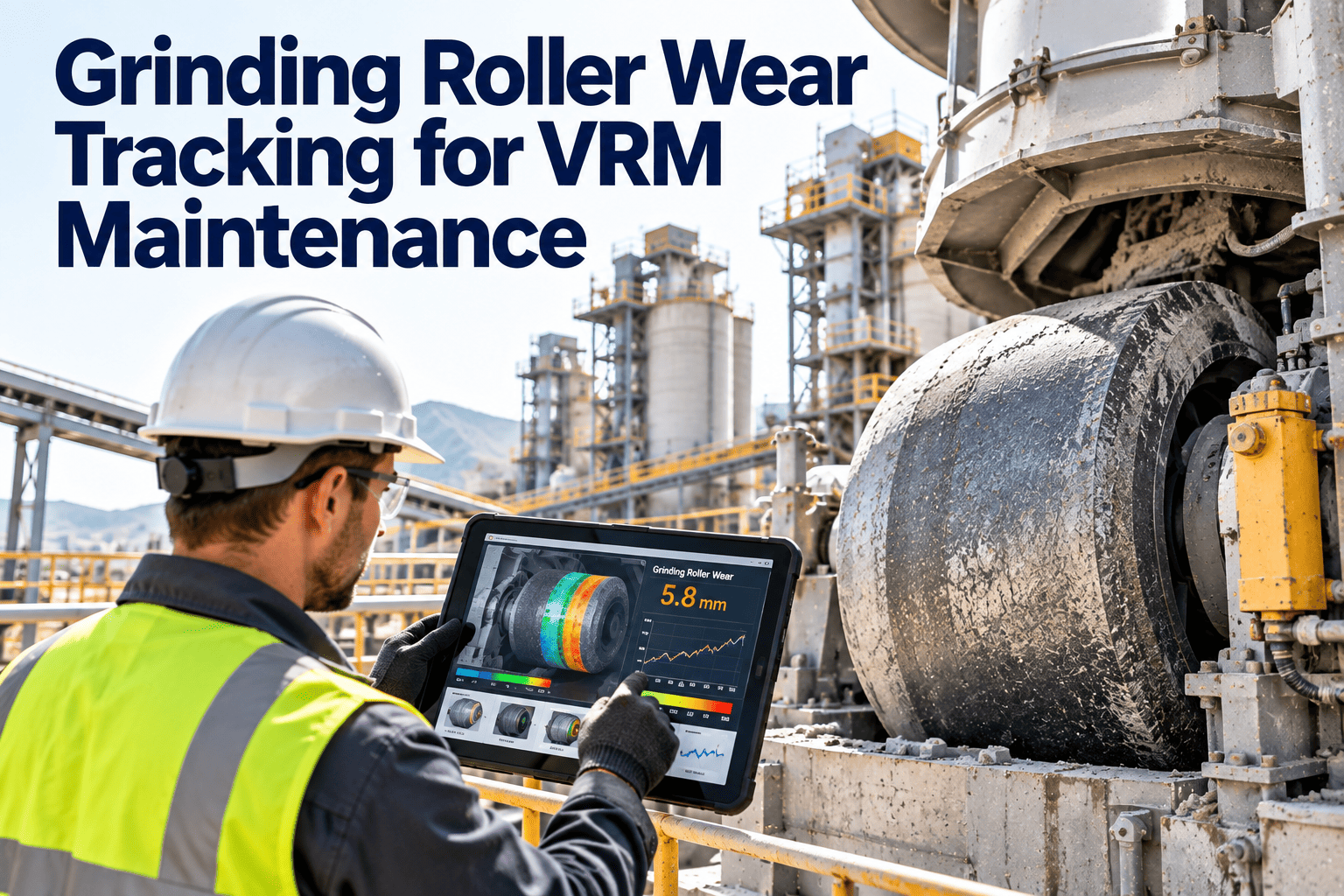
Roll surface wear measurements entered at each inspection are plotted against cumulative tonnes processed at the plant's actual feed rate. The RUL engine calculates remaining roll life and projects replacement at current throughput — not a fixed calendar date. Hydraulic pressure logs, bearing temperature records, and gap measurements are stored against the roller press asset record and alert maintenance when readings deviate from operating baseline. Book a demo to see roller press wear trending configured for your raw mill feed rate.
Separator rotor blade wear, guide vane condition, and reject cone measurements are logged at each planned inspection and plotted against separator efficiency readings and raw meal residue on 90μm sieve. When efficiency drops below the defined threshold, Oxmaint creates a corrective work order automatically and surfaces the last blade wear measurement as context for the maintenance engineer — eliminating the diagnostic delay that misattributes fineness drift to feed quality.
Vibration readings from handheld analyzers entered at each inspection are stored against the fan asset record and plotted as a trend across consecutive measurements. Threshold alerts trigger corrective work orders when amplitude deviation indicates progressive rotor imbalance from impeller erosion. Bearing temperature records and seal condition findings are captured in the same asset work order history — providing the full condition picture before any maintenance decision. See fan vibration trending and impeller wear tracking in a live platform demo.
Raw meal residue, LSF, and specific energy consumption are tracked as KPIs linked to the raw mill asset record. When a KPI deviates from baseline, the analytics dashboard cross-references the asset's recent work order history — surfacing maintenance events, component wear states, and overdue PM tasks as probable root causes. The CapEx forecasting module uses roller, separator, and fan component RUL data to build a rolling 5-year capital replacement schedule for the full raw mill circuit.
Platform Features for Raw Mill Asset Management
Plots roll surface wear against cumulative feed tonnes. Projects replacement at current throughput rate. Flags when remaining wear allowance drops below 20%. Reduces premature roll change spend by up to 22% per event cycle.
Work orders triggered by operating hours and cumulative feed tonnes — not calendar months. Hydraulic pressure checks, bearing temperature logs, and gap measurements each carry their own interval. PM compliance reaches 91% within two production quarters.
Separator efficiency linked to blade wear records and raw meal residue KPIs. Threshold alerts auto-generate corrective work orders with the last inspection finding as context. Eliminates the 4–8 week misdiagnosis delay attributing fineness drift to feed quality.
Consecutive vibration readings stored against the fan asset record and plotted as trends. Amplitude deviation from baseline triggers corrective work orders. Prevents the 4–9 day unplanned stop caused by undetected impeller imbalance from blade erosion.
Raw meal residue, LSF, and specific energy cross-referenced with the raw mill asset's maintenance work order history. Root cause analysis time for quality deviations reduced from 3–5 days to under 2 hours by surfacing relevant maintenance events automatically.
5-year roller press, separator, and fan capital replacement schedule built from component RUL data and historical repair costs. Formatted for VP of Operations and budget committee review — 88% approval rate versus 47% for estimate-based submissions.
Oxmaint Outcomes — Raw Mill Circuit Deployments
Investment vs Return — Raw Mill CMMS
| Asset | Planned Maintenance Cost | Emergency / Reactive Cost | Annual Saving |
|---|---|---|---|
| Roller Press Rolls | $72,000 planned roll change — throughput-optimized timing | $120,000–$320,000 emergency stop with kiln feed interruption | Up to $248,000 avoided per event |
| Dynamic Separator | $16,000 blade and guide vane inspection program annually | $55,000–$140,000 rotor failure replacement plus fineness reject costs | Up to $124,000 avoided per event |
| Circuit Fan | $12,000 vibration and impeller inspection program annually | $65,000–$180,000 bearing failure replacement and 4–9 day outage | Up to $168,000 avoided per event |
| Kiln Feed Quality | Fineness deviation root cause identified in under 2 hours via CMMS records | $40,000–$90,000 clinker quality cost from 3–5 days of misdiagnosed feed deviation | Up to $90,000 avoided per event |
| Oxmaint Platform (full raw mill circuit) | $28,000 per year | Prevention and analytics platform | $400,000+ combined annual avoidance |
Eliminate Raw Mill Unplanned Stops — Deploy in 3 Weeks
Feed-rate-linked PM scheduling, roller wear trending, separator efficiency monitoring, and fan vibration tracking — no hardware, no consultant fees. Book a demo to review your raw mill circuit configuration with our team.
Frequently Asked Questions
Continue Reading
Stop Raw Mill Stoppages Before They Reach the Kiln — Deploy in 3 Weeks
Feed-rate-linked roller press PM, separator efficiency tracking, fan vibration trending, and 5-year CapEx forecasting — configured for your raw mill circuit, live in three weeks, no hardware or consultant fees. Book a demo to see your raw mill asset hierarchy built in real time.