
Your campus dining hall serves thousands of meals daily—and every service depends on equipment performing flawlessly. A malfunctioning walk-in cooler overnight means $15,000 in spoiled food by morning. A failed fryer during lunch rush means 800 hungry students and a scrambling kitchen staff. For campus dining operations, equipment reliability isn't just about efficiency—it's about food safety, health code compliance, and your institution's reputation.
This guide provides a comprehensive, downloadable inspection checklist specifically designed for campus dining facilities—covering refrigeration systems, cooking equipment, ventilation, and sanitation infrastructure. You'll learn exactly what to check, how often, and why each inspection point matters for both food safety and regulatory compliance. Start tracking your kitchen inspections digitally—sign up free.
Why Campus Dining Facilities Need Structured Inspections
Campus dining operations face regulatory scrutiny that most commercial kitchens don't encounter. Health departments, institutional risk managers, insurance carriers, and accreditation bodies all expect documented evidence of systematic equipment maintenance. A single failed health inspection can trigger campus-wide headlines and enrollment concerns. Schedule a demo to see compliance tracking in action.
Food Safety Stakes
Temperature control failures can sicken hundreds of students within hours. Refrigeration and hot-holding equipment require continuous monitoring and documented verification.
Regulatory Compliance
Health department inspections, FDA Food Code requirements, and state regulations all demand documented maintenance programs with verifiable records.
High-Volume Operations
Campus dining serves 3,000-15,000 meals daily across multiple venues. Equipment runs harder and longer than typical restaurants, accelerating wear and failure risk.
The good news? A structured inspection program transforms compliance from a crisis response into routine operations. With the right checklist and digital tracking, your team can demonstrate due diligence to any auditor while catching problems before they become emergencies. Get started free with digital checklists.
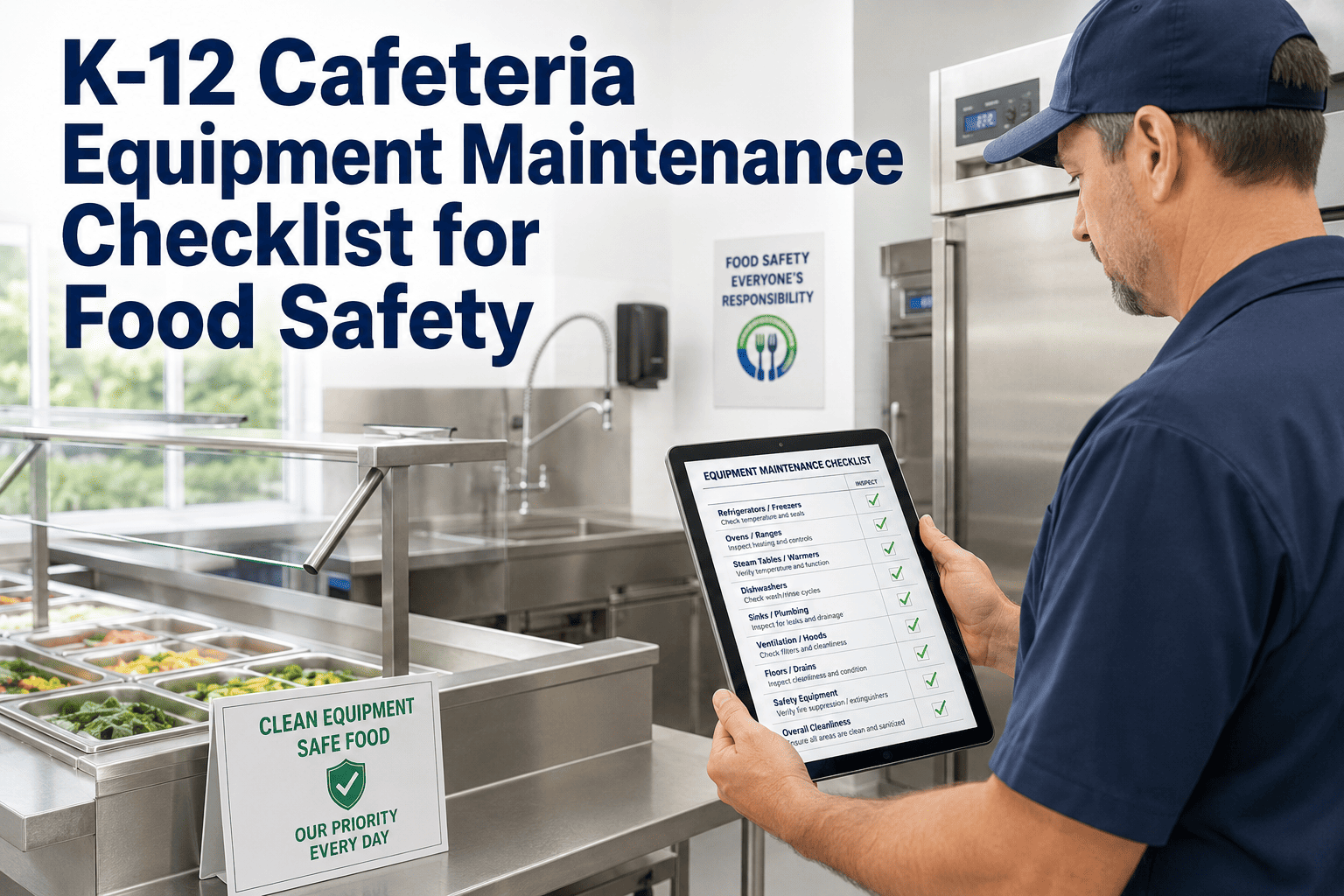
Complete Kitchen Equipment Inspection Checklist
Use this checklist to systematically evaluate every piece of equipment in your dining facility. Adjust frequencies based on your specific volume—high-traffic dining halls may need more frequent checks on critical refrigeration and cooking equipment.
Refrigeration Equipment
Daily + WeeklyWalk-In Coolers & Freezers — Daily Checks
Walk-In Coolers & Freezers — Weekly Checks
Reach-In Refrigerators & Prep Tables — Daily Checks
Cooking Equipment
Daily + MonthlyCommercial Ovens & Ranges — Daily Checks
Fryers — Daily Checks
Steamers & Combi Ovens — Daily Checks
Griddles & Grills — Daily Checks
Ventilation & Fire Safety
Daily + Monthly + QuarterlyHood Systems — Daily Checks
Hood Systems — Weekly Checks
Fire Suppression — Monthly Checks
Dishwashing & Sanitation
Daily + WeeklyCommercial Dishwashers — Daily Checks
Commercial Dishwashers — Weekly Checks
3-Compartment Sinks — Daily Checks
Food Prep & Holding Equipment
DailyHot Holding Equipment — Daily Checks
Cold Holding & Salad Bars — Daily Checks
Food Processors & Mixers — Daily Checks
Ice Machines & Beverage Equipment
Daily + WeeklyIce Machines — Daily Checks
Ice Machines — Weekly Checks
Beverage Dispensers — Daily Checks
Inspection Frequency Guide
Not all equipment demands the same attention. This visual guide shows recommended inspection intervals based on food safety criticality and failure risk. Automate your inspection schedules—try free.
Common Equipment Failures & Warning Signs
Train your kitchen staff to recognize these early warning signs before they become food safety incidents or service disruptions. See how to set up failure alerts—book a demo.
Refrigeration Temperature Drift
Signs: Temperature fluctuations, ice buildup on coils, compressor running constantly, warm spots in unit
Risk: Food safety violation, spoilage, potential foodborne illness outbreak
Action: Check door seals and coil cleanliness first; call for service if temperature won't stabilize within 2 hours
Fryer Temperature Inconsistency
Signs: Oil not reaching set temperature, food cooking unevenly, excessive smoking at normal temps
Risk: Undercooked food (safety hazard), poor food quality, fire risk from degraded oil
Action: Verify thermostat with probe thermometer, check heating elements, filter or replace oil
Dishwasher Temperature Failure
Signs: Dishes not drying properly, sanitizer test strips show inadequate concentration, rinse temperature below 180°F
Risk: Inadequate sanitization, health code violation, disease transmission
Action: Check heating elements, verify water supply temperature, inspect rinse injectors for clogs
Hood Exhaust Reduction
Signs: Smoke not being captured, grease accumulating on surfaces faster, kitchen feels hotter/stuffier
Risk: Fire hazard from grease buildup, air quality issues, accelerated equipment degradation
Action: Clean or replace grease filters, check fan belt tension, schedule duct cleaning if overdue
Building Your Kitchen Inspection Program
A checklist only protects you when it's consistently used and properly documented. Here's how to build a sustainable inspection program for your campus dining operation. Start building your program free today.
Complete Equipment Inventory
Document every piece of equipment with make, model, serial number, installation date, and service history. Include warranty information and service provider contacts.
Assign Inspection Responsibilities
Morning prep staff can handle daily temperature checks. Shift supervisors should conduct weekly inspections. Management reviews monthly comprehensive audits. Document who's responsible for what.
Implement Digital Tracking
Paper temperature logs get lost, damaged, or incomplete. Digital systems timestamp every entry, alert when readings are out of range, and create searchable records health inspectors can verify.
Establish Response Protocols
When equipment fails inspection, what happens next? Define temperature excursion procedures, equipment lockout protocols, and escalation chains for critical failures.
Review and Continuously Improve
Monthly, analyze what issues were found. Are the same problems recurring? Adjust PM schedules, staff training, or equipment replacement plans based on actual failure patterns.
Pro Tip: Temperature Monitoring Technology
Wireless temperature sensors can monitor walk-in coolers, freezers, and hot holding 24/7—even when no staff is present. They alert via text when temperatures drift outside safe ranges, giving you hours to respond before food spoils. The $200-500 per unit investment pays for itself the first time it prevents a $10,000 spoilage event. See sensor integration options—schedule a demo.
Health Inspection Readiness: Why Documentation Matters
Health inspectors don't just look at current conditions—they examine your systems. Documented inspection programs demonstrate the "active managerial control" that FDA Food Code requires. Build audit-ready documentation—sign up free.
Scenario: Health Inspector Asks for Temperature Records
During a routine inspection, the health department requests your refrigeration temperature logs for the past 30 days. This is standard—they're verifying you have a food safety system in place.
With Proper Inspection Records
You provide timestamped digital logs showing twice-daily temperature checks, automatic alerts when a unit briefly exceeded range last week, and the corrective action taken within 30 minutes. The inspector notes your "excellent food safety management system."
Without Documentation
You scramble to find partially completed paper logs with gaps. Some entries lack dates. The inspector marks "inadequate temperature monitoring" and schedules a follow-up inspection—plus your violation becomes public record.
Beyond inspections, proper documentation protects your institution if a foodborne illness claim arises. Evidence of systematic monitoring and rapid response to issues demonstrates the due diligence courts expect from food service operations.
Frequently Asked Questions
How often should commercial kitchen equipment receive professional service?
Refrigeration systems should have professional preventive maintenance quarterly. Cooking equipment varies—ovens annually, fryers semi-annually, hood systems per NFPA 96 requirements (typically quarterly for high-volume operations). Ice machines benefit from quarterly professional cleaning and sanitization beyond daily/weekly staff procedures. Schedule professional PMs automatically—try free.
What temperature records does the health department require?
Most jurisdictions require documented temperature monitoring for refrigeration (at least twice daily), hot holding (each service period), and dishwasher final rinse (each use or shift). Records should include date, time, temperature, and corrective actions for any out-of-range readings. Digital systems with automatic timestamps satisfy these requirements with less staff burden.
Can student workers perform equipment inspections?
Student workers can perform basic operational checks—temperature readings, visual inspections, and cleanliness verification—following structured checklists. However, trained staff should conduct detailed mechanical inspections and any maintenance requiring tools or equipment disassembly. All inspection personnel should be trained on food safety principles and documented in your HACCP plan.
What should we do when refrigeration temperatures exceed safe ranges?
If temperatures exceed 41°F for refrigeration or rise above 0°F for freezers: immediately check door seals and ensure doors weren't left open, verify thermostat settings, check for frost buildup blocking airflow. If temperature doesn't return to safe range within 2 hours, evaluate food safety per your HACCP plan (potentially discard affected items) and call for emergency service. Document all actions taken. Set up automatic temperature alerts—book a demo.
How long should we retain kitchen equipment inspection records?
Retain all food safety records for a minimum of 2 years per FDA Food Code requirements. Many institutions retain records for 5-7 years for liability protection. Equipment maintenance records should be retained for the life of the equipment plus 3 years. Digital systems make long-term retention simple and eliminate storage space concerns.
Ready to Digitize Your Kitchen Inspections?
Oxmaint helps campus dining teams move from paper logs to digital compliance—with mobile apps, automatic temperature alerts, photo documentation, and audit-ready reporting that health inspectors love.



.png)

