Asset reliability is the discipline that determines whether your facility runs at planned capacity or spends its maintenance budget reacting to failures. High-reliability facilities achieve 30 to 40% lower total maintenance costs, 25 to 35% longer average asset service lives, and CapEx approval rates above 85% because they can prove remaining useful life per asset rather than estimating it from age and visual inspection. AI-powered reliability analytics make this precision achievable at scale, continuously updating health scores, MTBF trends, MTTR benchmarks, and end-of-life forecasts for every asset in the registry from actual operational data. This guide covers the analytics framework, the metrics that matter, and the implementation path for facility teams ready to move from reactive to reliability-led operations. Sign up free on Oxmaint to deploy AI-powered asset reliability analytics across your portfolio, or book a demo for a walkthrough of the reliability console.
Asset reliability analytics is the systematic use of operational data, sensor readings, and maintenance history to measure, predict, and improve equipment performance. Key metrics are OEE (Overall Equipment Effectiveness), MTBF (Mean Time Between Failures), and MTTR (Mean Time to Repair). AI-powered analytics update these metrics continuously per asset rather than calculating them in monthly reports, enabling real-time reliability dashboards, end-of-life forecasts, and condition-based maintenance triggers that reduce both reactive failures and unnecessary PM visits simultaneously.
What This Guide Covers
- 1Core Reliability Metrics: OEE, MTBF, MTTR and Asset Health Score
- 2How AI Transforms Static Metrics Into Dynamic Reliability Intelligence
- 3Asset Lifespan Extension: How Reliability Analytics Adds Years to Equipment Life
- 4Oxmaint Real-Time OEE Dashboard and Reliability Console
- 5Reliability Benchmarks by Equipment Class and Facility Type
- 6Implementation Path: From Data Collection to Live Reliability Dashboard
- 7Frequently Asked Questions
Core Reliability Metrics: OEE, MTBF, MTTR and Asset Health Score
Four metrics form the foundation of any asset reliability analytics programme. Each measures a different dimension of equipment performance, and together they give facility managers a complete picture of where assets stand relative to their planned lifecycle and operating targets.
Combines Availability x Performance x Quality into a single percentage score. World-class OEE is typically 85%+ for commercial building systems. Most facilities start below 65% before structured reliability programmes are deployed.
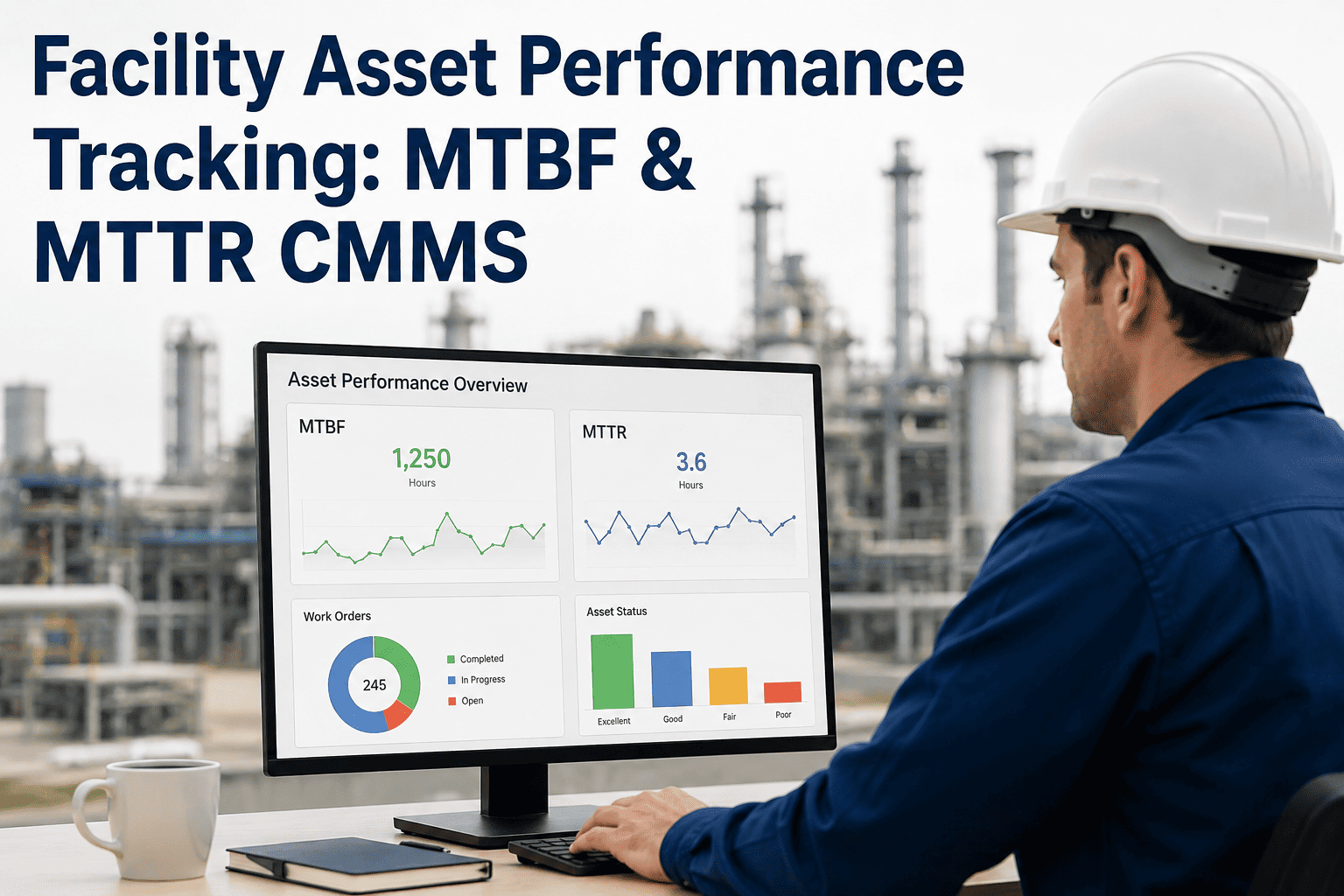
AvailabilityPerformanceQualityAverage operating time between unplanned failure events per asset. Higher MTBF indicates more reliable equipment or more effective maintenance. AI analytics identify MTBF trends weeks before an asset enters the pre-failure window.
Failure FrequencyReliability TrendPre-Failure WindowAverage time from failure detection to full system restoration. High MTTR indicates parts availability issues, technician capability gaps, or inefficient work order routing. Target MTTR for commercial HVAC failures is under 4 hours for planned interventions and under 8 hours for emergency events.
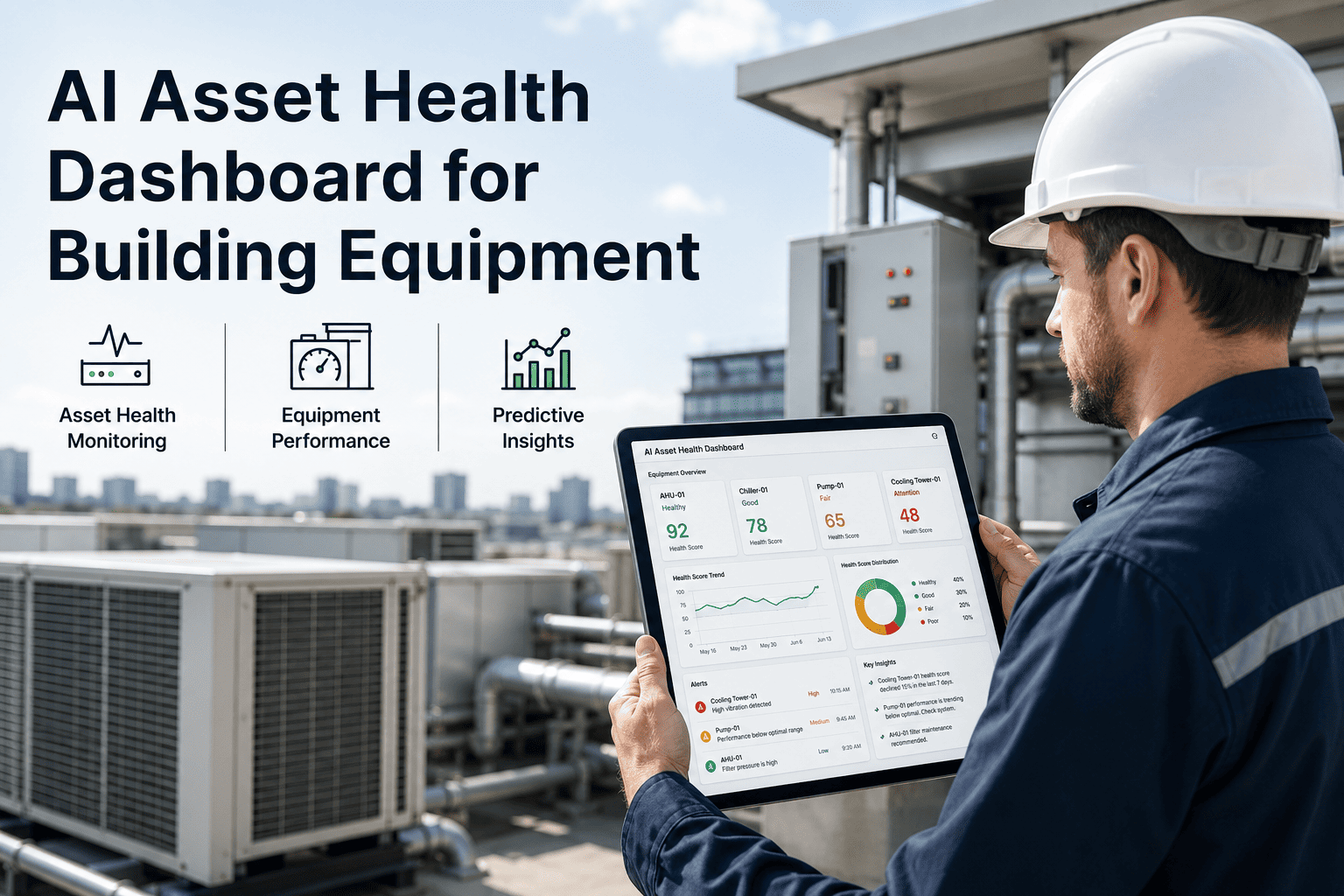
Repair SpeedParts AvailabilityRecovery TimeA composite score (typically 0 to 100) combining sensor readings, PM compliance history, failure event frequency, and age against expected lifecycle. Scores update with each PM completion, sensor reading, and work order closure, enabling real-time remaining useful life calculations per asset.
Composite ScoreReal-Time UpdateRUL CalculationHow AI Transforms Static Metrics Into Dynamic Reliability Intelligence
Traditional reliability metrics are calculated monthly from maintenance logs, producing lagging indicators that tell you what already happened. AI reliability analytics calculate the same metrics in real time from sensor data streams and work order completions, producing leading indicators that tell you what is about to happen.
Vibration, temperature, current draw, pressure, and runtime sensors feed data to the analytics platform continuously. Rather than a monthly snapshot, each asset has a real-time condition profile updated every 15 to 60 minutes depending on asset criticality and sensor configuration.
ML models compare current sensor readings against baseline operational profiles and historical pre-failure patterns. Deviations that match known failure precursor signatures trigger degradation alerts, MTBF recalculation, and health score reduction before any visible symptom appears.
Based on current health score, rate of degradation, and historical lifecycle data for the same equipment class, the system calculates remaining useful life in days or hours per asset. This feeds CapEx forecasting modules with evidence-based replacement timelines rather than age-based estimates.
When degradation trends cross pre-set thresholds, the system automatically generates a maintenance work order at the optimal intervention point, typically 14 to 42 days before projected failure, eliminating the manual triage step between detection and technician dispatch.
Asset Lifespan Extension: How Reliability Analytics Adds Years to Equipment Life
| Equipment Class | Standard Service Life | Life With AI Reliability | Extension Mechanism | Replacement Value |
|---|---|---|---|---|
| Water-Cooled Chiller | 18 to 22 years | 24 to 30 years | Early bearing intervention prevents compressor damage; refrigerant health monitoring prevents overload events | $120K to $380K |
| Air Handling Unit | 15 to 20 years | 20 to 26 years | Belt and bearing replacement at condition threshold prevents motor burnout; coil fouling addressed before efficiency loss causes secondary damage | $18K to $85K |
| Centrifugal Pump | 10 to 15 years | 14 to 20 years | Impeller cavitation detection and seal condition monitoring prevents catastrophic pump failure that causes housing damage requiring full replacement | $8K to $45K |
| Electrical Motor (above 15kW) | 15 to 20 years | 20 to 28 years | Winding insulation monitoring and bearing vibration analysis catches thermal and mechanical degradation before winding failure, which requires complete motor replacement | $4K to $28K |
| Cooling Tower | 15 to 25 years | 20 to 32 years | Fan blade erosion monitoring, gearbox oil analysis, and basin water quality tracking prevent cascading failures that accelerate tower structure degradation | $35K to $180K |
| Boiler and Heat Exchanger | 20 to 30 years | 26 to 38 years | Combustion efficiency tracking, flue gas analysis, and tube condition monitoring prevent heat exchanger fouling from causing pressure vessel stress damage | $22K to $120K |
Oxmaint Real-Time OEE Dashboard and Reliability Console
OEE Tracked Per Asset, Per System, Per Building in Real Time
Oxmaint's Real-Time OEE Dashboard calculates Availability, Performance, and Quality scores per asset continuously from sensor data and work order completions. No monthly manual calculation, no data exports, no spreadsheet aggregation.
OEE scores drill down from portfolio summary to individual asset, with trend charts showing improvement trajectory over the previous 30, 90, and 365 days. World-class OEE benchmarks overlaid for immediate gap identification. See the complete OEE guide for facility managers.
Condition-Based Asset Health Scores Across Every Equipment Class
Every asset in the Oxmaint registry receives a real-time health score (0 to 100) updated with each sensor reading, PM completion, and work order closure. Scores deteriorate as condition data indicates degradation and recover as maintenance interventions restore asset health.
Health scores feed the CapEx forecasting module, generating remaining useful life estimates and replacement timeline recommendations that replace age-based capital planning with evidence-based forecasts. See how IoT sensors feed real-time asset health data.
Reliability Benchmarks by Equipment Class and Facility Type
| Metric | Industry Average | High-Reliability Target | Oxmaint-Deployed Result |
|---|---|---|---|
| Overall OEE (all equipment classes) | 62 to 68% | 85%+ | 77 to 84% at 12 months; 85%+ at 24 months for portfolios with full sensor coverage |
| MTBF (HVAC, large AHUs) | 3,200 to 4,800 hours | 6,000+ hours | 5,200 to 6,800 hours at 18 months with condition-based PM replacing fixed calendar intervals |
| MTTR (planned interventions) | 6 to 12 hours | Under 4 hours | 2.8 to 4.2 hours average MTTR when work orders are pre-generated with parts requirements and asset history attached |
| Emergency repair ratio | 38 to 45% | Under 15% | 11 to 16% at 18 months. AI predictive maintenance converts 65%+ of HVAC and mechanical failures to planned interventions |
| PM compliance rate | 51 to 62% | 85%+ | 89% PM compliance across multi-site portfolios with automated scheduling and 30-7-1 day escalating alerts |
| CapEx forecast accuracy | Plus or minus 40% | Plus or minus 15% | Plus or minus 12 to 18% forecast accuracy using condition-score and degradation-rate based RUL calculations |
Implementation Path: From Data Collection to Live Reliability Dashboard
Frequently Asked Questions: Asset Reliability Analytics
Deploy AI Asset Reliability Analytics Across Your Entire Portfolio
Real-time OEE dashboards, MTBF and MTTR tracking, asset health scoring, and evidence-backed CapEx forecasting. Live across your full portfolio in under 21 days with pre-built models for every commercial building equipment class.