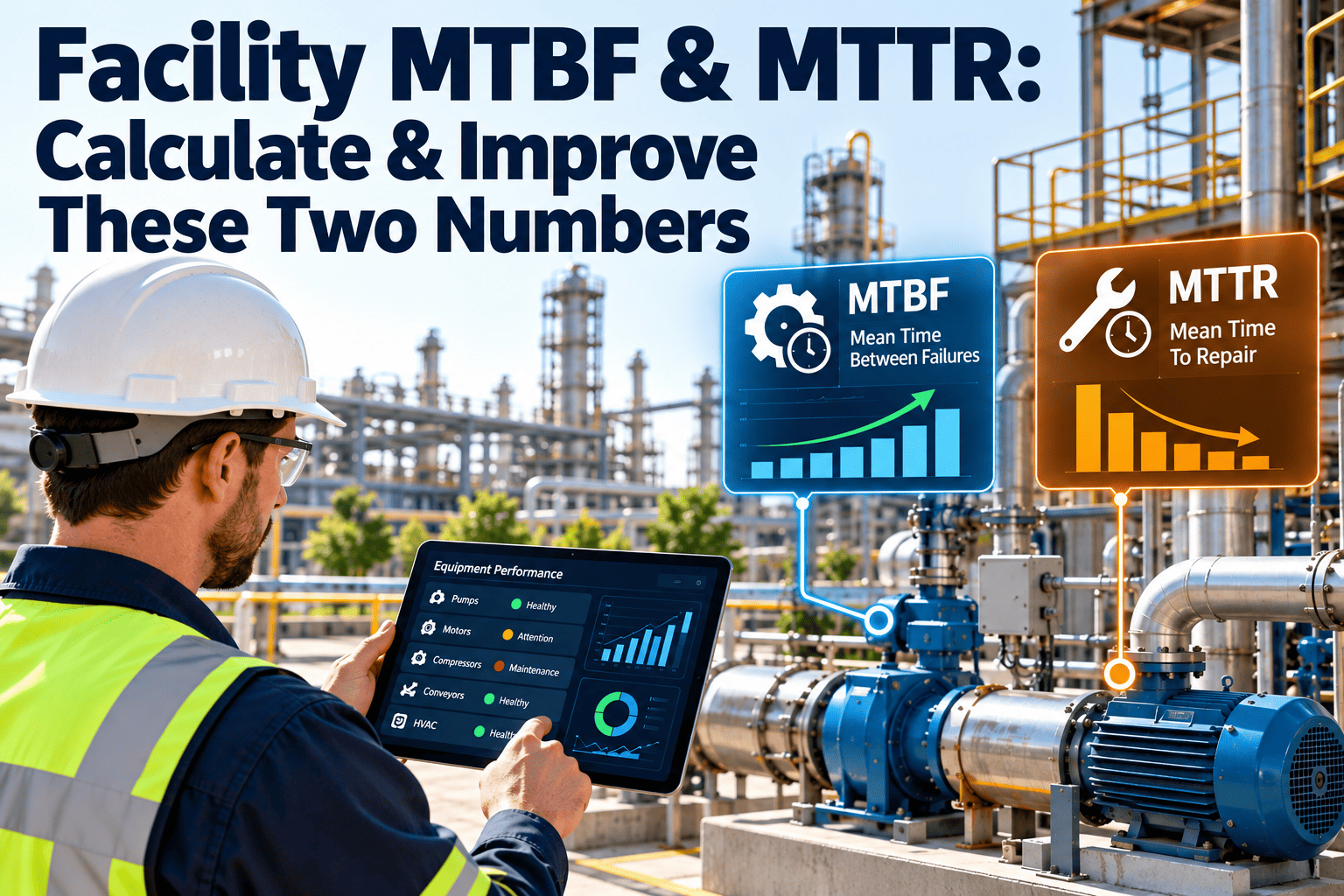
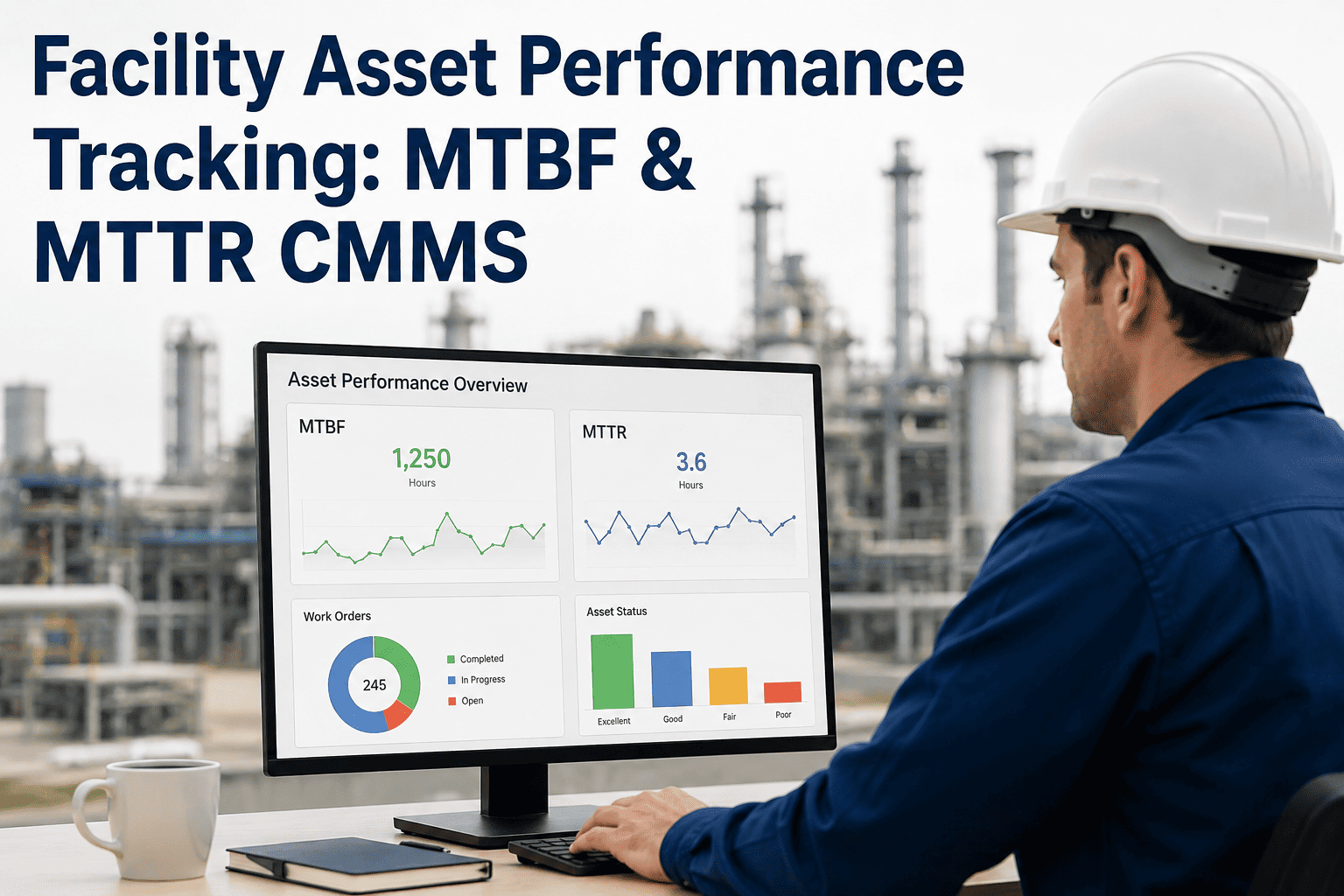
MTBF and MTTR are the two reliability metrics that tell facility managers the most important things about their equipment: how long assets typically run before failing, and how quickly the team can restore service when they do. A facility with high MTBF and low MTTR is one where failures are infrequent and recovery is fast. A facility with declining MTBF and rising MTTR is one heading toward a reliability crisis, where each failure takes longer to fix and happens more often. The gap between these two scenarios is not luck or asset age; it is the quality of the maintenance programme and the data available to manage it. This guide explains both metrics in plain terms, shows you how to calculate them for your own assets, gives you industry benchmarks to compare against, and shows you how structured CMMS deployment improves both figures within the first 12 months. Sign up free on Oxmaint to start tracking MTBF and MTTR across your portfolio today, or book a demo for a live reliability metrics walkthrough.
Track MTBF and MTTR in Real Time Across Your Entire Portfolio
Oxmaint calculates MTBF and MTTR per asset automatically from work order data. No manual calculation, no spreadsheets. Reliability trend dashboards live in 14 days. Book a demo to see the reliability dashboard configured for your equipment.
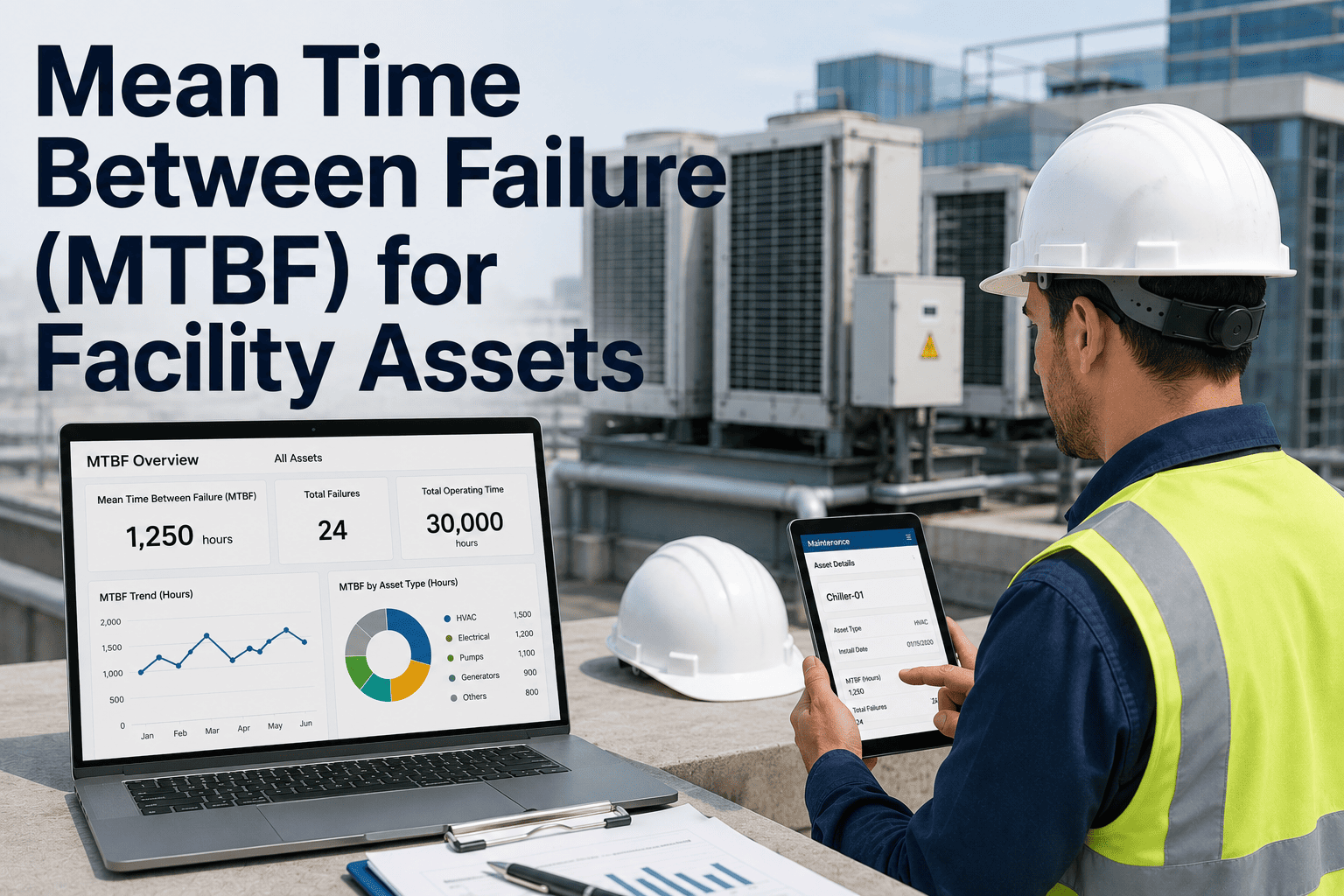
MTBF (Mean Time Between Failures) is the average operating time between unplanned failure events for a given asset. Calculated as: Total Operating Time divided by Number of Failures in that period. A chiller that ran 12,000 hours and failed 4 times has an MTBF of 3,000 hours. MTTR (Mean Time to Repair) is the average time from the moment a failure is detected to the moment the asset is fully restored to operational status. Calculated as: Total Repair Time divided by Number of Repairs. Both metrics are calculated per asset class, per building, and across the full portfolio. Tracking both together tells the complete reliability story: how often things break and how quickly the team responds.
MTBF: How to Calculate It and What It Tells You
MTBF is a measure of reliability, not durability. It does not measure how long an asset will last before it is replaced; it measures how long it typically runs between unplanned failure events during its service life. A declining MTBF trend is an early warning that asset condition is deteriorating and maintenance intervals need attention before a breakdown occurs.
MTTR: How to Calculate It and Why It Matters
MTTR measures maintenance team responsiveness and repair efficiency. High MTTR indicates structural problems: parts not stocked, technicians not adequately trained on the asset, work order information incomplete, or contractor response times unacceptably long. Reducing MTTR has immediate financial impact because every hour of extended downtime during a failure event carries direct operational cost.
The window between when a failure occurs and when the maintenance team is notified. IoT sensors and BAS monitoring reduce this to under 5 minutes. Without monitoring, detection depends on tenant complaints or scheduled walkthroughs, averaging 2 to 8 hours.
Target: under 5 minutes with IoT monitoringTime spent identifying what failed and why. Pre-built failure mode libraries in the CMMS, AI predictive context from sensor data, and complete asset maintenance history reduce diagnosis from an average of 90 minutes to under 20 minutes for common failure modes.
Target: under 20 minutes with CMMS history accessTime to locate, retrieve, or procure the required parts and tools. Facilities with CMMS-managed parts inventory linked to asset records cut parts retrieval time by 60 to 70%. Facilities without inventory management average 3 to 8 hours on parts delays alone.
Target: under 30 minutes with stocked MRO inventoryHands-on repair time plus system testing and verification before work order is closed. This component of MTTR is most directly improved by technician training, complete repair procedures in the CMMS, and post-repair performance verification protocols that prevent repeat callbacks on the same failure.
Varies by failure type. Document repair procedures per failure modeMTBF and MTTR Benchmarks by Equipment Class
Use these benchmarks to assess where your facility stands relative to industry performance. Facilities achieving above-benchmark MTBF and below-benchmark MTTR have effective reliability programmes; those below MTBF benchmark or above MTTR benchmark have structural maintenance gaps that CMMS deployment and PM programme restructuring can address.
| Equipment Class | Reactive Facility MTBF | Structured PM MTBF | AI Predictive MTBF | MTTR Target |
|---|---|---|---|---|
| Water-Cooled Chiller | 2,800 to 3,400 hrs | 4,200 to 5,200 hrs | 5,800 to 7,200 hrs | 4 to 8 hrs planned, 8 to 18 hrs emergency |
| Air Handling Unit (large AHU) | 3,400 to 4,200 hrs | 5,000 to 6,400 hrs | 6,200 to 7,800 hrs | 2 to 4 hrs planned, 4 to 8 hrs emergency |
| Centrifugal Pump | 4,200 to 5,800 hrs | 6,800 to 8,200 hrs | 8,400 to 10,200 hrs | 1 to 3 hrs planned, 3 to 6 hrs emergency |
| Cooling Tower Fan | 2,600 to 3,800 hrs | 4,400 to 5,600 hrs | 5,200 to 6,800 hrs | 2 to 4 hrs planned, 4 to 10 hrs emergency |
| Electrical Motor (above 15kW) | 5,200 to 7,400 hrs | 8,200 to 10,400 hrs | 10,800 to 14,000 hrs | 2 to 6 hrs planned, 6 to 24 hrs emergency |
| Elevator (hydraulic or traction) | 6,400 to 8,200 hrs | 9,200 to 11,400 hrs | 11,800 to 14,600 hrs | 1 to 2 hrs planned, 2 to 4 hrs emergency |
| Boiler (hot water or steam) | 4,800 to 6,400 hrs | 7,200 to 9,400 hrs | 9,800 to 12,200 hrs | 4 to 8 hrs planned, 8 to 36 hrs emergency |
| Generator (emergency or standby) | Tested monthly, MTBF for actual run failures 3,200 to 4,800 hrs | 5,400 to 7,200 hrs | 7,600 to 9,400 hrs | 1 to 4 hrs planned, 2 to 8 hrs emergency |
How to Improve MTBF and MTTR: Four Proven Approaches
Start Tracking MTBF and MTTR Automatically Across Your Portfolio
Oxmaint calculates MTBF and MTTR per asset from work order completion data automatically. No manual calculation. Trend dashboards, benchmark comparisons, and PM compliance tracking all in one platform.
How Oxmaint Tracks and Improves MTBF and MTTR
Oxmaint calculates both metrics automatically from work order data, making MTBF and MTTR live, asset-level reporting metrics rather than monthly manual calculations. Here is how each platform capability contributes to both figures.
Work order closures feed MTBF and MTTR calculations automatically. No manual data export or spreadsheet calculation required. Each asset's reliability metrics update in real time as work orders are opened, progressed, and closed in the CMMS. Historical trend charts available per asset and per equipment class across the full portfolio.
Updates automatically on every work order closurePM work orders generated automatically per equipment class and regulatory interval. 30-7-1 day escalating alerts prevent skipped maintenance. Every completed PM visit directly contributes operating hours between failure events, protecting and extending MTBF across all asset classes in the portfolio.
89% PM compliance rate within 12 monthsReactive work orders auto-populated with full asset repair history, previous failure modes, recommended diagnostic steps, and parts commonly required. Technicians arrive with context that reduces diagnosis time from 60 to 120 minutes to under 20 minutes for common failure modes, directly reducing MTTR on every callout.
Diagnosis time reduction: 60 to 80% versus no CMMS historyPortfolio-level MTBF and MTTR trends updated in real time. Equipment ranked by reliability score, highlighting highest-priority improvement targets. Month-over-month trend showing whether the reliability programme is delivering measurable results, exportable for director and board reporting.
Ranked by reliability score across all equipment classesFrequently Asked Questions: MTBF and MTTR for Facility Managers
Improve MTBF and MTTR Across Every Asset in Your Portfolio
Automatic MTBF and MTTR calculation, AI predictive maintenance to prevent failure events, PM automation to protect reliability gains, and asset history attached to every reactive work order to cut diagnosis time. Live across your full portfolio in 14 days.