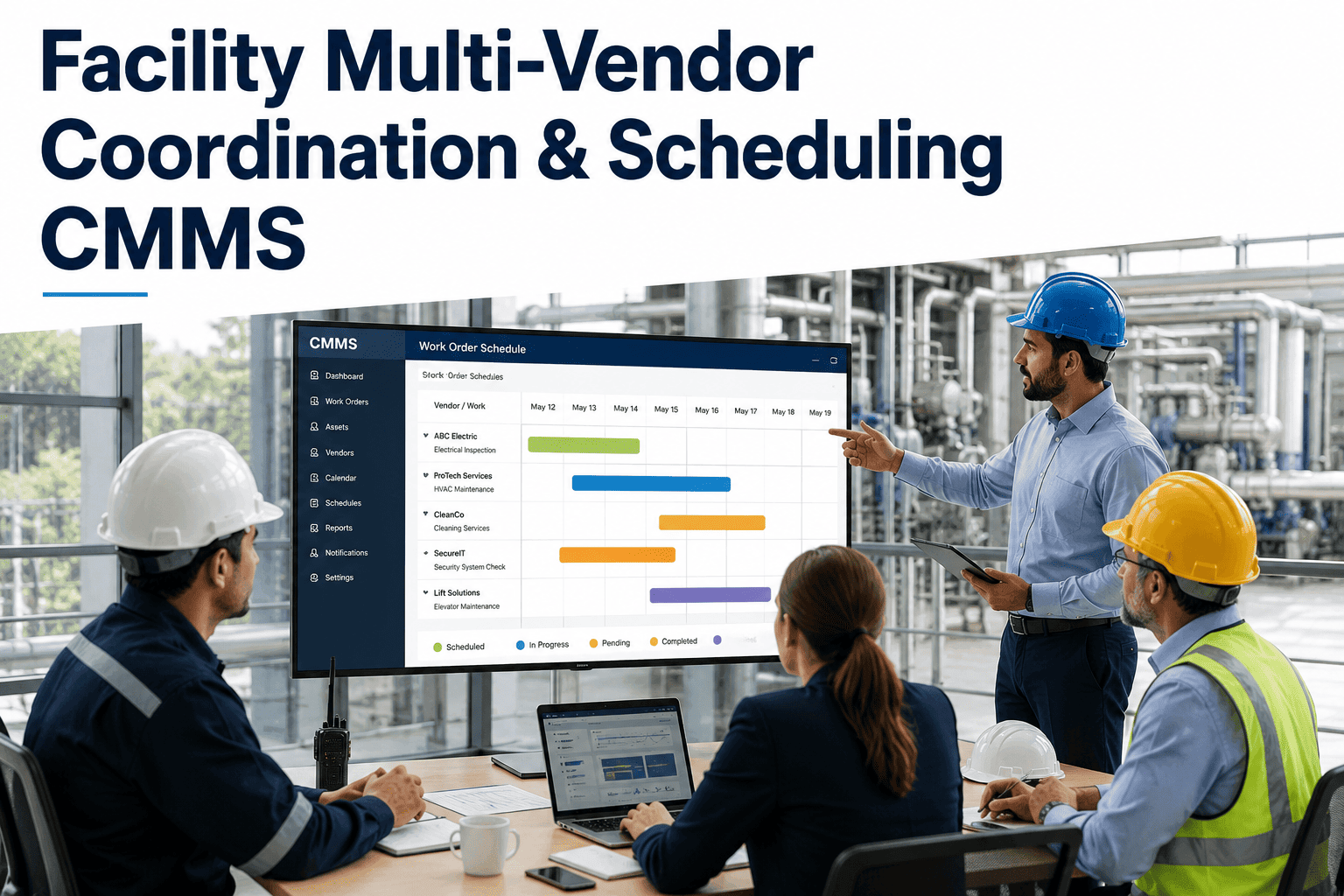
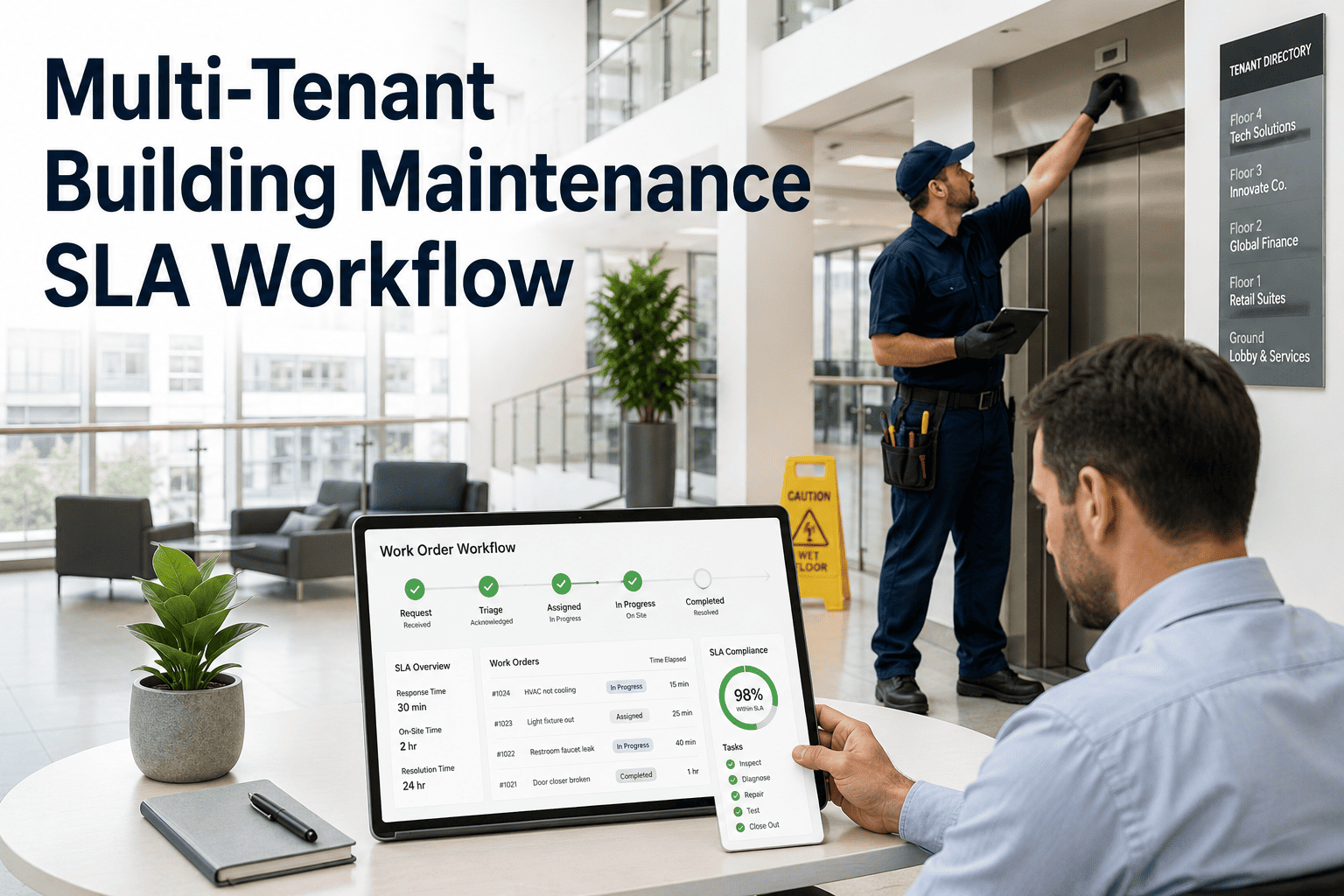
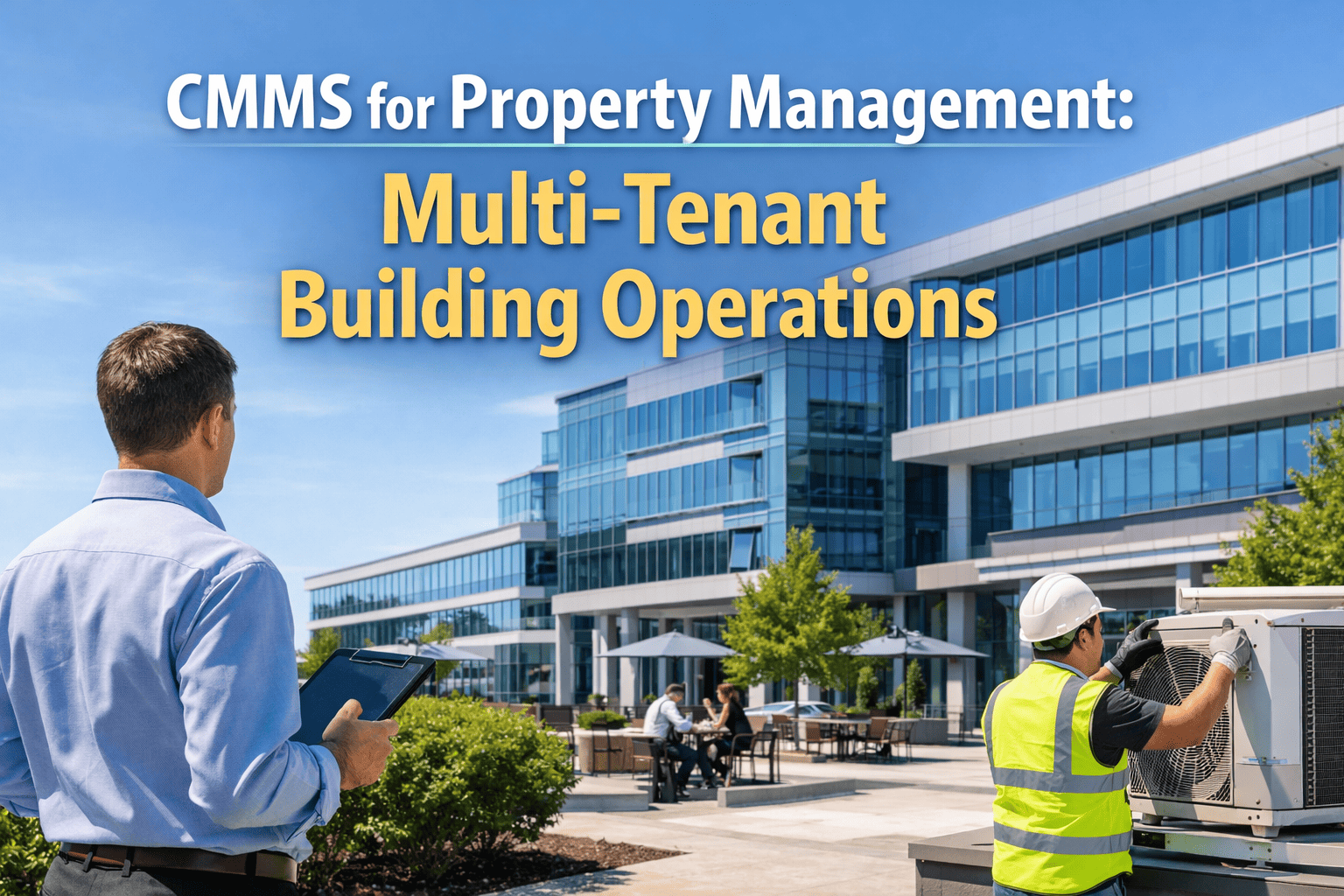
Multi-tenant buildings carry a structural FM complexity that single-occupant buildings do not. Every service failure, cost dispute, and maintenance gap affects multiple parties simultaneously. FM teams managing multi-tenant buildings without a unified platform for work order management, cost allocation, and tenant communication manage each of those problems separately, every time they occur. Book a demo to see how Oxmaint manages multi-tenant building operations in one platform.
Blog
Multi-Tenant Building Management: Coordinating Services Across Diverse Occupants
Space and Workplace Management · P3 · 8 min read
43%
of multi-tenant FM disputes relate to CAM charge allocation where no shared service cost ledger exists per occupant
2.8x
more formal complaints in multi-tenant buildings with no tenant portal versus buildings with self-service portals
$28K
average annual cost of unrecovered common area maintenance charges in commercial buildings with manual cost allocation
67%
of multi-tenant FM teams manage work order queues in a single undifferentiated list with no tenant attribution per task
Multi-Tenant Work Orders, Cost Allocation, and Tenant Portals in One Platform
Oxmaint gives multi-tenant FM teams a unified work order queue with tenant attribution, automated CAM cost tracking, and tenant-facing service portals. All service records are exportable per tenant for dispute resolution and SLA review. Book a demo to see the multi-tenant management module for your building.
What Makes Multi-Tenant FM Operationally Different?
Multi-tenant building FM differs from single-occupant FM in three structural ways. First, every work order must carry tenant attribution to enable cost allocation and SLA reporting per occupant. Second, shared service costs (common area maintenance, central plant, security, landscaping) must be allocated across tenants according to lease-specified methods, not estimated at year-end. Third, service communication and fault reporting must be managed through per-tenant channels so that issues are visible to their originating occupant without exposing other tenants' records.
FM teams operating multi-tenant buildings on single-occupant workflows absorb the cost of every gap: disputed CAM charges, unattributed work orders, and SLA reporting that cannot be sliced by occupant. These inefficiencies have a measurable annual cost.
The Four Pillars of Multi-Tenant FM
Pillar 1
Tenant-Attributed Work Order Management
Every work order in a multi-tenant building must carry a cost attribution code: tenant-exclusive, common area, or apportioned. Without this, cost allocation at month-end requires manual work order review. FM teams with attributed work orders reconcile CAM charges in hours, not weeks, and produce per-tenant service records that are dispute-proof at lease renewal.
Pillar 2
Shared Service Cost Allocation
Common area maintenance, central HVAC, lifts, security, and shared facilities generate costs that must be allocated across tenants. Most commercial leases specify the allocation method: GLA ratio, headcount, or custom formula. FM teams that track shared service costs at the work order level can produce an allocation ledger that matches lease terms exactly, eliminating the primary source of CAM disputes.
Pillar 3
Per-Tenant SLA Management
Different tenants in the same building frequently have different SLA commitments. Anchor tenants, healthcare occupants, and retail ground-floor tenants may have 2-hour emergency response commitments while upper-floor office tenants operate on 24-hour standard response. FM platforms that cannot differentiate SLA tracking by tenant produce compliance reports that are meaningful for no one.
Pillar 4
Tenant Isolation and Communication
Each tenant's service request history, outstanding work orders, and maintenance record must be visible to that tenant and the FM team, but not to other tenants. Multi-tenant portals require access-controlled views where each tenant sees only their own records. Shared-access portals where one tenant can see another's fault history are a lease compliance risk in jurisdictions with commercial tenancy privacy obligations.
Multi-Tenant FM Pain Points
CAM Charge Disputes Without Evidence
43% of multi-tenant FM disputes relate to CAM allocation
Tenants dispute CAM charges when no work order-level cost record exists to support the allocation. FM teams without attributed work orders cannot produce the per-service cost evidence needed to defend CAM charges. The dispute cost in management time typically exceeds the disputed amount for charges below $5,000.
Undifferentiated Work Order Queue
67% of multi-tenant FM teams use a single undifferentiated queue
A single work order queue with no tenant attribution makes SLA reporting and cost allocation impossible without manual extraction. FM teams spending 8 to 12 hours per month manually attributing work orders to tenants are absorbing an avoidable cost that tenant-attributed CMMS workflows eliminate.
Common Area Maintenance Cost Leakage
$28K average annual unrecovered CAM costs in manual allocation buildings
Common area maintenance costs incurred but not tracked at the work order level cannot be fully allocated at reconciliation. FM teams recover an average of $28,000 less per year in CAM charges than they actually spend when operating on manual cost allocation rather than work order-level tracking.
No Per-Tenant SLA Visibility
Building-wide SLA reports are meaningless for anchor tenant review
Anchor tenants and institutional occupants increasingly require per-tenant SLA performance reports for lease compliance. FM teams that can only produce building-wide SLA reports cannot meet this requirement. The gap is reporting infrastructure, which a multi-tenant CMMS resolves directly.
Contractor Coordination Across Tenant Zones
Average 2.4 coordination failures per month in manually managed multi-tenant buildings
Contractors working in a multi-tenant building require access coordination across occupant zones. Without a platform that manages contractor access permissions by zone and notifies affected tenants automatically, FM teams manage access coordination manually, producing both compliance risk and tenant disruption at every contractor attendance.
Mixed-Use Complexity Without Differentiated Workflows
Mixed-use buildings have 2.6x more FM workflow types than single-use buildings
Mixed-use buildings with retail, office, residential, and hospitality tenants in the same structure require differentiated maintenance workflows, inspection frequencies, and compliance documentation for each use type. Single-workflow FM platforms cannot handle this complexity without significant manual workaround that introduces both errors and delay.
How Oxmaint Supports Multi-Tenant Building Management
ATR
Tenant-Attributed Work Orders
Every work order in Oxmaint carries a cost attribution code: tenant-exclusive, common area, or allocated. CAM reconciliation that previously took 2 weeks of manual work order review completes in under 3 hours from live data without manual extraction.
CAM
Automated CAM Cost Tracking
Shared service work orders in Oxmaint carry the allocation formula from the asset record: GLA ratio, headcount factor, or custom percentage. Allocation applies automatically at work order completion. Monthly CAM statements generate from live data with per-service cost breakdown that matches the lease allocation method for every occupant simultaneously.
SLA
Per-Tenant SLA Configuration
Oxmaint supports differentiated SLA configurations per tenant. Anchor tenant 2-hour emergency response, standard office 24-hour, and retail 4-hour SLAs all tracked and reported independently. Monthly SLA reports export per tenant for institutional occupant review and lease compliance.
PRT
Access-Controlled Tenant Portals
Each tenant accesses their own service request history, work order status, and maintenance records through an isolated portal view. No tenant can see another occupant's data. Fault reporting, planned maintenance notifications, and contractor attendance alerts all route to the specific tenant affected, not to all building occupants.
Multi-Tenant FM: Manual vs Oxmaint Platform
ROI: What Unified Multi-Tenant FM Delivers
$28K
CAM cost recovery
Average unrecovered CAM charges per year eliminated through work order-level cost attribution tracking
88%
Fewer CAM disputes
Work order-level cost evidence eliminates the primary driver of CAM charge disputes at reconciliation
2.8x
Fewer formal complaints
Buildings with per-tenant service portals versus no portal across commercial multi-occupant buildings
14 hrs
Saved per month
Manual work order attribution and CAM reconciliation time eliminated by automated tenant cost tracking
Continue Reading: Space and Workplace Management
Hybrid Workplace FM: Optimizing Space for Flexible Work ModelsOccupancy data, hot-desking, flex space design, and right-sizing strategies for hybrid portfolio cost optimisation.
Read More
Tenant Experience in Commercial Facilities: Service Portals and Real-Time CommunicationService portals, real-time status updates, and SLA reporting that drive tenant retention in commercial buildings.
Read More
Workplace Experience Technology: Smart Desks, Wellness Sensors and Comfort ControlsDesk booking, wellness sensors, air quality monitoring, and environmental controls for modern commercial workplaces.
Read More
Space Planning and Office Layout Optimization Using Facility DataUtilisation heat maps, scenario modelling, and right-sizing tools for maximum office space efficiency.
Read More
Frequently Asked Questions
QHow does Oxmaint handle CAM cost allocation across tenants with different lease allocation methods?
Oxmaint stores the allocation formula at the asset or service category level: GLA ratio, headcount factor, or custom percentage per tenant. When a common area work order completes, the cost allocates automatically using the configured formula. Monthly CAM reports export per tenant with full cost breakdown.
Book a demo to see CAM allocation configured for your building's lease structure.
QCan Oxmaint configure different SLA response times for different tenants in the same building?
Yes. Oxmaint supports per-tenant SLA configuration with differentiated response time commitments by work order priority and tenant type. Anchor tenants, healthcare occupants, and retail tenants can have independent SLA rules, all tracked and reported separately per occupant.
Start free trial to configure per-tenant SLA rules in Oxmaint today.
QHow does Oxmaint ensure tenant data isolation in a shared building platform?
Each tenant in Oxmaint is configured as an isolated access-controlled entity. Tenant portal logins provide access only to that tenant's own service requests, work order history, and maintenance records. No tenant can view another occupant's data under any permission configuration.
Book a demo to see tenant isolation in Oxmaint.
QHow long does it take to configure Oxmaint for a multi-tenant commercial building?
Most multi-tenant buildings go live in Oxmaint within 10 to 14 days. Configuration covers tenant registration, SLA rules per occupant, asset register with cost attribution codes, and portal access setup. No implementation project is required and no third-party consultant is needed.
Sign up free or
book a demo to see the onboarding process.
Multi-Tenant Work Orders, CAM Tracking, and Tenant Portals in One Platform.
Oxmaint connects tenant-attributed work orders, automated CAM cost allocation, per-tenant SLA tracking, and access-controlled portals into one multi-tenant FM platform. Go live in under 14 days with no implementation project required.