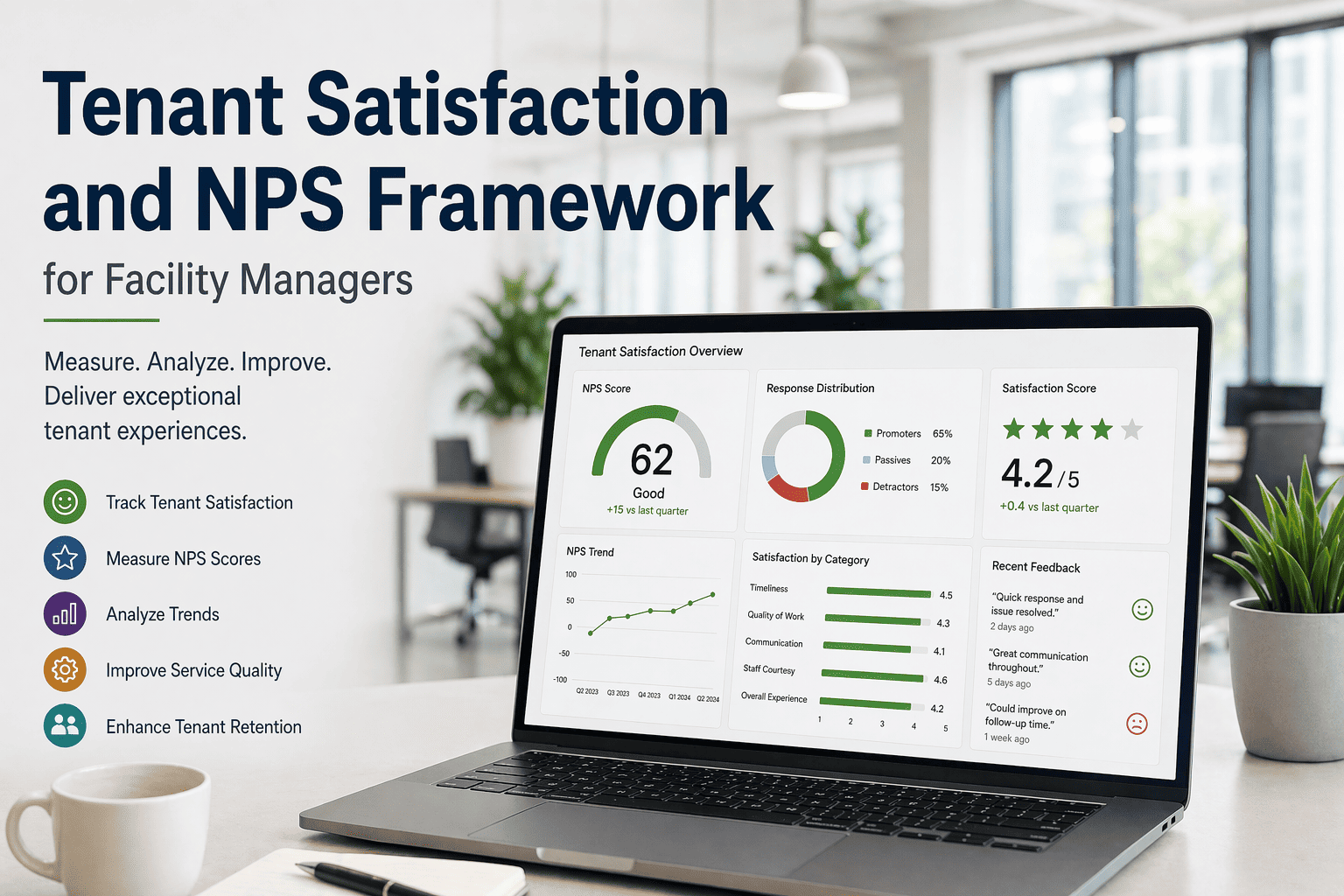
Tenant retention in commercial property is won or lost in the 48 hours after a service request is raised, not at lease renewal. Tenants who receive no update on a reported fault within 24 hours are 3.2x more likely to raise a formal complaint and 1.8x more likely to downgrade their lease renewal intent than those who receive real-time status updates. The FM team controls this outcome entirely through its work order communication infrastructure. Book a demo to see how Oxmaint drives tenant satisfaction and retention across commercial portfolios.
Blog
Tenant Experience in Commercial Facilities: Service Portals and Real-Time Communication
Space and Workplace Management · P2 · 8 min read
3.2x
more likely to complain when no update received on a service request within 24 hours of raising it
68%
of commercial tenants cite poor FM communication as a primary reason for lease non-renewal decisions
$42K
average cost to replace a commercial tenant including void period, fit-out contribution, and leasing fees
41%
improvement in tenant satisfaction when self-service portals replace phone and email service requests
Tenant Portal and Work Order Communication in One Platform
Oxmaint gives commercial FM teams a tenant-facing service portal, real-time work order status updates, SLA compliance dashboards, and transparent communication tools. No third-party add-on required. No manual status emails. Book a demo to see the tenant experience module for your portfolio.
What Is Tenant Experience FM?
Tenant experience FM is the practice of managing service delivery, communication, and transparency in commercial properties in a way that directly influences tenant satisfaction, lease renewal intent, and net promoter scores. It extends beyond executing work orders correctly to ensuring tenants are informed throughout the process, have a self-service channel to raise and track requests, and receive SLA-compliant responses that match the commitments made at lease execution.
Research consistently shows that tenants rate response time communication and status transparency ahead of actual resolution speed as the primary drivers of satisfaction. A fault resolved in 72 hours with three proactive status updates consistently outscores a fault resolved in 24 hours with zero communication on tenant satisfaction surveys.
The Four Pillars of Tenant Experience FM
Pillar 1
Self-Service Request Portal
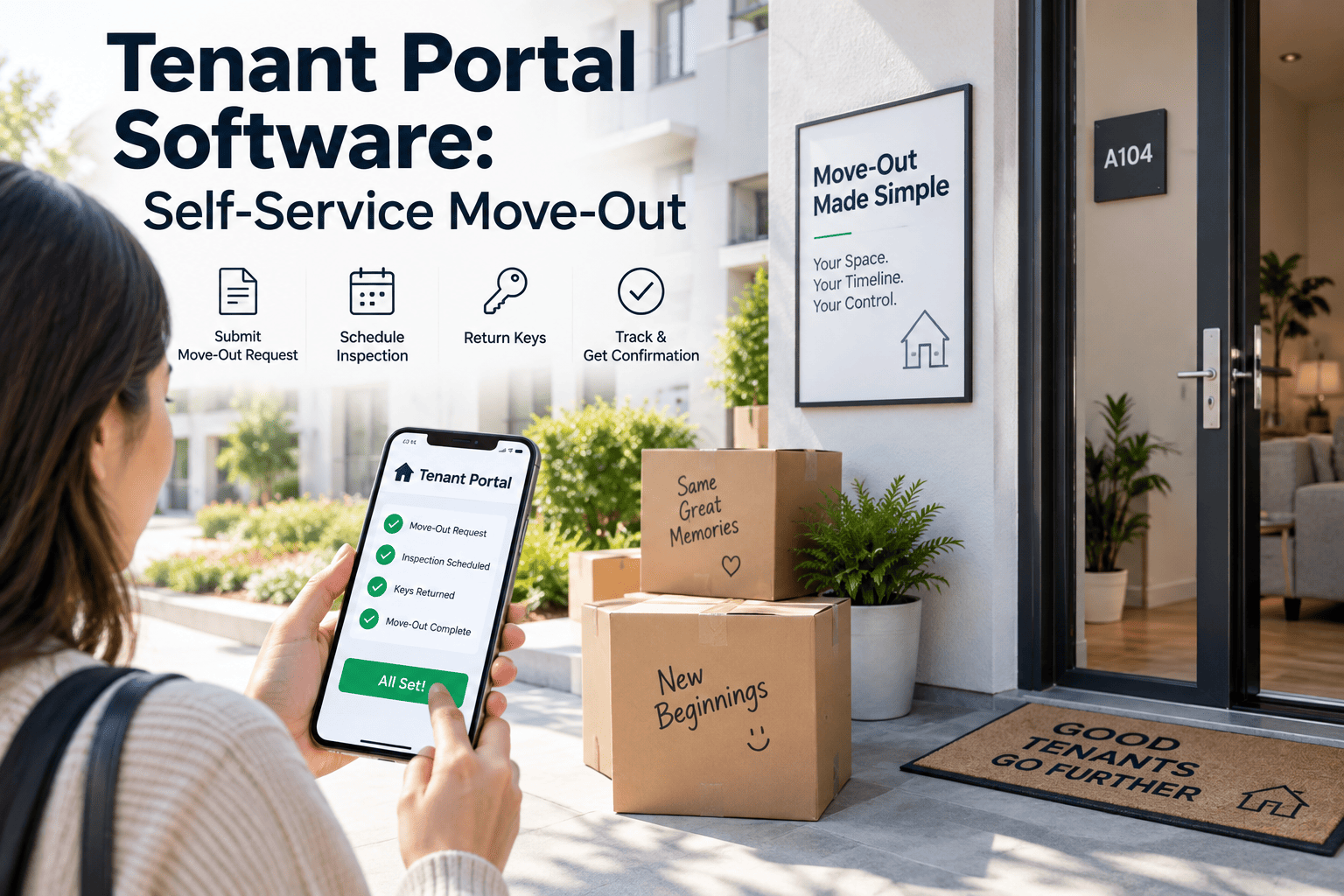
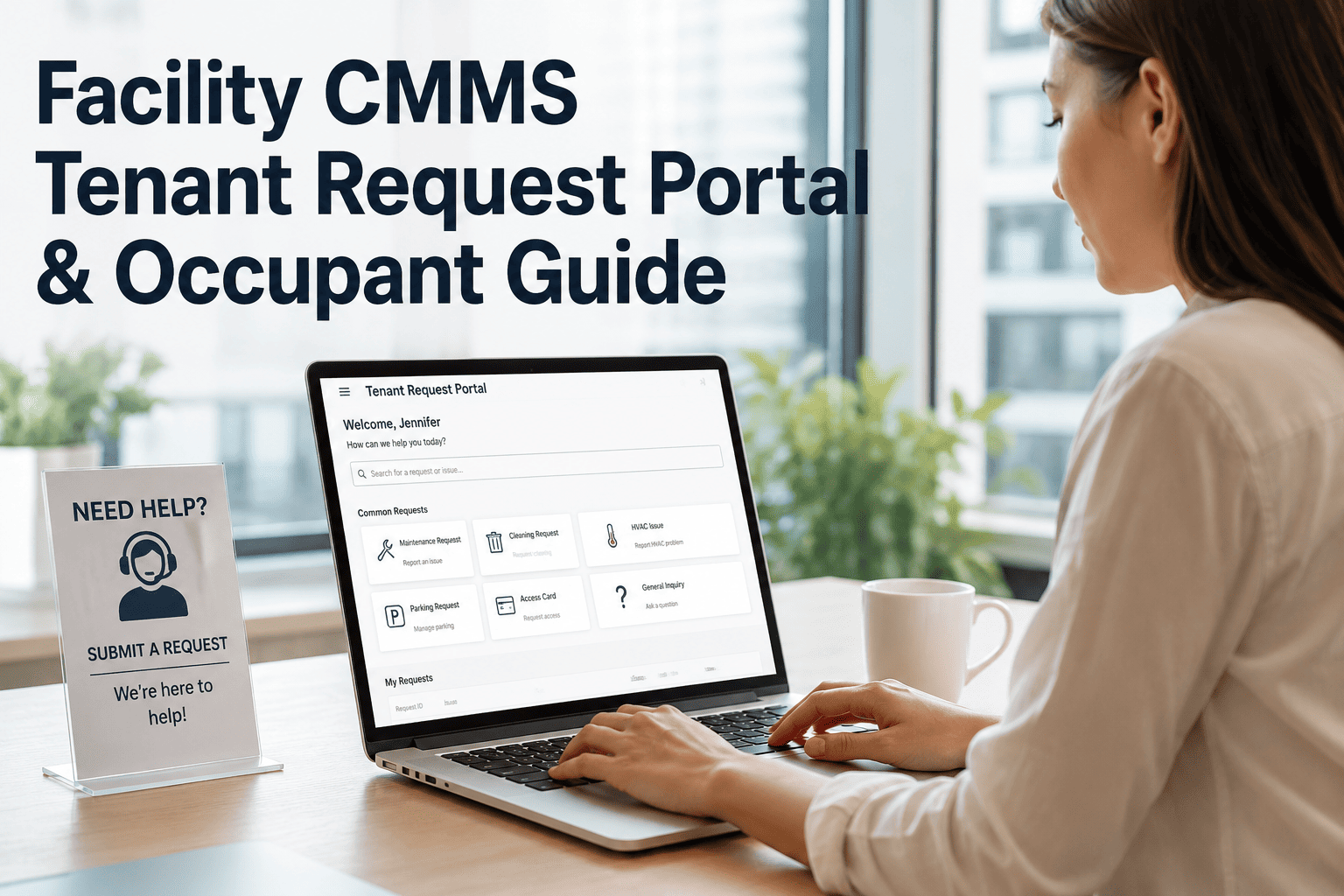
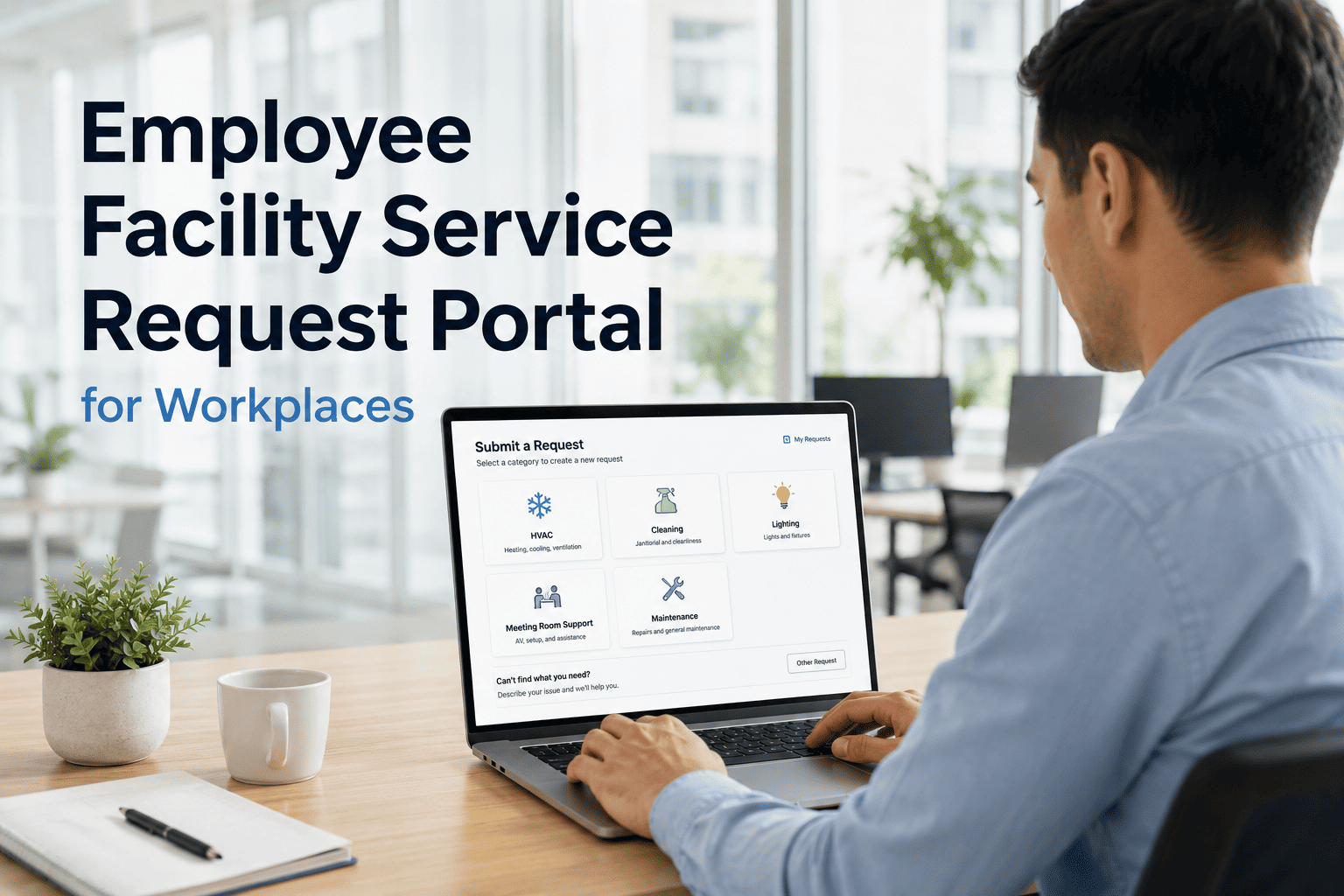
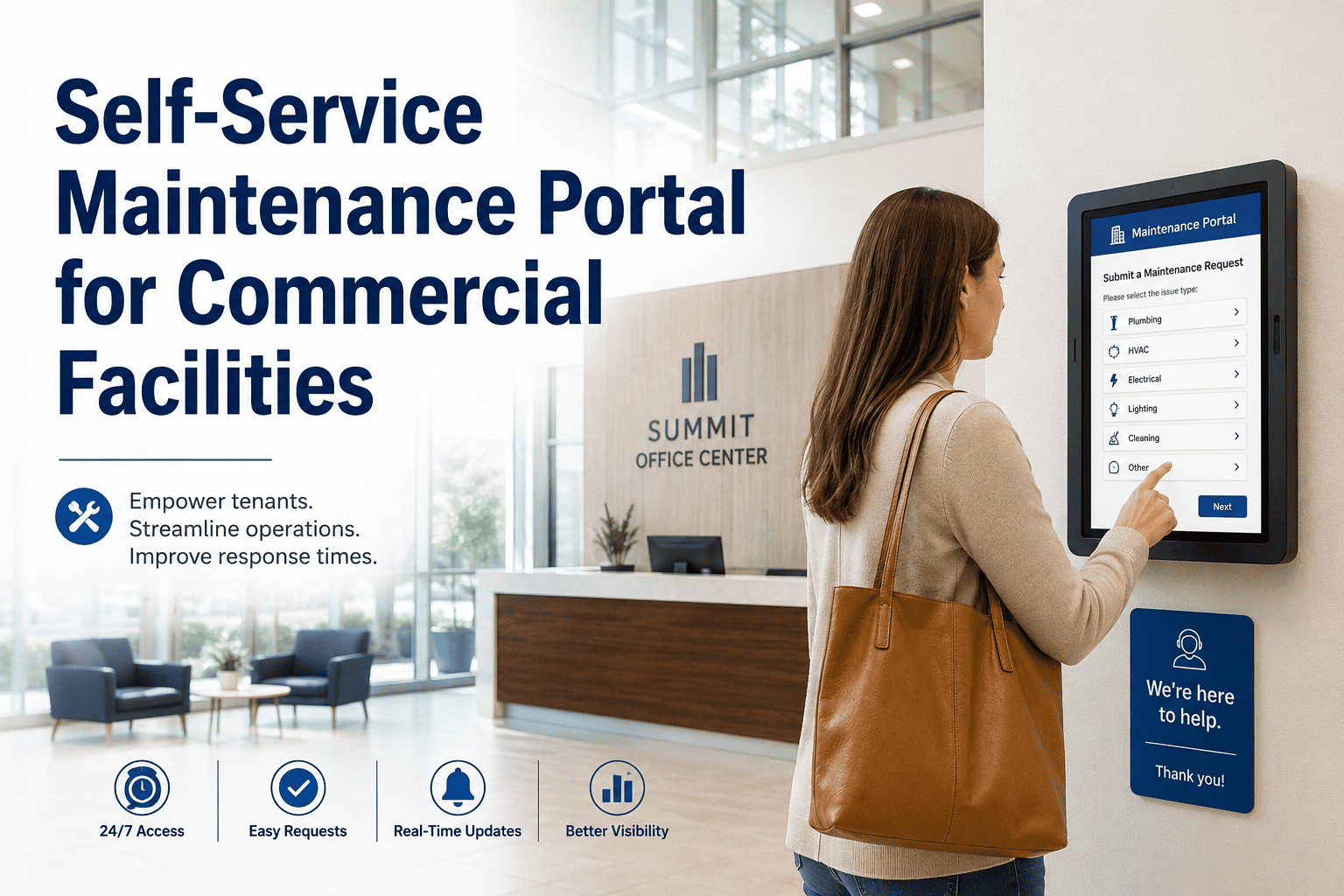
Tenants submit service requests through a branded portal without calling the help desk or emailing the FM team. Each request generates a work order automatically, assigns a reference number, and sends an acknowledgement within 60 seconds. FM teams reduce inbound phone volume by 40% to 60% and gain a complete written record of every tenant request from first contact to resolution.
Pillar 2
Real-Time Work Order Status
Tenants see live work order status: received, assigned, in progress, completed, or escalated. Status updates trigger automatically as technicians progress work orders on mobile devices. Tenants who can see live status make 74% fewer follow-up calls to the FM help desk, freeing team capacity for higher-value work while removing the primary source of tenant frustration.
Pillar 3
SLA Transparency and Reporting
SLA performance data visible to tenants and ownership groups through monthly compliance reports showing response time, resolution time, and first-visit fix rate by category. Tenants who can see SLA performance data consistently rate their FM service 28% higher than equivalent service levels with no reporting, because visibility signals accountability rather than assumed incompetence.
Pillar 4
Proactive Communication
Planned maintenance notifications, contractor attendance schedules, and service interruption alerts delivered to affected tenants before the event. Proactive FM communication reduces formal tenant complaints by 52% compared to reactive notification after disruption begins. Tenants informed in advance of a planned outage never raise a formal complaint about it regardless of duration.
Tenant Experience Gaps That Cost FM Teams Retention
Phone and Email as Primary Request Channel
3.4 hours average delay before work order is raised
Phone and email service requests add 3 to 5 hours of administrative delay before a work order exists in the CMMS. During that window, the tenant has no reference number, no acknowledgement, and no way to track progress. This first-contact experience sets the tone for all subsequent tenant perception of FM service quality.
No Status Updates Between Request and Completion
68% of tenants never receive a status update on non-urgent requests
The silence between raising a request and receiving a completion notification is the most consistent driver of tenant dissatisfaction in commercial FM. Tenants interpret silence as either incompetence or indifference. Both damage lease renewal intent more than a delayed resolution would if accompanied by proactive communication throughout the process.
SLA Commitments Not Visible to Tenants
74% of FM teams cannot produce an SLA report within 24 hours
When tenants cannot see SLA performance data, they benchmark FM quality against their subjective experience rather than objective metrics. A team delivering 94% SLA compliance that cannot demonstrate it is indistinguishable from one delivering 60%. Visible SLA data converts performance into perceived value at lease renewal.
Reactive Outage and Disruption Notification
Reactive notification generates 4x more formal complaints
Planned maintenance and service interruptions notified after they begin generate formal complaints at four times the rate of events communicated in advance. The FM team manages the same work either way. The difference in tenant outcome is entirely a communication process decision, not a technical or budget one.
Common Area Fault Reporting Void
Common area faults reported by tenants 2.8x more often than internal faults
Lift downtime, carpark barriers, lobby HVAC, and common area lighting failures are reported by tenants more than internal faults. When these reports disappear into an FM inbox with no acknowledgement or reference number, the frustration is disproportionate to the fault severity and disproportionately affects lease renewal intent.
Lease Renewal Handled Without FM Data
FM service quality influences 34% of commercial lease renewal decisions
Asset managers negotiating lease renewals without FM performance data miss a significant retention lever. A tenant satisfaction score backed by 12 months of SLA compliance data, response time trends, and resolved complaint records is a commercially defensible retention case that FM teams without portal data simply cannot make.
How Oxmaint Delivers Tenant Experience FM
PRT
Branded Tenant Service Portal
Tenants submit requests via a branded web portal that automatically generates work orders in Oxmaint, assigns reference numbers, and sends instant acknowledgements. FM teams eliminate phone intake, reduce administrative processing, and create a complete written record of every tenant interaction from first contact to resolution with no manual transcription required.
STA
Live Work Order Status Tracking
Tenants see real-time work order status in the portal as technicians progress tasks on mobile. Status transitions trigger automatic portal and notification updates. No manual email updates required from the FM team. Tenant follow-up call volume reduces by 40% to 60% within the first 90 days of portal adoption across commercial portfolios.
SLA
SLA Dashboards and Compliance Reports
Monthly SLA compliance reports by tenant, category, and priority showing response time, resolution time, and first-visit fix rate against committed service levels. Reports export in PDF format for quarterly tenant reviews. Asset managers have data-backed FM performance evidence ready for every lease negotiation without manual report preparation.
NOT
Proactive Tenant Notification
Planned maintenance, contractor attendance, and service interruption notifications sent to affected tenants from within Oxmaint work orders before the event begins. FM teams schedule notifications at work order creation stage. Formal complaints related to planned work reduce by over 50% in the first year of structured advance notification programmes.
Tenant FM Experience: Before vs After Oxmaint Portal
ROI: What Tenant Portal FM Delivers
41%
Satisfaction improvement
Self-service portal vs phone and email request channels in commercial FM
52%
Fewer formal complaints
Proactive planned maintenance notification vs reactive communication
60%
Help desk call reduction
Real-time work order status visibility vs no portal status tracking for tenants
$42K
Average tenant replacement cost
Void period, fit-out contribution, and leasing fees per tenant lost to non-renewal
Continue Reading: Space and Workplace Management
Hybrid Workplace FM: Optimizing Space for Flexible Work ModelsOccupancy data, hot-desking, flex space design, and right-sizing strategies for hybrid portfolio cost optimisation.
Read More
Space Planning and Office Layout Optimization Using Facility DataUtilisation heat maps, scenario modelling, and right-sizing tools for maximum office space efficiency.
Read More
Workplace Experience Technology: Smart Desks, Wellness Sensors and Comfort ControlsDesk booking, wellness sensors, air quality monitoring, and environmental controls for modern commercial tenants.
Read More
Multi-Tenant Building Management: Coordinating Services Across Diverse OccupantsShared services, cost allocation, tenant portals, and SLA management for commercial multi-occupant operations.
Read More
Frequently Asked Questions
QHow does the Oxmaint tenant portal integrate with existing building management systems?
Oxmaint connects to BMS and access control systems via API to enable automatic work order creation from system alerts alongside manual tenant submissions. All portal-raised and system-raised work orders appear in a single queue with full tenant-visible status.
Book a demo to see the integration for your BMS stack.
QWhat SLA categories should commercial FM teams track and report to tenants?
Minimum: emergency response (2 to 4 hours), urgent (24 hours), routine (72 hours), and planned maintenance completion. First-visit fix rate and tenant satisfaction score per category complete the commercial FM SLA reporting picture.
Start free trial to configure your SLA tiers in Oxmaint today.
QHow quickly do tenants adopt self-service portals versus traditional phone and email channels?
Commercial FM teams typically see 60% to 70% portal adoption within 90 days when portal submission delivers instant reference numbers and visible tracking. Remaining phone and email intake converts progressively as tenants experience the status visibility advantage directly.
Book a demo to see tenant onboarding in Oxmaint.
QHow does Oxmaint tenant satisfaction data support lease renewal negotiations?
Oxmaint generates 12-month SLA compliance reports, response time trends, satisfaction scores per tenant, and resolved complaint records for asset managers. FM performance data converts a subjective service quality discussion into an objective lease retention argument backed by evidence.
Sign up free or
book a demo today.
Tenant Portal, Real-Time Status, and SLA Reporting in One FM Platform.
Oxmaint connects tenant service requests, work order management, SLA compliance tracking, and satisfaction reporting into one platform. Commercial FM teams go live in under 14 days with no implementation project and no third-party portal required.