Municipal water utilities operating treatment plants face a maintenance discipline with zero tolerance for failure — pump breakdowns don't just drain operating budgets, they interrupt drinking water supply to hundreds of thousands of residents and trigger immediate EPA Safe Drinking Water Act reporting obligations. The average unplanned treatment plant outage costs $2.8 million in emergency repairs, regulatory penalties, and public notification expenses. Yet most utilities still manage pump PM cycles, filter backwash schedules, and chemical system inspections through spreadsheets disconnected from SCADA alarm data, with no automatic compliance documentation and no capital replacement forecasting. Schedule a demo to see how Oxmaint delivers purpose-built CMMS for water treatment plant operations.
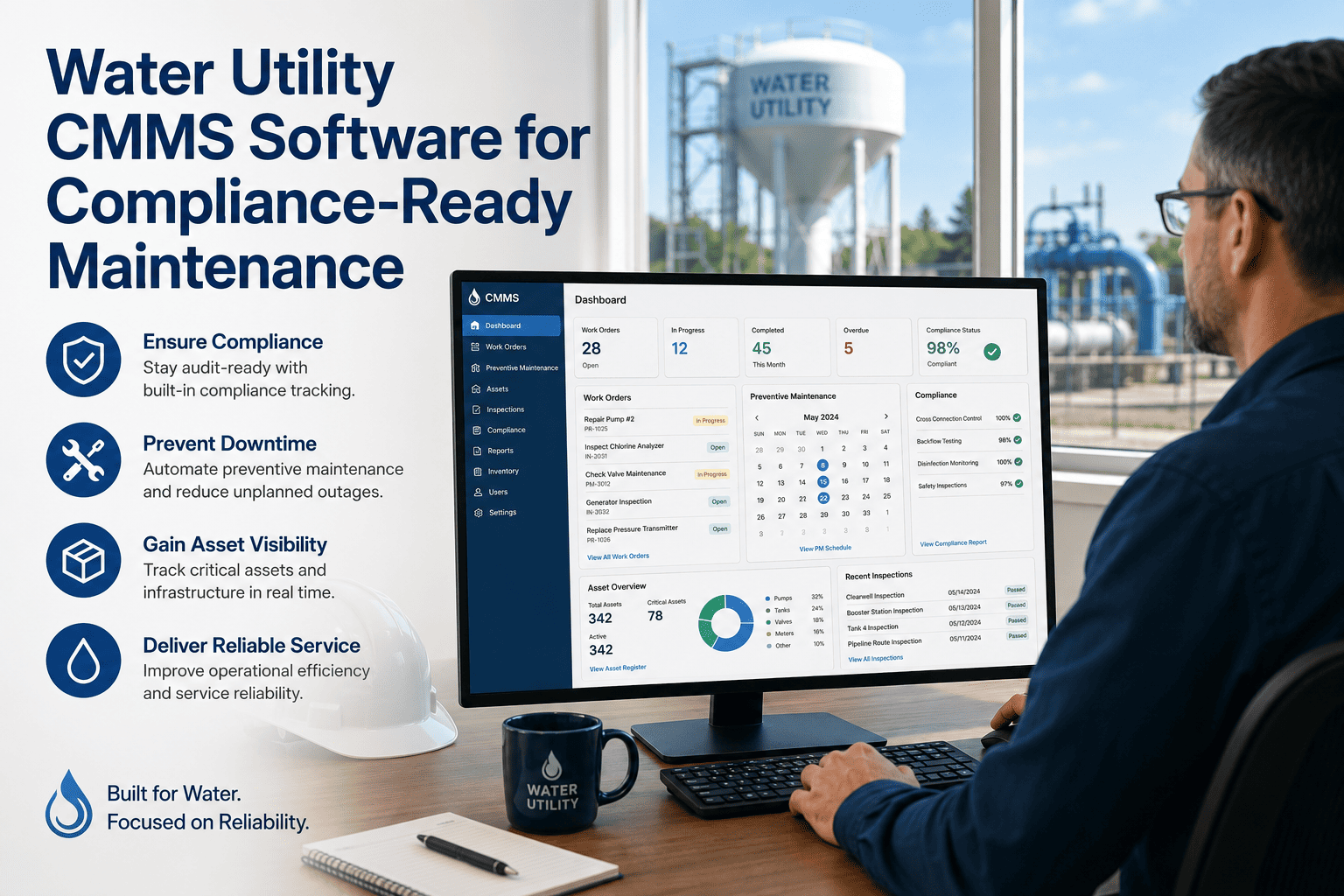
Water treatment plant maintenance management software is a CMMS platform configured for municipal utilities to schedule preventive maintenance on pumps, filters, chemical dosing systems, and electrical controls — with SCADA integration for alarm-to-work-order automation, EPA Safe Drinking Water Act compliance documentation, and capital asset forecasting for aging infrastructure replacement planning. Unlike generic CMMS tools, a water utility platform connects directly to SCADA historian data, tracks chemical feed system calibration intervals, and generates the timestamped technician records required for EPA and state primacy agency audits.
Three Maintenance Failures Putting Water Utilities at Risk
These are not operational inconveniences — they are public health risks, regulatory liabilities, and capital planning failures that a water utility director carries directly to city council and state regulators. See the full EPA and state compliance framework for water and wastewater utilities.
High-service and booster pump failures account for 43% of unplanned water utility outages. Without condition-based PM scheduling, bearings run past inspection intervals, seal failures go undetected, and emergency pump replacement costs 4 to 6 times a planned rebuild. A single raw water pump failure can trigger a boil-water advisory affecting an entire service area.
The EPA SDWA and state primacy agencies require documented maintenance records for chemical feed systems, disinfection equipment, and treatment processes. Manual log books produce gaps that trigger Notice of Violations and consent orders. Paper records also fail to meet the 72-hour incident reporting timeline required for significant deficiencies at community water systems.
Water treatment SCADA systems generate hundreds of alarms per shift. Without CMMS integration, operators acknowledge alarms in the HMI but create no maintenance record and assign no technician. Critical fault conditions — low chlorine residual, filter differential pressure, pump bearing temperature — cycle through alarm queues without triggering a documented corrective action trail.
How Oxmaint Works in a Water Treatment Plant
Oxmaint deploys in four operational phases — from initial asset registry through live SCADA integration and EPA compliance export — with most municipal utilities running full PM schedules within 14 days of deployment start.
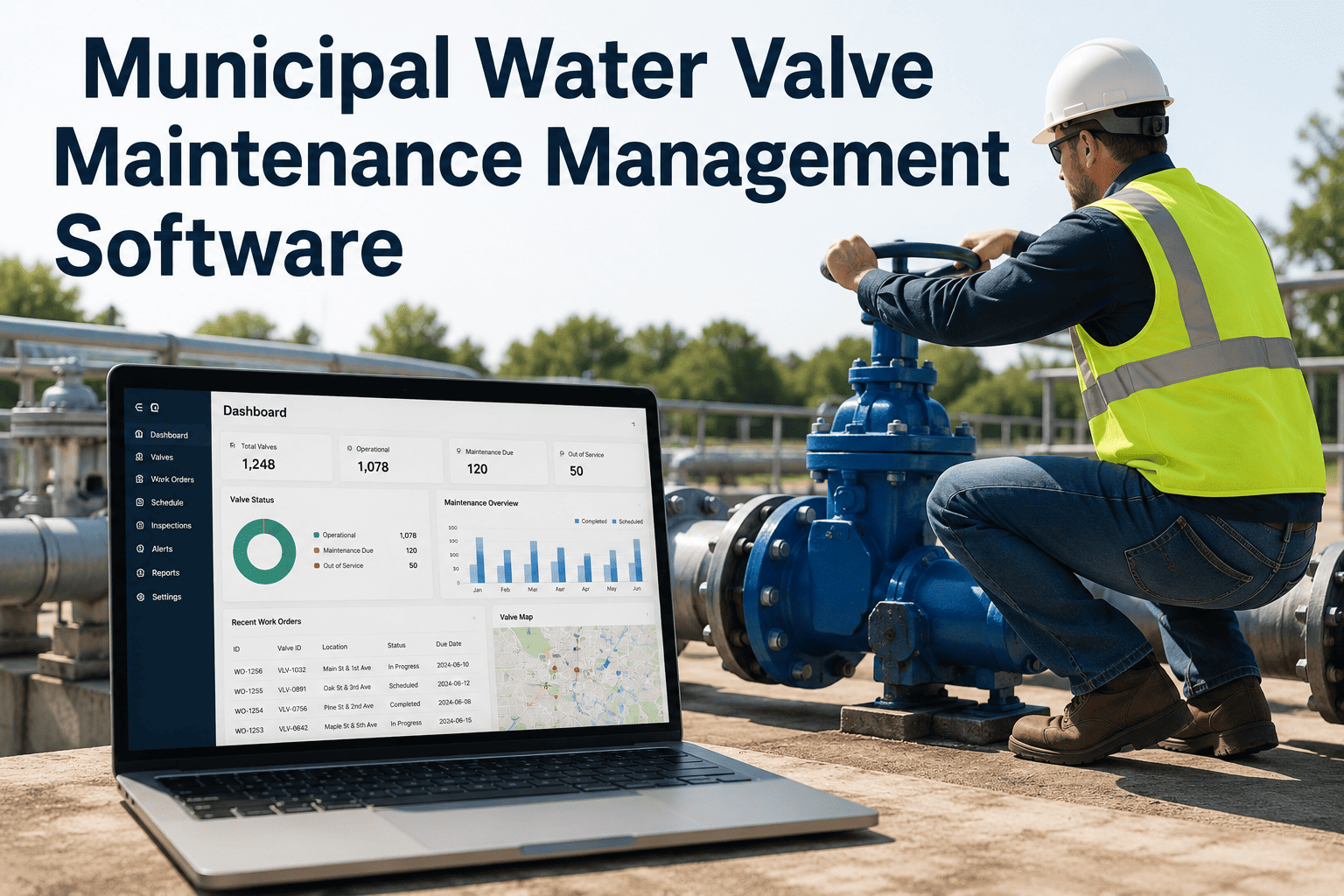
All pumps, motors, chemical feed systems, filters, membranes, electrical panels, and instrumentation registered with manufacturer specs, installation dates, and replacement values. QR asset tags assigned and linked to equipment records. Remaining useful life calculated per asset class from actual maintenance cost data. See the municipal water infrastructure asset management framework.
PM work orders generated automatically based on AWWA, OSHA, and manufacturer intervals for each equipment type — pump lubrication, seal inspection, impeller clearance checks, chemical feed calibration, filter backwash cycles, generator load tests, and UV system lamp replacements. Work orders escalate automatically at 30, 7, and 1 day before deadline with no manual intervention required.
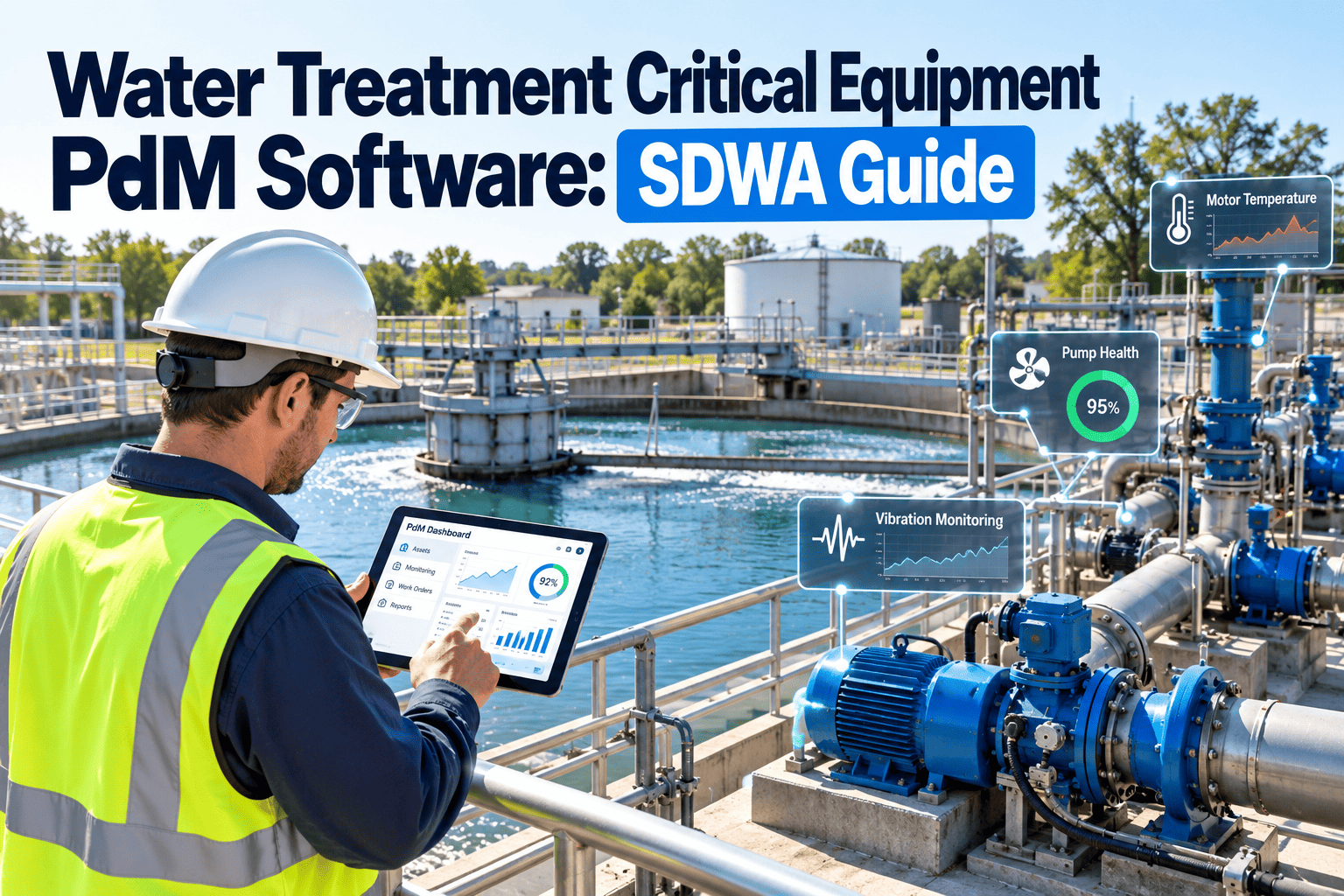
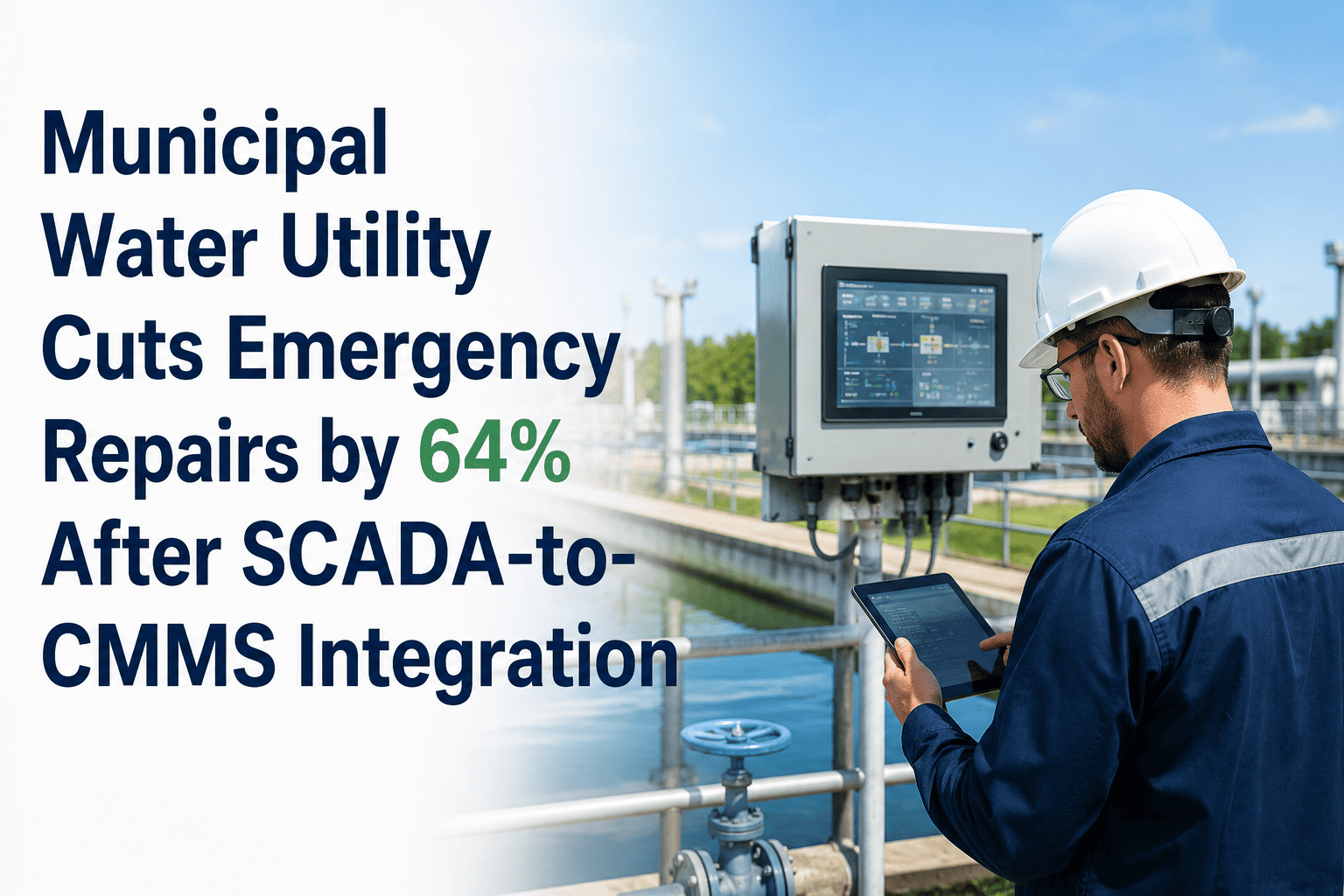
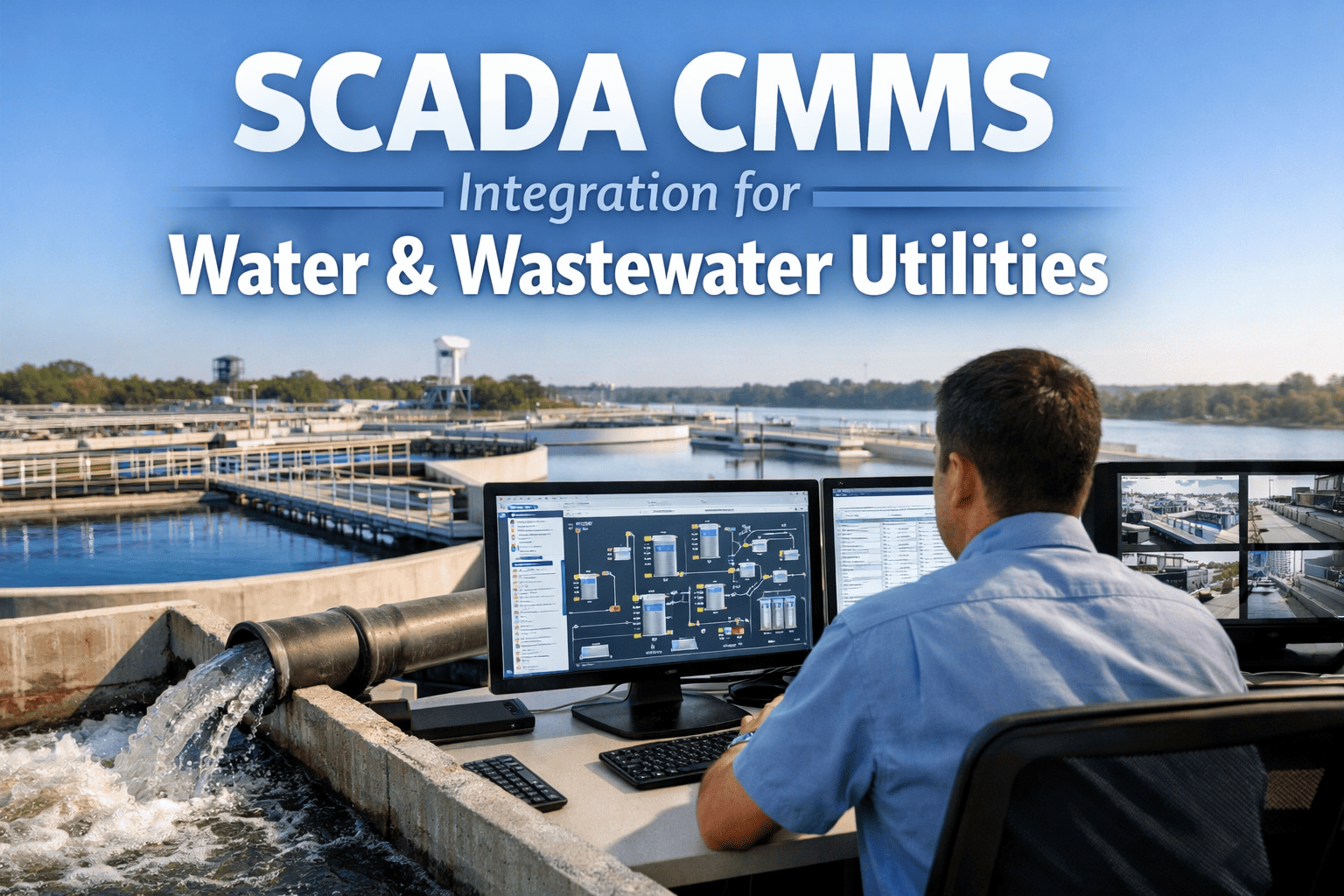
SCADA alarm conditions above configurable thresholds automatically generate Oxmaint work orders with equipment ID, alarm type, and timestamp pre-populated. Operators work from a mobile app rather than acknowledging alarms in the HMI with no documentation follow-through. Every corrective action creates a permanent, timestamped maintenance record linked to the originating alarm event.
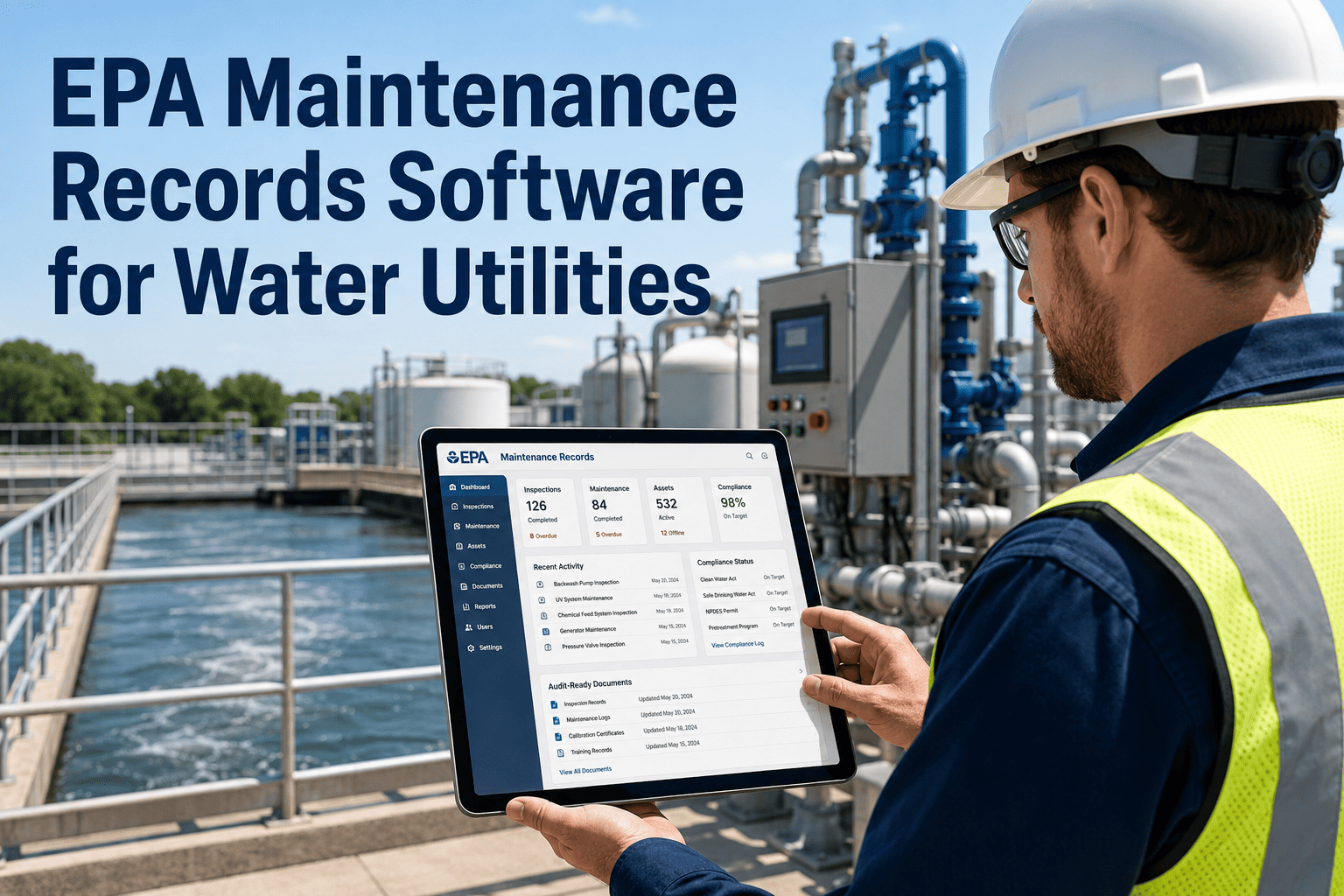
Every completed work order produces a timestamped, technician-attributed record with GPS check-in and photo evidence. EPA SDWA, state primacy, and OSHA audit packages export in one click from the compliance dashboard. Capital replacement forecasts for pumps, membranes, and chemical systems auto-generate from asset condition data without manual assessment cycles. See the complete EPA compliance documentation framework for water utilities.
Connect Your Treatment Plant Assets on One Maintenance Platform
Oxmaint unifies pump PM schedules, SCADA alarm routing, chemical system tracking, and EPA compliance documentation across your entire water treatment operation — live in 14 days, no consultant fees, no hardware replacement.
Platform Capabilities for Water Treatment Operations
Each capability is configured for the specific equipment classes, regulatory frameworks, and operational protocols that define municipal water treatment plant maintenance.
Pre-built PM templates for raw water intake pumps, high-service pumps, booster stations, and chemical metering pumps — covering bearing lubrication, seal inspection, impeller clearance, motor insulation resistance, and vibration trending. PM compliance on rotating equipment reaches 91% within two quarters. Planned pump rebuilds cost 4 to 6 times less than emergency replacements triggered by deferred PM. See the complete water utility PM checklist.
Tracks calibration intervals, chemical feed rates, and dosing pump performance for chlorination, coagulation, pH adjustment, fluoridation, and corrosion inhibitor systems. Automated work orders at calibration deadlines prevent chemical feed deviations that trigger SDWA violations. Every calibration event produces a timestamped record acceptable to state primacy agencies and EPA Region auditors — with no manual log compilation before inspections.
Manages backwash cycle scheduling, filter media replacement intervals, differential pressure trending, and membrane integrity testing for sand filters, anthracite beds, GAC contactors, and ultrafiltration systems. Backwash frequency optimization reduces chemical waste and extends media life. Membrane autopsy records and integrity test logs are stored per EPA reporting requirements for surface water treatment rule compliance.
Connects to existing SCADA, DCS, and historian platforms — OSIsoft PI, Wonderware, Ignition, GE iFIX — to route configurable alarm conditions directly to Oxmaint work orders with equipment ID, alarm priority, and sensor value pre-filled. Operators close alarms and complete the maintenance action in the same mobile workflow. No parallel paper log, no untracked corrective actions. Every SCADA event that generates a work order is permanently documented with technician attribution and GPS check-in.
EPA & Regulatory Compliance Coverage
Oxmaint's compliance documentation module is pre-configured for the federal and state regulatory frameworks governing municipal water treatment plant operations. See the complete EPA and state compliance guide for water utilities.
| Regulatory Framework | Scope | Oxmaint Documentation Coverage |
|---|---|---|
| EPA Safe Drinking Water Act (SDWA) | Treatment technique requirements, disinfection compliance, chemical feed documentation, monthly operating reports | Timestamped chemical dosing records, disinfection PM completion logs, treatment technique deviation alerts, MOR data exports |
| Surface Water Treatment Rule (SWTR) | Filter turbidity, Cryptosporidium log removal credit, CT disinfection calculations, membrane integrity testing | Filter differential pressure logs, backwash cycle records, membrane integrity test documentation, CT value tracking |
| OSHA 29 CFR 1910.119 (PSM) | Process safety management for utilities handling chlorine gas or anhydrous ammonia above threshold quantities | PSM mechanical integrity PM records, pre-startup safety review documentation, management of change work order trails |
| Lead & Copper Rule (LCR) | Corrosion inhibitor dosing compliance, distribution system pH and alkalinity management documentation | Corrosion inhibitor feed calibration records, chemical system PM logs, distribution sampling coordination records |
| State Primacy Agency Requirement | State-specific operating permit conditions, annual maintenance certifications, emergency response plans | Permit condition PM template library, annual certification documentation package, emergency work order response records |
Before and After: Water Utility Maintenance Transformation
These outcomes reflect benchmark comparisons between reactive-maintenance water utilities and Oxmaint-deployed operations running structured preventive maintenance programs on treatment plant assets.
See Oxmaint in a Water Treatment Plant Environment
Book a 30-minute demo configured for water utility operations — pump PM templates, SCADA integration walkthrough, and EPA compliance export demonstration included. Schedule your water utility demo today.
Equipment-Specific PM Coverage by Treatment System
Oxmaint includes pre-built PM templates for every major equipment class in a municipal water treatment plant — calibrated to AWWA, OSHA, NFPA, and manufacturer service intervals. Download the complete water utility PM checklist.
Raw water intake, high-service, booster, jockey, chemical metering, and sump pumps. PM coverage: bearing lubrication, mechanical seal inspection, impeller clearance, motor insulation resistance, vibration analysis, and coupling alignment checks.
Chlorination, coagulant, pH adjustment, fluoridation, corrosion inhibitor, and ammonia feed systems. PM coverage: dosing pump calibration, feed rate verification, chemical storage inspection, injection point integrity, and secondary containment checks.
Sand, anthracite, GAC, greensand, and membrane filtration including UF and MF systems. PM coverage: backwash cycle scheduling, differential pressure trending, media replacement, integrity testing, and CIP cleaning interval tracking.
MCC panels, VFDs, switchgear, PLCs, RTUs, and instrumentation. PM coverage: thermal scanning, contact cleaning, breaker testing, grounding verification, and calibration of flow meters, pressure transducers, and level sensors.
Gas chlorination, sodium hypochlorite, UV disinfection, ozone generation, and chloramine systems. PM coverage: UV lamp replacement, quartz sleeve cleaning, ozone cell inspection, gas feed system pressure testing, and contact time verification logs.
Standby generators, ATS panels, UPS systems, and facility HVAC for chemical storage and control rooms. PM coverage: generator load bank testing, fuel system inspection, coolant analysis, ATS transfer testing, and climate control calibration records.
Frequently Asked Questions: Water Treatment Plant CMMS
Continue Reading: Water & Wastewater Utility Maintenance
Stop Reactive Pump Failures Before They Interrupt Drinking Water Supply
Water utilities on Oxmaint reach 91% PM compliance, reduce emergency work orders by 68%, and produce EPA and state primacy audit documentation in under 4 hours — live in 14 days with no hardware replacement and no consultant fees.