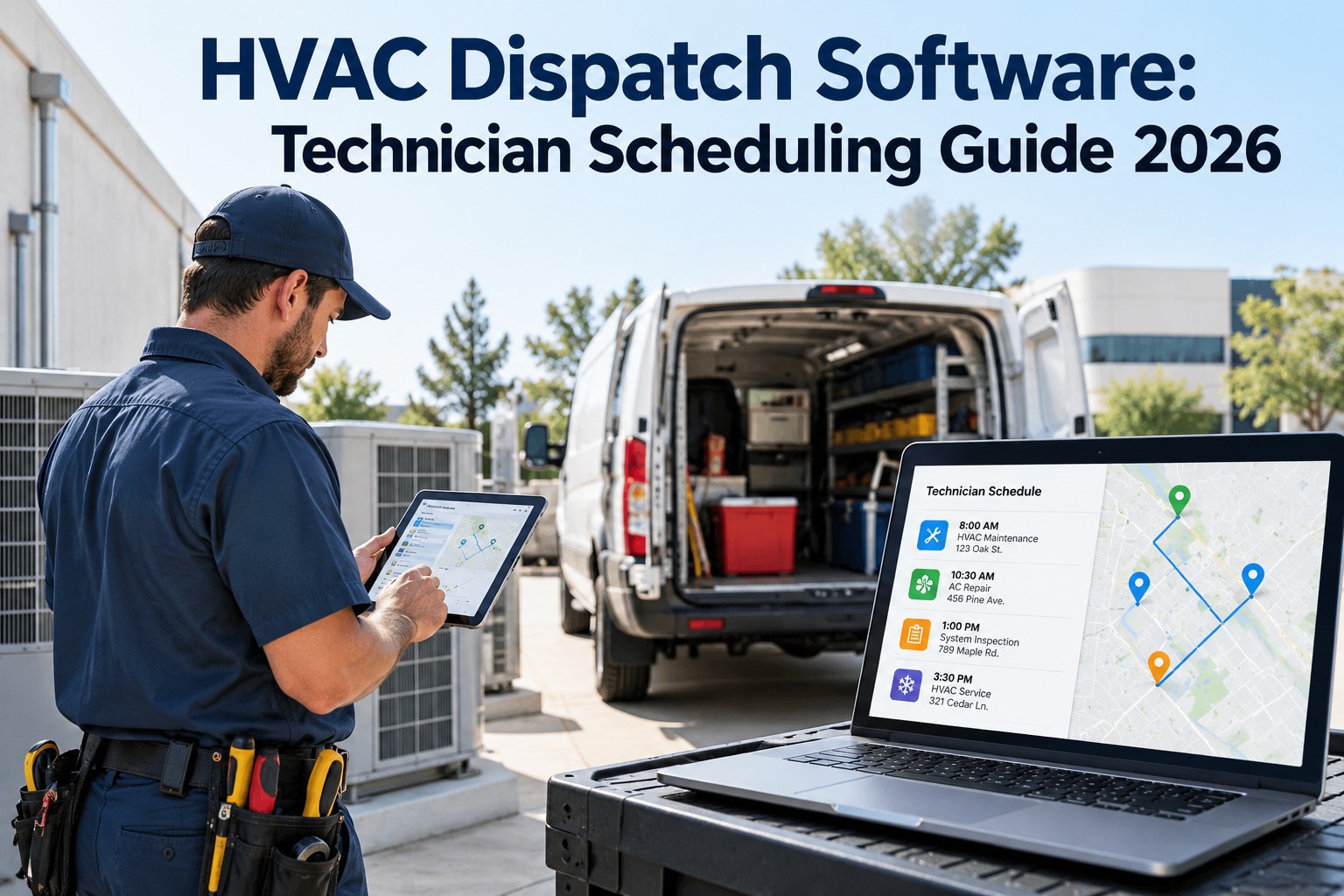
It's 2:15 PM on the hottest day of July. A commercial tenant calls in—their server room AC just died. Your dispatcher pulls up the whiteboard, squints at the last known schedule, and calls three technicians to find someone close enough to respond. Twelve minutes of phone tag later, the nearest available tech is 38 minutes away. But the tech who just finished a job two blocks from the emergency? He's already driving back to the shop because nobody knew he was free. That's not a scheduling failure. That's a visibility failure. And across the HVAC industry, it's costing companies between $200 and $300 per wasted truck roll—money that evaporates every time a dispatcher guesses instead of knows. GPS fleet visibility eliminates that guesswork entirely, turning every service van into a pin on a live map that your dispatch team can act on in seconds.
The Visibility Gap: What Dispatchers See vs. What's Really Happening
Without GPS Visibility
Call each tech to find their location
Guess which tech is "probably" closest
No idea if a van is idling or en route
After-hours use goes completely undetected
Customer ETAs are rough guesses at best
95% of the day is unsupervised
With Real-Time GPS Tracking
See every van on a live map instantly
Auto-identify nearest available technician
Real-time status: idle, en route, on-site
Geofence alerts for off-hours movement
Accurate ETAs sent directly to customers
100% fleet visibility, 24/7
78%
of U.S. fleets now use GPS tracking technology
47%
see positive ROI in under 12 months
1-2
extra service calls per tech per day with GPS dispatch
The Silent Money Leaks GPS Visibility Exposes
Most HVAC owners know fuel is expensive. What they don't realize is how much money disappears through invisible inefficiencies that only surface when you have real-time data. The 2025 Fleet Technology Trends Report found that fleets using GPS tracking now save an average of 16% on fuel—nearly double the 9% savings reported just one year earlier. But fuel is only one leak in the bucket. Labor padding, unauthorized vehicle use, and inefficient routing silently drain thousands more. Companies ready to see where their money is actually going can start tracking their fleet operations today and find out within the first week.
Where HVAC Fleets Lose Money Without Visibility
Annual cost impact per 15-van fleet based on industry averages
Idle Time Waste
$75,000 - $180,000
Engines running without moving cost $5,000-$12,000 per van annually. A 15-van fleet idling 45 min/day bleeds fuel, accelerates wear, and violates anti-idling laws in 18+ states.
GPS tracks idle events in real time and sends instant alerts when thresholds are exceeded
Inefficient Routing
$18,000 - $45,000
Techs driving past each other, backtracking across zones, taking longer routes. Optimized routing adds 1-2 extra jobs per tech per day without adding hours.
Live map dispatching assigns nearest available tech, cutting travel time by 20-30%
Time Card Padding
$31,000 - $78,000
The average employee pads over 4 hours per week. GPS-verified timesheets eliminate rounding up clock-ins, extended lunches, and early departures that go unnoticed.
Automated GPS timesheets match van movement to clock entries with zero manual input
Unauthorized Use
$6,000 - $24,000
Side jobs, personal errands, after-hours use—all invisible without geofencing. Some drivers use company vans for unreported work, exposing your business to liability.
Geofence boundaries trigger instant alerts when vans move outside approved zones or hours
Total Annual Exposure (15 Vans)
$130,000 - $327,000
GPS visibility typically recovers 15-35% of total fleet operating costs
The Four Layers of Fleet Visibility That Matter
GPS tracking isn't just a blinking dot on a map. Modern fleet visibility platforms provide four distinct intelligence layers that together give you complete operational control—from where your vans are right now to how your technicians drove last Tuesday. Each layer feeds actionable data into your maintenance and dispatch systems, and for HVAC companies managing 10 or more vans, the difference between having one layer versus all four is the difference between partial awareness and total fleet command. Operations managers looking to see all four layers in action can schedule a fleet visibility demo and walk through real dashboard views.
Four Intelligence Layers of Fleet GPS Visibility
01
Real-Time Location
Live van positions updated every 10-30 seconds. See who's on-site, who's en route, and who just became available—all on a single dashboard map.
Dispatch nearest tech to emergencies in under 60 seconds
02
Driver Behavior Analytics
Speeding events, hard braking, rapid acceleration, and idle time tracked per technician. Scorecards rank driver performance for targeted coaching.
Reduce accident risk by 22% and insurance premiums by up to 34%
03
Geofence Intelligence
Virtual boundaries around job sites, supply houses, and service territories. Get instant alerts when vans enter or leave designated zones—or move after hours.
Eliminate unauthorized use and verify billable time on customer sites
04
Vehicle Health Monitoring
Engine diagnostics, maintenance alerts, and mileage-based service scheduling pushed automatically to your CMMS. No more missed oil changes or surprise breakdowns.
Reduce vehicle breakdowns by up to 48% with proactive alerts
When these four layers feed into a centralized CMMS platform, the result is a system where a sensor alert on Van #7 automatically generates a maintenance work order, assigns it to the right shop, and schedules the van's downtime around your lightest service day. No manual tracking. No forgotten oil changes. No $4,000 roadside breakdowns that knock a tech out for a full day. HVAC companies ready to connect their fleet data to automated maintenance workflows can set up their fleet tracking dashboard and see the integration in practice.
See Your Entire Fleet on One Screen
Watch how live GPS data connects to dispatch, maintenance scheduling, and driver scorecards—all in a single platform built for HVAC operations.
The business case for GPS fleet tracking has strengthened dramatically. According to the 2025 Fleet Technology Trends Report, fuel savings nearly doubled year-over-year from 9% to 16%, accident-related cost savings jumped from 15% to 22%, and labor savings climbed from 10% to 16%. Nearly half of all fleets now recover their full investment in under 12 months. For HVAC companies operating on tight margins with vans as their most expensive mobile assets, these numbers translate directly to the bottom line.
GPS Fleet Tracking ROI by the Numbers
2025 Fleet Technology Trends Report data
Fuel Savings
9%
16%
+78% improvement year over year
Labor Savings
10%
16%
+60% improvement year over year
Accident Cost Reduction
15%
22%
+47% improvement year over year
Time to Positive ROI
47%
of fleets recover investment in under 12 months
Small Fleet (5-25 vans)
15-20% cost reduction within 8-12 months
Medium Fleet (25-100 vans)
20-25% efficiency gains within 6-9 months
Large Fleet (100+ vans)
25-30% operational improvements within 4-6 months
Expert Perspective: Why Visibility Is No Longer Optional
Real-time fleet tracking technology makes 95% of your company's day visible when before 95% of the day went unsupervised. For HVAC companies, where every technician is a mobile profit center, that shift from blind operation to full visibility isn't a luxury—it's the infrastructure of modern service management. The companies still dispatching by phone tag and gut instinct are leaving 1-2 jobs per tech per day on the table.
Emergency Response Transforms
When a no-cool call comes in at peak demand, GPS dispatching identifies the nearest qualified tech in seconds—not the 12-15 minutes of phone calls that manual dispatch requires. That speed difference directly impacts customer retention.
Accountability Drives Performance
Driver scorecards that track idle time, route adherence, and on-site duration create natural accountability without micromanagement. Top-performing techs actually welcome the data because it validates their work ethic.
Data Powers Smarter Decisions
Historical route data reveals which service zones are profitable and which cost more in drive time than they generate in revenue. This intelligence lets you right-size territories, optimize scheduling, and forecast staffing with precision.
The HVAC GPS tracking software market, valued at $4.5 billion in 2023, is projected to reach $11.5 billion by 2033—growing at 9.9% annually. That trajectory reflects an industry-wide recognition that fleet visibility is no longer a nice-to-have but a competitive necessity. The companies adopting now are building the operational data foundation that will separate them from competitors still running blind. For fleet managers ready to stop losing revenue to invisible inefficiencies, getting started with fleet GPS tracking takes less time than one wasted dispatch call.
Getting Started: Your Fleet Visibility in 3 Steps
Implementing GPS fleet visibility doesn't require rewiring your vans or hiring IT staff. Modern GPS tracking integrates with your CMMS platform through plug-and-play devices that install in minutes and begin transmitting location, diagnostics, and driver behavior data immediately. The key is connecting that data to your dispatch and maintenance workflows so it triggers action—not just dashboards. Book a walkthrough with our fleet specialists to map the integration to your specific operation and get a clear picture of your ROI timeline.
Stop Dispatching Blind. Start Tracking Smart.
Join HVAC companies using OXmaint to connect GPS fleet visibility with automated dispatch, maintenance scheduling, and driver performance—all in one platform.
How does GPS tracking improve HVAC dispatch response times?
GPS tracking displays every service van on a live map with real-time status indicators showing whether each tech is on-site, en route, idle, or just completed a job. When an emergency call comes in, dispatchers instantly identify the nearest available technician rather than calling multiple techs to find someone close. This typically reduces dispatch decision time from 10-15 minutes of phone tag to under 60 seconds, and enables HVAC companies to complete 1-2 additional service calls per technician per day simply through smarter routing.
What ROI can I expect from GPS fleet tracking for my HVAC company?
According to the 2025 Fleet Technology Trends Report, 47% of fleets using GPS tracking achieve positive ROI in under 12 months. Average savings include 16% reduction in fuel costs through route optimization and idle time reduction, 16% labor savings through GPS-verified timesheets, and 22% reduction in accident-related costs through driver behavior monitoring. For a typical 15-van HVAC fleet, these savings combined can recover $20,000-$50,000 or more annually depending on current operational inefficiencies.
Can GPS tracking help prevent unauthorized use of company vans?
Yes. Geofencing technology creates virtual boundaries around approved operating zones and sets business-hour parameters. If a van moves outside designated areas or during off-hours, dispatchers receive instant alerts. This detects side jobs, personal errands, and unauthorized after-hours use. Some systems also integrate with automated timesheet tools, matching GPS location data to clock entries so time theft and route deviations are flagged automatically without manual auditing.
How does fleet GPS integrate with a CMMS maintenance system?
Modern GPS tracking devices transmit engine diagnostics alongside location data, including mileage, engine hours, idle time, and fault codes. When connected to a CMMS platform like OXmaint, this data automatically triggers maintenance work orders based on actual usage rather than calendar guesswork—for example, scheduling an oil change when a van hits 5,000 miles rather than hoping someone remembers. This integration has been shown to reduce vehicle breakdowns by up to 48% and extends fleet lifespan significantly.
Will my technicians resist GPS tracking on their vehicles?
Initial resistance is common but typically fades quickly when implementation is handled transparently. Best practices include explaining the business reasons clearly—faster dispatch means more jobs and more earning potential—and focusing on fleet safety and customer service benefits rather than surveillance. Many companies find that top-performing technicians actually welcome GPS tracking because it validates their efficiency and work ethic. Driver scorecard programs that reward safe, efficient driving with recognition or small incentives further accelerate adoption.