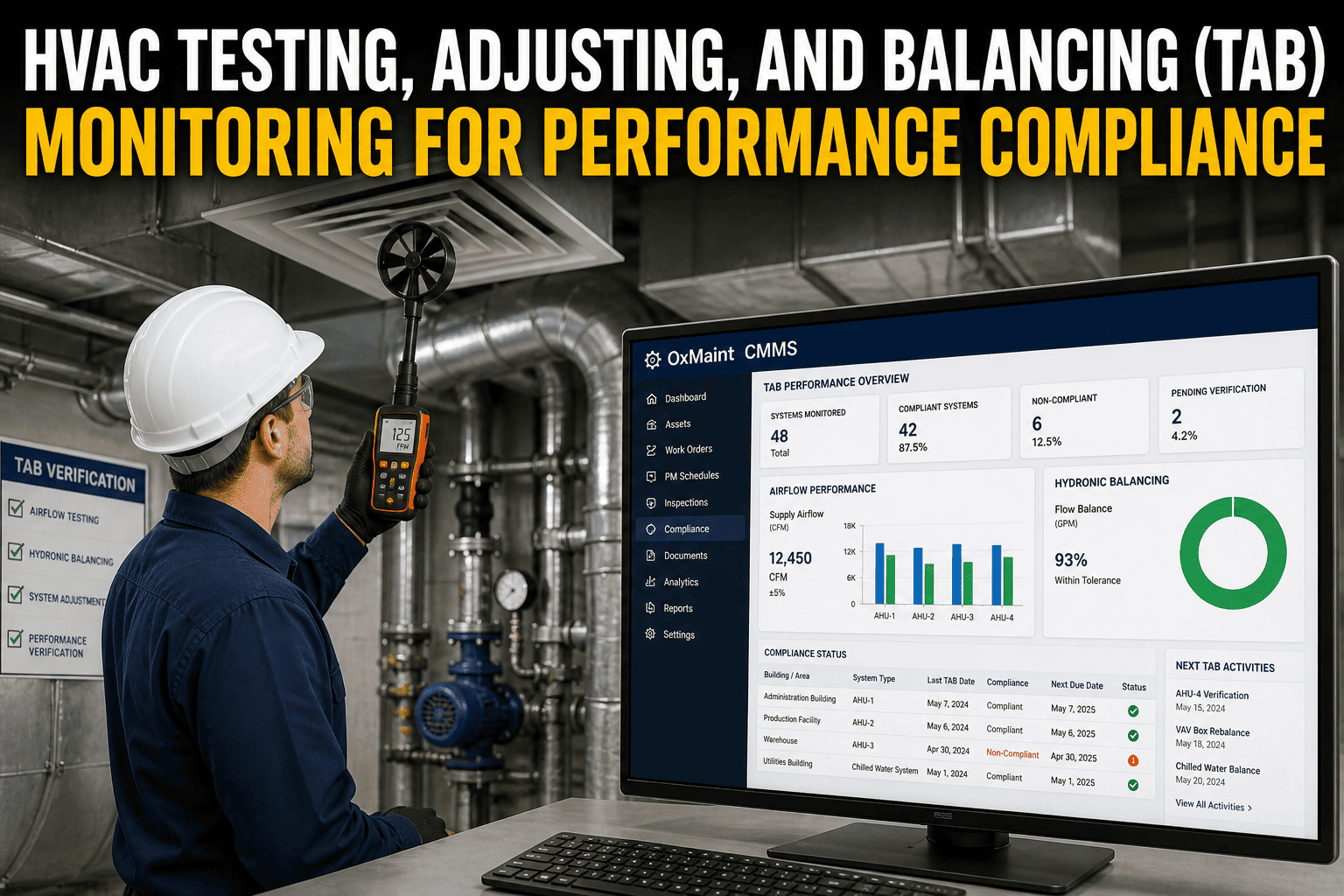
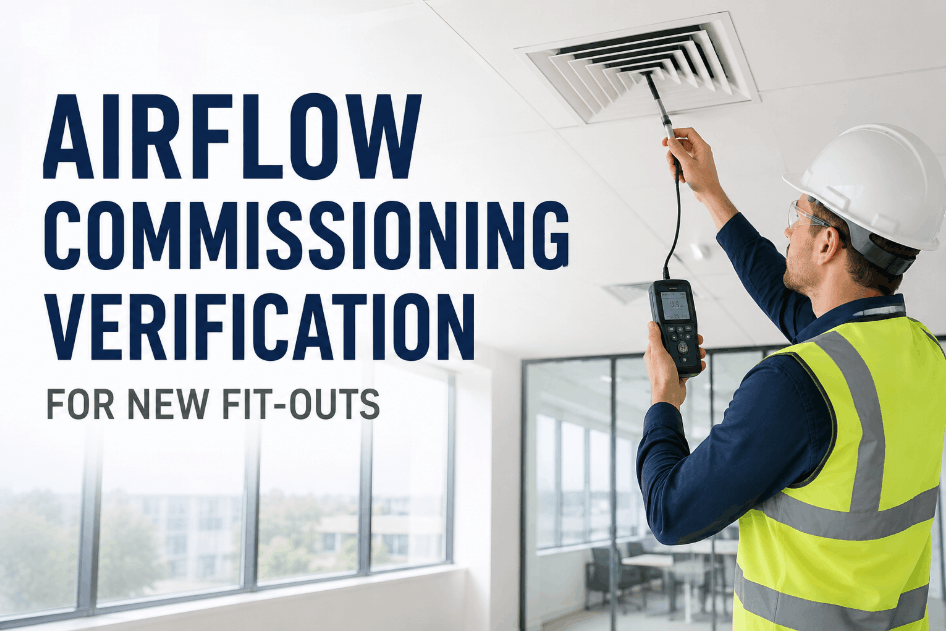
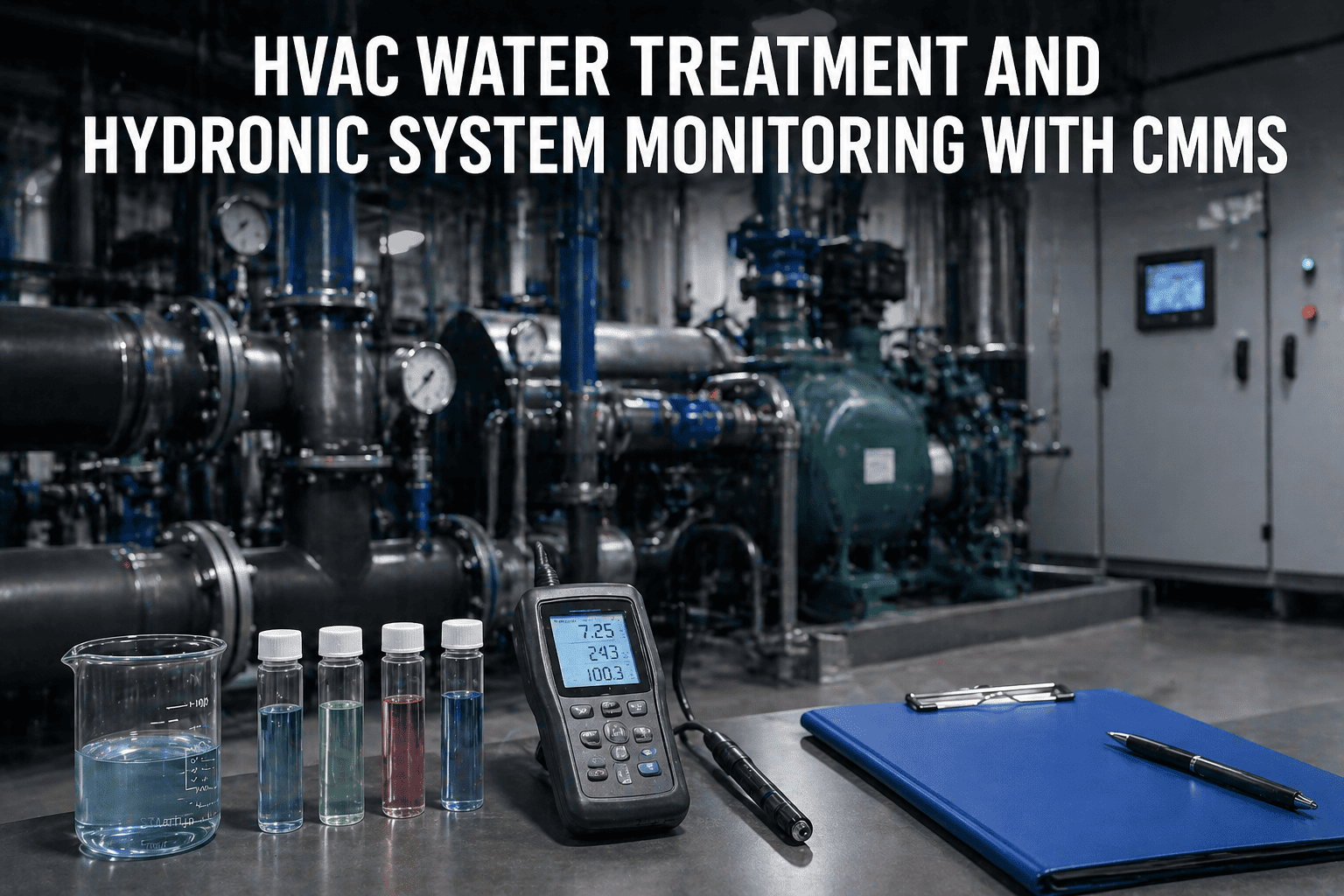
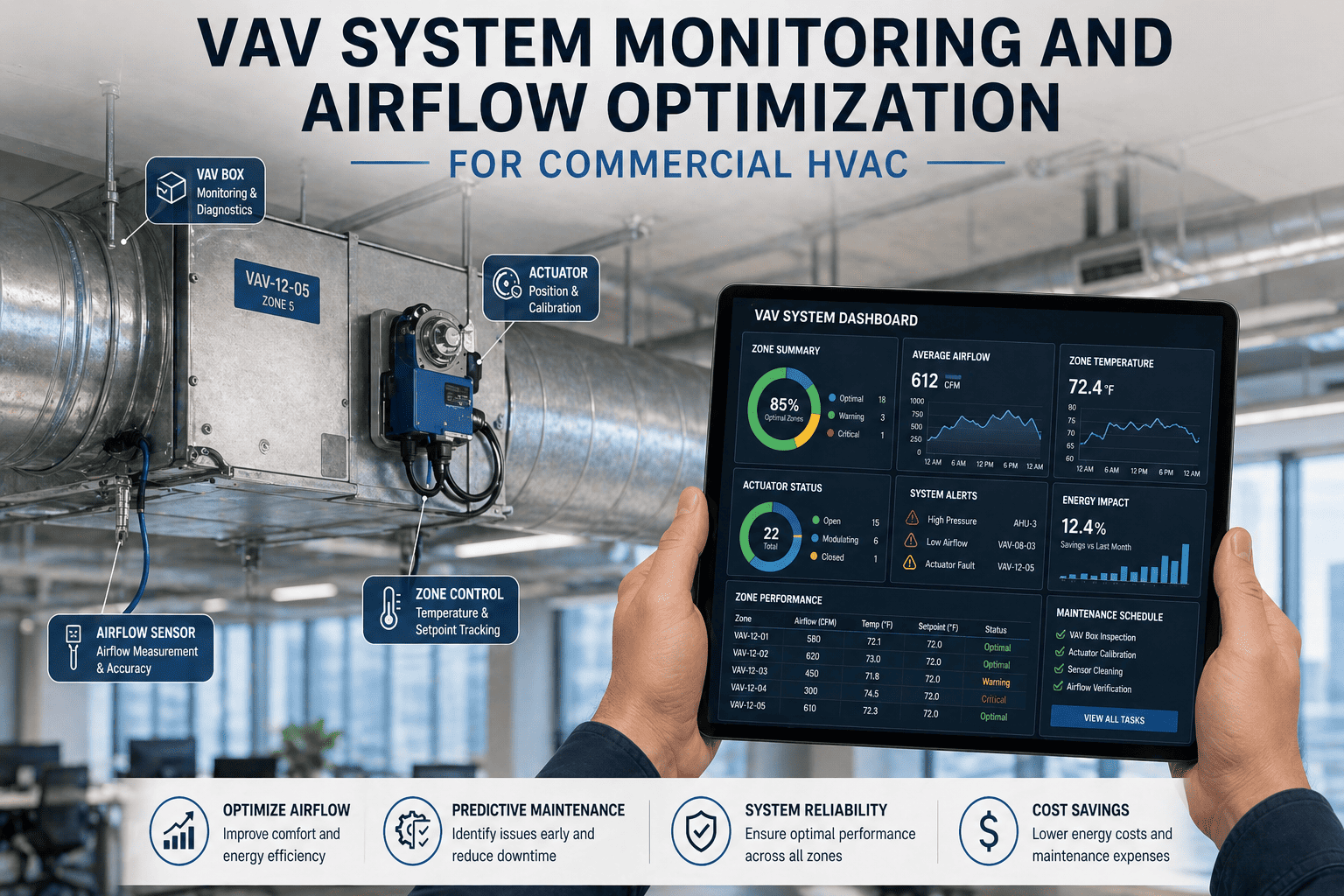
An HVAC system that passes commissioning and drifts six months later is not a commissioning success — it is a maintenance failure waiting to be discovered during a complaint or an energy audit. Airflow imbalances, hydronic pressure deviations, and terminal unit drift are silent performance losses that compound every operating hour. OxMaint structures TAB verification, airflow trending, and compliance documentation into continuous workflows — so your system performs to design intent long after the commissioning engineer leaves the site.
COMPLIANCE TRACKING — HVAC PERFORMANCE
HVAC Testing, Adjusting & Balancing (TAB) Monitoring for Performance Compliance
A complete framework for sustaining HVAC airflow and hydronic performance using structured TAB verification cycles, CMMS-linked documentation, and continuous compliance tracking — from supply air terminals to chilled water loops.
30%
Energy Waste
Typical energy loss in commercial buildings due to undetected airflow imbalance post-commissioning
18 mo
Avg. Drift Window
Average time before TAB-verified systems show measurable performance degradation without re-verification
ASHRAE 111
TAB Standard
Primary standard governing measurement procedures for TAB of HVAC systems
±10%
Max Allowable Variance
Acceptable deviation from design airflow at supply terminals per ASHRAE and SMACNA guidelines
What TAB Covers — Air, Hydronic, and Controls
TAB is not a single test — it is a structured verification discipline covering three interdependent subsystems. A building can have perfectly balanced ductwork and still fail hydronic performance if the chilled water flow at coils is unbalanced. OxMaint tracks each subsystem as a distinct asset class with its own measurement schedule, design reference, and deviation threshold.
A
Air Systems
Supply air volume per terminal, return air balance, outside air fraction, exhaust airflow, static pressure at AHU
Standard: ASHRAE 111, SMACNA TAB
H
Hydronic Systems
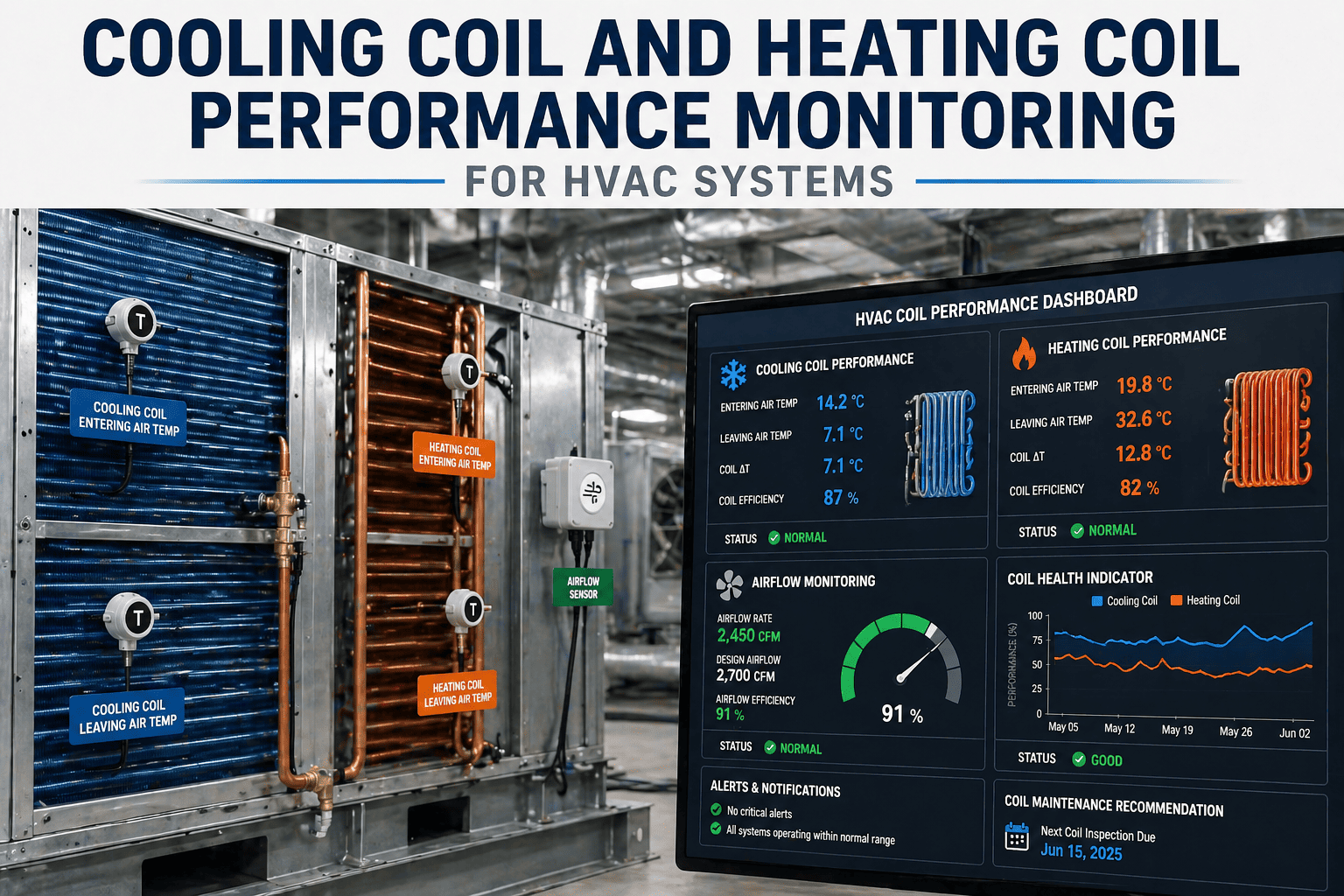
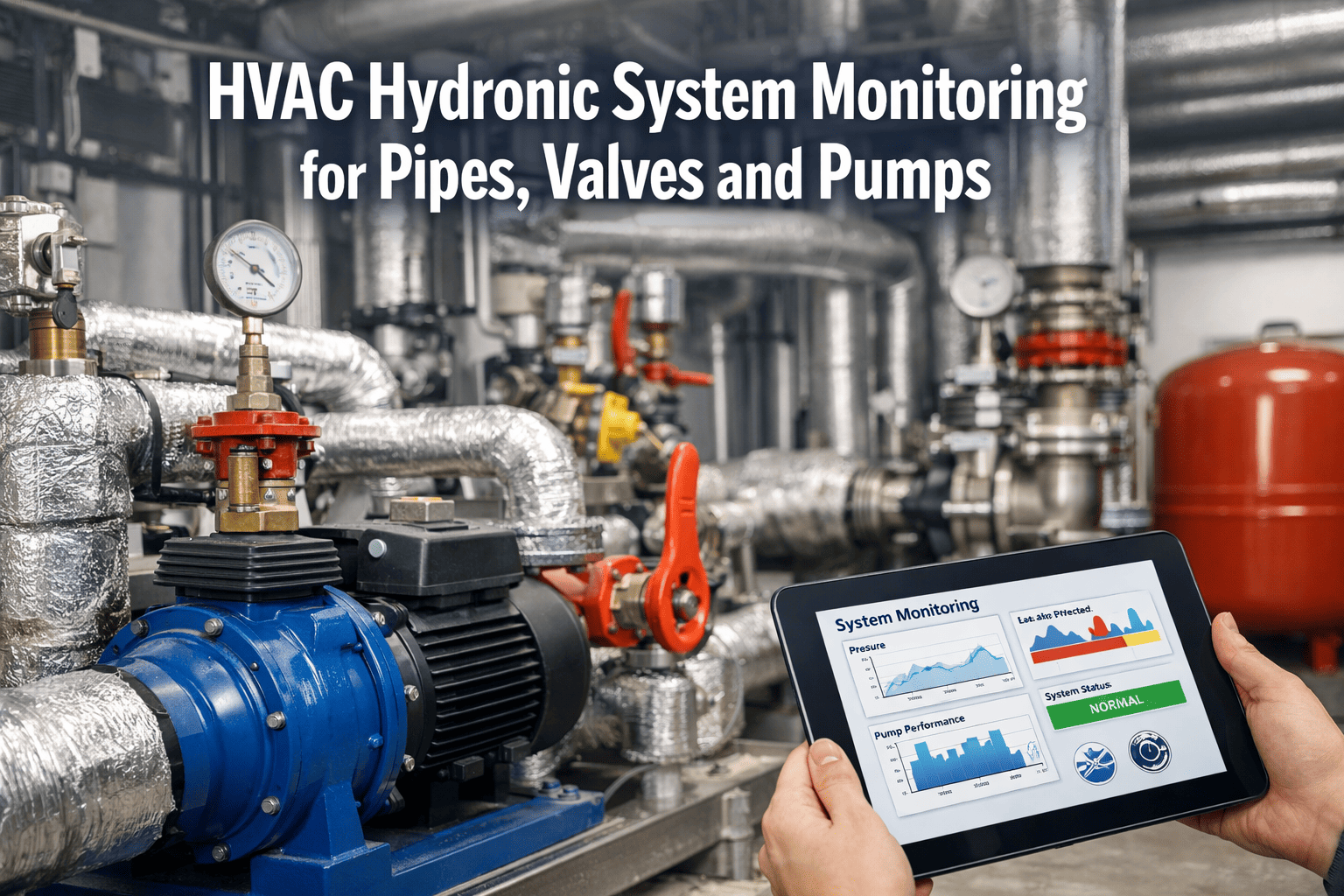
Chilled water flow at coils, heating water differential pressure, pump performance curves, control valve authority
Standard: ASHRAE 111, BSRIA AG 2/89
C
Controls Verification
Setpoint accuracy, sensor calibration, VAV box minimum positions, economizer operation, BMS interlock testing
Standard: ASHRAE 202, Cx commissioning protocols
TAB Measurement Parameters — Design vs. Actual Compliance
| Parameter |
Measurement Tool |
Acceptable Variance |
Failure Impact |
CMMS Response |
| Supply Air Volume (CFM) |
Flow hood, Pitot tube traverse |
±10% of design |
Thermal comfort complaints, zone pressure imbalance |
Work order for damper adjustment or duct inspection |
| Return Air Volume |
Flow hood, duct traverse |
Within 10% of supply |
Negative or positive zone pressurization, air quality issues |
Return grille inspection and damper re-balance |
| Outside Air Fraction |
CO₂ tracer, Pitot, BMS data |
Per ASHRAE 62.1 min. requirement |
IAQ non-compliance, LEED certification risk |
Economizer controls check + damper actuator PM |
| CHW Flow at Coil |
Ultrasonic flow meter, circuit setter |
±10% of design GPM |
Insufficient cooling capacity, hot calls in summer |
Coil balancing valve adjustment + pump curve check |
| Differential Pressure (HHW/CHW) |
Manometer, building BMS |
Within design range at critical index circuit |
Remote coils starved, pump energy waste |
Pressure set point review + bypass valve inspection |
| Fan Static Pressure |
Inclined manometer, BMS trend |
±5% of design ESP |
Fan motor overload or under-delivery of air |
Belt/VFD check + filter replacement trigger |
TAB Verification Cycle — What OxMaint Automates
TAB is not a one-time event. System performance drifts with filter loading, damper wear, coil fouling, and seasonal load shifts. A structured re-verification cycle — managed as formal PM work orders with design reference data — is the only way to sustain performance between commissioning events. OxMaint makes this systematic instead of reactive.
1
Baseline Import
Design airflow and hydronic values imported per terminal and coil — CMMS stores design intent as the permanent reference for every future measurement.
2
Scheduled Re-Verification
Quarterly or semi-annual TAB check work orders auto-generated per AHU, zone, and hydronic loop — assigned to technician with measurement protocol attached.
3
Variance Detection
Measured values entered via mobile — system instantly calculates deviation from design and flags any terminal or coil outside the ±10% acceptance band.
4
Corrective Work Order
Flagged deviations automatically generate a corrective work order with the measured value, design value, location, and responsible technician pre-populated.
5
Compliance Documentation
Every verification cycle exported as a timestamped compliance report — acceptable for LEED documentation, energy audits, and building commissioning authority sign-off.
6
Trend Analysis
OxMaint analytics surface performance trends across re-verification cycles — identifying terminals or coils with recurring drift before they become comfort complaints.
Replace Paper TAB Reports With a Living Compliance System.
OxMaint tracks every measured value against design intent, flags deviations automatically, and generates audit-ready TAB compliance reports on demand.
Expert Review
AK
Arun Krishnamurthy
HVAC Commissioning Engineer — Commercial & Healthcare Projects
16 years in HVAC TAB and building commissioning
"The gap between TAB completion and sustained performance is where most facility teams lose control. I've returned to buildings 12 months after commissioning and found supply terminals 25% below design, return paths completely unbalanced, and outside air fractions at half the ASHRAE 62.1 minimum — all while the BMS showed green. A CMMS that schedules re-verification as a PM workflow, stores the original design values as the permanent benchmark, and auto-flags deviations changes the entire model. Facilities that do this stop treating TAB as a one-time document and start treating airflow performance as a managed asset. In my experience, structured re-verification cycles reduce complaint-driven HVAC calls by over 40%."
★★★★★
Verified Industry Expert
Frequently Asked Questions
How often should HVAC TAB re-verification be performed?
For most commercial buildings, annual re-verification of critical zones and semi-annual checks of primary AHU performance are industry best practice. Healthcare facilities, laboratories, and cleanrooms — where airflow directly affects safety and regulatory compliance — require quarterly verification of supply volumes, exhaust rates, and pressure relationships. OxMaint schedules these intervals automatically per asset type, generates the measurement work order, and tracks completion — so re-verification is never delayed because no one remembered to schedule it.
Start free to set up your first TAB re-verification schedule.
What documentation does OxMaint generate for TAB compliance?
OxMaint generates TAB verification reports that include measured airflow per terminal, design reference values, variance percentage, technician name, measurement date, and pass/fail status per ASHRAE 111 tolerance bands. For hydronic systems, reports include measured flow, design GPM, differential pressure, and control valve position at time of measurement. All reports are timestamped and linked to the specific asset — acceptable for LEED commissioning documentation, energy audit evidence, and building owner handover packages.
Book a demo to see a live TAB compliance report.
Can OxMaint integrate with BMS trend data for continuous TAB monitoring?
Yes. OxMaint connects to BMS platforms via BACnet, Modbus, and API integrations — pulling continuous data from airflow sensors, pressure transducers, and VAV box controllers. This means deviation detection does not wait for the next scheduled re-verification: if a supply terminal drops below 80% of design between PM cycles, OxMaint flags it and generates a work order automatically. Manual measurement data and BMS continuous data are stored in the same asset record, giving technicians a complete performance history for every terminal and coil they maintain.
How does poor airflow balance affect building energy performance?
Airflow imbalance forces mechanical systems to work harder than design intent requires. Over-supplied zones drive excess fan energy; under-supplied zones cause zone thermostats to call for heating or cooling continuously, loading the chiller and boiler beyond their part-load efficiency points. Studies by ASHRAE and PNNL consistently find that buildings with unmanaged airflow balance consume 20–35% more HVAC energy than design-intent performance. OxMaint's TAB trending allows energy managers to quantify this gap and demonstrate energy savings from corrective rebalancing — directly supporting sustainability and carbon reporting targets.
Start free and track your first energy baseline with TAB data.
HVAC Performance Is a Maintenance Outcome, Not a Commissioning Certificate
OxMaint gives facility teams a complete platform to schedule TAB re-verification, log airflow and hydronic measurements against design intent, flag deviations automatically, and generate compliance documentation — so buildings perform to specification every day, not just on handover day.