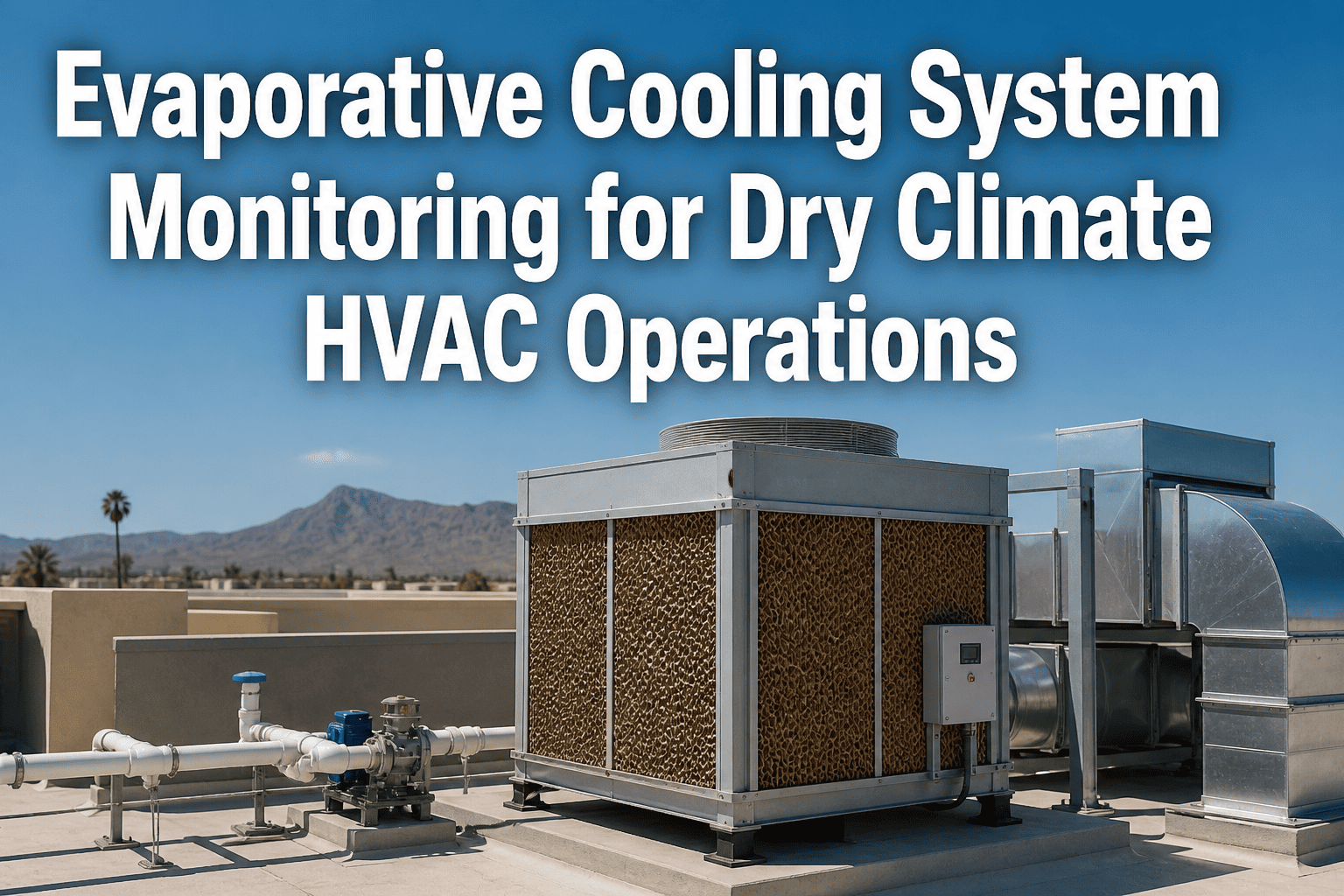
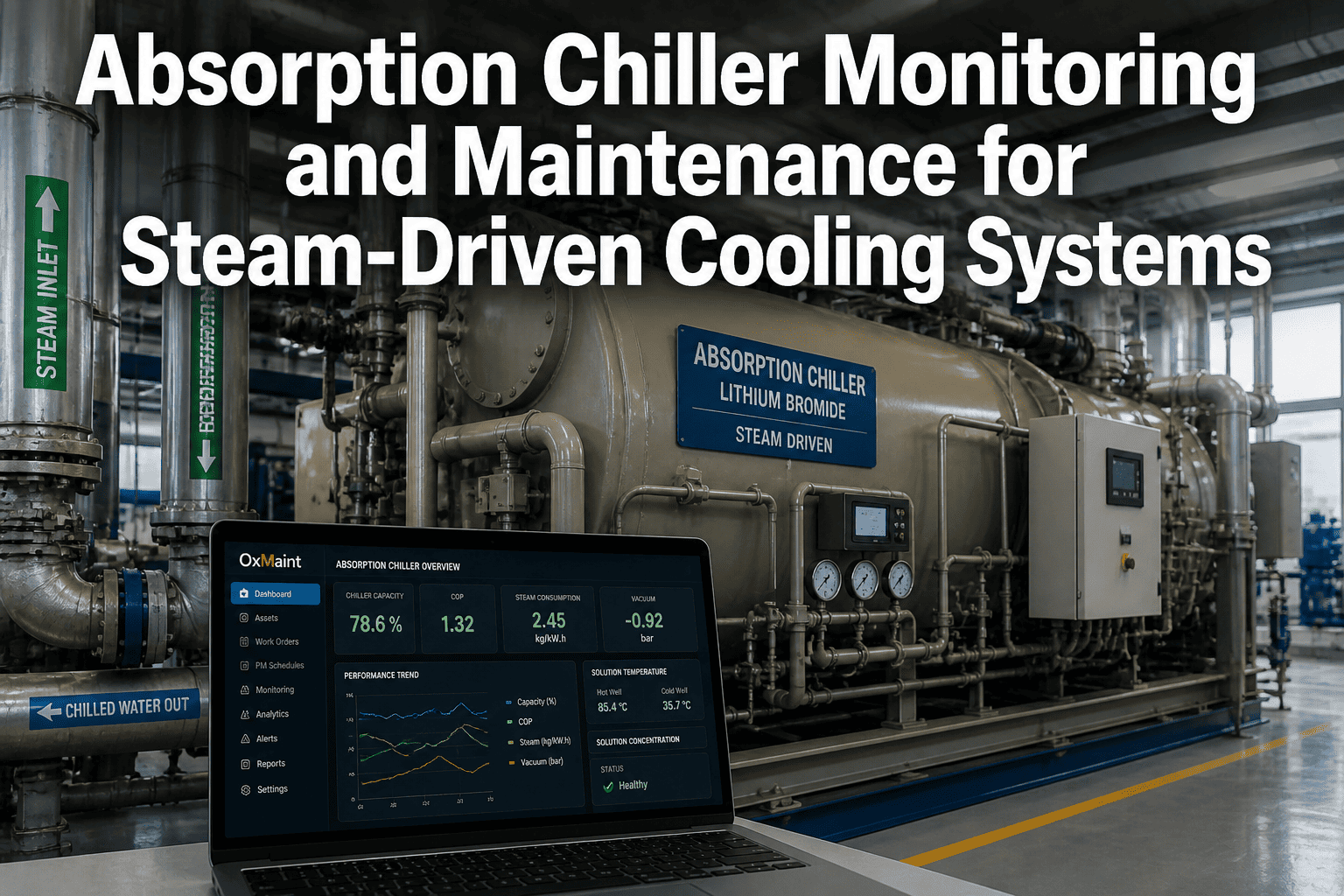
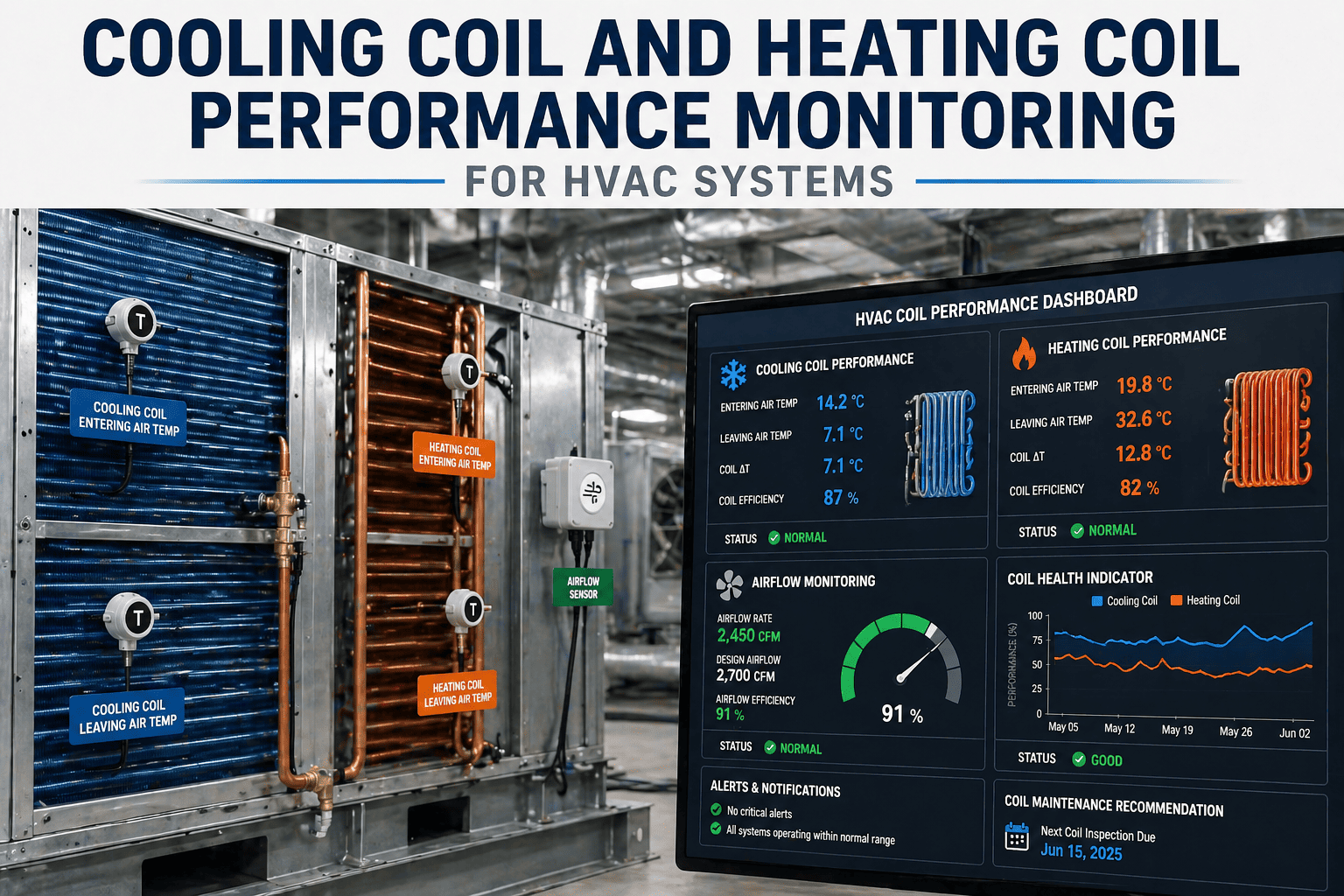
In manufacturing, HVAC is not a comfort system — it is a production variable. A 3°C deviation in process temperature can reject an entire batch. A chiller trip in a pharmaceutical cleanroom triggers a shutdown protocol that costs hours of production. Industrial HVAC and process cooling systems operate continuously under demanding load cycles and are routinely under-maintained because they sit at the intersection of facilities and production engineering — owned by neither team fully. OxMaint's Preventive Maintenance module bridges that gap by giving manufacturing facilities a single system that tracks industrial chiller health, air handler performance, and process cooling circuit integrity — all linked to production asset criticality.
Industrial HVAC · Process Cooling · Manufacturing Reliability
Industrial HVAC and Process Cooling Maintenance for Manufacturing Plants
Chiller failures, AHU filter bypass, and process cooling circuit contamination are the top three causes of production climate failures in manufacturing. A structured digital PM program prevents all three — and keeps your process temperatures where they belong.
$180K
avg. cost of a single chiller failure in manufacturing
40%
of chiller failures are preventable with monitoring
15%
energy savings from clean condenser and evaporator coils
99.4%
process temperature uptime with OxMaint PM program
System Map
Four Industrial HVAC Systems That Require Dedicated PM Programs
01
Industrial Chillers
Central to both comfort HVAC and process cooling loops. Condenser tube fouling and refrigerant charge loss are the leading causes of efficiency degradation — both preventable with quarterly PM.
Critical PM: Quarterly tube cleaning, annual refrigerant analysis
02
Air Handling Units (AHU)
Filter bypass and coil fouling in AHUs raise particulate levels in controlled manufacturing environments. In pharmaceutical and electronics plants, this directly triggers production shutdowns and batch failures.
Critical PM: Monthly filter inspection, semi-annual coil clean
03
Process Cooling Circuits
Closed-loop cooling circuits for machine tools, injection molding, and heat treatment equipment depend on water quality, pump head pressure, and heat exchanger cleanliness. Contamination causes both equipment damage and process deviation.
Critical PM: Monthly water analysis, quarterly heat exchanger inspection
04
Cooling Towers
Condenser heat rejection for chiller systems. Legionella risk, scale buildup, and drift eliminator damage are the three maintenance-driven failure modes — all with regulatory and safety consequences beyond simple equipment failure.
Critical PM: Weekly water treatment, monthly biological testing
PM Reference
Industrial HVAC and Process Cooling: Full Maintenance Schedule
| Component |
PM Task |
Interval |
Production Risk if Deferred |
| Chiller condenser tubes |
Eddy current test + brush clean |
Quarterly |
15–20% efficiency loss, process temp rise |
| Chiller refrigerant circuit |
Refrigerant analysis + leak check |
Annual |
Capacity loss, compressor failure |
| AHU filters |
Pressure drop measurement + replacement |
Monthly |
Particulate exceedance, batch rejection |
| AHU cooling coil |
Coil clean + fin inspection |
Semi-annual |
Humidity and temperature control loss |
| Process cooling water |
pH, conductivity, microbiological |
Monthly |
Scaling, corrosion, process deviation |
| Process heat exchangers |
Pressure drop + fouling factor check |
Quarterly |
Machine overheating, production stop |
| Cooling tower fill + basin |
Visual inspection + basin clean |
Semi-annual |
Legionella risk, scale-induced chiller load |
| Cooling tower drift eliminators |
Integrity inspection + replacement |
Annual |
Legionella aerosol risk, regulatory penalty |
| Variable speed drives (AHU/pumps) |
Thermal image + filter clean |
Quarterly |
Drive failure, AHU/pump loss |
Preventive Maintenance · Manufacturing HVAC
Link Your Process Temperature Requirements Directly to Maintenance Schedules
OxMaint lets you define process temperature tolerances for each production zone, then automatically escalates a work order when HVAC sensor data shows the zone approaching its limit — before the process deviates, not after. Production and maintenance finally work from the same data.
Book a Demo
Asset Criticality
How Manufacturing HVAC PM Priority Is Set by Production Impact
Not all HVAC assets carry the same production risk. OxMaint's criticality scoring assigns PM frequency and response priority based on the consequence of failure — so your team always works on what matters most first.
| Criticality Level |
Example Assets |
PM Frequency |
Failure Response Target |
| Critical (P1) |
Cleanroom AHU, process chiller, cooling circuit pump |
Monthly minimum |
2-hour response, 8-hour repair |
| Essential (P2) |
Condenser water pumps, cooling tower fans, secondary AHU |
Quarterly |
4-hour response, 24-hour repair |
| Standard (P3) |
Office HVAC, general ventilation, exhaust fans |
Semi-annual |
Next business day response |
| Non-critical (P4) |
Storage area HVAC, perimeter heating units |
Annual |
Scheduled within 5 days |
Expert Review
What Manufacturing Facilities Engineers Say About Process Cooling PM
"We lost an entire week of semiconductor production because a process chiller compressor failed. The condenser tubes had not been cleaned in 18 months. The efficiency data was in the BMS for months telling us something was wrong, but no one had defined what normal looked like — so no alert was ever generated."
Facilities Engineering Manager
Semiconductor Manufacturing Plant, Taiwan
"Process cooling water quality is treated as a chemistry problem by most plants, not a maintenance problem. But when a heat exchanger fails from scaling, that is a maintenance failure — and it was preventable with monthly conductivity checks and a clear corrective action threshold logged in the CMMS."
Process Reliability Engineer
Automotive Component Manufacturer, Germany
"The most dangerous assumption in industrial HVAC is that the BMS alarm will tell you when something is wrong. BMS alarms are set for failure, not for degradation. A chiller running at 85% efficiency never triggers an alarm — it just raises your energy bill and production variation until something breaks."
Chief Engineer, Industrial Facilities
Pharmaceutical Manufacturing Group, India
Performance Results
Industrial HVAC PM Program: Before and After
| Metric |
Reactive / Ad-Hoc PM |
OxMaint Structured PM |
| Unplanned chiller failures / year |
3–5 |
0–1 |
| Process temperature exceedances / month |
8–14 events |
0–2 events |
| Chiller energy efficiency (COP) |
3.8–4.2 (degraded) |
5.0–5.6 (near-design) |
| AHU filter PM compliance |
44% |
96% |
| Production batches rejected from HVAC |
6–10 / year |
0–1 / year |
| Annual HVAC maintenance cost |
Baseline |
22–28% reduction |
Frequently Asked
Industrial HVAC Maintenance Questions
How often should industrial chiller condenser tubes be cleaned in a manufacturing plant?
Industrial chiller condenser tubes in manufacturing facilities should be cleaned and eddy current tested quarterly when the chiller runs year-round and the condenser water is from a cooling tower. Fouled condenser tubes are the single most common cause of chiller COP degradation — a fouling factor of 0.0002 ft²·hr·°F/BTU increases energy consumption by 15–20% and raises condensing pressure enough to trigger compressor safeties at peak load. In cleanroom environments where process temperature tolerance is tight, quarterly tube cleaning is a minimum standard.
OxMaint tracks chiller tube cleaning history and efficiency trend together.
What causes AHU filter bypass in manufacturing and how is it detected?
AHU filter bypass occurs when a filter frame gasket deteriorates, a filter is incorrectly sized or installed, or a differential pressure across a loaded filter exceeds the structural rating of the media, causing it to collapse or pull away from the frame. In manufacturing environments, bypass is detected by comparing upstream and downstream particulate counts — a downstream reading that rises without a corresponding change in the production environment indicates bypass, not true contamination. Monthly filter inspection with a gasket condition check and pressure drop measurement is the minimum standard for production-critical AHUs.
Book a demo to see OxMaint's AHU PM workflow.
How should process cooling water quality be monitored in a manufacturing plant?
Process cooling water in closed-loop manufacturing circuits should be tested monthly for pH (target 7.5–9.0), conductivity, total hardness, corrosion inhibitor concentration, and microbiological count. pH outside the target range accelerates corrosion of aluminum heat exchangers and copper tubing in machine tool cooling circuits — damage that is often discovered only when a heat exchanger fails and causes machine downtime. Conductivity trending above the bleed setpoint indicates inadequate bleed rate and rising scaling potential. OxMaint logs water analysis results against the cooling circuit asset and auto-generates a corrective work order when any parameter exceeds threshold.
See how OxMaint tracks water quality against asset health.
Can OxMaint integrate with manufacturing BMS and SCADA to trigger HVAC PM work orders automatically?
Yes. OxMaint integrates with manufacturing BMS platforms (Honeywell, Siemens, Johnson Controls, Schneider) and SCADA systems via BACnet, Modbus, and OPC-UA. Process temperature, chiller COP, AHU pressure drop, and cooling water conductivity readings are all pulled into OxMaint in real time. When any monitored value crosses a user-defined PM threshold, a work order is raised automatically, assigned to the responsible technician, and tracked to closure — with full data context visible to both the maintenance engineer and the production supervisor.
Start a free trial to connect your first manufacturing HVAC asset.
Industrial HVAC · Process Cooling Reliability
Every Degree of Process Temperature Is a Maintenance Problem First
OxMaint gives manufacturing facilities a single PM platform for industrial chillers, AHUs, process cooling circuits, and cooling towers — scheduled by production criticality, triggered by real sensor data, and tracked to closure with full audit history. Keep your process in spec. Keep your production running.