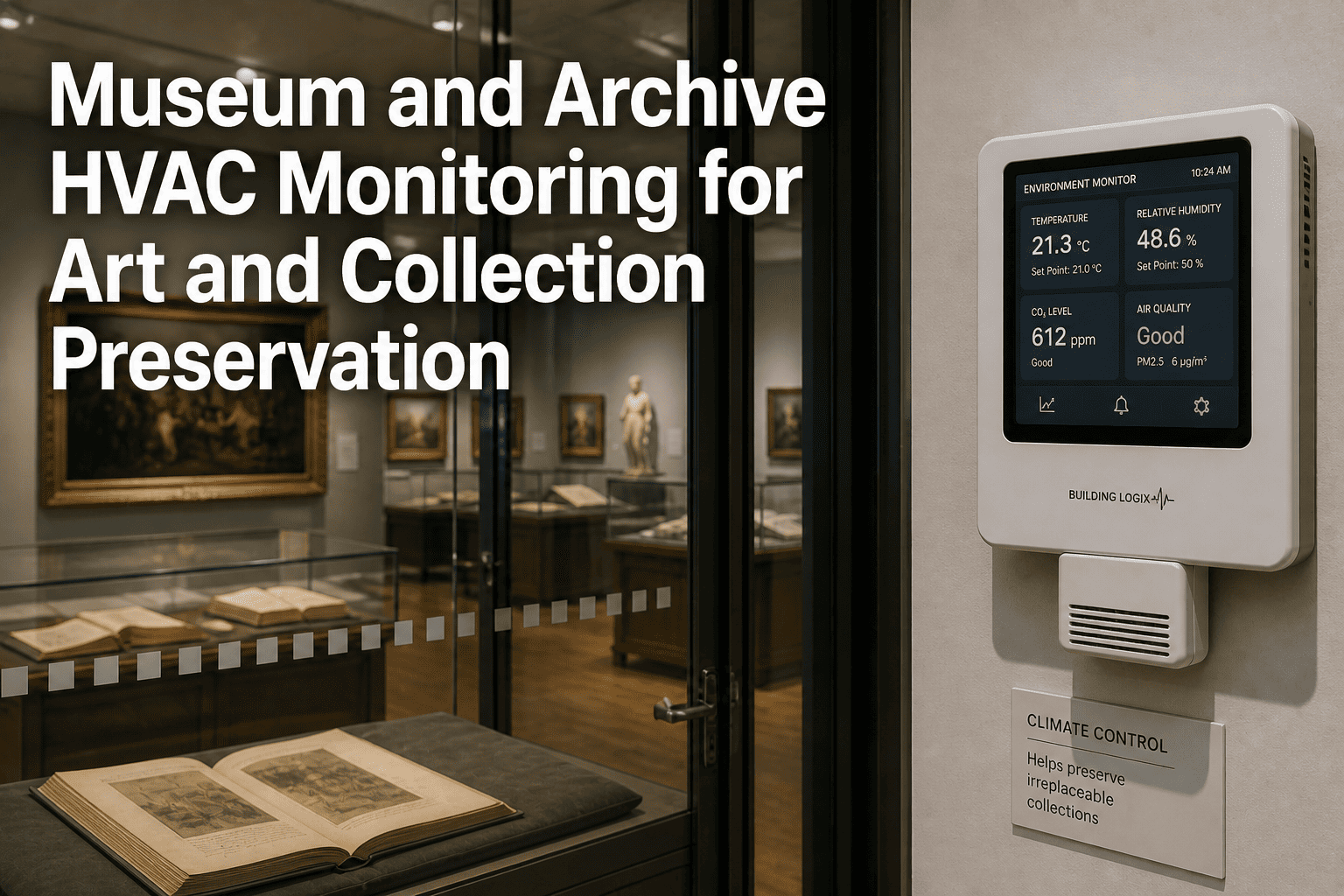
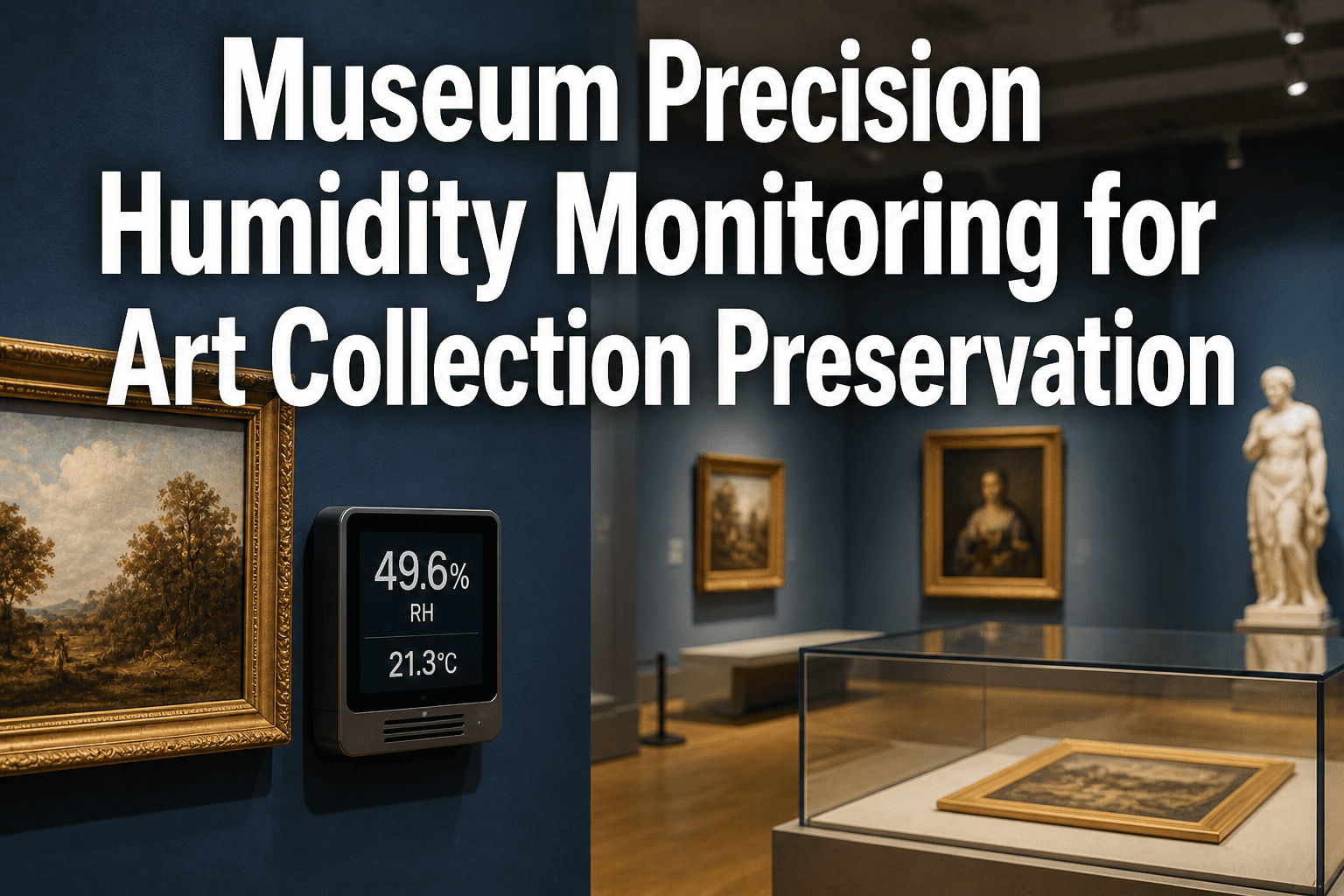
A painting that survived four centuries can be destroyed in four months by inconsistent humidity. A manuscript collection that outlasted wars and fires becomes brittle and unreadable when temperature swings exceed two degrees Fahrenheit on a regular basis. Museums and archives are not simply buildings with climate control — they are precision preservation environments where HVAC maintenance is collection stewardship. The difference between a well-maintained and a poorly maintained climate control system is not comfort. It is the survival or loss of irreplaceable objects. Sign up free to see how Oxmaint's asset management and environmental monitoring tools are built for institutions where tolerance for failure is zero.
±2°F
Temperature Tolerance
maximum allowable temperature fluctuation in most gallery and storage environments — tighter than any commercial building standard and impossible to achieve without active HVAC monitoring
±5%
Relative Humidity
maximum allowable RH swing for most mixed-media collections — humidity variation is the primary driver of dimensional change, cracking, and delamination in organic materials
65°F
Typical Target Temp
standard target temperature for general collection storage — lower temperatures slow chemical degradation in organic materials and reduce the rate of color fading in photographs and dyes
50%
Typical Target RH
standard relative humidity target for general mixed-media collections — deviations above 65% accelerate mold growth while drops below 35% cause irreversible shrinkage and cracking
Why Museum HVAC Maintenance Is a Different Category of Work
Standard commercial HVAC maintenance keeps people comfortable. Museum HVAC maintenance keeps artifacts alive. The equipment may look similar — air handlers, humidifiers, dehumidifiers, chillers, controls — but the performance requirement is categorically different. A ±5°F temperature swing in an office building generates a comfort complaint. In a gallery housing a 17th-century panel painting, it generates micro-cracking in the paint layer that accumulates with every cycle. Book a demo to see how Oxmaint structures asset management for precision HVAC environments.
Commercial Building Standard
Temperature tolerance
±5°F acceptable
RH tolerance
±15% acceptable
Failure consequence
Comfort complaints
PM priority
Scheduled intervals
Sensor calibration
Annual check
VS
Museum and Archive Standard
Temperature tolerance
±2°F required
RH tolerance
±5% required
Failure consequence
Permanent artifact damage
PM priority
Continuous verification
Sensor calibration
Quarterly NIST-traceable
The Four HVAC Asset Types That Determine Collection Safety
Museum and archive climate control systems share equipment categories with commercial buildings, but each asset class carries collection-specific failure modes and maintenance requirements that standard commercial schedules do not address. Knowing which component fails in which way — and what that means for the objects in the space — is the foundation of a preservation-quality PM program. Sign up free and build your museum asset registry in Oxmaint before the next seasonal transition.
01
Precision Humidification Systems
Steam humidifiers and ultrasonic systems maintain RH within the ±5% band that collection materials require. Scale buildup on heating elements reduces output and causes RH to drop — the most common cause of low-humidity damage events in museum storage. Bacterial growth in water tanks and distribution lines is both an equipment and an indoor air quality hazard in collection spaces.
PM Focus: Monthly scale inspection, quarterly tank sanitization, semi-annual element replacement assessment, continuous RH output monitoring
02
Dehumidification Equipment
During summer months and in humid climates, dehumidification is the active control mechanism that keeps RH below the 65% threshold where mold growth begins. Refrigerant-based dehumidifiers lose capacity as refrigerant charge drops and coils foul. Desiccant systems require rotor replacement and regeneration heat verification on strict schedules. A dehumidification failure in a high-humidity climate event can trigger visible mold on organic collection materials within 48 hours.
PM Focus: Quarterly refrigerant check, semi-annual coil cleaning, annual desiccant rotor inspection, continuous drain pan monitoring
03
Air Handling and Filtration Systems
Collection spaces require MERV-13 or higher filtration to exclude particulate matter that causes soiling of surfaces and contributes to chemical degradation. Filter loading increases in direct proportion to visitor traffic and building activity — a museum with 500 daily visitors will load filters at a fundamentally different rate than one with 50. Bypass around degraded filter banks delivers unfiltered air directly to collection surfaces, which is irreversible in its effects.
PM Focus: Monthly pressure differential check, filter replacement driven by pressure — not calendar, annual AHU coil cleaning, quarterly filter seating inspection
04
Environmental Monitoring Sensors
Temperature and humidity sensors are not HVAC equipment in the traditional sense — but they are the only mechanism by which a facility knows whether collection conditions are being maintained. Sensor drift is insidious: a sensor that reads 50% RH when the actual condition is 58% RH means the HVAC system is not controlling to the setpoint it believes it is controlling to. Quarterly calibration against NIST-traceable references is the minimum standard for collection-adjacent sensors.
PM Focus: Quarterly calibration verification, annual NIST-traceable reference check, continuous data logging with alarm thresholds, sensor replacement on drift exceedance
Asset Management Built for Precision Environments
Oxmaint tracks every humidifier, dehumidifier, AHU, and sensor in your collection environment — with calibration records, PM history, and alarm logs that document the care your collection receives.
Environmental Monitoring: The Difference Between Awareness and Documentation
Many museums monitor their environments. Far fewer document them in a way that is useful for conservation decisions, insurance claims, or accreditation review. The gap between having sensors and having an organized, searchable record of environmental history is where most institutions leave themselves exposed. When a damage event occurs — and in any institution operating long enough, one will — the ability to reconstruct the environmental history of a space is the difference between a defensible record and a liability. Book a demo to see Oxmaint's environmental monitoring log and how it integrates with HVAC maintenance records.
Continuous temp and RH logging
Provides the baseline record for any conservation assessment or damage investigation
Exceedance events with timestamps
Documents when conditions left the acceptable band — essential for conservation assessment after an event
Sensor calibration records
Validates that the logged data reflects actual conditions — critical for insurance and accreditation purposes
HVAC work order correlation
Links maintenance events to environmental data — shows whether a PM task or repair restored conditions to spec
Seasonal trend analysis
Identifies recurring seasonal vulnerabilities before they become collection damage events — the highest-value use of monitoring data
48hrs
time within which mold growth can begin on organic materials when RH exceeds 65% — the argument for continuous monitoring, not spot checks
0.5°F
typical sensor drift that develops within 12 months of installation without calibration — enough to cause the HVAC system to operate outside the ±2°F tolerance without triggering any alarm
100%
of AAM-accredited museums required to demonstrate documented environmental monitoring as part of the accreditation process — records are not optional
Zone-by-Zone Maintenance: Not All Spaces Require the Same Standard
A museum is not one environment — it is several. The requirements for open storage, gallery display, paper archives, photographic collections, and public access areas differ significantly, and a single maintenance protocol applied uniformly across all spaces either over-protects low-priority areas or under-protects critical ones. Effective museum HVAC maintenance requires a zone map that matches maintenance intensity to collection risk. Sign up and configure your zone-level asset tracking in Oxmaint today.
Permanent Collection Storage
65°F ± 2°F / 50% RH ± 5%
Continuous 24/7 monitoring with 1-hour alarm response threshold
Quarterly sensor calibration — NIST-traceable reference
Monthly humidification system inspection and water quality check
Redundant HVAC capacity required — no single point of failure
Consequence of failure: Irreversible artifact damage
Gallery and Exhibition Spaces
68°F ± 2°F / 50% RH ± 5%
Continuous monitoring with visitor load compensation
Quarterly sensor calibration, semi-annual AHU service
Filter replacement driven by pressure differential — not schedule
Seasonal setpoint review before high-occupancy periods
Consequence of failure: Display damage + visitor complaint
Paper and Photographic Archives
60°F ± 2°F / 45% RH ± 5%
Tighter RH control — paper and emulsions are most humidity-sensitive
Monthly dehumidifier performance verification
Quarterly condensate drain inspection and flush
Annual refrigerant charge check on dehumidification equipment
Consequence of failure: Emulsion lifting, paper cockle, mold
Public Lobbies and Transition Spaces
70°F ± 4°F / 50% RH ± 10%
Standard commercial HVAC maintenance intervals apply
Vestibule air curtains — quarterly motor and control inspection
Monitoring focused on preventing infiltration into collection zones
Annual energy performance review — largest HVAC load area
Consequence of failure: Visitor comfort + infiltration risk
Environmental Monitoring
Every Zone. Every Sensor. Every Calibration Record.
Oxmaint links environmental monitoring data to HVAC asset records and maintenance work orders — giving institutions a single documented record of how every space was maintained.
Sign up free or
book a demo to see the full environmental monitoring workflow.
±2°F
temperature precision maintained with active monitoring and PM documentation
3x
faster audit and accreditation response with digital maintenance records vs. paper logs
100%
traceable calibration history per sensor — defensible in any conservation review
Seasonal Transitions: The Highest-Risk Period for Collection Environments
Most HVAC-related collection damage in museums does not happen during steady-state operation — it happens during seasonal transitions when the system shifts between heating and cooling modes, when outdoor humidity levels change rapidly, and when HVAC equipment that has been idle for months is brought back into service. A humidifier that sat unused over summer may have scale buildup, bacterial contamination, or a failed element that is not discovered until it is needed in October. A proactive pre-season inspection protocol eliminates these transition-period risks before they become collection events.
Pre-Heating Season (September)
Full inspection and cleaning of all humidification systems — scale removal, tank sanitization, element check
Calibration verification of all collection-area temperature and RH sensors before heating loads begin
Heating coil and heat exchanger inspection on all collection-zone AHUs
Setpoint review — collection vs. public area transition setpoints for fall conditions
Pre-Cooling Season (April)
Dehumidification system startup inspection — refrigerant charge, coil condition, drain pan and line flush
Chilled water system inspection before first cooling demand — coil condition, valve operation, controls
Air curtain and vestibule seal inspection before high-humidity outdoor conditions arrive
Filter replacement in all collection-zone AHUs — start cooling season with clean media
Pre-Season Inspections. Automated. Never Missed.
Oxmaint's preventive maintenance engine generates pre-season inspection work orders automatically — humidifier startup in September, dehumidifier startup in April, sensor calibration every quarter. No seasonal transition falls through the cracks.
Sign up free to configure your museum's seasonal PM calendar, or
book a demo to see how collection-environment scheduling works.
48hrs
maximum window before RH exceedance above 65% causes visible mold on organic collection materials
3x
faster accreditation and insurance audit response with digital environmental and maintenance records
Zero
acceptable missed pre-season inspections in a collection environment where failure means permanent loss
Your Collection Deserves Maintenance Documentation as Precise as Your Environmental Standards
Oxmaint's asset management and environmental monitoring platform gives museums and archives the structured PM tracking, calibration records, and zone-level documentation that precision climate control requires — and that accreditation bodies, conservators, and insurers expect to see.
Zone-Level Asset Registry
Sensor Calibration Record Tracking
Automated Seasonal PM Scheduling
Environmental Exceedance Logging
Frequently Asked Questions
What temperature and humidity tolerances do museums actually require for collection preservation?
The widely accepted standard for general mixed-media collections is 65°F (±2°F) and 50% relative humidity (±5%). These tolerances are far tighter than commercial HVAC systems are typically designed to maintain and require active monitoring, precision equipment, and a disciplined maintenance program to achieve consistently. Paper and photographic archives often require slightly lower temperatures (around 60°F) and lower RH targets (around 45%) to slow chemical degradation. Specific collection types — metals, ethnographic materials, modern plastics — may have different optimal ranges. The ±2°F and ±5% RH targets represent the performance floor, not a suggestion. Institutions that cannot document consistent performance within these bands risk collection damage with every seasonal transition and every HVAC maintenance failure.
Sign up free to begin tracking your environmental performance against these targets.
How often should humidity sensors in museum collection spaces be calibrated?
Quarterly calibration verification is the minimum standard for sensors in direct collection spaces — permanent storage, active display galleries, and archive rooms. Annual calibration is insufficient because humidity sensors drift meaningfully within a 12-month period, and a sensor that drifts by 5% RH between calibration events can cause the HVAC system to operate outside the ±5% RH tolerance band without triggering any alarm. Calibration should be performed using a NIST-traceable reference standard, and the calibration record — date, technician, reference instrument serial number, pre-calibration reading, post-calibration reading — should be retained in a searchable maintenance record. Public lobby sensors and non-collection spaces can follow standard commercial annual calibration intervals.
Book a demo to see how Oxmaint tracks calibration records per sensor with full audit trail.
What causes the most HVAC-related collection damage in museums?
The two most common causes of HVAC-related collection damage are humidification system failures in winter (causing RH to drop below the tolerance band and inducing shrinkage and cracking in organic materials) and dehumidification failures in summer (causing RH to rise above 65%, which accelerates mold growth on all organic materials within 48 hours). Both failure modes share a common root cause: inadequate preventive maintenance that allows equipment degradation to go undetected until the system fails to maintain setpoint. Scale buildup on humidifier elements, refrigerant loss in dehumidifiers, and filter bypass in AHUs are the specific maintenance failures most commonly linked to collection damage events. All three are detectable and preventable with a structured PM program and continuous environmental monitoring.
How does Oxmaint support environmental monitoring for museum HVAC systems?
Oxmaint links environmental monitoring to the HVAC asset management and work order system, so each sensor has an associated asset record containing its calibration history, location, acceptable range parameters, and linked maintenance work orders. When a PM task is completed on a humidifier or AHU serving a collection space, the work order records the environmental conditions before and after the task — creating a documented link between maintenance activity and environmental performance. Calibration records are stored per sensor with technician, date, reference standard, and readings. The full environmental and maintenance history for any zone is accessible for conservator review, accreditation assessment, or insurance documentation.
Sign up free to configure your first collection zone in Oxmaint.
What maintenance documentation do accreditation bodies expect from museum HVAC programs?
American Alliance of Museums (AAM) accreditation and most professional museum standards bodies expect institutions to demonstrate ongoing, documented environmental monitoring — not just the presence of monitoring equipment. This means continuous temperature and RH logs for all collection spaces, documented calibration records for all sensors, maintenance records demonstrating systematic preventive maintenance on HVAC equipment serving collection areas, and evidence that exceedance events (conditions outside the acceptable band) are detected, documented, and responded to. Paper-based maintenance records typically cannot provide this level of documentation without significant manual effort at review time. Digital systems that generate this documentation automatically as a byproduct of normal operations are the practical standard for institutions seeking or maintaining accreditation.
Book a demo to see how Oxmaint generates accreditation-ready documentation.
How should museums handle HVAC maintenance during active exhibitions with loan objects?
Loan agreements for significant works typically include specific environmental requirements — often stricter than the borrowing institution's baseline standard — and may require continuous environmental monitoring with data made available to the lending institution. Facilities teams must treat the loan exhibition period as a heightened-maintenance window: increased sensor verification frequency, no deferred maintenance on HVAC equipment serving the exhibition space during the loan period, and documented environmental logs that can be transmitted to the lender at the end of the loan. Any HVAC work that could temporarily affect environmental conditions should be scheduled before installation or after de-installation, and the maintenance record should document the environmental impact window of any service that affects collection-area conditions. Building a workflow around loan exhibitions in a digital maintenance system ensures these requirements do not depend on individual staff memory.