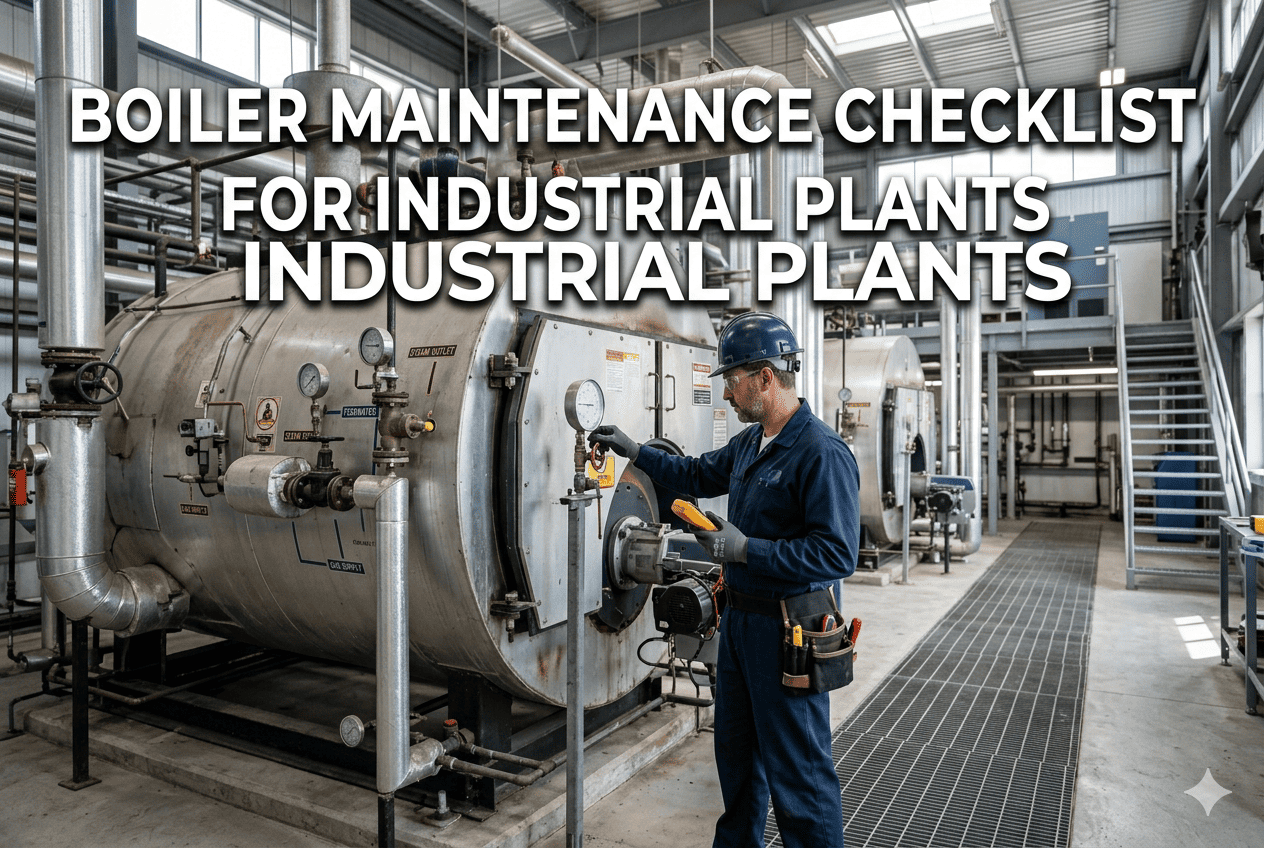
Boilers are the workhorses of manufacturing — generating the steam that drives heat treating, sterilization, drying, chemical reactions, and dozens of other critical processes. Yet the NBBI reports that poor maintenance and defective low water cutoffs remain the leading cause of boiler incidents across industrial facilities. This complete inspection checklist gives your plant maintenance team every task they need, organized by frequency from shift-start operator rounds through annual certified overhauls, to keep your boilers safe, efficient, and compliant. Schedule a consultation to digitize this entire checklist inside Oxmaint.
Key Boiler Components Covered in This Checklist
Before running through the inspection tasks, your team should be familiar with the core boiler components each check targets. Every item in this checklist maps directly to one of these critical systems — and skipping any one of them creates a path to failure.
Gauge Glass & Water Level Controls
Visual water level indication plus LWCO and ALWCO devices that shut the burner down if water drops below safe levels
Burner & Combustion System
Burner assembly, flame sensors, igniter, diffuser, fuel valves, air dampers, and linkages that control combustion
Pressure & Safety Devices
Safety relief valves, pressure gauges, operating controls, limit controls, and pressure switches
Heat Transfer Surfaces
Fire tubes or water tubes, tube sheets, refractory, and insulation where combustion heat transfers to water
Feedwater & Condensate System
Feedwater pumps, condensate receiver, deaerator, water softener, chemical feed system, and blowdown separator
Flue & Venting System
Flue gas vent piping, stack, combustion air intake, breeching, and draft controls
Turn every checklist item into a trackable work order. Oxmaint auto-schedules inspections, sends push notifications to technicians, and logs every completed task with timestamps and photos.
Daily Boiler Inspection Checklist
Perform these checks at the start of every operating shift. Follow lockout/tagout procedures where applicable. Record all readings in the boiler room log and compare to previous entries to spot developing trends.
Weekly Boiler Inspection Checklist
Performed by maintenance technicians. Weekly tasks require more detailed attention to burner mechanics, control systems, and fuel delivery — components that drift out of spec gradually between monthly services.
Never miss a weekly boiler check again. Oxmaint auto-generates work orders every week and sends push notifications directly to your technicians' mobile devices.
Monthly Boiler Maintenance Checklist
Monthly tasks address the slow-building problems that erode boiler performance — soot accumulation on heat transfer surfaces, water chemistry drift, control calibration loss, and sediment buildup. Create your free Oxmaint account to set up automated monthly work orders with step-by-step instructions.
Quarterly / Seasonal Inspection Checklist
Seasonal changes affect boiler operation significantly — condensation risks in spring, idle-period protection in summer, startup preparation in fall, and peak-load demands in winter. These quarterly tasks address components that need deeper inspection than monthly service provides.
Seasonal inspections need advance planning. Oxmaint auto-generates quarterly work orders with lead-time reminders, parts lists, and contractor scheduling built in.
Annual Boiler Inspection & Overhaul Checklist
Schedule the annual overhaul during the off-season (June–September for heating boilers). This requires a full shutdown, draining, and internal access. An independent NBBI-certified inspector must conduct the internal inspection per National Board Inspection Code (NBIC) standards.
Documentation & Compliance Checklist
Every inspection task above must be documented. Regulatory bodies, insurance inspectors, and OSHA auditors require proof that your boiler maintenance program is more than a plan on paper — it must be a living, verifiable record.
Turn This Checklist Into Automated Work Orders
Oxmaint converts every inspection item on this page into scheduled, trackable work orders. Your technicians get mobile checklists with photo documentation. Your managers get real-time completion dashboards. Your auditors get instant access to complete boiler maintenance history — no filing cabinets required.
Frequently Asked Questions
How often should a manufacturing plant boiler be inspected?
Manufacturing boilers need daily operator rounds every shift, weekly mechanical checks by technicians, monthly service and water chemistry testing, quarterly seasonal deep inspections, and a full annual overhaul with NBBI-certified internal inspection. Boilers over 10 years old or those with a history of issues may need quarterly professional inspections as well.
Sign up for Oxmaint to automate every interval.
What is the most critical daily boiler check?
The LWCO blowdown test. The National Board of Boiler and Pressure Vessel Inspectors identifies defective low water cutoffs as a primary cause of boiler incidents. This two-minute test confirms the burner will shut off if water drops below minimum level — preventing the most dangerous failure mode a boiler can experience.
Why does soot buildup matter so much?
Soot is an insulator. Just 1/8-inch of soot on fire tube surfaces can increase fuel consumption by up to 8% because heat cannot transfer efficiently to the water. Monthly fireside cleaning is one of the highest-ROI tasks on any boiler maintenance checklist.
What happens if we skip the annual NBBI inspection?
In most states, skipping the certified annual inspection is a regulatory violation resulting in fines, forced shutdown orders, and voided insurance coverage. Your insurer typically requires documented proof of annual inspection before processing any boiler-related claim.
Schedule a consultation to discuss compliance documentation.
How can a CMMS improve boiler maintenance at our plant?
CMMS platforms like Oxmaint automate scheduling so inspections are never missed, standardize procedures with digital checklists, require photo documentation for accountability, maintain complete searchable equipment histories, and generate audit-ready compliance reports instantly. Plants using CMMS report PM completion rates above 95% compared to roughly 60% with paper-based tracking.