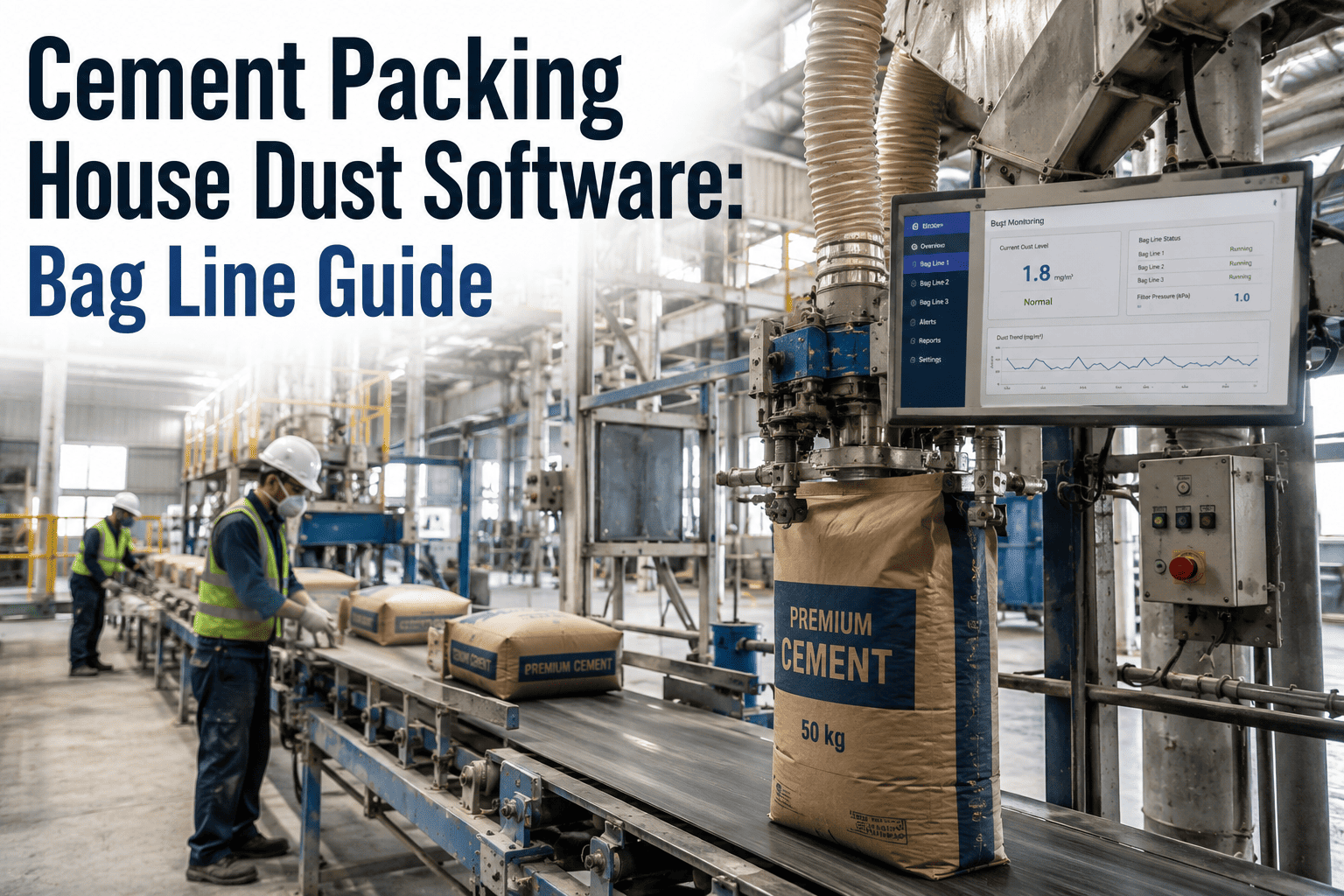
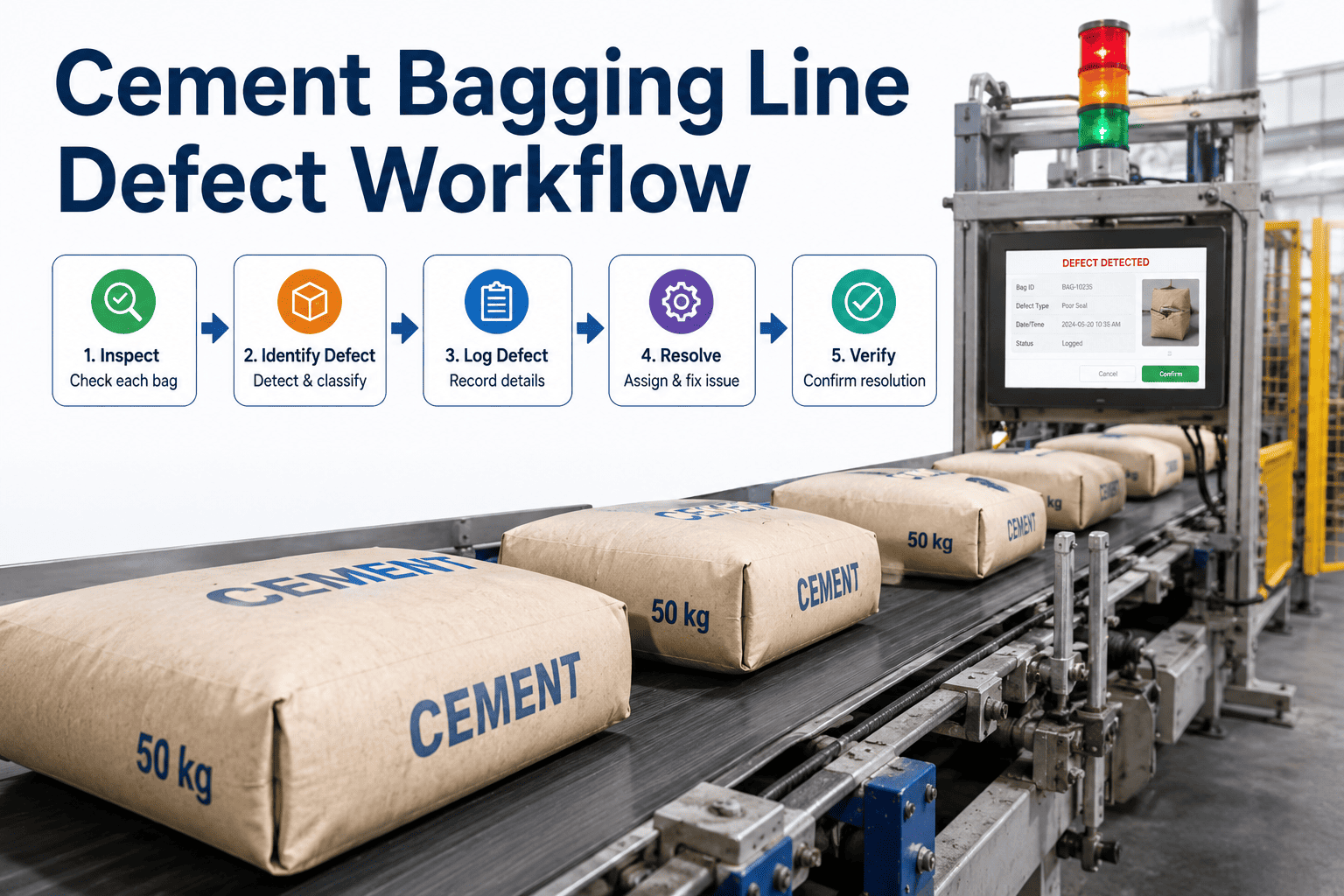
Cement packing plants are the final link in the production chain — and the most overlooked from a maintenance standpoint. Industry data shows that unplanned packer downtime reduces dispatch capacity by 15–25% on peak days, while miscalibrated bag fillers cause filling weight deviations that trigger batch rejections, customer complaints, and regulatory non-compliance simultaneously. On a 5,000 TPD plant running three packing lines, a single packer failure during peak dispatch hours costs more in lost throughput than the entire month's PM budget for that line. Structured preventive maintenance across packers, palletizers, conveyors, and bag counters eliminates this pattern systematically. Book a demo to see how OxMaint manages packing plant maintenance across cement operations.
Packing Plant Performance: The Numbers That Drive Decisions
Compliance Standards by Region: Packing Plant and Dispatch Operations
Cement packing operations intersect with weights and measures regulations, occupational safety mandates, and environmental dust emission standards that vary significantly by region. OxMaint automates inspection scheduling, calibration records, and compliance documentation — giving your team audit-ready records without manual tracking.
| Region | Key Frameworks | OxMaint Coverage |
|---|---|---|
| India | Legal Metrology Act 2009, BIS IS 269 / IS 1489, Factories Act 1948, CPCB dust norms | Packer calibration scheduling, statutory inspection calendars, weight audit documentation |
| USA | NIST HB 44 Weights and Measures, OSHA 29 CFR 1910 (dust, machinery), EPA particulate standards | Digital inspection audit trails, safety PM scheduling, LOTO work order controls |
| Germany | Eichrecht (Calibration Law), BetrSichV, DIN EN 450, TA Luft dust emission standards | Calibration interval tracking, mandatory test documentation, certification record archiving |
| UAE | ESMA UAE.S metrological standards, Civil Defence codes, DEWA energy efficiency, Estidama | Multi-site compliance dashboards, real-time monitoring, digital inspection records |
| UK | Weights and Measures Act 1985, PSSR 2000, HSE COSHH dust regulations, ESOS | Calibration inspection scheduling, ESOS audit documentation, compliance report exports |
| Canada | Weights and Measures Act (Measurement Canada), CSA Z432 machinery safety, Provincial OH&S | Centralised inspection records, multi-site PM compliance dashboards, calibration alert scheduling |
OxMaint delivers automated packer calibration scheduling, inspection documentation, and compliance audit trails across every region — so your team has accurate records without manual calendar management.
What Is Packing Plant Maintenance in Cement Operations?
Packing plant maintenance is the structured discipline of keeping cement bagging, filling, palletizing, and dispatch equipment running at rated capacity and accuracy — without unplanned stoppages that interrupt the final stage of production. It covers everything from rotary packer spout seals and impeller wear to palletizer chain tension, bag counter sensor calibration, and dust suppression filter integrity. Reactive maintenance in packing plants creates a specific failure pattern: equipment runs until failure, rejection rates spike, dispatch queues build, and the cost compounds downstream. Book a demo to see how OxMaint structures packing plant PM across multi-line cement facilities.
Packer Preventive Maintenance
Scheduled servicing of rotary packers, impeller assemblies, spout seals, filling heads, and air systems on running-hours intervals — not failure triggers. Includes spout seal replacements, impeller blade inspection, and filling accuracy verification at defined milestones.
Calibration & Accuracy Management
Systematic bag weight calibration across all filling heads on a defined schedule. Every calibration event logged with before/after measurements, technician sign-off, and deviation trend tracking. Weight compliance maintained within legal metrology tolerances at all times.
Palletizer & Conveyor Upkeep
Chain tension checks, gripper pad replacement, servo drive inspection, and belt conveyor alignment services scheduled by cycle count and running hours. Palletizer availability directly determines dispatch throughput — deferred service here creates the most visible bottlenecks.
Dispatch Tracking & Performance
Real-time monitoring of bags per hour, rejection rates, stoppage frequency, and shift-level dispatch output against targets. Data logged per line, per shift, and per packer — enabling root-cause analysis when throughput drops and accountability for production shortfalls.
See OxMaint Running Packing Plant PM Live
Our team will walk you through actual packer PM schedules, calibration work orders, and dispatch performance dashboards from live cement plant deployments — in under 30 minutes.
Four Packing Plant Problems Driving Dispatch Losses
The same failure patterns repeat across cement packing lines worldwide — regardless of packer brand, plant capacity, or geography. These four problems account for the majority of avoidable downtime, quality rejections, and dispatch throughput losses in the industry.
Packer Spout and Seal Degradation
Rotary packer spout seals, rubber sleeves, and bag clamping mechanisms wear continuously under high-cycle operations. A single packing line running 1,800–2,400 bags per hour puts extreme cyclic load on filling head components. When seals fail, cement dust contamination, bag breakage, and filling inaccuracy cascade simultaneously — stopping the line during peak dispatch windows.
Bag Weight Drift and Calibration Gaps
Impeller wear, load cell drift, and pneumatic pressure fluctuations cause gradual filling weight deviation. Plants operating without scheduled calibration routinely discover 100–300g overfill per bag — on a 1,000-bag-per-hour line, that is 100–300 kg of cement given away every hour. Underfill carries legal metrology penalty risk. Neither is visible without a calibration programme.
Palletizer Downtime During Peak Dispatch
Palletizer chain elongation, gripper wear, and sensor misalignment accumulate silently. Plants that skip chain tension checks and gripper pad replacements face palletizer jams at the worst possible time — when bulk trucks are queued and loading pressure is highest. A two-hour palletizer stoppage in peak season can trigger customer penalties and fleet demurrage charges simultaneously.
No Dispatch Visibility or Performance Benchmarking
Without real-time dispatch tracking, plant managers cannot identify which packing line is running at 72% of rated capacity versus 95%, which shift consistently under-delivers, or whether a throughput decline is equipment-driven or demand-driven. Monthly production reports confirm what happened — they provide no data to prevent it.
How OxMaint Structures Packing Plant Maintenance
OxMaint replaces reactive packing line management with a structured framework that drives preventive action before downtime events occur. Each step compounds value as equipment data accumulates across packer assets. Book a demo to walk through the full framework with your plant's packing line asset classes.
OxMaint Platform: Built for Cement Packing Line Operations
Each module addresses a specific failure point in packing plant operations. Together they form a closed loop where every PM work order feeds packer condition data, every calibration record refines the maintenance schedule, and every dispatch performance reading drives accountable corrective action. Book a demo to walk through each module with live packing plant data.
Ready to Eliminate Packing Line Downtime?
OxMaint deploys across a cement plant's packing operations in under 60 days. Start with the asset register, activate PM scheduling, and begin building the dispatch performance data that drives monthly throughput improvements. Book a personalised 30-minute demo — your packing line data, our platform.
Reactive vs. Optimised: The Packing Plant Performance Gap
The performance gap between unmanaged and structured packing plant maintenance compounds every operating year. These six factors quantify what structured management delivers — and what reactive programmes cost cement plants in throughput, quality, and dispatch reliability.
Packing Plant Performance Benchmarks
These performance improvements represent average results from cement packing operations that moved from reactive maintenance to structured OxMaint-driven programmes within 18 months of deployment. Results vary by packer model, number of lines, and baseline condition.
Your Packing Plant Baseline Starts Here
OxMaint delivers measurable packing line throughput and maintenance improvements within 60–90 days of deployment. Book a 30-minute demo to map your current packing operations against these benchmarks.
Packing Plant Asset Lifecycle Profiles
Cement packing plant assets have distinct lifecycle characteristics determined by bag throughput cycles, cement abrasion, and dust exposure. Understanding the replacement cost and service requirements of each major asset class is the foundation of any capital-efficient maintenance strategy. Book a demo to see how OxMaint tracks lifecycle status across your packing plant equipment.
ROI From Structured Packing Plant Maintenance
Frequently Asked Questions: Cement Packing Plant Maintenance
QWhat is the correct PM interval for rotary packer spout seals?
QHow often should filling head calibration be performed on cement packers?
QWhat causes palletizer failures during peak dispatch hours?
QHow does packing plant maintenance compliance differ across regions?
QHow long does it take to implement OxMaint across a packing plant?
QCan OxMaint track bag counter accuracy alongside maintenance records?
Continue Reading: Cement Plant Maintenance Resources
Explore these in-depth guides to build a complete picture of maintenance strategy, operational efficiency, and equipment reliability for cement manufacturing.
Start Optimising Your Packing Plant Today
OxMaint deploys across your cement packing operations in 60 days — no heavy implementation, no long onboarding. Start with the packing asset register, activate PM scheduling, and begin building the dispatch performance data that drives monthly throughput improvements. Book a 30-minute demo — your plant data, our platform, zero obligation.