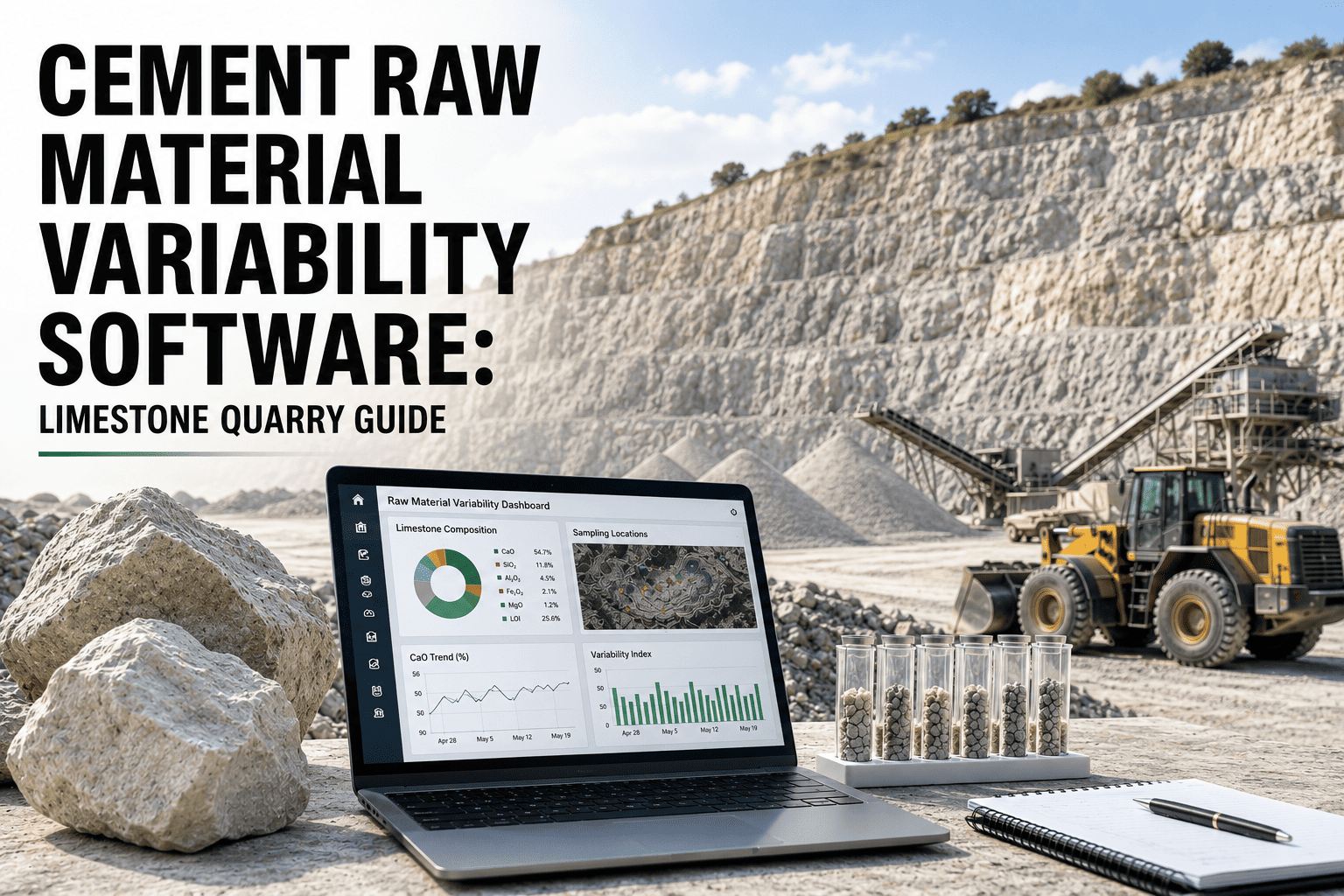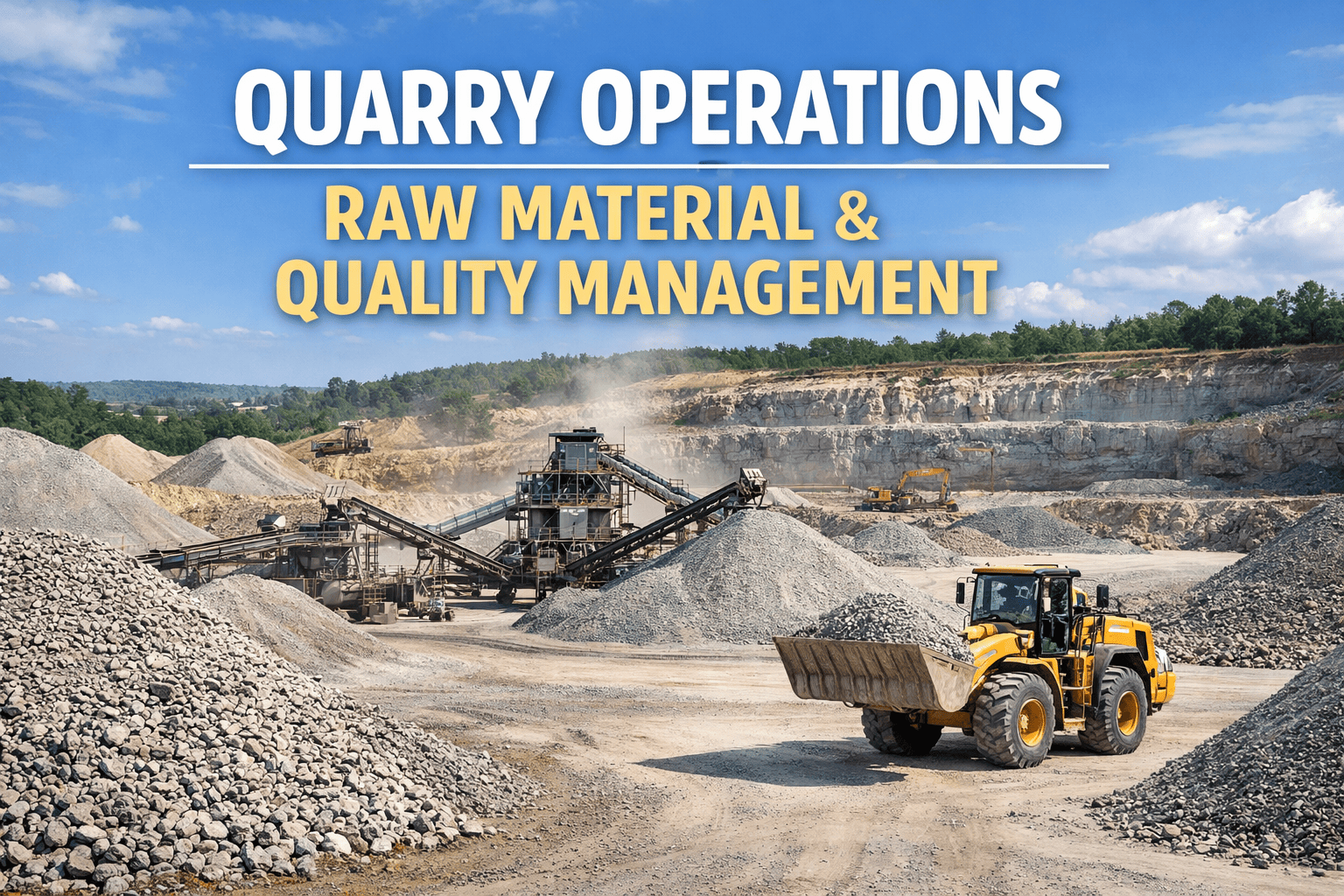
Limestone accounts for 78–82% of total raw material feed in integrated cement plants — yet quarry operations remain the least digitised stage of the production chain. Inconsistent CaO content from uncontrolled extraction forces kiln operators to chase raw mix chemistry corrections that inflate specific heat consumption by 5–15 kcal/kg clinker, and a primary crusher breakdown translates directly into kiln feed starvation within 4–8 hours of stockpile depletion. Every tonne of off-spec limestone that enters the raw mill compounds downstream energy waste, refractory stress, and clinker quality variance. Book a demo to see how Oxmaint structures quarry asset management and quality monitoring across integrated cement operations.
Quarry Operations in Cement Manufacturing: Why Raw Material Quality Drives Everything Downstream
Compliance Standards by Region: Quarry and Raw Material Operations
Quarry operations in cement manufacturing intersect with mine safety, environmental impact, explosives licensing, equipment inspection, and dust emission regulations that vary significantly by region. Oxmaint automates inspection scheduling, equipment certification tracking, and audit documentation across every compliance framework listed below — giving quarry and plant teams accurate records without manual calendar management.
| Region | Key Frameworks | Oxmaint Coverage |
|---|---|---|
| USA | MSHA Part 56/57, OSHA 29 CFR 1910, EPA NESHAP, RCRA | Mine safety inspection scheduling, equipment certification tracking, digital audit trail exports |
| UAE | Civil Defence codes, SASO standards, Ministry of Energy quarry permits | Real-time equipment inspection records, multi-site compliance dashboards, permit expiry alerts |
| India | Mines Act 1952, DGMS directives, Environment Protection Act, CPCB dust norms | PM scheduling for statutory equipment, DGMS inspection calendar, emission monitoring integration |
| Germany | BBergG Mining Act, BImSchG emissions, DGUV safety rules, BetrSichV | Mandatory inspection documentation, test record archiving, certification tracking for quarry plant |
| UK | Quarries Regulations 1999, HSE Guidance, RIDDOR, Planning conditions | Digital incident logging, blasting record management, equipment thorough examination scheduling |
| Indonesia | SNI standards, Ministry of Industry regulations, ESDM mining rules, KLHK environment | Multi-site compliance dashboards, quarry equipment PM records, centralised certification management |
Oxmaint delivers inspection scheduling, equipment certification management, and compliance audit trails for quarry operations across every region above — your team gets accurate records without building manual tracking systems.
What Is Quarry Operations and Raw Material Quality Management in Cement Production?
Quarry operations management is the systematic approach to controlling limestone extraction, equipment reliability, and raw material quality from the blasting face through to the raw mill feed — ensuring the kiln receives a consistent, on-spec raw mix every operating hour. In cement manufacturing, where a single percentage point shift in CaO directly affects clinker quality and kiln fuel consumption, structured quarry management is not a support function — it is a production reliability discipline. Book a demo to see Oxmaint's quarry asset tracking and quality monitoring running on live cement plant data.
Extraction Planning
Systematic blast design and face sequencing based on geological grade mapping. Extraction zones planned to blend high and low CaO faces — delivering consistent feed chemistry to the primary crusher rather than running single-grade blocks that force chemistry corrections downstream.
Raw Material Quality Control
Continuous sampling from cross-belt analysers, stockpile composite samples, and crush product — tracked against CaO, SiO2, Al2O3, Fe2O3, and MgO targets. Grade data logged per extraction zone and linked to raw mix optimisation setpoints to eliminate chemistry-driven kiln upsets.
Fleet and Equipment Management
Preventive maintenance scheduling for drills, primary crushers, haul trucks, and stockyard reclaimers — all tracked against running hours, tonnage throughput, and component wear rates. Equipment availability directly determines buffer stockpile levels and kiln feed continuity.
Digital Production Tracking
Real-time quarry production data — blast tonnage, crusher throughput, stockpile volumes, and equipment utilisation — connected to plant-level CMMS records. Every work order, quality sample, and equipment failure logged against a digital asset record for traceability and capital planning.
See Oxmaint Running on Quarry and Raw Material Assets
Our team will walk you through a live demo with quarry asset hierarchies, extraction zone quality tracking, crusher PM schedules, and fleet management dashboards built for cement manufacturing — in under 30 minutes.
Four Quarry Management Problems Costing Cement Plants Output and Quality
The same structural failures repeat across cement plant quarry operations worldwide. These four problems are responsible for the majority of raw mix variability, unplanned kiln stoppages, and avoidable capital losses in raw material operations.
Grade Variability Causing Raw Mix Chemistry Swings
Without systematic extraction planning and face-level grade mapping, quarry teams mine whatever face is most accessible — not the face that best serves the raw mix target. CaO swings of 3–5% between blast batches force continuous raw mill feed corrections that increase specific heat consumption, destabilise kiln flame, and accelerate refractory wear in the burning zone.
Crusher and Quarry Equipment Breakdowns Without Buffer
Primary jaw crushers and haul truck fleets are maintained reactively in most cement quarries — oil changes, liner replacements, and bearing checks happen after failure, not before it. A primary crusher stop with less than 8 hours of buffer stockpile initiates an unplanned kiln shutdown. The cost is not just the repair — it is $50,000–$150,000 per day in lost clinker production added to the emergency procurement premium.
No Real-Time Visibility Into Stockpile Quality or Volume
Most cement quarries track stockpile volume and chemistry through weekly manual surveys logged on spreadsheets. By the time chemistry data reaches the raw mill operator, the blend it reflects is already partially consumed. Decisions to add corrective materials are made hours behind actual conditions — compounding the chemistry errors that started at the quarry face.
Blasting Schedules Disconnected from Plant Demand
Blast scheduling is managed independently of kiln production targets in the majority of cement plants. Blasts are planned around quarry logistics — drill rig availability, explosive delivery schedules, statutory notification windows — not against the plant's weekly clinker production requirement. The result is chronic mismatches between quarry output rates and kiln feed demand, creating avoidable stockpile shortages and fleet over-utilisation peaks.
How Oxmaint Structures Quarry Operations and Raw Material Management
Oxmaint connects quarry asset management, equipment PM, and raw material quality tracking into a single platform — giving cement plants the visibility and control needed to run quarry operations as a reliable supply function rather than a reactive extraction activity. Book a demo to walk through the full quarry management framework with your plant's asset classes and production targets.
Ready to Connect Quarry Operations to Kiln Reliability?
Oxmaint deploys across quarry and raw material operations in 60–90 days. Start with the crusher and fleet asset register, activate PM scheduling, and begin building the quality tracking data that drives raw mix consistency. Book a personalised 30-minute demo — your quarry data, our platform, zero obligation.
Oxmaint Platform: Purpose-Built for Quarry and Raw Material Operations in Cement Plants
Each module addresses a specific operational failure point in cement plant quarry management. Together they form a closed-loop system where every work order feeds equipment condition data, every quality reading informs blending decisions, and every asset record contributes to the capital plan. Book a demo to walk through each module with quarry and raw material asset data from a live cement plant.
Manual Quarry Management vs. Oxmaint: The Performance Gap in Cement Raw Material Operations
Quarry Operations Performance Benchmarks: Cement Plants Using Structured Digital Management
These performance improvements represent average results from cement plants that transitioned from manual quarry management to structured Oxmaint-driven programmes within 24 months of deployment.
Your Quarry Baseline Starts Here
Oxmaint delivers measurable quarry management improvements within 60–90 days of deployment. Book a 30-minute demo to map your current quarry operations baseline against industry benchmarks and build a business case for your operations leadership.
Critical Asset Lifecycle Profiles: Quarry Equipment in Cement Manufacturing
Quarry equipment lifecycle requirements vary significantly across the asset classes that drive the most capital risk in raw material operations. Understanding service life, component cycles, and CMMS tracking needs for each major asset class is the foundation of an effective quarry maintenance strategy. Book a demo to see how Oxmaint tracks quarry equipment lifecycles for integrated cement plant operations.
Primary Jaw Crusher
Liner wear tracked by cumulative throughput tonnage, not calendar time. Replacement work orders auto-generated as tonnage threshold is approached. Power draw monitoring detects crushing efficiency decline before product oversize appears in raw mill feed quality data.
Rotary Drill Rig
Drill bit consumption tracked per metres drilled — replacement triggered before penetration rate decline causes blast pattern deviations that generate oversized ROM. Engine and compressor PM scheduled by running hours. Major overhaul needs surfaced 12–18 months ahead in capital plan.
Heavy Haul Truck Fleet
Fleet-wide PM tracked by individual operating hours — oil changes, filter replacements, hydraulic inspections, and brake checks auto-scheduled per truck. Tyre hours tracked per axle position for rotation planning. Fleet availability KPI monitored daily against 88% target for kiln feed continuity.
Limestone Stockyard and Reclaimer
Reclaimer bucket and chain wear logged at monthly inspection intervals against replacement threshold curves. Belt conveyor condition tracked by operating hours — splice inspections and cover wear measurements linked to remaining useful life calculations. Stockpile volume data connected to reclaimer utilisation records for blending sequence planning.
ROI From Structured Quarry Operations Management in Cement Plants
Frequently Asked Questions: Quarry Operations and Raw Material Quality Management
QHow does quarry grade variability directly affect kiln fuel consumption?
QWhat is the right buffer stockpile size to protect kiln continuity from quarry disruptions?
QWhich quarry equipment compliance frameworks apply globally to cement manufacturing operations?
QHow long does it take to deploy Oxmaint across quarry and raw material operations?
QCan Oxmaint connect quarry quality data to the raw mill optimisation system?
QHow does CMMS-based jaw crusher liner management reduce total maintenance cost?
Continue Reading: Cement Plant Operations and Maintenance Resources
Explore these in-depth guides to build a complete picture of maintenance strategy, supply chain management, and operational performance across cement manufacturing.
Start Digitalising Your Quarry Operations Today
Oxmaint deploys across quarry and raw material operations in 60–90 days with no heavy implementation fees and no long onboarding programme. Start with your crusher and fleet asset register, activate PM scheduling, and begin building the raw material quality tracking that drives consistent kiln feed chemistry. Book a 30-minute demo — your quarry data, our platform, zero obligation.