Asset Lifecycle Management for Facility Managers: Acquisition to Disposal
By John Polus on March 25, 2026
Facility managers running asset tracking on spreadsheets, handwritten tags, and informal logs are not managing assets. They are managing the paperwork that describes assets, weeks after the events that generate it. A technician arriving at an unlabelled piece of equipment without maintenance history cannot confirm the last PM date, the correct lubricant specification, or whether a recurring fault has been logged before. That information gap costs time on every work order and compounds into inaccurate MTBF data, missed warranty claims, and CapEx decisions made without condition history. Barcode, QR code, and RFID asset tracking eliminates that gap. Every asset becomes scannable, its full history accessible in seconds on a mobile device, and every work order automatically attributed to the correct asset record. Book a demo to see how Oxmaint digitizes asset tracking across your facility inventory.
BlogAsset Tracking with Barcode, QR Codes and RFID: Digitizing Facility InventoriesAsset and Inventory Management · Core · P1 · 8 min read
40%
reduction in work order closure time when technicians scan assets directly rather than searching asset lists manually
$3,200
average annual cost of a single untracked asset due to missed PM, duplicate procurement, and lost warranty claims
68%
of facility managers report inaccurate asset inventories that do not reflect current equipment location or condition
14 days
typical go-live time for a full facility asset register with QR code scanning active across all tracked equipment in Oxmaint
QR Code, Barcode, and RFID Asset Tracking Integrated into Your CMMS from Day One
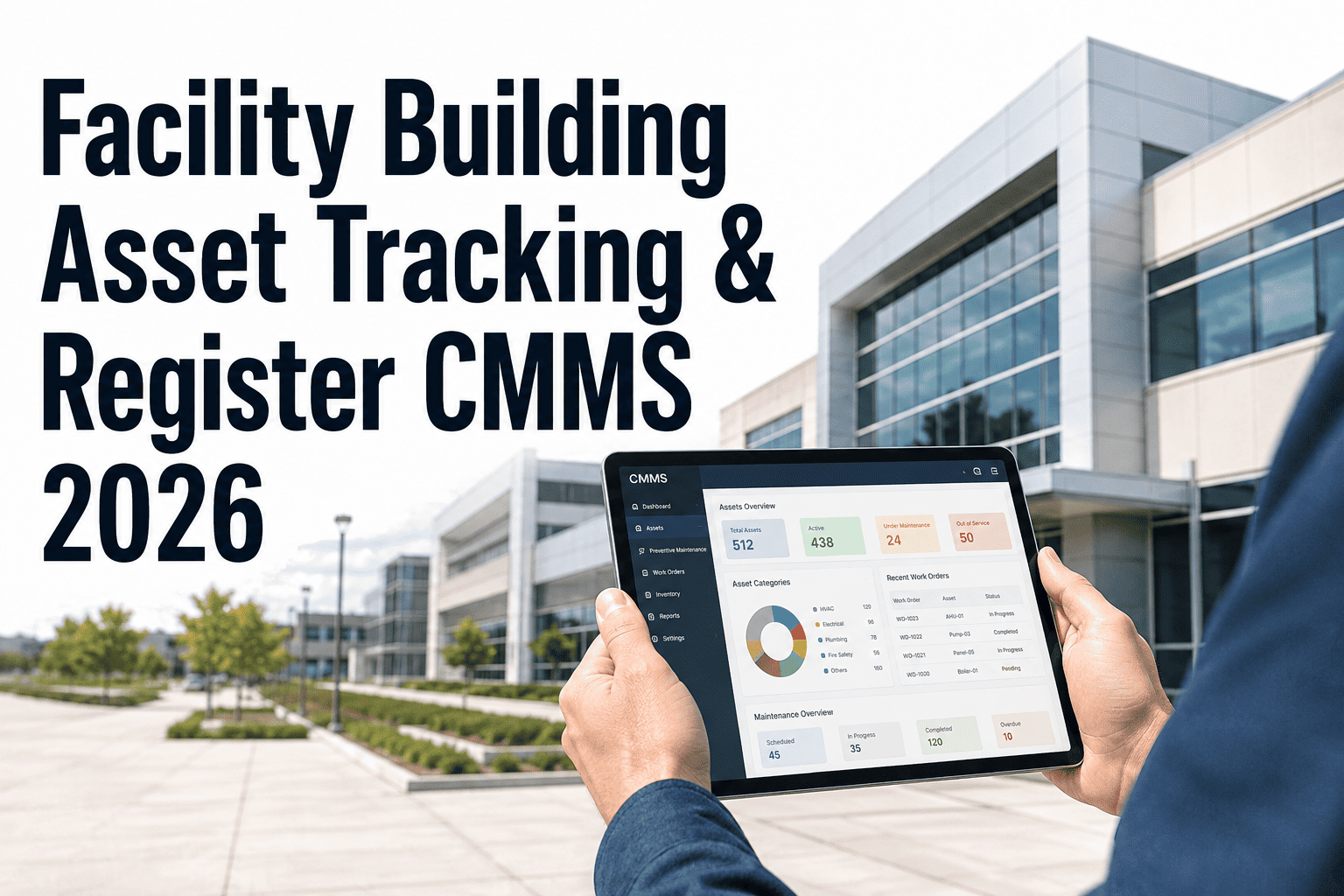
Oxmaint's asset tracking module connects QR code and barcode scanning to asset records, maintenance history, PM schedules, and work order creation in one mobile-first platform. Scan any tagged asset to view full history, raise a work order, or record an inspection result. Book a demo to see asset scanning configured for your facility type.
Three Asset Tracking Technologies: What Each Delivers for Facility Managers
Barcode, QR code, and RFID each solve the same core problem from different operational angles. The right choice depends on asset density, scan distance requirements, and budget. Most facility operations combine two or all three.
Barcode
1D linear labels, scannable by dedicated scanners and mobile cameras
Best for: Fixed equipment, spare parts bins, tool cribs, low-density environments
Lowest cost per tag. Works with existing scanner infrastructure. Label damage from moisture, heat, or abrasion reduces scan reliability in harsh plant environments. Requires line-of-sight scan at close range.
$0.01
per barcode label vs $0.25 to $5 per QR tag and $3 to $15 per passive RFID tag
QR Code
2D matrix codes, scannable by any smartphone camera without dedicated hardware
Best for: General facility assets, mechanical equipment, panels, switchgear, HVAC units
No dedicated scanner required. Technician scans with their phone and lands directly on the asset record in Oxmaint. Metal and UV-resistant labels extend life in plant environments. Most cost-effective solution for facilities deploying tracking at scale without RFID infrastructure investment.
Zero
additional scanning hardware required when Oxmaint QR tracking is deployed on existing mobile devices
RFID
Radio-frequency tags, scannable without line of sight at 1 to 6 metres
Best for: High-density inventories, tool tracking, mobile equipment, parts rooms
Passive RFID enables real-time inventory counts without manual scanning. A technician walking a parts room with an RFID reader captures a full inventory in under 2 minutes versus 2 hours for manual count. Active RFID enables continuous location tracking for mobile assets and rental equipment across large sites.
2 min
to complete a full parts room inventory scan with RFID vs 2 hours for manual count
Combined Approach
QR for fixed assets, RFID for parts and mobile equipment
Best for: Multi-site operations, mixed asset types, high-value tool fleets
Most facility operations achieve best coverage by combining QR codes on fixed mechanical and electrical assets with RFID for spare parts inventory and high-value tool tracking. All three technologies feed the same asset record in Oxmaint with no separate database per tracking type.
100%
of scan types feed a single unified asset record in Oxmaint regardless of barcode, QR, or RFID source
What Gets Digitized: Asset Types and Tracking Requirements
Mechanical and HVAC Equipment
QR CodeBarcode
Chillers, AHUs, pumps, compressors, and motors carry individual QR tags. Scan opens the asset record showing last PM date, open work orders, fault history, and upcoming scheduled tasks. Technician raises work order from the scan without returning to a desktop.
Scan benefit: PM history and open faults visible at the asset in under 10 seconds
Electrical and Control Panels
QR Code
MCC panels, distribution boards, and switchgear carry QR tags linking to one-line diagrams, last inspection result, and next thermographic survey date. Electrical compliance records accessible in the field eliminate the need to retrieve paper files from the maintenance office before inspection.
Compliance: Last inspection result and next due date visible at the panel
Spare Parts and MRO Inventory
RFIDBarcode
Parts bins, shelf locations, and individual high-value components tagged with RFID or barcode. Stock counts automated on receipt and issue. Reorder alerts fire when stock drops below minimum. Work orders reserve parts before the technician arrives at the job, eliminating mid-repair delays for missing components.
Inventory accuracy: RFID-tracked parts rooms achieve 98%+ count accuracy vs 74% manual
Tools and Portable Equipment
RFIDQR Code
High-value tools, calibrated instruments, and portable equipment tracked by RFID or QR to individual technicians and job locations. Calibration due dates linked to the tool record. Overdue calibration flagged before issue. Tool loss tracked to last scan point for accountability without manual sign-out sheets.
Calibration: Overdue calibration status visible before tool issue from crib
Every Asset Tagged. Every Scan Creating a Maintenance Record. Zero Data Entry.
Oxmaint's mobile asset scanning connects QR codes, barcodes, and RFID tags to asset records, PM schedules, work orders, and parts inventory in one platform. Technicians scan and act. Managers see the complete picture in real time across every location. Book a demo to see the scanning workflow for your facility asset types.
Technician scans QR tag. Asset record opens in under 3 seconds showing full maintenance history, open work orders, PM schedule, and parts list. No search, no lookup, no desktop required.
Technician reads asset tag, searches CMMS or paper register manually. History in separate binder or shared drive. 5 to 15 minutes lost per work order finding relevant information.
Work order creation
Scan creates a work order pre-populated with asset identity, location, and fault history. Technician adds fault description and submits in under 2 minutes from the asset location with no data entry errors.
Work order created by hand or at desktop after returning to office. Asset attribution errors common. Delay between fault discovery and work order creation averages 4 to 8 hours in undigitized operations.
Parts inventory accuracy
RFID or barcode scanning at receipt and issue maintains perpetual inventory count. Parts reserved on work order before job starts. Stockout risk visible before technician goes to the job, not after arrival.
Physical count completed quarterly or semi-annually. Parts shortages discovered at repair time. Emergency procurement at spot market prices. Duplicate stock purchased because inventory record inaccurate.
Maintenance history
Every scan event, work order, inspection, and parts issue logged against the specific asset record automatically. MTBF, repair cost, and failure pattern visible per asset from day one of tagging.
Maintenance history in paper job cards, spreadsheets, or technician memory. No reliable failure frequency data per asset. MTBF calculated from incomplete records. Recurring faults not identifiable as pattern.
Digital Asset Tracking Performance Benchmarks
Reduction in work order closure time when technicians scan assets vs manual asset lookup and work order creation40%
Parts room inventory count accuracy achieved by RFID-tracked facilities vs 74% average for manual count98%
Of facility managers report asset register accuracy improves within 90 days of deploying QR code scanning68%
Reduction in time spent on asset identification and history lookup across maintenance teams on mobile CMMS with scanning84%
How Oxmaint Solves the Asset Tracking Gap
Platform Overview
Four structural gaps drive asset tracking failure in facility operations: assets without tags or records, maintenance history siloed in paper or spreadsheets, parts inventory counted manually and infrequently, and work orders created without reliable asset attribution. Oxmaint addresses each through QR code and RFID integration, a unified asset register with full history per record, automated parts inventory tracking, and mobile work order creation from any scan point.
QR and Barcode ScanningRFID Parts InventoryMobile-First Work OrdersUnified Asset Register
01
QR Code Tag-to-Asset in One Scan
14-day go-live · zero scanning hardware required
Print QR labels from Oxmaint, apply to assets, and every tag is immediately linked to the asset record. Technicians scan with their existing phone. Full maintenance history, PM schedule, and work order creation available from the scan in under 10 seconds. Book a demo to see QR setup for your facility.
02
Unified Asset Register with Full History per Tag
All scan types feed one record, not separate databases
Every barcode scan, QR scan, and RFID read updates the same asset record in Oxmaint. Maintenance history, fault patterns, parts consumed, and inspection results accumulate per asset automatically. No manual data consolidation across systems.
03
Mobile Work Orders Raised from the Asset Location
74% of work orders completed on mobile in Oxmaint deployments
Technician scans asset, sees fault history, and raises a work order pre-populated with asset identity, location, and last maintenance date from the asset location without returning to office. Work order attributed to correct asset automatically, no manual selection.
04
RFID Parts Inventory with Automated Reorder Alerts
Parts stockouts eliminated on RFID-enabled parts rooms
RFID-tagged parts bins update stock counts automatically on issue and receipt. Minimum stock alerts fire before stockout, not at repair time. Work orders link to required parts before the technician goes to the job, confirming availability before travel. Book a demo to see parts inventory configuration.
QDoes Oxmaint support QR code scanning without dedicated hardware or a separate scanning app?
Yes. Oxmaint's mobile app uses the native camera on any iOS or Android device to scan QR codes and barcodes. No additional scanning hardware is required. The scan opens the asset record directly in the app with full maintenance history, PM schedule, and work order creation available in under 10 seconds. Book a demo to see the scanning workflow on your device.
QHow does Oxmaint handle RFID integration for spare parts inventory tracking?
Oxmaint integrates with RFID readers via API to receive scan events and update stock counts automatically on parts issue and receipt. Minimum stock alerts and work order parts reservation are configured per item in the parts register. Physical inventory counts are automated by reader sweep rather than manual count. Start free trial to configure parts inventory tracking in Oxmaint.
QCan Oxmaint generate and print QR labels for existing assets in an established facility?
Yes. Oxmaint generates printable QR labels for every asset in the register with the asset name, ID, and location pre-printed alongside the code. Labels are formatted for standard label printers and thermal print sheets. Bulk label generation covers entire asset classes or buildings in a single export. Book a demo to see the label generation workflow for your facility.
QHow quickly can a facility complete a full asset tagging and register setup in Oxmaint?
Most facility teams complete initial asset register setup and QR tagging in 10 to 14 days using Oxmaint's bulk import tool and mobile registration workflow. Technicians scan existing assets and add details on the spot. High-priority assets go live first and scanning activates immediately after registration. Sign up free or book a demo to see the setup timeline for your facility size.
Every Asset Tagged. Every Scan a Maintenance Record. Live in 14 Days.
Oxmaint connects QR code and RFID asset scanning, a full asset register with maintenance history per tag, mobile work order creation from any scan point, and automated parts inventory tracking into one platform. No dedicated scanning hardware required. Go live in under 14 days.